
 Chat with us on WhatsApp

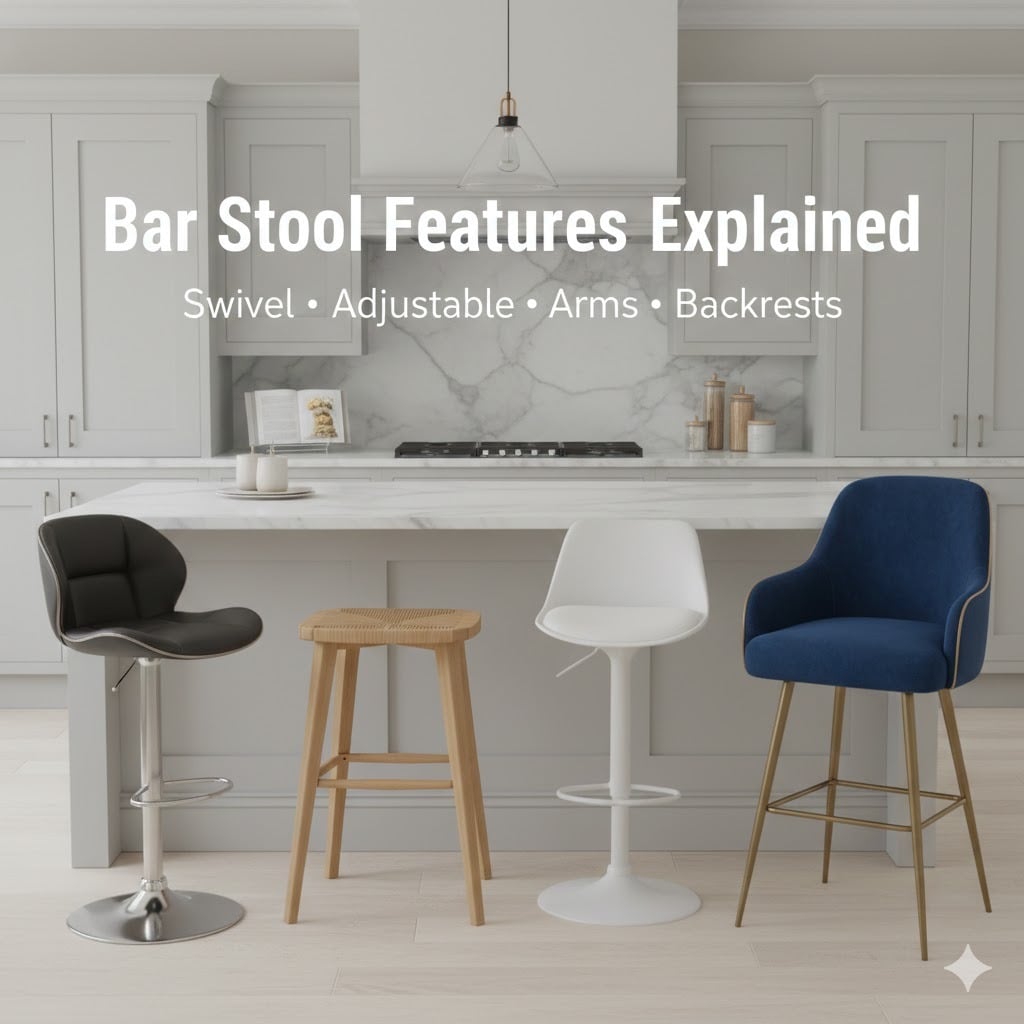
Bar stool decisions often fail because buyers focus on appearance before understanding function. Features determine how a stool performs over time — how stable it feels, how comfortable it is after 30 minutes, and how well it handles daily use.
This guide explains the mechanics behind swivel systems, gas lifts, backrests, armrests, and structural design. It focuses on durability, ergonomics, and real‑world practicality. If you are unsure about seat height or counter fit, see our Bar Stool Height Guide.
Swivel vs Fixed Bar Stools: Which Is Better?
Neither is universally better. Swivel stools prioritise movement and flexibility. Fixed stools prioritise structural stability and lower maintenance. The right choice depends on how the stool will be used.

How Swivel Mechanisms Work
Most swivel stools use either:
-
A swivel plate system (layered rotating plates)
-
A ball‑bearing mechanism for smoother rotation
Higher‑quality models use hardened steel components to reduce wear. Cheaper mechanisms rely on thinner plates and lighter hardware, which can loosen over time.
There are two main types:
-
360‑degree swivel – unrestricted full rotation.
-
Memory return swivel – rotates but automatically returns to a forward position using a spring system.
Memory return systems are useful where visual order matters, as stools reset neatly after use.
Swivel Clearance & Layout Considerations
Swivel stools require rear and side clearance to rotate freely. Without adequate space, backs can contact walls or counters.
Memory return systems reduce visual clutter and limit prolonged outward rotation. In tighter kitchens, they can reduce accidental contact.
This is a movement consideration, not a height issue.
When Swivel Bar Stools Make Sense
Swivel works well when:
-
The kitchen is open‑plan and social.
-
Users regularly turn to speak to others.
-
Entry angles are tight and sliding sideways is awkward.
-
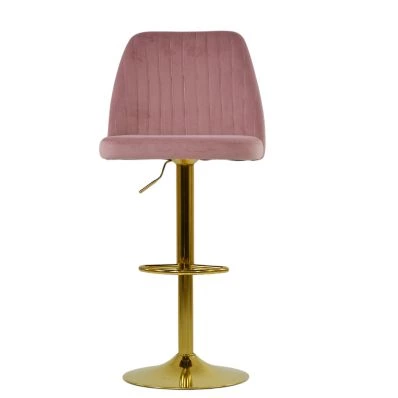
The stool uses a pedestal base with adjustable functionality.
They are particularly helpful for users who prefer easier entry and exit without shifting the entire base.
When Fixed Bar Stools Are Better
Fixed stools are better when:
-
Stability is the priority.
-
The home includes young children.
-
Reduced wall impact is important.
-
Long‑term durability outweighs movement flexibility.
With no rotating hardware, fixed stools have fewer mechanical failure points.
Swivel Maintenance & Longevity
Swivel systems benefit from basic upkeep:
-
Tighten mounting bolts periodically.
-
Remove dust build‑up from bearing areas.
-
Apply light lubrication if rotation stiffens.
If a swivel feels loose, it is often a hardware issue rather than a structural failure.
Swivel vs Fixed Comparison
| Feature | Swivel | Fixed |
|---|---|---|
| Stability | Moderate to High (depends on base) | High |
| Movement | Full rotation | None |
| Maintenance | Moderate | Low |
| Lifespan | Dependent on hardware quality | Typically longer |
| Best Use | Social kitchens | Family durability |
Adjustable vs Fixed Height Bar Stools
This section covers mechanism — not sizing.
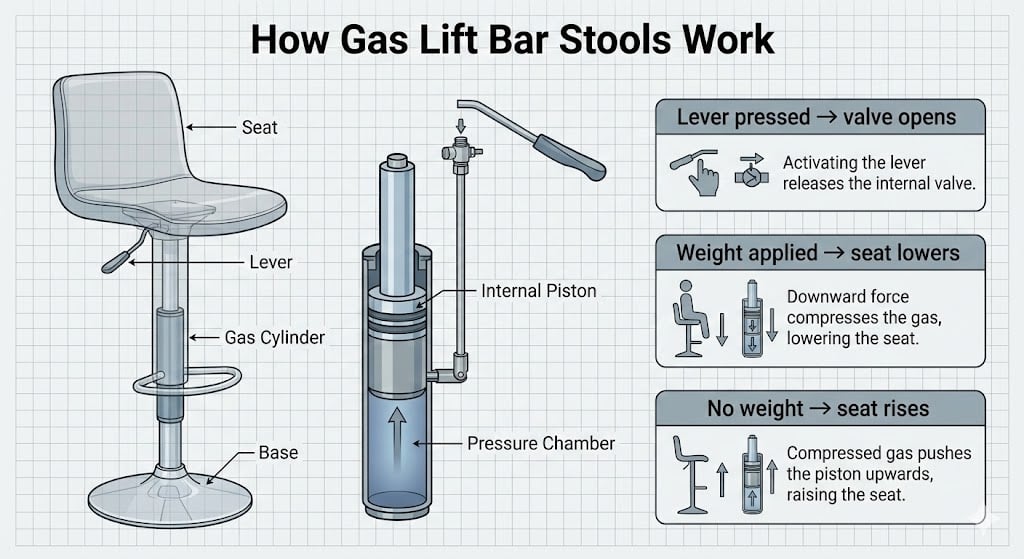
How Gas Lift Mechanisms Work
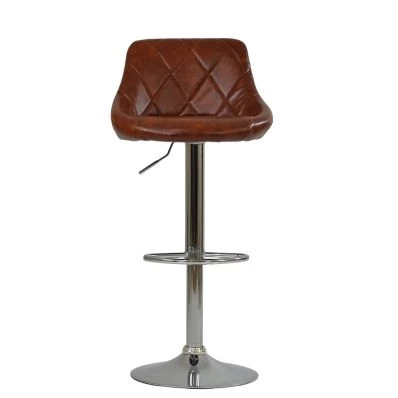
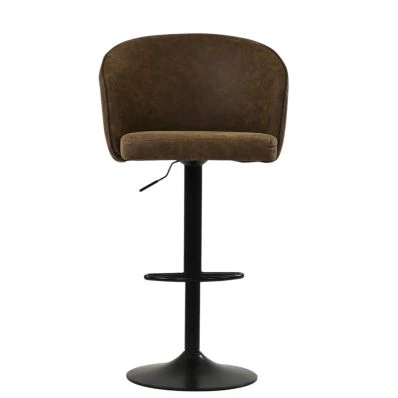
Gas lift stools use a sealed pressure cylinder containing compressed gas. Inside is a piston and release valve system.
When the lever is pressed, the valve opens:
-
With weight applied, the stool lowers.
-
Without weight, internal pressure raises the seat.
Quality matters. Better gas lifts use reinforced seals and thicker internal walls to prevent pressure loss.
Gas Lift Lifespan & Failure Signs
Common failure signs include:
-
Gradual sinking while seated.
-
Sudden drop when weight is applied.
-
Lever resistance or stiffness.
Most quality gas lifts last several years under normal domestic use. Failure is usually due to seal degradation or internal pressure loss.
Pros & Cons of Adjustable Stools
Pros:
-
Flexible for mixed‑height households.
-
Useful for multi‑purpose islands.
-
Easier to adapt to different users.
Cons:
-
More moving parts.
-
Requires a heavier pedestal base for balance.
-
Long‑term maintenance may be required.
When Fixed Height Is the Smarter Choice
Fixed height stools offer:
-
Simpler construction.
-
Fewer mechanical risks.
-
Greater long‑term stability.
-
Stronger suitability for high‑traffic kitchens.
For households prioritising durability over flexibility, fixed height is often the safer choice.
Backrest Types Explained: High Back, Low Back & Backless
Backrest choice affects comfort duration more than appearance.
High Back Stools
High backs support the spine and reduce fatigue during longer sitting sessions. They distribute upper body weight through the frame rather than relying entirely on the seat.
Best suited for:
-
Extended seating.
-
Dining‑style kitchen use.
Low Back Stools
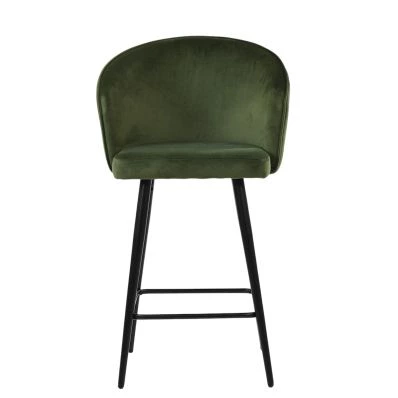
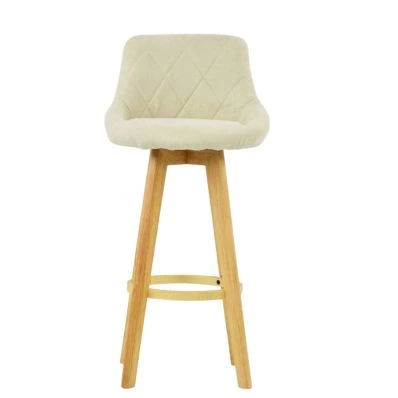
Low backs provide moderate support while maintaining openness. They allow some lumbar assistance without visually dominating the space.
They balance support and minimalism.
Backless Stools
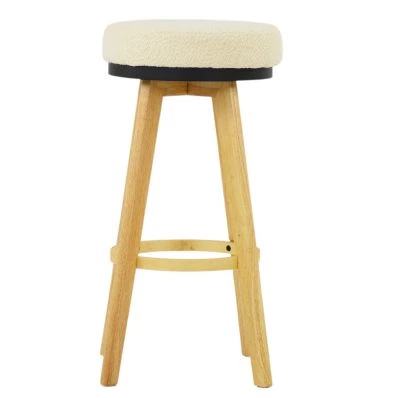
Backless stools are compact and tuck neatly under counters. They are best for short‑duration seating.
They do not provide lumbar support and are not ideal for extended sitting.
Backrest Comparison
| Feature | High Back | Low Back | Backless |
| Comfort Duration | High | Moderate | Low |
| Postural Support | Strong | Limited | Minimal |
| Visual Impact | Larger presence | Balanced | Minimal |
| Space Efficiency | Moderate | High | Very High |
Bar Stools With Arms vs Armless
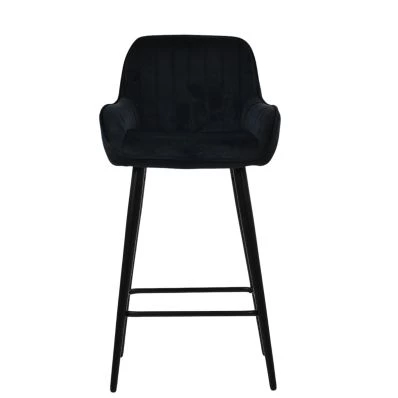
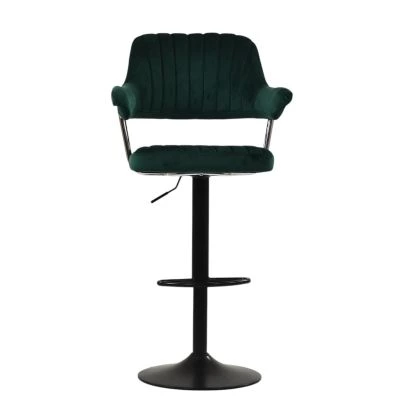
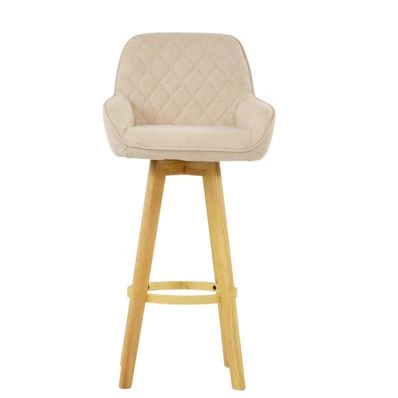
Armrests improve comfort but increase overall width.
Benefits:
-
Elbow support.
-
Improved sense of security.
-
Helpful for longer sitting.
Limitations:
-
Require additional side clearance.
-
May not tuck fully under counters.
-
Reduce how many stools fit side‑by‑side.
Armless stools are more flexible in tighter layouts and allow easier side entry.
Seat Comfort & Ergonomics
Feature mechanics directly affect long‑term comfort.
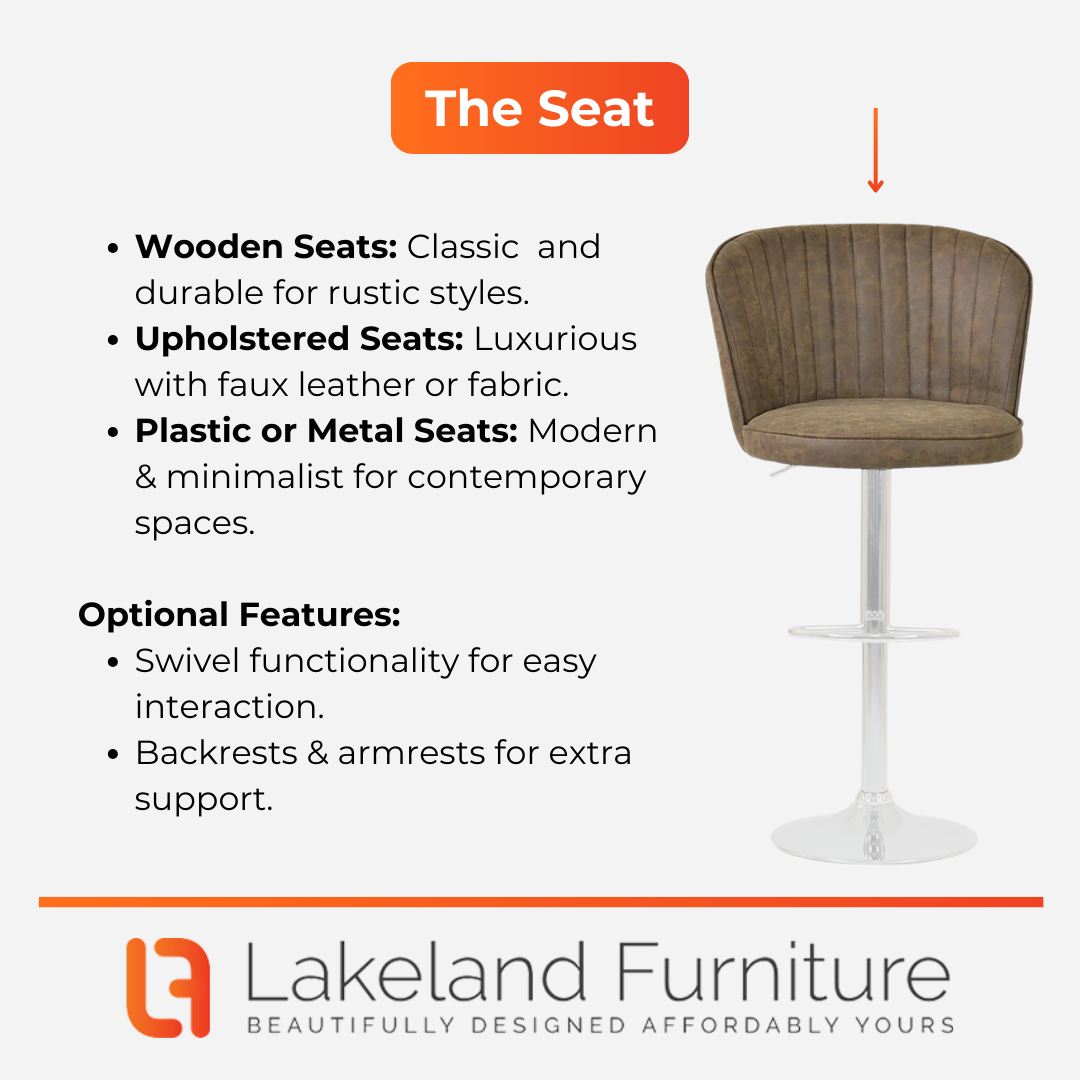
Seat Width & Depth
Narrow seats create pressure points on thighs. Wider seats distribute weight more evenly.
Adequate depth prevents the user from feeling perched on the edge.
Comfort depends on support, not just padding thickness.
Padding & Foam Density
High‑density foam retains shape longer. Low‑density foam compresses quickly and loses support.
Cushion construction influences lifespan more than surface material.
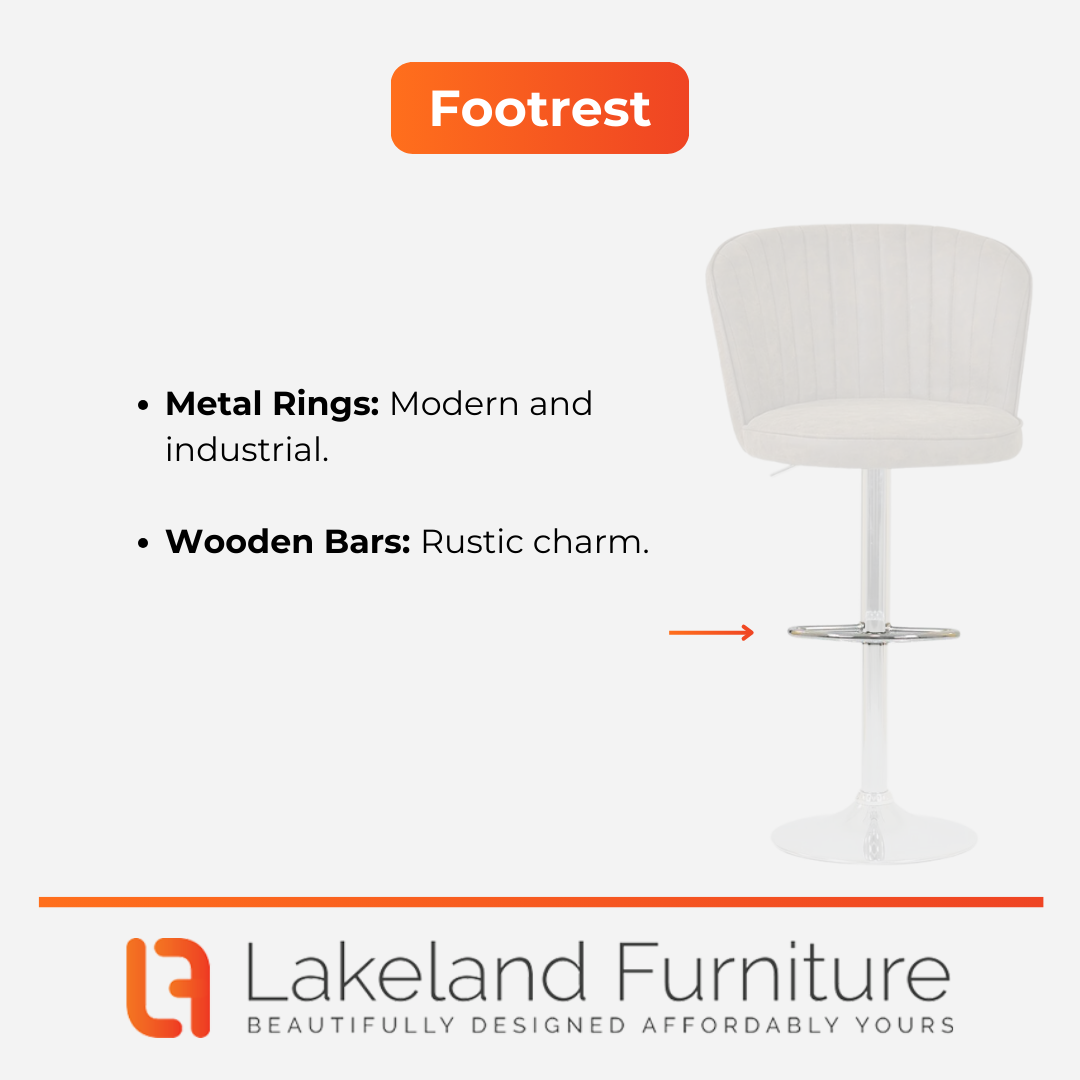
Footrests & Leg Support
Footrests prevent legs from dangling and reduce strain.
Integrated footrests on pedestal bases differ from crossbars on four‑leg frames. Both must align naturally with seated posture.
Stability & Base Design
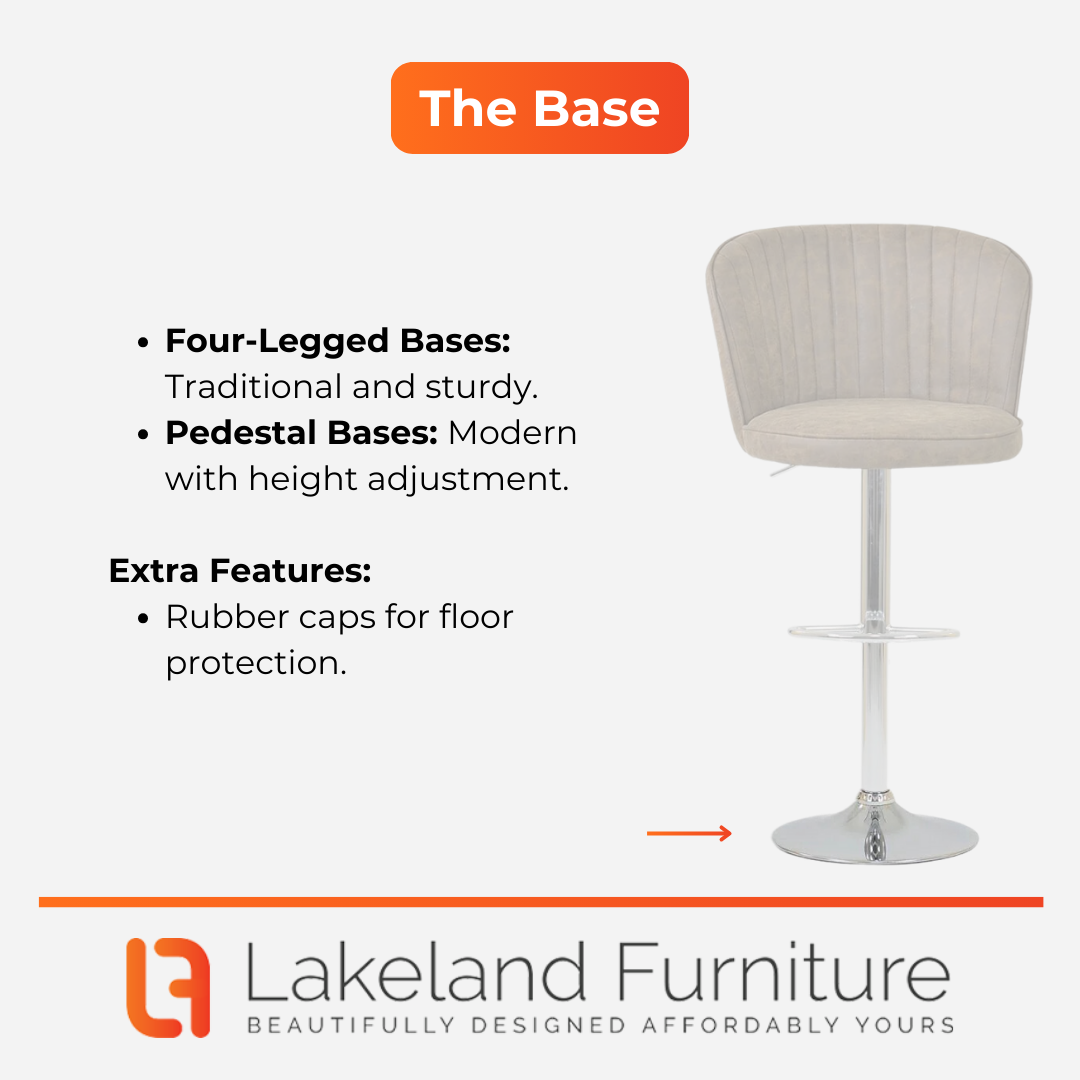
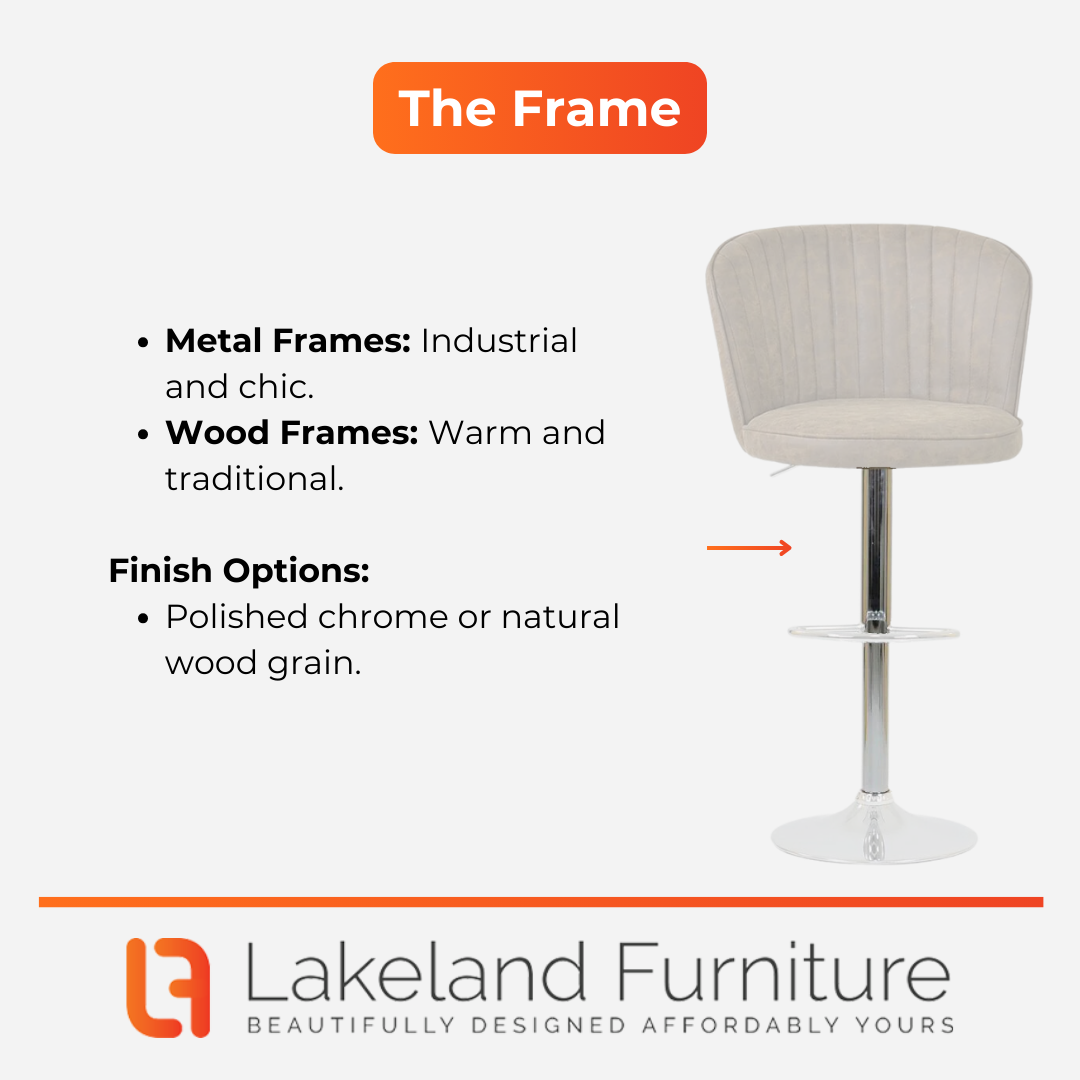
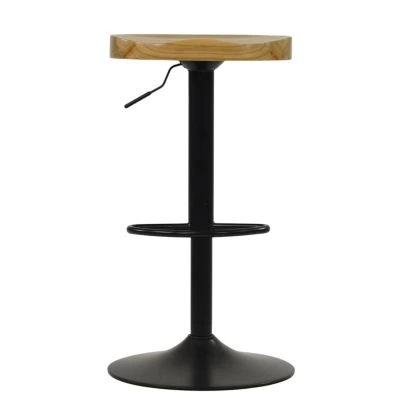
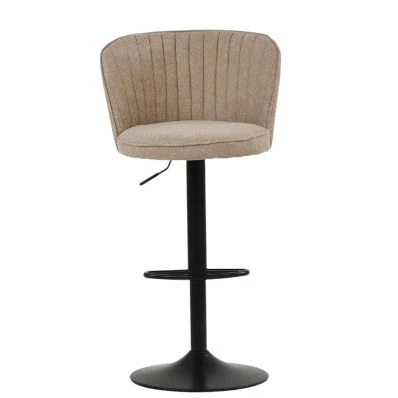
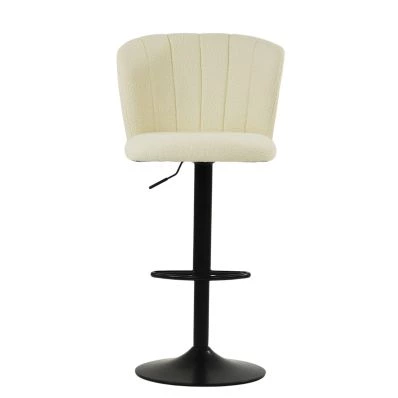
Weighted pedestal bases lower the centre of gravity and resist tipping.
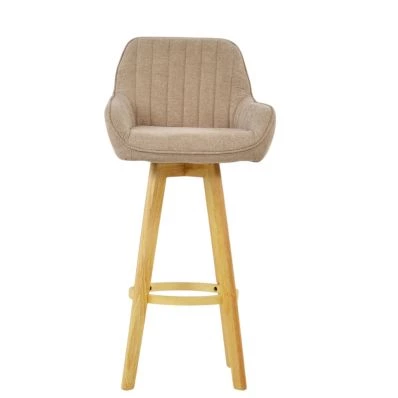
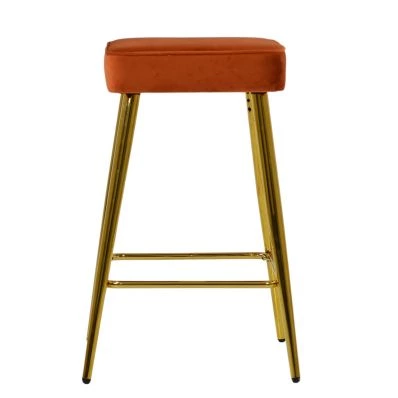
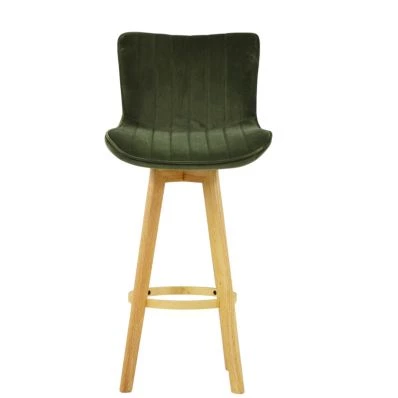
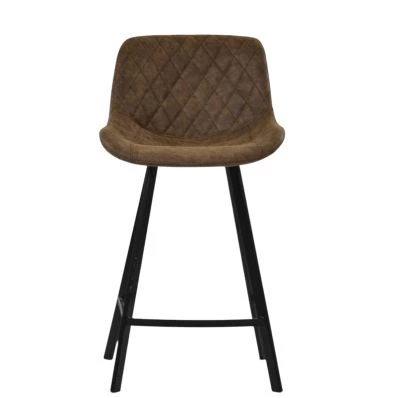
Four‑leg stools distribute weight through splayed legs, increasing structural balance on uneven floors.
Both designs are stable when properly constructed.
Weight Capacity & Structural Reinforcement
Quality stools clearly state weight capacity.
Metal frames rely on weld integrity. Wooden frames rely on joint strength and screw reinforcement.
Structural integrity matters more than cosmetic detail.
FAQ
Do swivel bar stools get loose over time?
Quality swivel mechanisms do not loosen quickly if properly installed. Looseness is usually caused by hardware bolts backing out or low‑grade bearing plates wearing down. Regular tightening and basic cleaning prevent most issues.
Are adjustable bar stools safe?
Yes, when built with a stable base and rated gas lift. Safety depends on base diameter and weight distribution. A properly constructed adjustable stool should not drop suddenly under normal use.
Are bar stools with arms practical?
They are practical for longer sitting and added support, but require additional width. In tight layouts, armless designs are more flexible.
Are backless stools comfortable?
They are comfortable for short sitting periods. For extended use, lack of lumbar support increases fatigue.
What is the most stable type of bar stool?
Fixed four‑leg stools typically offer maximum stability due to their distributed load design. Heavy pedestal bases can also be very stable when adequately weighted.


Comments