
 Chat with us on WhatsApp

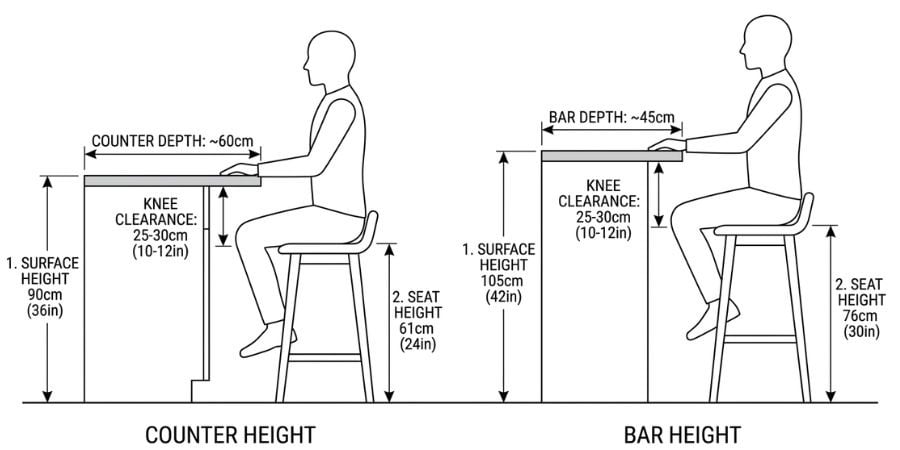
Bar Stool Height Guide: Counter Height vs Bar Height
Bar stool height is the single most important factor in whether a stool works in practice. The difference between counter height and bar height is small in measurement terms, but it directly affects comfort, legroom, and usability. If you already know you need counter height seating, browse our counter bar stools — otherwise, read on to understand which height suits your setup.
This guide focuses specifically on how stool height aligns with surface height. It does not cover full sizing logic. For a broader overview, see our Bar Stool Size guide.
If the seat height is wrong, everything else fails. This article isolates that decision and gives you clear, usable ranges.
Counter Height vs Bar Height — What’s the Difference?
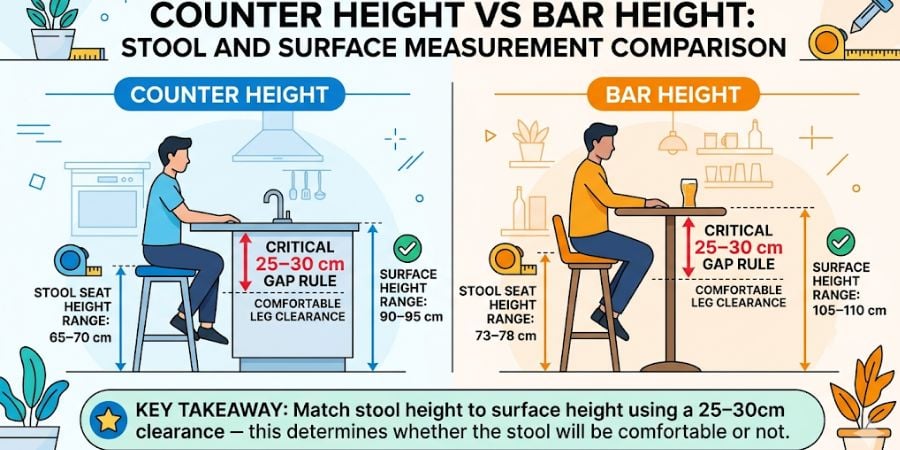
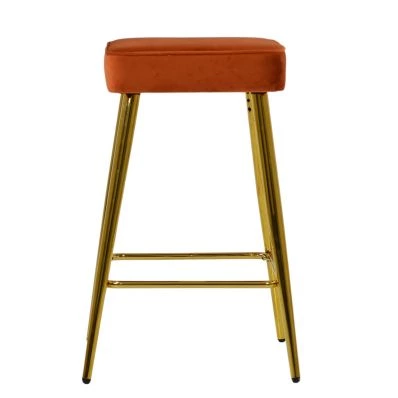
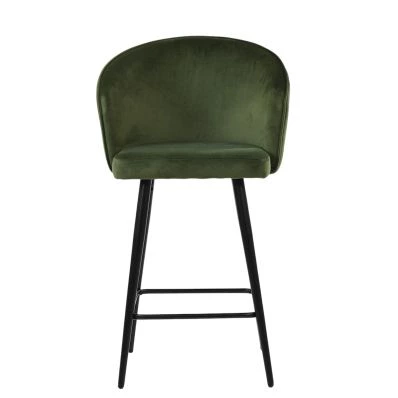
Counter height stools typically have a seat height of 65–70cm and are used with surfaces around 90–95cm high. Bar height stools typically have a seat height of 73–78cm and are used with surfaces around 105–110cm high.
The distinction is based on the finished height of the surface, not the stool itself.
| Stool Type | Seat Height | Surface Height |
|---|---|---|
| Counter height | 65–70cm | 90–95cm |
| Bar height | 73–78cm | 105–110cm |
| Extra tall | 80cm+ | 115cm+ |
In most UK homes, kitchen worktops and islands are counter height, while raised breakfast bars are often bar height.
Choosing the wrong category leads to either knees hitting the underside if the stool is too tall, or an unusable gap if the stool is too low.
How to Choose the Correct Bar Stool Height
Step-by-step measurement
- Measure from floor to the underside of your surface.
- Subtract 25–30cm.
- The result is your target seat height.
This gives a usable range rather than a single number.
Why the 25–30cm gap matters
Aim for a 25–30cm gap between the seat and the underside of the counter. This creates enough legroom for sitting comfortably without raising your shoulders or forcing your knees into the surface.
Less than 25cm feels cramped, makes knee contact more likely, and is harder to sit at for longer periods.
More than 30cm can feel too low and awkward for eating, working, or using the surface properly.
How High Should Bar Stools Be for a 90cm Counter?
For a 90cm counter, bar stools should have a seat height of 65–67cm. This maintains the recommended 25–30cm gap for comfortable seating.
This is the most common setup in UK kitchens.
Standard counter height stools will usually fit. Bar height stools will be too tall.
If your counter is closer to 95cm, move towards a 68–70cm seat height.
How High Should Bar Stools Be for a 105cm Bar?
For a 105cm bar, bar stools should have a seat height of 73–75cm to maintain the correct clearance.
This applies to raised breakfast bars, home bars, and some kitchen islands with split levels.
Counter stools will feel too low here. You need a true bar-height stool.
Adjustable vs Fixed Height — When It Matters
Adjustable stools are often positioned as a fallback when measurements are uncertain. That is accurate, but only in specific cases.
When adjustable stools make sense
- Surface height is unusual and does not sit within standard ranges
- Multiple users of different heights
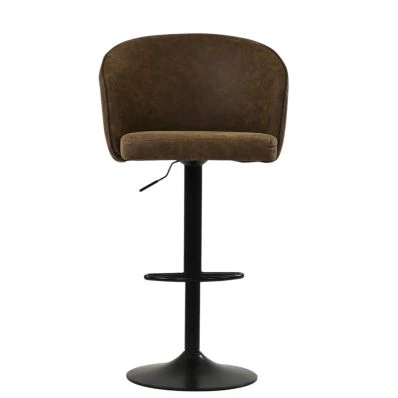
- Dual-use spaces such as island and bar seating
When fixed height is better
- Standard kitchen layouts
- You want consistent seating alignment
- You are buying multiple stools for one surface
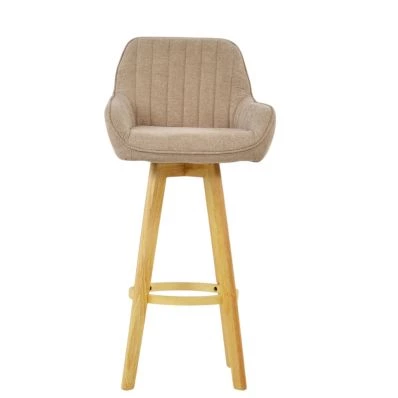
Fixed height stools are generally more stable and keep all seats aligned.
Adjustable stools add flexibility and reduce measurement risk, but they also introduce moving parts.
Common Height Mistakes to Avoid
Mixing counter and bar height stools
This creates uneven seating and makes the space harder to use properly. All stools should match the same surface height.
Measuring to the top of the surface
Always measure to the underside, not the top. The underside determines usable legroom.
Ignoring seat thickness
Seat height is measured to the top of the seat, but thicker seats reduce effective clearance. This matters most on tighter setups.
Assuming all “bar stools” are the same height
Retail naming is inconsistent. Always check the actual seat height measurement rather than relying on the product label alone.
Practical Application — Choosing the Right Height
Counter height (65–70cm seat height)
Use this for standard kitchen worktops or islands, everyday dining, and stable, consistent seating.
Avoid it if the surface is above 100cm.
Bar height (73–78cm seat height)
Use this for raised breakfast bars, home bar areas, and split-level kitchen islands.
Avoid it if the surface is standard worktop height.
Adjustable stools
Use these when you are unsure of exact measurements, the space is multi-purpose, or users vary significantly in height.
Avoid them if you want a fixed, uniform setup across multiple stools.
How Height Links to Other Decisions
Height is the starting point. Once that is correct, other factors come into play.
- For quantity, see How Many Bar Stools.
All of these depend on getting seat height correct first.
Frequently Asked Questions
What is the standard bar stool height?
Standard bar stool height is typically 73–78cm from floor to seat. This is designed for surfaces around 105–110cm high.
Anything below this range is usually considered counter height rather than bar height.
What is the difference between counter and bar stools?
Counter stools are shorter at 65–70cm seat height and are used with 90–95cm surfaces. Bar stools are taller at 73–78cm and are used with 105–110cm surfaces.
The difference is based on the surface height they are designed to work with.
How much space should be between the seat and counter?
Allow 25–30cm between the seat and the underside of the counter. This ensures comfortable legroom without restricting movement.
This is the key measurement used to select stool height accurately.
Conclusion
Bar stool height is a measurement decision, not a style decision. Match seat height to surface height using the 25–30cm clearance rule, and most fit issues are avoided.
For a full breakdown of sizing, spacing, and fit, refer to the main Bar Stool Size guide, or browse our full range of bar stools.


Comments