
 Chat with us on WhatsApp

Dining Chair Size: Height, Width and Spacing Explained
Choosing the correct dining chair size is a fit problem, not a style decision. Most issues—chairs not sliding under the table, cramped seating, awkward legroom—come from mismatched measurements rather than poor product choice.
This guide defines the exact dimensions that control fit: seat height, chair width, depth, and spacing. It explains how these measurements relate to table height, how much clearance is required for comfort, and how to calculate how many chairs will fit.
The goal is simple: remove guesswork. By the end, you should be able to check any chair against your table and room layout and know immediately whether it will work.
Standard Dining Chair Dimensions (UK Reference)
Dining chairs follow relatively consistent sizing ranges. These are not rules, but they form the baseline for compatibility.
Typical UK dining chair dimensions:
- Seat height: 45–50 cm
- Overall height: 75–95 cm
- Chair width: 45–55 cm
- Seat depth: 40–50 cm
These ranges exist because most dining tables are built to a standard height.
Typical UK dining table height:
- Table height: 71–76 cm
The relationship between these two is what determines comfort.
What Is the Correct Gap Between Seat and Table?
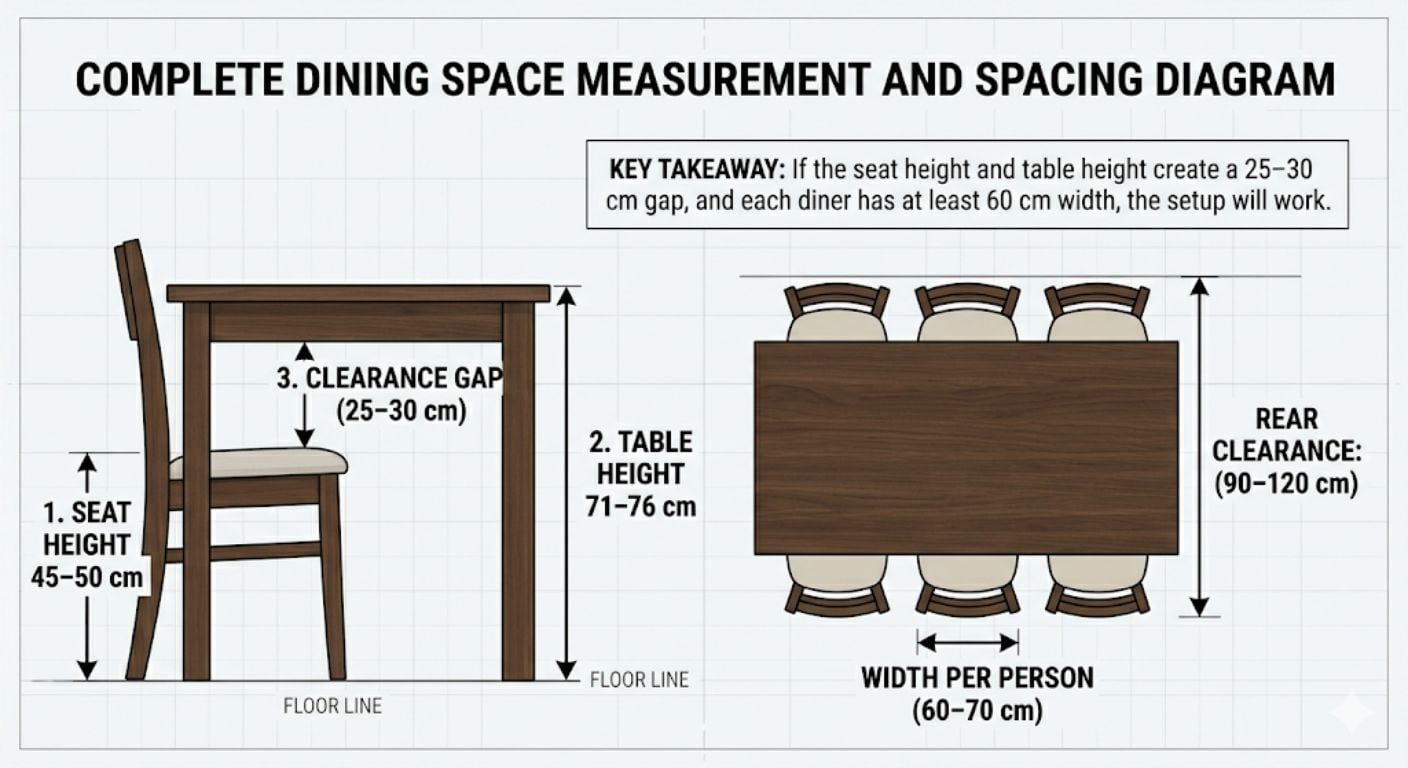
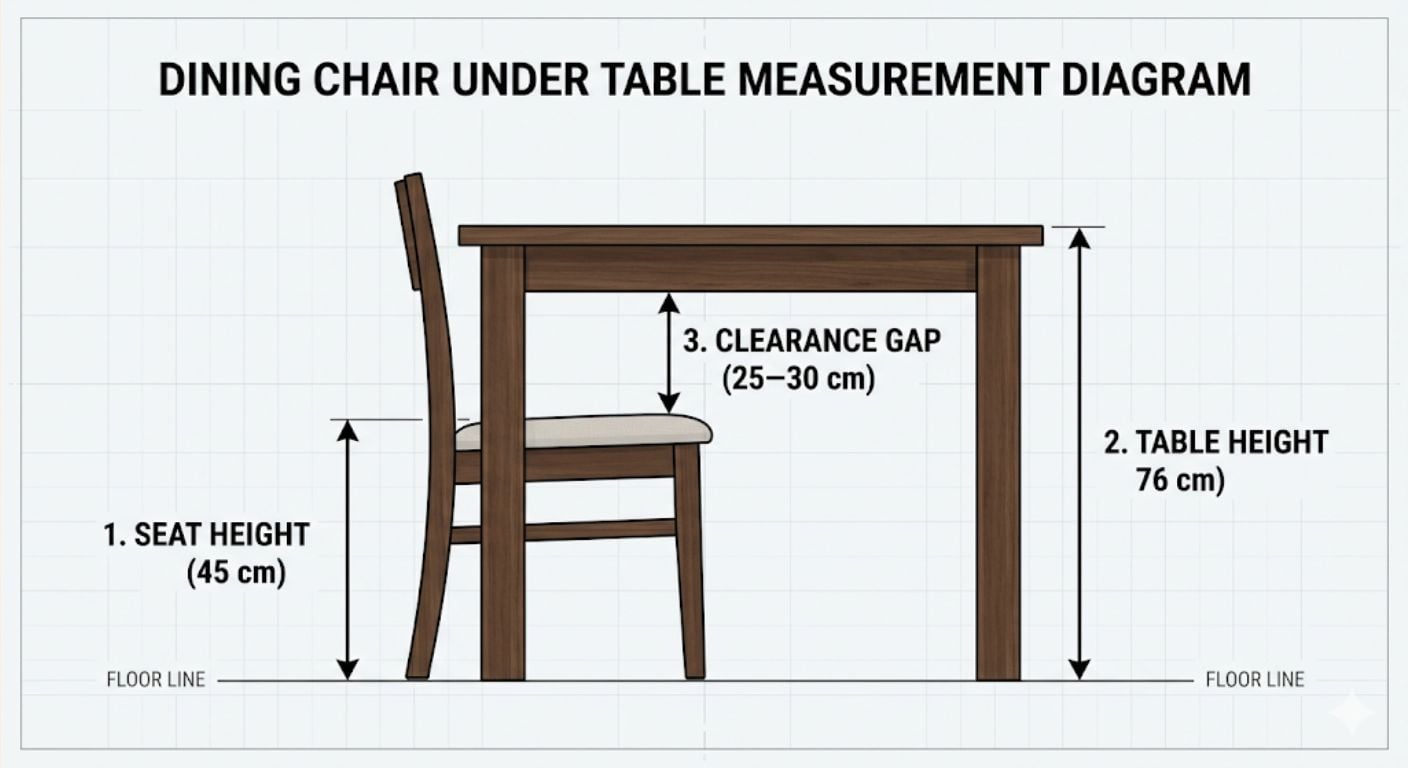
For comfortable seating, there should be a 25–30 cm gap between the top of the chair seat and the underside of the table. This allows enough space for thighs, movement, and posture.
Anything outside this range creates problems:
- Less than 25 cm: restricted legroom, uncomfortable posture
- More than 30 cm: table feels too high, reduced support when eating
This measurement must be taken to the underside of the table, not the tabletop surface.
Seat Height: The Primary Fit Measurement
Seat height determines whether a chair will work with your table. Everything else is secondary.
Standard seat height:
- 45–50 cm (most dining chairs)
This aligns with standard tables (71–76 cm) to create the correct 25–30 cm gap.
What affects real seat height?
Two factors can shift the effective height:
- Cushion compression: upholstered seats can drop 2–4 cm when sat on
- Seat shape: deeply padded or curved seats may feel lower
If you are choosing upholstered dining chairs, factor in this compression. The listed seat height is not always the seated height.
Chair Width: How Much Space Each Person Needs
Chair width determines how many people can sit at a table without crowding.
Recommended space per person:
- Minimum: 60 cm
- Comfortable: 65–70 cm
- Spacious: 70–75 cm
This includes both the chair and elbow room.
Example: 180 cm rectangular table
- 180 ÷ 60 = 3 chairs per side (tight fit)
- 180 ÷ 70 = 2–3 chairs per side (comfortable)
Most setups land at:
- 6 chairs total (3 per side)
For a full breakdown of table sizing and seating capacity, see Dining Table Size Seating Guide.
Chair Depth: Clearance Behind the Table
Chair depth affects how far the chair sits from the table and how much space is needed behind it.
Typical chair depth:
- 40–50 cm
But the critical measurement is not depth alone—it is movement space behind the chair.
Recommended clearance behind dining chairs
- Minimum: 90 cm (push chair back + limited walking space)
- Comfortable: 100–120 cm (full movement behind seated diners)
If your room cannot accommodate this, spacing and chair size need adjusting.
Table Structure: The Most Common Fit Issue
Many buyers measure to the tabletop and ignore what sits underneath.
Key obstruction:
- Table apron (frame under the tabletop)
This reduces usable height.
How to measure correctly
- Measure from floor to underside of the table frame, not the top
- Subtract seat height from this measurement
If the gap is below 25 cm, the chair will feel cramped regardless of its listed dimensions.
Armrests: Will They Fit Under the Table?
Dining chairs with arms introduce an additional constraint.
Typical armrest height:
- 65–70 cm from floor
To fit under a table:
- Arm height must be lower than the table underside, not the tabletop
If the arms hit the table:
- Chairs cannot be pushed in fully
- They increase required space around the table
For a full breakdown of when to choose arms vs armless, see Dining Chair Arms Armless.
How Many Dining Chairs Will Fit Your Table?
This depends on width per person and table shape.
Quick calculation method
- Measure usable table length
- Divide by 60–70 cm
- Round down
Example
- Table length: 200 cm
- 200 ÷ 65 = 3 chairs per side
- Total: 6 chairs
End seating depends on table leg placement and width.
Decision Logic: Choosing the Right Dining Chair Size
Use this as a working checklist.
- If your table height is standard (71–76 cm): choose seat height 45–50 cm.
- If your table has a thick frame or apron: measure underside clearance and ensure a 25–30 cm gap after seating.
- If space is limited: keep chair width closer to 45–50 cm, avoid wide arms, and reduce spacing to 60 cm per person.
- If you want more comfortable spacing: allow 65–70 cm per person and 100–120 cm behind chairs.
- If using upholstered chairs: allow for 2–4 cm compression.
- If considering armchairs: check arm height against the table underside. If unsure, choose armless.
Category Integration: Applying This to Real Products
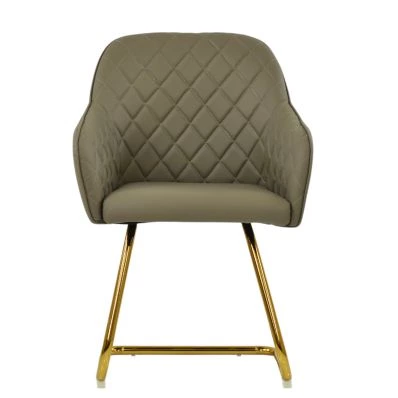
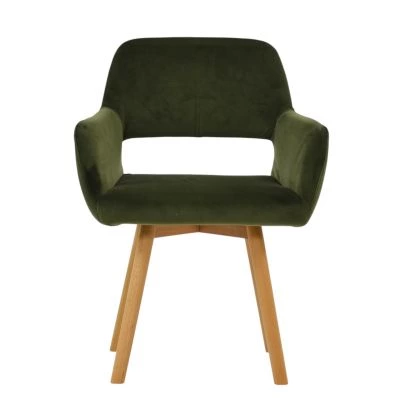
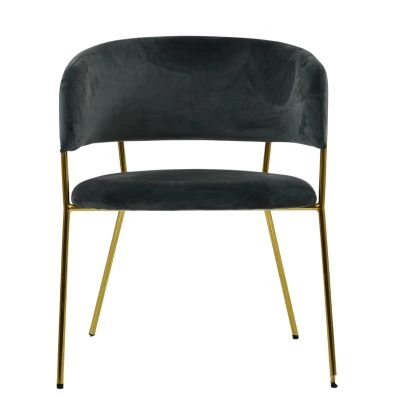
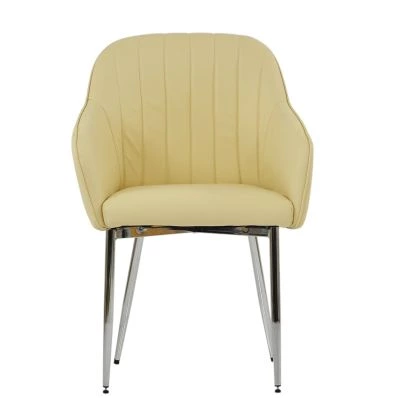
Most dining chairs available at Lakeland dining chairs fall within the standard UK sizing ranges outlined above.
This means:
- They are designed to work with standard dining tables
- The main decision is not whether they will fit
- It is how well they fit your exact space and layout
Variations between models typically come from:
- Width differences (affects spacing)
- Arm presence (affects clearance)
- Upholstery thickness (affects seat feel)
Use the measurement framework above to filter options before comparing designs.
Comfort should also be considered alongside measurements. Seat padding, backrest support, upholstery type, and seat shape can all change how a chair feels during longer meals or everyday use. If you are comparing multiple styles, it can help to understand which features make a dining chair more supportive and practical for regular use. You can read more in our what makes a dining chair comfortable guide.
-
-
-
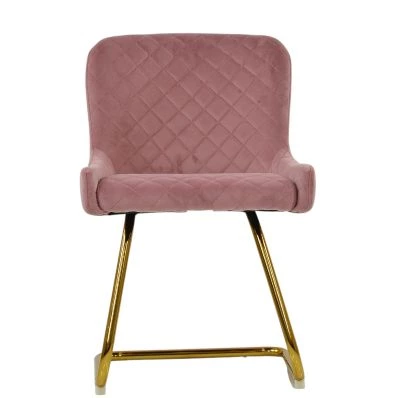
-
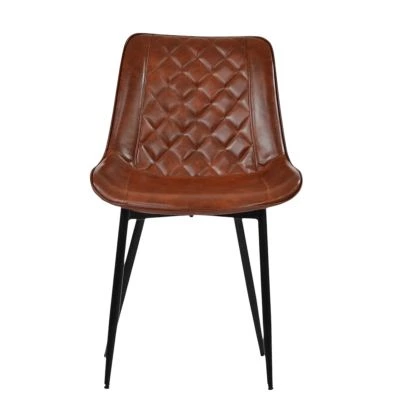
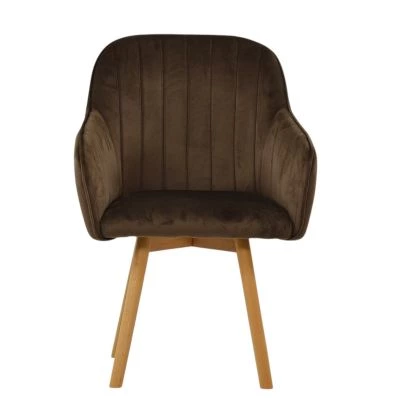
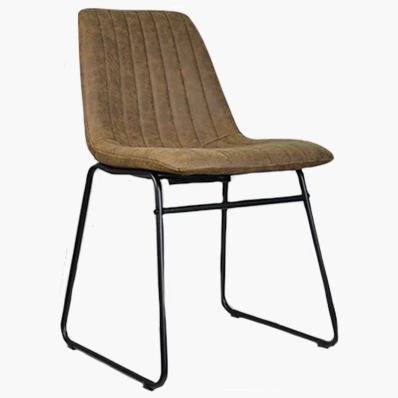 Plato Dining Chair in Aged Brown LeatherSpecial Price £49.99 Regular Price £89.99 Original price 44% Inc VATSaving £40
 -
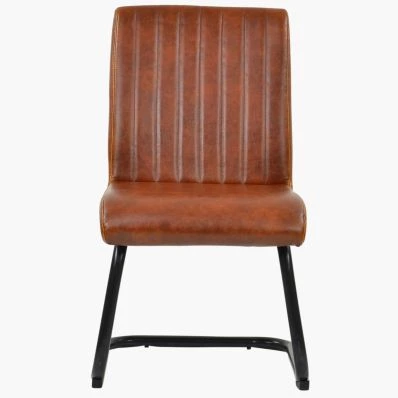
-
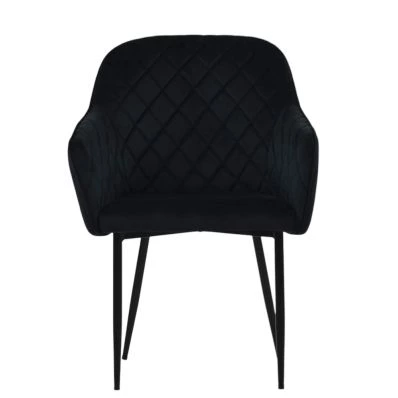
-
-
-
-
-
-
Frequently Asked Questions
What is the standard height of a dining chair?
The standard dining chair seat height is 45–50 cm. This is designed to pair with tables around 71–76 cm high, creating the correct 25–30 cm clearance gap for legroom.
How much space should be between a dining chair and table?
There should be a 25–30 cm gap between the seat and the underside of the table. This ensures enough space for legs and comfortable movement while seated.
How much space does each person need at a dining table?
Each person needs at least 60 cm width, with 65–70 cm recommended for comfort. This includes both chair width and elbow room.
How much space should you leave behind dining chairs?
Allow at least 90 cm behind chairs for basic movement. For comfortable circulation, increase this to 100–120 cm.
Will dining chairs with arms fit under my table?
Only if the arm height is lower than the underside of the table. Always measure to the frame, not the tabletop, to avoid clearance issues.
Summary: Key Dining Chair Size Rules
Core measurements
- Seat height: 45–50 cm
- Table height: 71–76 cm
- Clearance gap: 25–30 cm
Spacing rules
- Per person: 60–70 cm width
- Behind chairs: 90–120 cm clearance
Common mistakes
- Measuring to tabletop instead of underside
- Ignoring table apron thickness
- Overfilling tables with narrow spacing
- Choosing armchairs without checking clearance
- Not accounting for cushion compression
Decision shortcuts
- Standard table → choose standard chair height
- Limited space → reduce chair width and spacing
- Unsure about arms → choose armless
- Upholstered chairs → allow for compression
For most setups, selecting within standard ranges and applying these checks will eliminate fit issues before purchase.
If you are comparing options now, you can browse the full dining chairs category and use these measurements to narrow the right fit.


Comments