
 Chat with us on WhatsApp

Cleaning Metal Bar Stools: Rust Removal & Maintenance
Metal bar stools are popular because they handle regular daily use well and suit a wide range of kitchen, breakfast bar, and home bar settings. Chrome, brushed steel, powder-coated steel, and stainless steel frames are all relatively low maintenance, but they still need routine cleaning to prevent corrosion, surface marks, and loose hardware over time.
Most issues start small. Water spots, grease buildup, scratches around footrests, and trapped moisture around joints can eventually lead to rust or dull finishes if left untreated. Regular cleaning also helps maintain moving parts like swivel mechanisms and adjustable-height gas lifts.
This guide focuses specifically on cleaning metal bar stools, removing rust safely, and protecting the finish long term. If you are comparing different frame types overall, see our guide to bar stool materials.
How Often Should You Clean Metal Bar Stools?
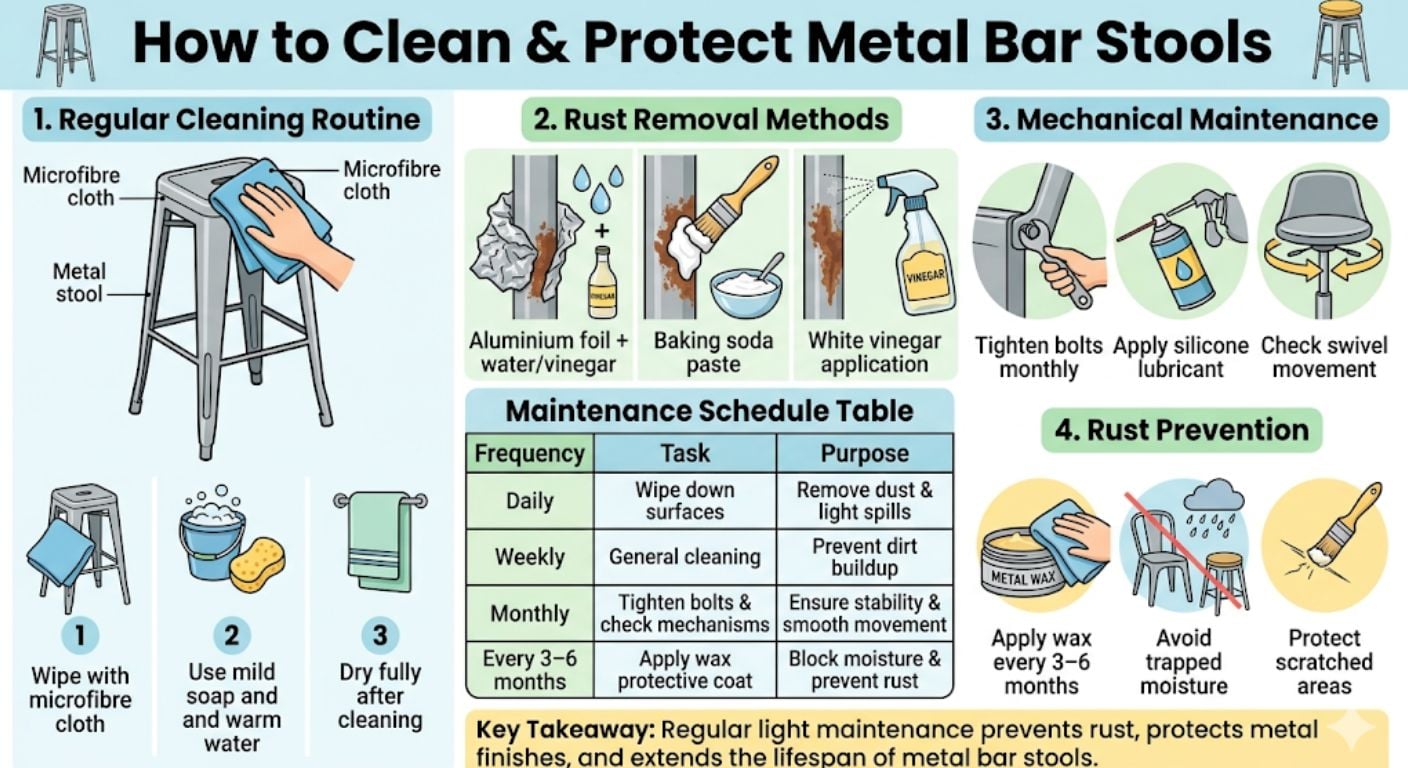
Metal bar stools benefit from light weekly cleaning and occasional deeper maintenance checks. Areas around footrests, bases, and adjustment mechanisms usually collect dirt and moisture first.
| Frequency | What To Do | Why It Matters |
|---|---|---|
| Daily or after spills | Wipe surfaces with a dry microfibre cloth | Prevents moisture marks and grease buildup |
| Weekly | Use mild soap and warm water to clean frames and bases | Stops grime building around joints and welds |
| Monthly | Check screws, bolts, and swivel movement | Reduces wobbling and uneven wear |
| Every 3–6 months | Apply protective polish or wax if suitable for the finish | Adds a moisture barrier against corrosion |
What You Need to Clean Metal Bar Stools
Most routine cleaning only requires a few basic tools. Avoid abrasive pads or strong chemical cleaners because they can scratch plated finishes or strip protective coatings.
- Microfibre cloths
- Mild dish soap or detergent
- Warm water
- Soft-bristle brush or toothbrush
- Baking soda
- White vinegar
- Dry towel
- Silicone-based lubricant for moving parts
No, you should not use bleach on metal bar stools. Bleach and strong chemical cleaners can damage chrome plating, dull powder-coated finishes, and accelerate corrosion around scratches or exposed edges.
How to Clean Metal Bar Stool Frames
Chrome Bar Stool Frames
Chrome finishes show fingerprints and water spots more easily than brushed or matte metals, so regular wiping matters more.
- Dust the stool with a dry microfibre cloth.
- Mix warm water with mild dish soap.
- Wipe the frame gently using a soft cloth.
- Use a toothbrush around welds or screw joints.
- Dry the stool fully to prevent water spots.
One thing we regularly hear from customers is that chrome footrests usually show wear before the rest of the stool because shoes constantly rub against the finish during everyday use.
For stubborn marks, a chrome-safe polish can help restore shine. The Bob Vila chrome cleaning guide also explains safe methods for maintaining plated metal surfaces.
Powder-Coated and Painted Metal Frames
Powder-coated metal is generally easier to maintain because the finish resists fingerprints and minor surface marks better than polished chrome.
Use mild soap and warm water only. Avoid scouring pads because scratches in the coating can expose the metal underneath and eventually lead to rust spots.
Stainless Steel Bar Stool Bases
Stainless steel resists corrosion better than mild steel, but it can still stain or develop surface discoloration if grease and moisture sit on the finish for long periods.
Clean using a damp cloth followed by a dry cloth. Always wipe in the direction of the grain where visible.
How to Remove Rust from Metal Bar Stools
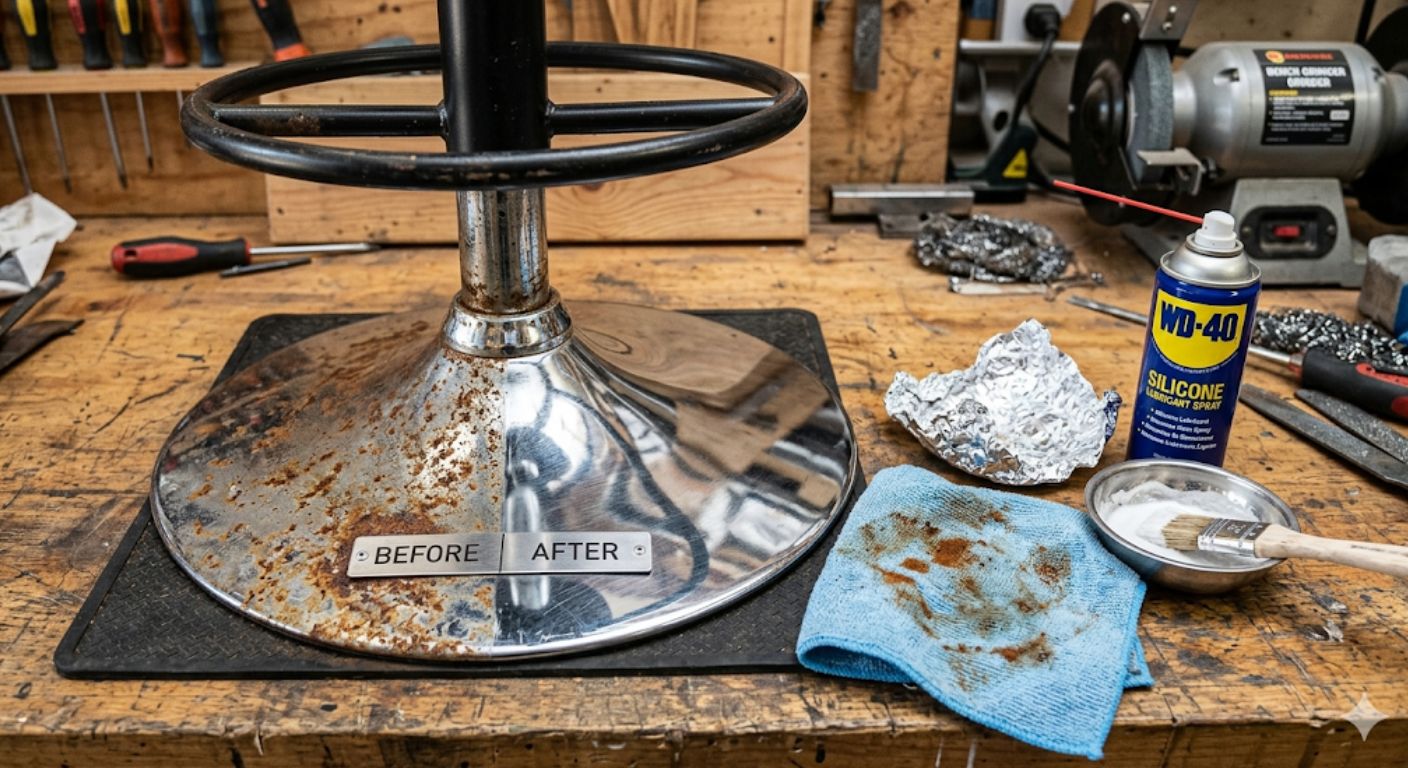
Surface rust can usually be removed safely if treated early. Deep rust around welded joints or structural damage is harder to repair and may eventually affect stability.
How to Remove Rust from Chrome Bar Stools with Aluminium Foil
- Crumple aluminium foil into a loose ball with the shiny side outward.
- Dip the foil into water or white vinegar.
- Rub the rusted area gently using small circular motions.
- Wipe away residue with a soft cloth.
- Dry the surface fully afterward.
The foil reacts differently to rust than steel wool and is less likely to scratch chrome plating when used gently.
Removing Rust with Baking Soda
Baking soda works well for lighter rust spotting on painted or coated metal frames.
- Mix baking soda with water to form a thick paste.
- Apply the paste directly onto the rust.
- Leave it for 15–20 minutes.
- Scrub gently with a soft brush.
- Wipe clean and dry thoroughly.
Using Vinegar for Rust Removal
White vinegar helps dissolve oxidation on exposed metal surfaces. Apply a small amount using a cloth rather than pouring directly onto the stool.
Do not leave vinegar sitting on chrome plating for extended periods because prolonged exposure can dull the finish.
Preventing Rust on Metal Bar Stools
Preventing corrosion is easier than removing it later. Moisture, kitchen humidity, cleaning residue, and scratches are the most common causes of rust formation indoors.
Protect the Finish
A light coat of wax or metal-safe polish helps create a barrier against moisture. Some owners use automotive car wax on chrome or powder-coated frames every few months.
Apply only a thin layer and buff the surface properly afterward. Heavy wax buildup can make footrests slippery.
Keep Stools Dry
Always dry metal frames after cleaning. Moisture trapped around bolts, seams, and swivel mechanisms increases corrosion risk over time.
If stools are used outdoors occasionally, avoid leaving them exposed overnight or storing them in damp sheds or garages.
Avoid Scratches
Deep scratches remove protective coatings and expose bare metal underneath. This is common around footrests, base rings, and areas that regularly contact flooring.
If you notice chipped paint or exposed metal, treat the area early before oxidation spreads.
Maintaining Swivel and Adjustable Mechanisms
Metal bar stools with swivel seats or gas-lift bases need occasional mechanical maintenance as well as surface cleaning.
Best Lubricant for Swivel Bar Stool Mechanisms
Silicone-based lubricants are usually the safest option for swivel mechanisms because they reduce friction without attracting excessive dust or grease buildup.
Avoid spraying standard WD-40 directly into moving joints long term. It can temporarily loosen movement but may attract dirt over time.
- Turn the stool upside down safely.
- Clean away visible dust or debris.
- Apply a small amount of silicone lubricant to the swivel joint.
- Rotate the seat several times to distribute evenly.
- Wipe away excess lubricant.
Checking Screws and Bolts
Loose hardware is one of the main reasons metal stools develop wobbling over time. Check bolts, support bars, and footrests monthly, especially on frequently used kitchen seating.
If a stool continues wobbling after tightening hardware, inspect welded joints carefully for stress cracks or movement.
Cleaning Upholstered Seats Attached to Metal Frames
Many metal bar stools combine chrome or steel frames with upholstered seats. The cleaning method depends on the seat material.
Removing Grease from PU Leather Bar Stool Seats
- Mix warm water with a small amount of mild detergent.
- Dampen a soft cloth lightly.
- Wipe using gentle circular motions.
- Dry immediately with a clean towel.
Avoid soaking PU leather because excessive moisture can affect the surface layer and stitching over time.
Cleaning Upholstered Bar Stools with Baking Soda for Odours
If fabric seats develop cooking or food odours, baking soda can help absorb smells without saturating the material.
- Sprinkle baking soda evenly across the seat.
- Leave it for several hours.
- Vacuum thoroughly using an upholstery attachment.
For deeper fabric maintenance, see our guide on cleaning fabric bar stools.
When Metal Bar Stools Make Sense Long Term
Metal frames suit kitchens, breakfast bars, and entertaining spaces where durability and lower maintenance matter more than softer finishes.
They are particularly practical for:
- Busy kitchens with regular daily use
- Homes needing wipe-clean surfaces
- Compact layouts where slimmer frames help save space
- Adjustable-height and swivel seating designs
They may be less suitable for:
- Damp outdoor environments without covered storage
- Homes wanting softer upholstered-heavy seating
- Settings where scratches or chrome marks would become noticeable quickly
If you are comparing metal against timber, upholstered, or woven designs overall, our full guide to bar stool materials explains the trade-offs in more detail.
You can also browse the full range of bar stools to compare different frame finishes, seat materials, and base types.
Frequently Asked Questions
Can rust on metal bar stools be fully removed?
Light surface rust can usually be removed successfully using baking soda, vinegar, or aluminium foil methods. Deep corrosion around joints or structural areas is harder to repair completely and may eventually weaken the stool.
Can chrome bar stools rust?
Yes. Chrome plating itself resists corrosion, but scratches or worn areas can expose the steel underneath. Moisture around these damaged areas can then cause rust spots to form.
How do you stop metal bar stools wobbling?
Check and tighten all visible screws, bolts, and support bars first. If movement continues, inspect the swivel mechanism and welded joints for wear or cracking.
Should metal bar stools be polished?
Chrome and stainless steel finishes can benefit from occasional polishing to maintain their appearance and add a moisture-resistant barrier. Powder-coated finishes usually only need regular cleaning.
-
-
-
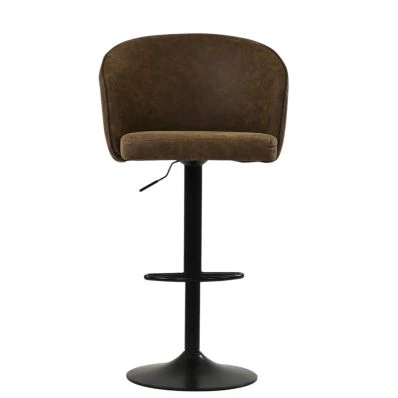
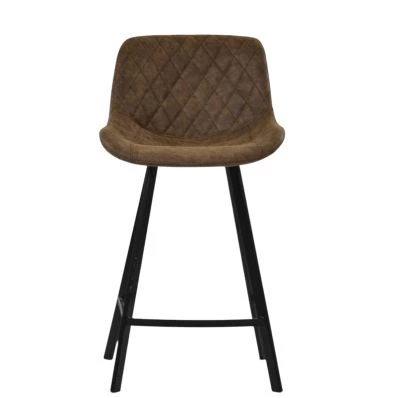 Matteo 65cm Bar Stool in Aged Brown Leather & Black BaseSpecial Price £59.99 Regular Price £74.99 Original price 20% Inc VATSaving £15
 -
-
-
-
-
-
-
-
Conclusion
Metal bar stools are relatively straightforward to maintain when cleaned regularly and kept dry around joints and moving parts. Most surface rust, grease buildup, and dull finishes can be managed using mild cleaners and basic household materials before permanent damage develops.
Choosing the right frame finish also affects long-term maintenance requirements. If you are comparing chrome, powder-coated steel, stainless steel, or mixed-material designs, our guide to bar stool materials breaks down the practical differences between each option.


Comments