
 Chat with us on WhatsApp


Colourful Dining Chairs: How to Add Personality to Your Dining Room
Colourful dining chairs are one of the most direct ways to introduce character into a dining space. Whether you are looking for bright dining chairs to make an immediate statement or more considered bold colour dining chairs that work within an existing scheme, the choice of shade and material has a larger impact than most decorative decisions. Unlike repainting walls or replacing flooring, switching chairs creates an immediate visual shift without major renovation.
Why Colour Works in the Dining Room
Vibrant dining room chairs directly influence the atmosphere of a room — warm tones increase energy and sociability, while cooler shades sit calmer and work well alongside neutral walls and natural wood tables.
The dining room is one of the few spaces in the home where people regularly gather, which makes the visual atmosphere more relevant than in purely functional rooms. Unlike soft furnishings such as cushions or curtains, dining chairs carry both visual and structural weight. A set of chairs in a strong colour acts as a design anchor for the whole room, giving the choice a larger impact than most decorative decisions.
The Most Popular Colours for Dining Chairs Right Now
For buyers searching for colourful dining chairs in the UK, the strongest current options fall into four broad groups — jewel-tone velvets, earthy muted shades, classic bold primaries, and neutral-adjacent tones such as warm grey and soft cream.
Velvet in jewel tones — emerald green, deep blue, dusty pink, and burnt orange are consistently among the most searched upholstery combinations. Velvet as a material amplifies colour depth, making it a frequent choice for chairs intended to make a statement.
Earthy and muted shades — olive green, terracotta, stone, and dusty peach are growing in popularity as an alternative to saturated jewel palettes. These work particularly well in Scandi and mid-century influenced interiors.
Classic bold primaries — red, yellow, and cobalt blue retain a strong following, particularly in modern and industrial settings where metal-frame chairs are paired with bold seat upholstery.
Neutral-adjacent colours — warm greys, off-whites, and soft creams remain popular for buyers who want a degree of colour without committing to something highly saturated.
Mixing and Matching Colourful Dining Chairs
Mixing dining chair colours works when you keep one consistent element across all chairs — such as leg finish, frame material, or seat height — and limit the palette to two or three tones that share an undertone.
Start with one common element. Whether that is leg style, frame material, or seat height, keeping one feature consistent prevents the arrangement from reading as accidental. A set of chairs in different colours but with matching black metal legs, for example, looks considered rather than mismatched.
Stick to a defined colour palette. Two or three colours that share an undertone — for example, a warm palette of terracotta, burnt orange, and mustard — will hold together far more effectively than an unrelated mix of disconnected shades.
Limit the number of different styles. Mixing up to three distinct chair designs in one space is workable. Beyond that, the eye has too many competing points of interest to read the room as a coherent whole.
Colourful Dining Chairs in Small Spaces
Lighter and mid-tone colours work better in small dining rooms because they reflect more light and carry less visual weight than dark saturated shades.
Chairs with a slimmer profile and open backs contribute less visual bulk than heavily upholstered designs with solid backs. In a small dining room, a consistent set of chairs in the same colour creates less visual noise than a mixed arrangement — a single bold colour across four identical chairs tends to feel considered rather than overwhelming. Muted shades such as dusty pink, sage green, and warm cream are particularly well suited to compact spaces.
Material Considerations for Colourful Dining Chairs
The material affects both how vivid the colour appears and how practical the chair is for daily use — velvet produces the richest colour depth, while faux leather is the most wipe-clean option.
Velvet carries colour with the most depth and richness. It is a popular choice for dining chairs in bold shades but requires spot cleaning rather than a simple wipe-down. Velvet chairs are less suited to households with young children or frequent spills.
Leather and Faux Leather is available in a wide colour range and is the most practical upholstery for kitchens and dining rooms with heavy daily use. The surface wipes clean, making it suitable for families. Colour in faux leather tends to appear slightly less saturated than velvet.
Fabric and woven upholstery covers a broad range of materials including linen-look, chenille, and boucle. These sit between velvet and faux leather in terms of maintenance and colour vibrancy. They are more susceptible to marking than faux leather but generally easier to clean than velvet.
Solid wood and painted finishes bring colour through the frame or seat rather than upholstery. Wooden dining chairs in painted finishes — particularly muted tones — suit farmhouse, traditional, and Scandi interiors well.
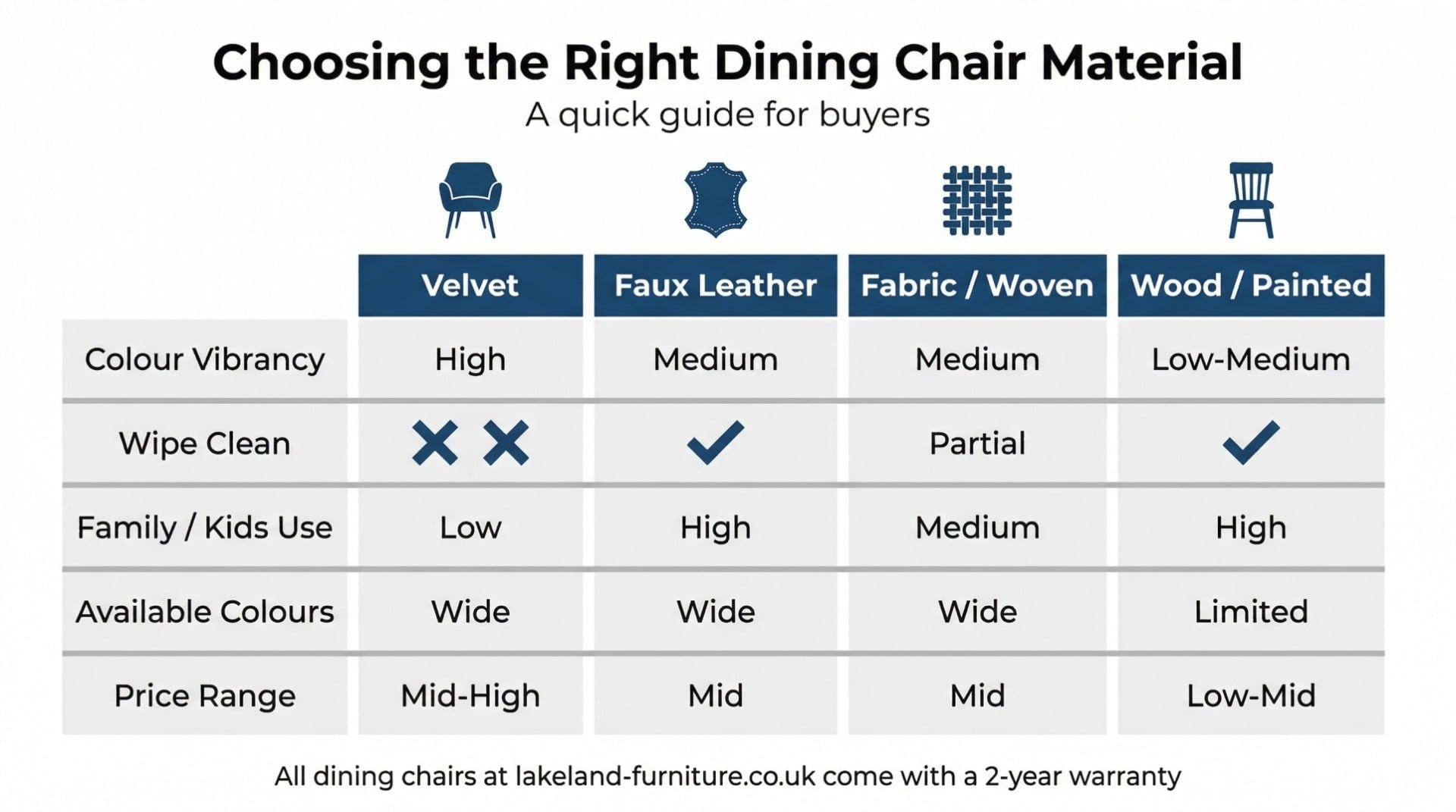
Choosing the right material also affects how your chairs fit within the wider layout of your dining space. If you are still working out the practical dimensions alongside your material choice, our Ultimate Guide to Dining Chair Size, Height and Width covers seat heights, widths, and spacing in full detail.
Using Colourful Chairs to Define Zones in Open-Plan Spaces
In open-plan kitchen and dining layouts, a set of dining chairs in a distinct colour creates a visual boundary between the dining and living areas without the need for physical dividers.
This is particularly relevant in modern homes where kitchen, dining, and living areas share a single floor plan. The colour does not need to contrast sharply with the rest of the room — a tonal variation is often enough to signal the change in zone while maintaining visual continuity across the space. Accent chairs in a complementary but distinct shade can reinforce the separation further.
Practical Questions Buyers Ask
These are the questions that come up most often from buyers choosing colourful dining chairs.
Is it OK to have different colour dining chairs at the same table? Yes — mixing chair colours is a widely used approach. The key is maintaining one consistent element across the chairs, such as frame material, leg finish, or seat height, so the combination looks intentional rather than mismatched.
Do colourful dining chairs date quickly? Trend-led colours tied to a specific moment in interior design can feel dated within a few years. Muted, earthy, and classic jewel tones tend to hold relevance longer than highly trend-specific shades. Neutral-adjacent colours such as warm grey, sage, and dusty pink have remained consistently popular across several years.
What colour dining chairs work with a dark wood table? Warm neutrals, dusty greens, and rich upholstered tones in velvet or fabric complement dark wood tables without competing with the grain. High-contrast combinations — such as white or cream chairs against a dark walnut table — are also widely used in contemporary interiors.
Are colourful dining chairs suitable for households with children? Faux leather upholstery in mid-tones — grey, green, brown — is the most practical choice for busy family homes, as the surface wipes clean and mid-tones are less likely to show marks than pale shades. Velvet and light fabric upholstery in pale colours present more of a maintenance challenge in daily family use.
The brightest chairs in our range
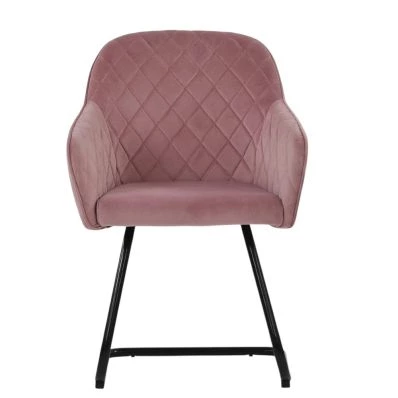
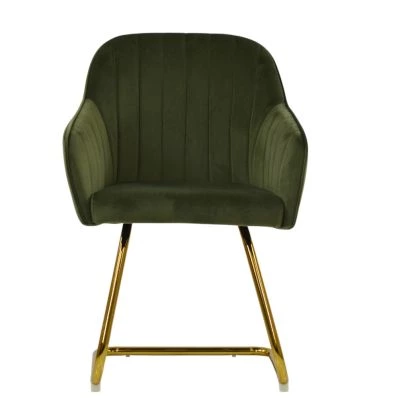
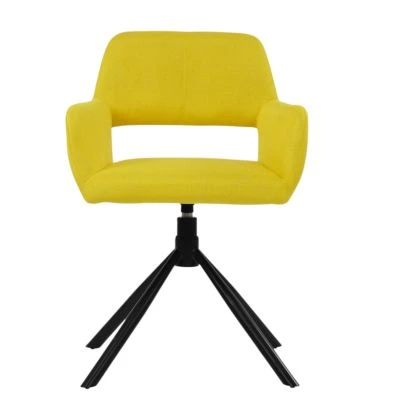
If you are looking for dining chairs in bold colours, these are some of the strongest options currently available from Lakeland Furniture.
Aarhus Dining Chair
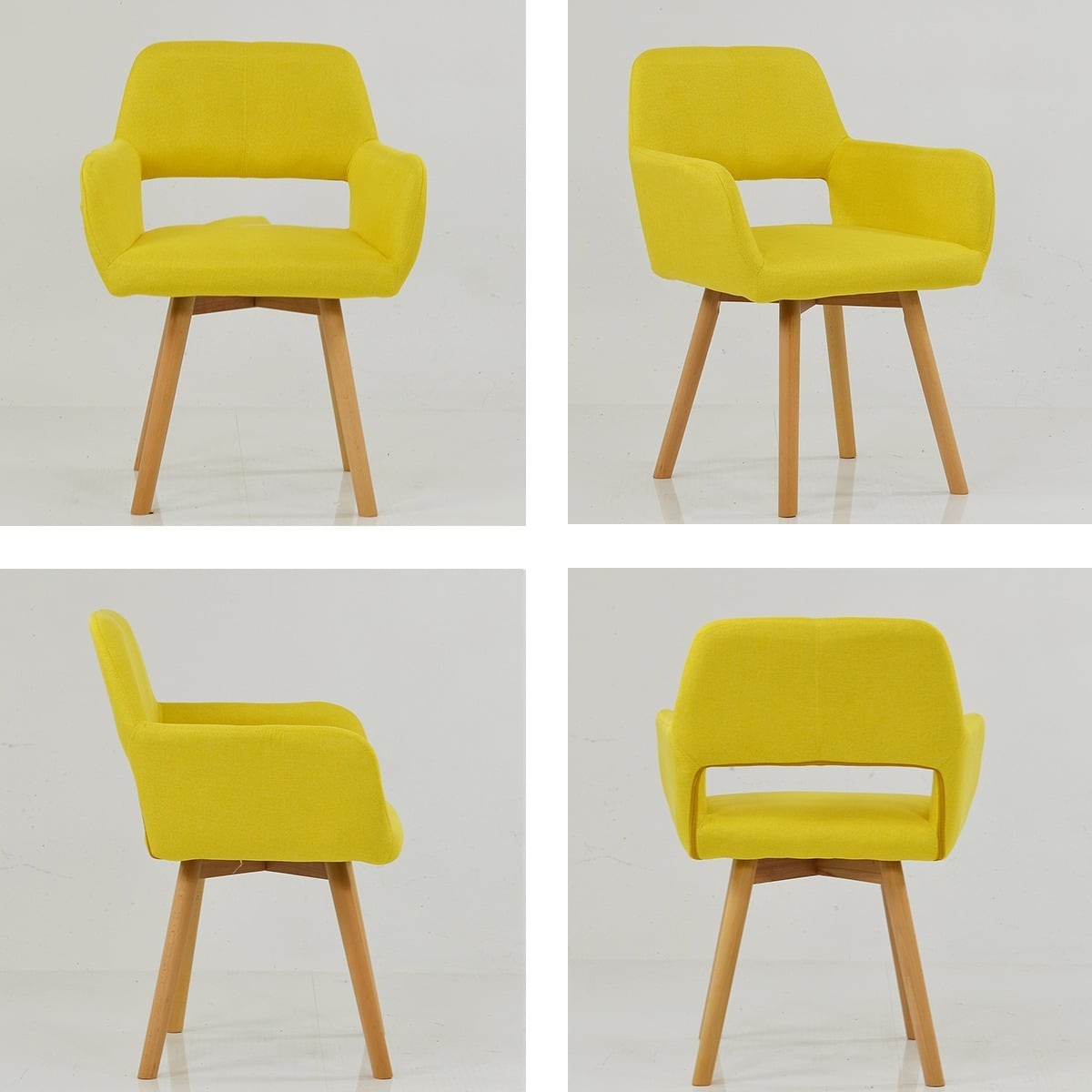
The AVA
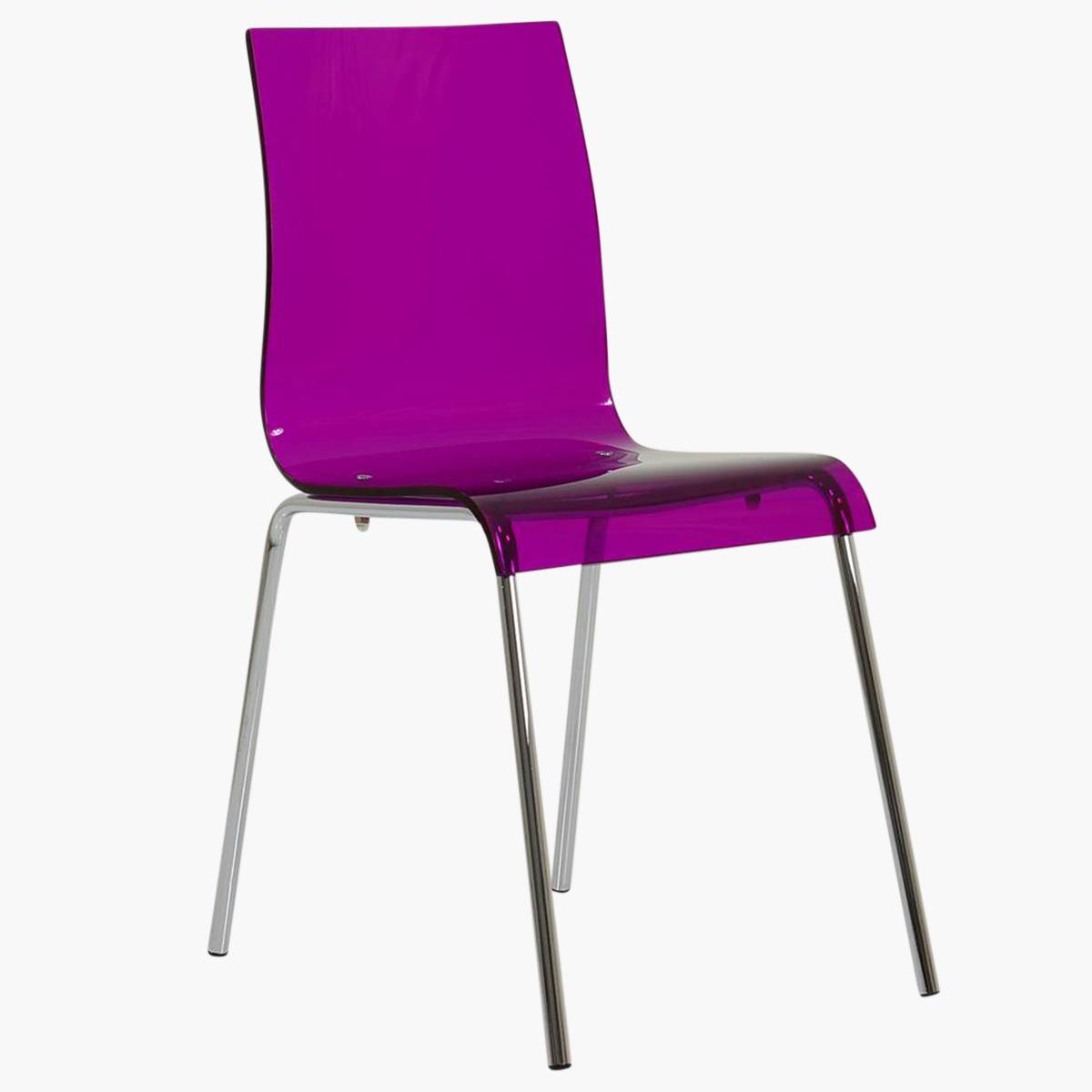
The Odense Swivel Chair
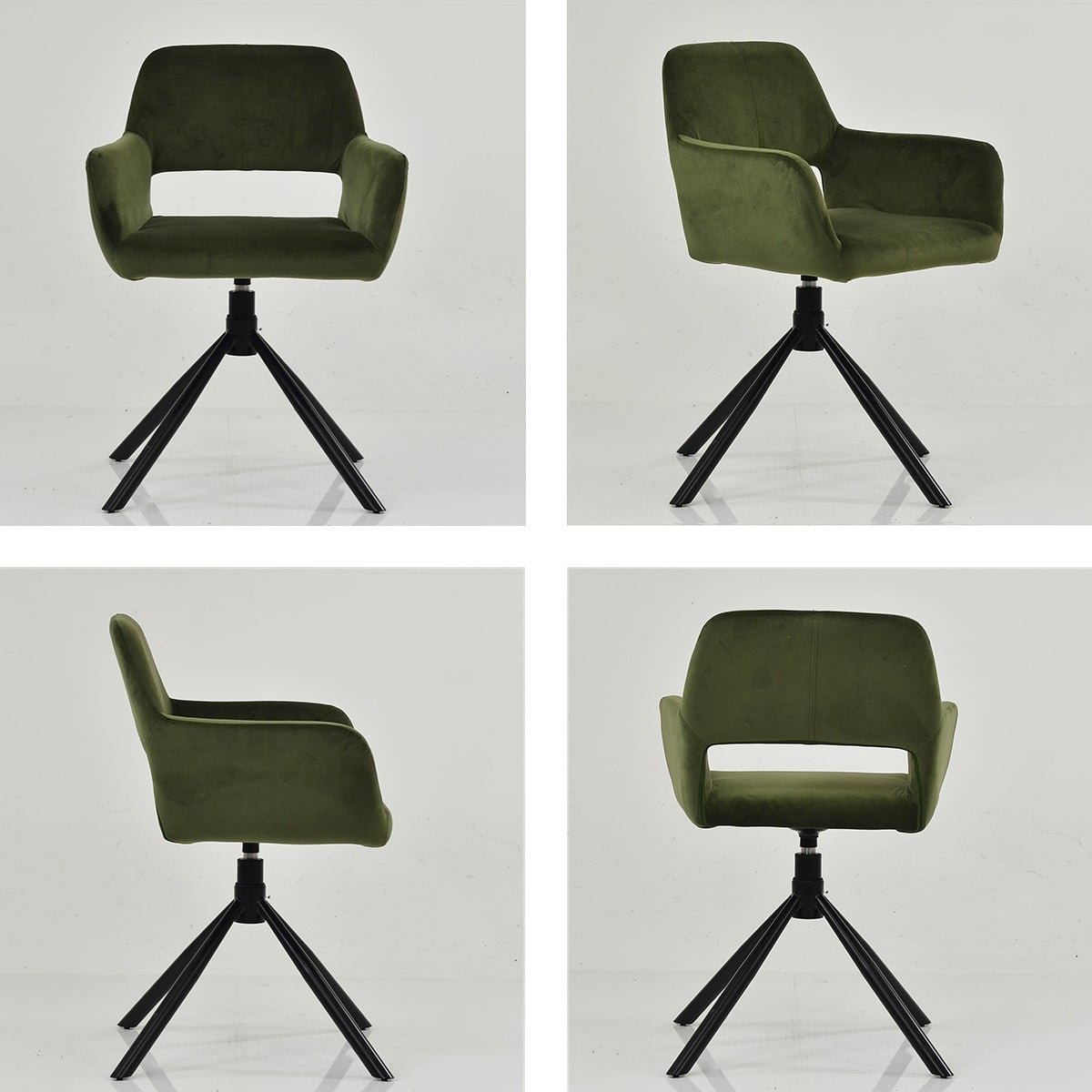


Comments