
 Chat with us on WhatsApp

Dressing Table Chair Height Guide: Common Table Heights Explained
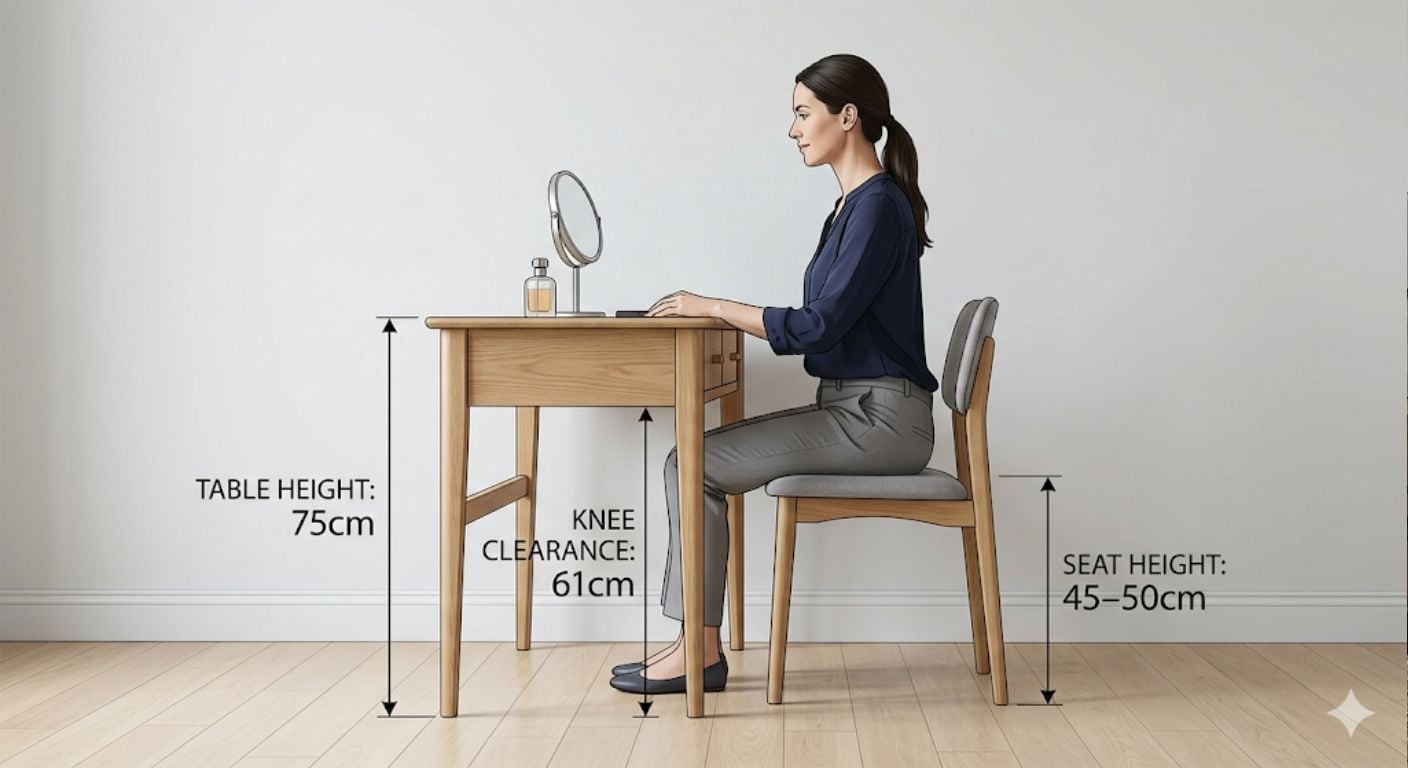
Choosing the right dressing table chair height is mainly a measurement problem, not a style problem. If the seat is too low, you lean forward and raise your shoulders. If it is too high, your knees press against the underside of the table and your posture becomes cramped. The correct height depends on the dressing table surface, the thickness of the tabletop, and the space left for your legs.
This guide explains the most common dressing table heights, the seat heights that usually match them, and the clearance rules that help prevent buyer mistakes. It also covers when a dining chair can work, when an adjustable chair is safer, and how much room you need around the table. Use it before buying a chair, stool, or compact bedroom seat so the finished setup feels comfortable, practical, and proportionate.
Standard Dressing Table Heights
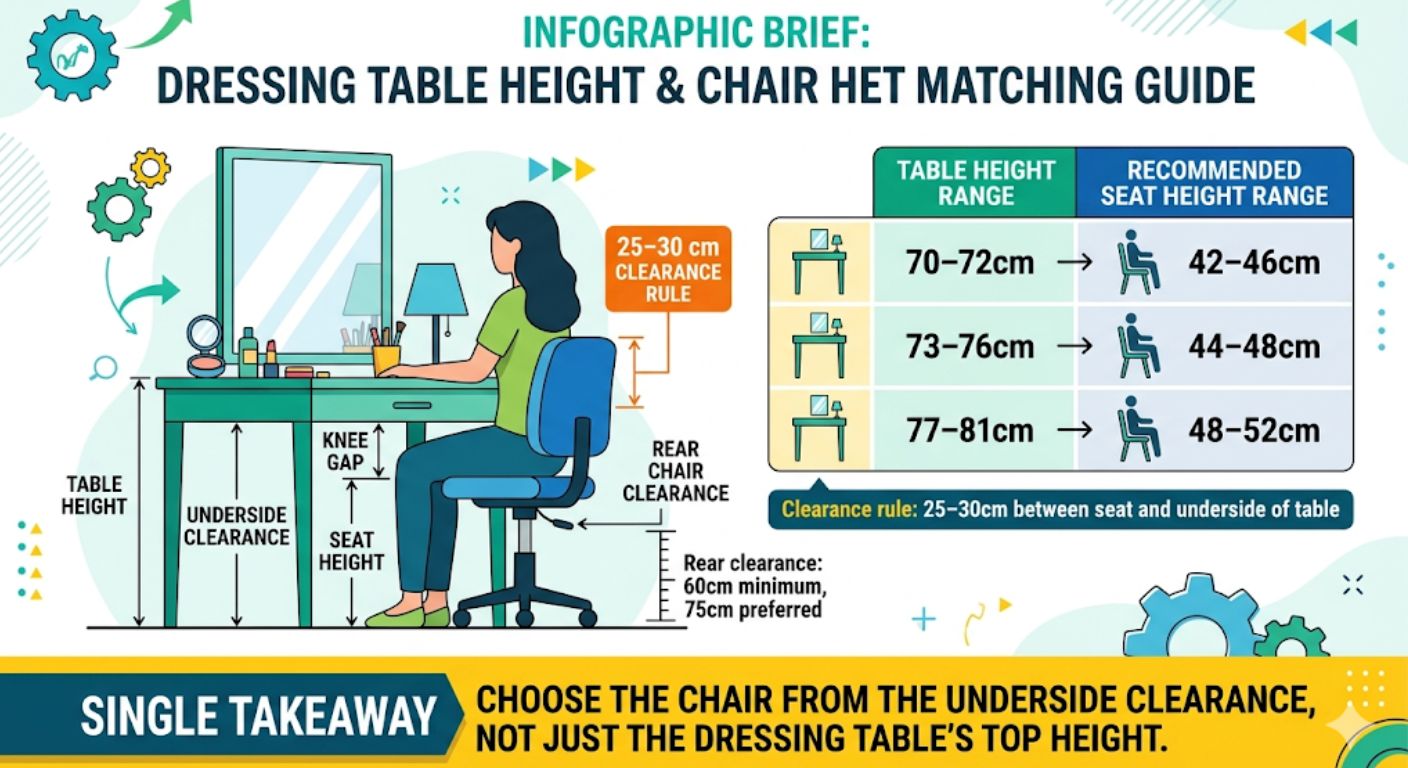
Most dressing tables sit between 71cm and 76cm high from the floor to the top surface. Some modern vanity-style tables can be closer to 78cm to 81cm, especially if they include deeper drawers or a thicker frame. The chair should not be chosen from the tabletop height alone. The more important measurement is the gap between the seat and the underside of the table.
| Dressing table height | Typical use | Likely seat height | Fit note |
|---|---|---|---|
| 70–72cm | Lower compact dressing tables | 42–45cm | Best with a low-profile chair or stool |
| 73–76cm | Most standard dressing tables | 44–48cm | Works with many dining-style chairs |
| 77–81cm | Taller vanity tables or drawer-heavy designs | 48–52cm | Often better with adjustable seating |
| 82cm+ | Unusually tall vanity or desk-style surface | Adjustable recommended | Check knee clearance carefully |
For most homes, a seat height of 44–48cm is the safest starting point. This is close to many standard dining chairs, which is why a compact dining-style chair can sometimes work at a dressing table. The issue is not always height. Width, armrests, back shape, and whether the chair tucks under the table matter just as much.
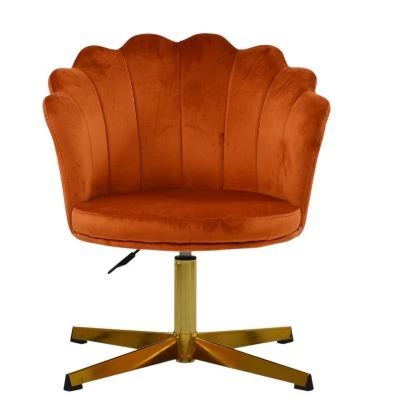
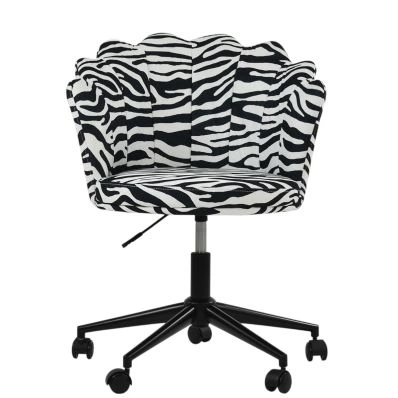
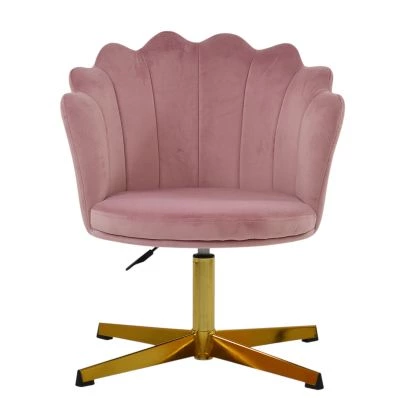
If you are comparing options, Lakeland’s dressing table chairs category is the most relevant starting point because the chairs are selected for bedroom and vanity-style proportions rather than full dining room scale.
The Clearance Rule: The Most Important Measurement
The safest rule is to leave around 25–30cm between the seat and the underside of the dressing table. This gives enough space for your thighs and knees without forcing the chair too low. If the table has a thick apron, deep drawer, or low support rail, measure from the floor to the lowest underside point, not just to the tabletop.
Use this simple method:
- Measure from the floor to the underside of the dressing table.
- Subtract 25–30cm for leg clearance.
- The result is your ideal maximum seat height.
Example: if the underside of your dressing table is 70cm from the floor, a seat around 40–45cm will usually feel right. If the underside is 74cm, a seat around 44–49cm is usually suitable.
The question our customers often miss is not “will the chair fit under the table?” but “will my legs fit comfortably once I am sitting on it?” That difference is where many height mistakes happen.
How High Should a Chair Be for a 75cm Dressing Table?
For a 75cm dressing table, a chair or stool with a seat height around 45–50cm usually works best. This assumes the underside of the table is not reduced by deep drawers or a thick frame. If the usable underside clearance is lower than 70cm, choose closer to 45cm.
A 75cm table is close to standard desk and dining table height, so many standard dining chairs can work. The safest fit is usually a chair without arms, with a compact back, and with a seat height in the mid-40cm range. If the chair has a thick padded cushion, check the compressed sitting height rather than only the listed measurement.
Common Dressing Table Heights and Matching Chair Heights
Use the table below as a practical matching guide. It assumes normal adult seating posture, a flat floor, and a standard dressing table without unusually deep under-table storage.
| Table height | Best seat height range | Best seating type | Avoid |
|---|---|---|---|
| 70cm | 40–44cm | Low stool or compact armless chair | Deep padded dining chairs |
| 72cm | 42–46cm | Compact chair or vanity stool | High cushioned seats |
| 75cm | 45–50cm | Standard armless chair | Wide armchairs |
| 78cm | 48–52cm | Adjustable or slightly taller chair | Low backless stools |
| 80cm | 50–54cm | Adjustable chair | Fixed low dining chairs |
These numbers are a guide, not a replacement for measuring. Two dressing tables can both be 75cm high, but one may have a thin top and the other may have a drawer section that reduces usable knee space by several centimetres.
Seat Height vs Table Height: What Actually Affects Comfort
Chair height is only one part of the fit. Comfort depends on how your body sits in relation to the table surface. For light use, such as makeup, hair, jewellery, or short writing tasks, the setup should allow your elbows and shoulders to stay relaxed. The UK Health and Safety Executive gives general guidance on reducing awkward postures during seated tasks, including matching the working height to the task and user position: HSE posture guidance.
For dressing tables, check these points:
- Feet: your feet should rest flat on the floor or on a stable footrest.
- Knees: your knees should not press against drawers or the underside frame.
- Shoulders: your shoulders should not lift when using the table surface.
- Back: the chair should let you sit close enough without leaning forward.
- Movement: the chair should slide in and out without catching on the table legs.
If the dressing table will also be used for laptop work, writing, or longer seated use, height matters more. A chair that feels fine for five minutes may feel wrong after half an hour if the seat is too low or the back gives no support.
Can You Use a Dining Chair with a Dressing Table?
Yes, a dining chair can work with a dressing table if the seat height, width, and arm clearance are right. Most standard dining chairs have a seat height around 45–48cm, which often pairs well with dressing tables around 73–76cm high.
The main risk is scale. Dining chairs are designed for dining tables, so they may be wider, deeper, or taller-backed than a chair intended for a bedroom. A large dining chair can make a dressing table feel crowded, especially in a small room or narrow gap between wardrobes and the bed.
Fixed Height or Adjustable Chair?
A fixed-height chair is suitable when the dressing table height is standard and the user is comfortable with a seat around 44–48cm. An adjustable chair is better when the table is taller, the user is much shorter or taller than average, or the dressing table will double as a work surface.
| Choose fixed height if... | Choose adjustable if... |
|---|---|
| The table is 73–76cm high | The table is 78cm or higher |
| Only one person uses the setup | More than one person will use it |
| The chair is used for short routines | The chair is used for work or longer sitting |
| You want a simple tucked-in look | You need more control over posture |
Adjustability is useful, but it is not automatically better. A gas-lift chair with a bulky base may not tuck neatly under a compact dressing table. Always check the full width and depth, not only the seat height range.
Width, Depth, and Tuck-Under Space
A dressing table chair should fit the space physically, not just visually. The chair needs room to pull out, sit on, and push back under the table. For most dressing tables, allow at least 60–75cm of clear space behind the chair so the user can sit down without hitting the bed, wardrobe, radiator, or wall.
Useful spacing rules:
- Chair width: ideally narrower than the open knee space of the dressing table.
- Chair depth: compact enough to tuck in when not in use.
- Rear clearance: 60cm minimum, 75cm better.
- Side clearance: enough space to move elbows without hitting drawers or walls.
- Armrests: only suitable if they slide under the table or sit outside the frame comfortably.
Dressing Table Chair Height Compared with Counter and Bar Stool Heights
Dressing table chairs are much lower than counter stools and bar stools. This matters because many shoppers see the word “stool” and assume the height range is flexible. It is not. A counter stool or bar stool will usually be far too tall for a dressing table.
| Furniture type | Typical surface height | Typical seat height | Suitable for dressing table? |
|---|---|---|---|
| Dressing table | 71–76cm | 44–48cm | Yes |
| Desk | 72–76cm | 43–50cm | Often |
| Dining table | 74–76cm | 45–48cm | Often |
| Kitchen counter | 88–92cm | 60–70cm | No |
| Bar table | 100–110cm | 70–80cm | No |
If you are buying for a kitchen island rather than a bedroom table, use Lakeland’s bar stools range instead. The height logic is different, and a dressing table chair will usually be too low for that use.
When a Dressing Table Doubles as a Desk
A dressing table can double as a desk if the height, depth, and chair support are suitable. The surface should usually be around 72–76cm high, with enough depth for a laptop, notebook, and comfortable arm position. A depth of 40cm may work for occasional laptop use, but 50cm or more is better for regular work.
If the table is used as both a beauty station and a work surface, avoid very low stools and unsupportive seats. A chair with a shaped back and a stable seat will usually be more practical than a purely decorative option. For long work sessions, a proper office chair may be more suitable than a bedroom chair, especially if posture and adjustability matter.
The dressing table also needs enough clear surface space. If mirror stands, organisers, lamps, and cosmetics take up most of the top, it may technically be the right height but still fail as a desk.
How Mirror Position Affects Chair Height
The chair height should let the user see comfortably into the mirror without stretching, slouching, or leaning forward. If the mirror is fixed too high, people often compensate by choosing a taller chair, but that can ruin the table clearance. It is usually better to correct the mirror position than to force the seat height too high.
For a fixed tabletop mirror, sit on the intended chair and check whether your face sits naturally in the centre of the mirror. For a wall-mounted mirror, check the seated eye line before fixing it permanently.
Best Chair Types by Dressing Table Height
Different chair types work better at different table heights. The right choice should follow the measurements first, then the room style.
| Chair type | Best for | Watch point |
|---|---|---|
| Compact armless chair | Most standard dressing tables | Check back height and depth |
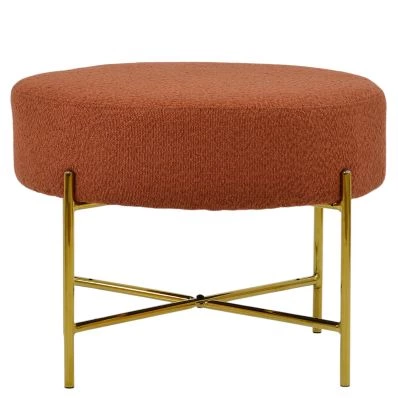
| Backless stool | Very small spaces and tuck-under storage | Less support for longer sitting |
| Upholstered bedroom chair | Comfort and softer room feel | Thick padding can raise sitting height |
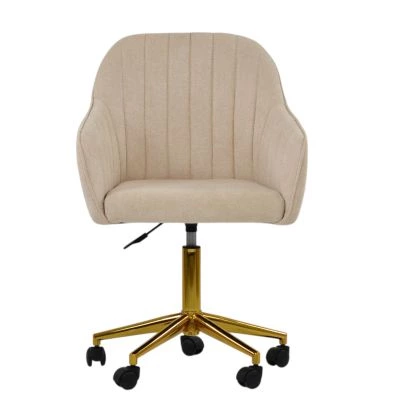
| Adjustable chair | Taller tables or shared use | Base may take up more floor space |
| Dining-style chair | Tables around 73–76cm | Can look oversized in smaller bedrooms |
For most bedroom dressing tables, the safest all-round option is a compact armless chair with a seat height around 45–48cm. It gives more support than a stool but usually avoids the bulk of a full dining chair.
Decision Logic: If This, Choose That
Use these rules to make the buying decision faster.
- If your dressing table is 70–72cm high, choose a lower seat around 42–45cm.
- If your dressing table is 73–76cm high, choose a seat around 44–48cm.
- If your dressing table is 77–81cm high, choose a taller or adjustable seat around 48–52cm.
- If the underside has deep drawers, measure to the lowest point and reduce the chair height accordingly.
- If space is limited, avoid arms, wide seats, and deep backs that will not tuck under.
- If the chair is used for long sitting, avoid low backless stools and choose better back support.
- If more than one person uses the table, adjustable height is safer than a fixed seat.
- If the dressing table also works as a desk, prioritise posture and surface depth over decorative shape.
- If the chair catches the table legs, the width is wrong even if the seat height is correct.
Common Buying Mistakes
The most common mistake is choosing by appearance before checking the measurements. A chair can look right next to a dressing table but still be uncomfortable if the seat is too high, too deep, or too wide.
- Only checking tabletop height: the underside clearance is more important.
- Ignoring cushion thickness: deep padding can raise the real seated height.
- Choosing arms without measuring: arms often stop the chair tucking under.
- Buying a counter stool: counter stools are too tall for standard dressing tables.
- Forgetting rear clearance: the chair needs space to pull out properly.
- Using a decorative stool for long work: short-use comfort and desk comfort are different.
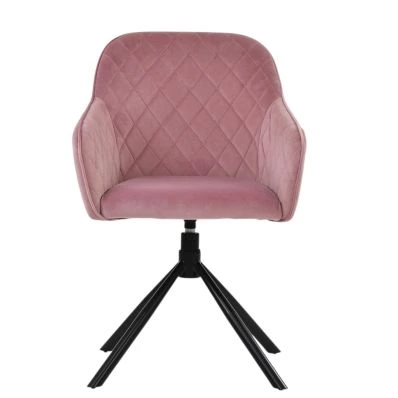
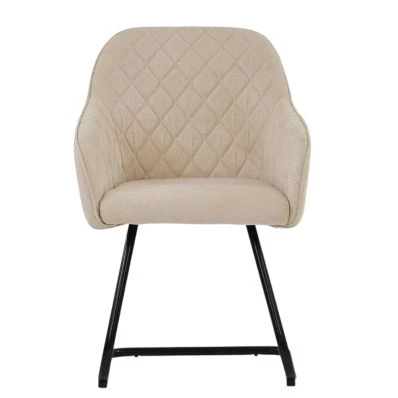
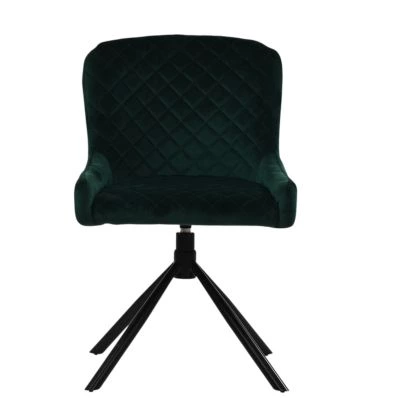
For a more focused product selection, browse dining chairs only when the dressing table is close to standard table height and the chair proportions are compact enough for the bedroom.
Frequently Asked Questions
What is the standard height for a dressing table?
Most dressing tables are around 71–76cm high from the floor to the top surface. Some modern vanity-style tables are slightly taller, especially if they include drawers or a thicker frame. Always measure the underside clearance as well as the tabletop height because knee space affects chair choice.
How high should a dressing table chair be?
Most dressing table chairs should have a seat height around 44–48cm. This works well with many dressing tables between 73cm and 76cm high. If the table is lower, choose closer to 42–45cm. If the table is taller, an adjustable chair may be safer.
How much gap should there be between the chair and dressing table?
Allow around 25–30cm between the seat and the underside of the table. This gives enough room for your thighs and knees while keeping the table surface within comfortable reach. Measure to the lowest underside point, especially if the table has drawers or a thick support rail.
Can I use a dining chair with a dressing table?
Yes, a dining chair can work if the seat height is around 45–48cm and the dressing table is around 73–76cm high. Choose a compact armless design where possible. Large dining chairs can feel oversized in bedrooms and may not tuck neatly under the table.
What chair height works for a 75cm dressing table?
For a 75cm dressing table, choose a seat around 45–50cm high, depending on the underside clearance. If drawers reduce knee space, stay closer to 45cm. If the table has a slim top and generous clearance, a seat near 48cm will usually work comfortably.
Is a backless stool better than a chair?
A backless stool is useful when space is tight because it can tuck fully under the dressing table. A chair is better for comfort, posture, and longer sitting. If the dressing table is used every day or also used as a desk, a supportive chair is usually the better choice.
How much room do I need behind a dressing table chair?
Allow at least 60cm behind the chair, with 75cm being more comfortable. This gives enough space to pull the chair out and sit down without hitting the bed, wall, wardrobe, or radiator. In smaller bedrooms, chair depth matters as much as seat height.
Are counter stools suitable for dressing tables?
No, counter stools are usually too tall for dressing tables. Counter stools often have seat heights around 60–70cm, while dressing table chairs are usually around 44–48cm. A counter stool will leave too little leg clearance and make the surface feel too low.
Structured Summary
- Most dressing tables are 71–76cm high.
- Most suitable chair seat heights are 44–48cm.
- Leave 25–30cm clearance between the seat and the underside of the table.
- Measure the underside, not only the tabletop.
- For a 75cm dressing table, choose a chair around 45–50cm high.
- Use a compact armless chair if the bedroom is narrow.
- Avoid counter stools and bar stools for dressing tables.
- Choose adjustable seating if the table is unusually tall or used by more than one person.
- Check chair width, depth, and rear clearance before buying.
- For the most relevant proportions, start with Lakeland’s dressing table chairs category.


Comments