
 Chat with us on WhatsApp


How To Fix A Squeaking Bar Stool
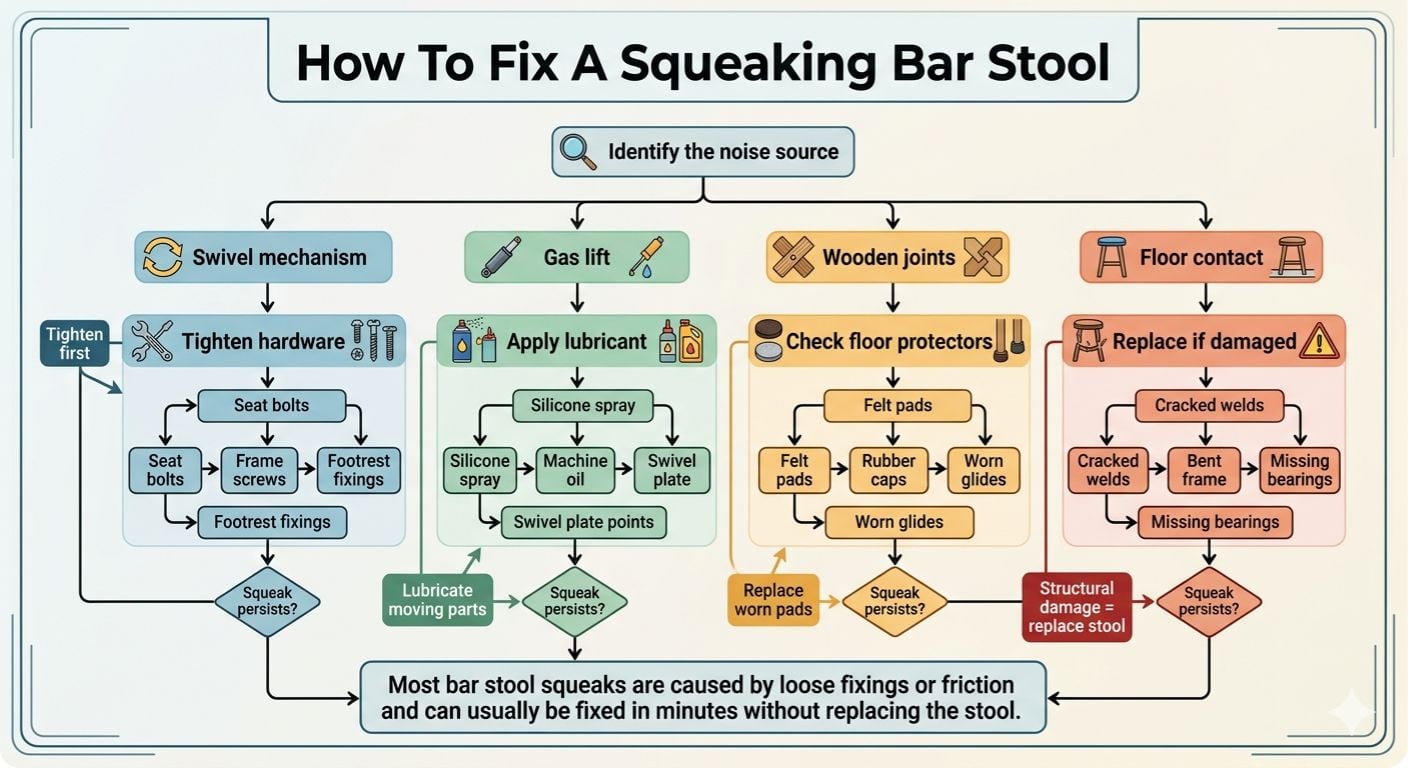
A squeaking bar stool is usually caused by friction between moving parts, loose fixings, or pressure inside worn joints. The good news is that most squeaks can be fixed without replacing the stool. In many cases, tightening bolts or applying the correct lubricant solves the problem within a few minutes.
The exact repair depends on the type of stool you own. Gas lift stools, swivel stools, wooden stools, and fixed-leg designs all develop noise for different reasons. Identifying where the squeak comes from is the first step before attempting any repair.
If you are also checking whether your stool height and design are suitable for your kitchen setup, our breakfast bar stool height guide explains the differences between counter and bar height seating.
Why Do Bar Stools Start Squeaking?
Most squeaks happen because two surfaces begin rubbing together under pressure. Over time, small movements inside joints, swivel plates, screws, or gas lift mechanisms create friction. Dust, dried lubricant, and normal daily use make the noise worse.
Modern heated homes can also affect wooden stools. Dry indoor air reduces moisture inside timber joints, which increases movement and creates creaking sounds during use.
Common causes include:
- Loose screws or bolts
- Dry swivel mechanisms
- Friction around gas lift columns
- Wood joints shrinking slightly
- Metal components rubbing together
- Worn rubber or floor protection pads
One thing we notice regularly is that customers often assume the gas lift itself has failed, when the noise is actually coming from loose fixings underneath the seat.
Check And Tighten All Hardware First
Before using lubricants, tighten every visible fixing on the stool. Loose hardware is the most common source of squeaking and should always be checked first.
How To Tighten A Squeaky Bar Stool
Turn the stool upside down on a soft surface so you can safely access the underside. Use the correct Allen key, screwdriver, or spanner for the fixings.
- Tighten seat mounting screws
- Check leg connections or frame joints
- Tighten footrest fixings
- Inspect swivel plate bolts
- Check the gas lift retaining plate
Do not overtighten bolts on wooden stools, as excessive force can damage the timber or strip threaded inserts.
How To Lubricate A Squeaking Bar Stool
If tightening the stool does not remove the noise, lubrication is usually the next step. This works best on swivel stools, gas lift stools, and metal-framed designs.
Best Lubricants For Bar Stool Mechanisms
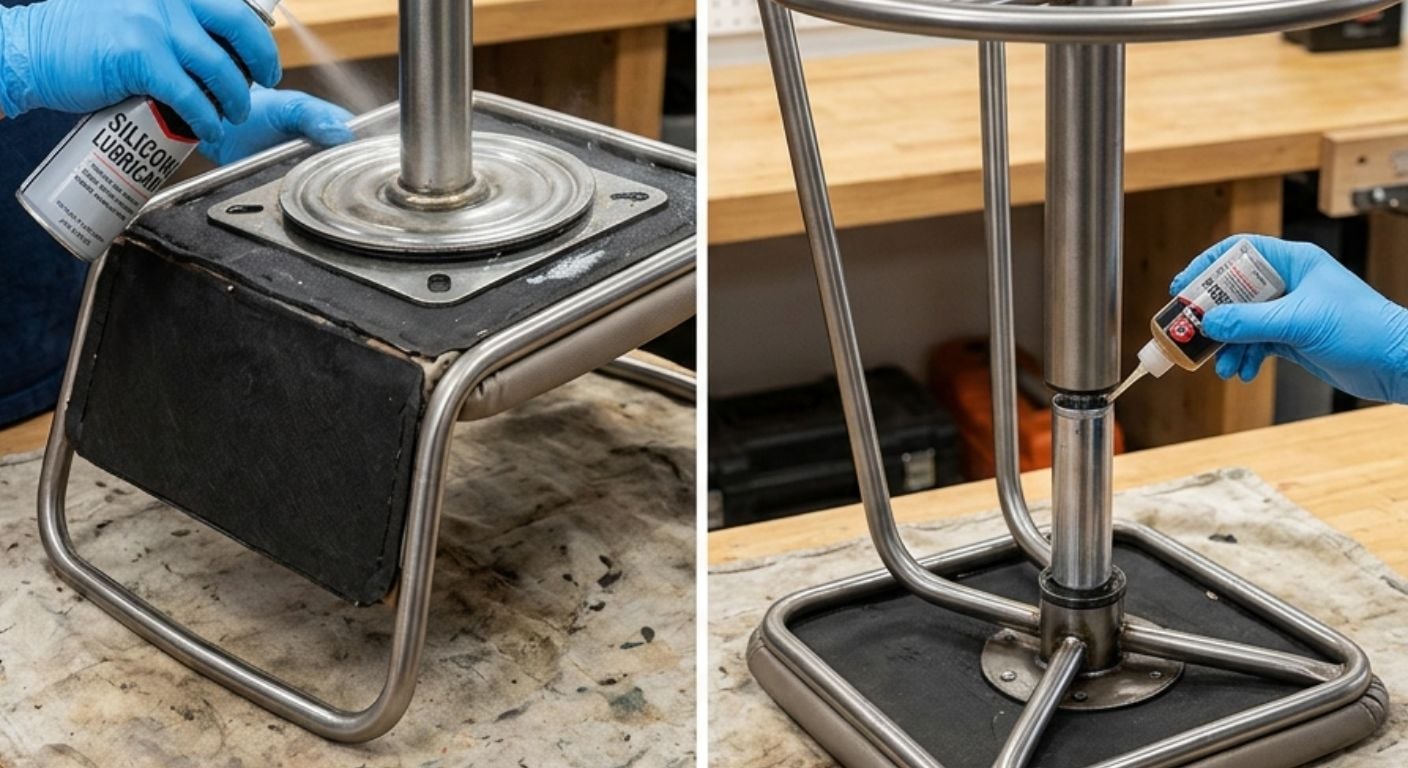
Silicone spray is normally the safest option because it reduces friction without leaving a thick residue. Light machine oil can also work well on metal pivot points.
Common options include:
- Silicone spray lubricant
- Light machine oil
- 3-IN-ONE oil
- Graphite lubricant for tight joints
Many people use WD-40 initially, but it works more as a cleaner and water dispersant than a long-term lubricant. If you use it, follow with a proper lubricant afterwards.
Where To Apply Lubricant
Apply lubricant directly to moving contact points:
- Swivel plates
- Gas lift connection points
- Metal pivot joints
- Rotating seat brackets
- Footrest weld connections
Rotate or move the stool several times after applying lubricant so it spreads evenly inside the mechanism.
Fixing A Squeaky Swivel Bar Stool
Swivel stools often squeak because the rotating plate underneath the seat develops friction over time. Dust and dried lubricant inside the bearing assembly are common causes.
Remove the seat if possible and inspect the swivel plate. Look for:
- Loose mounting bolts
- Metal scraping marks
- Missing bearings
- Bent swivel plates
- Dirt trapped inside the mechanism
If the swivel feels rough or grinds during rotation, the bearing assembly may be damaged rather than dry. In that situation, replacement parts are usually more effective than repeated lubrication.
If you are comparing different stool mechanisms, our guide to swivel vs fixed bar stools explains the practical differences between each design.
How To Fix A Squeaky Gas Lift Bar Stool
Gas lift stools usually squeak where the seat mechanism meets the central column. The sealed gas cylinder itself rarely causes the noise.
Start by removing dust around the gas lift connection points. Apply silicone lubricant where the upper mechanism joins the cylinder and where the column meets the base.
Check for:
- Movement around the seat plate
- Loose retaining clips
- Metal rubbing at full height
- Damaged plastic spacers
If the stool also sinks while sitting, the gas lift may need replacing rather than lubricating. Our separate guide on how to fix a gas lift bar stool covers that issue in more detail.
Fixing Squeaks In Wooden Bar Stools
Wooden stools normally squeak because joints gradually loosen through temperature changes and repeated movement. This is especially common in centrally heated kitchens during winter.
How To Repair Loose Wooden Joints
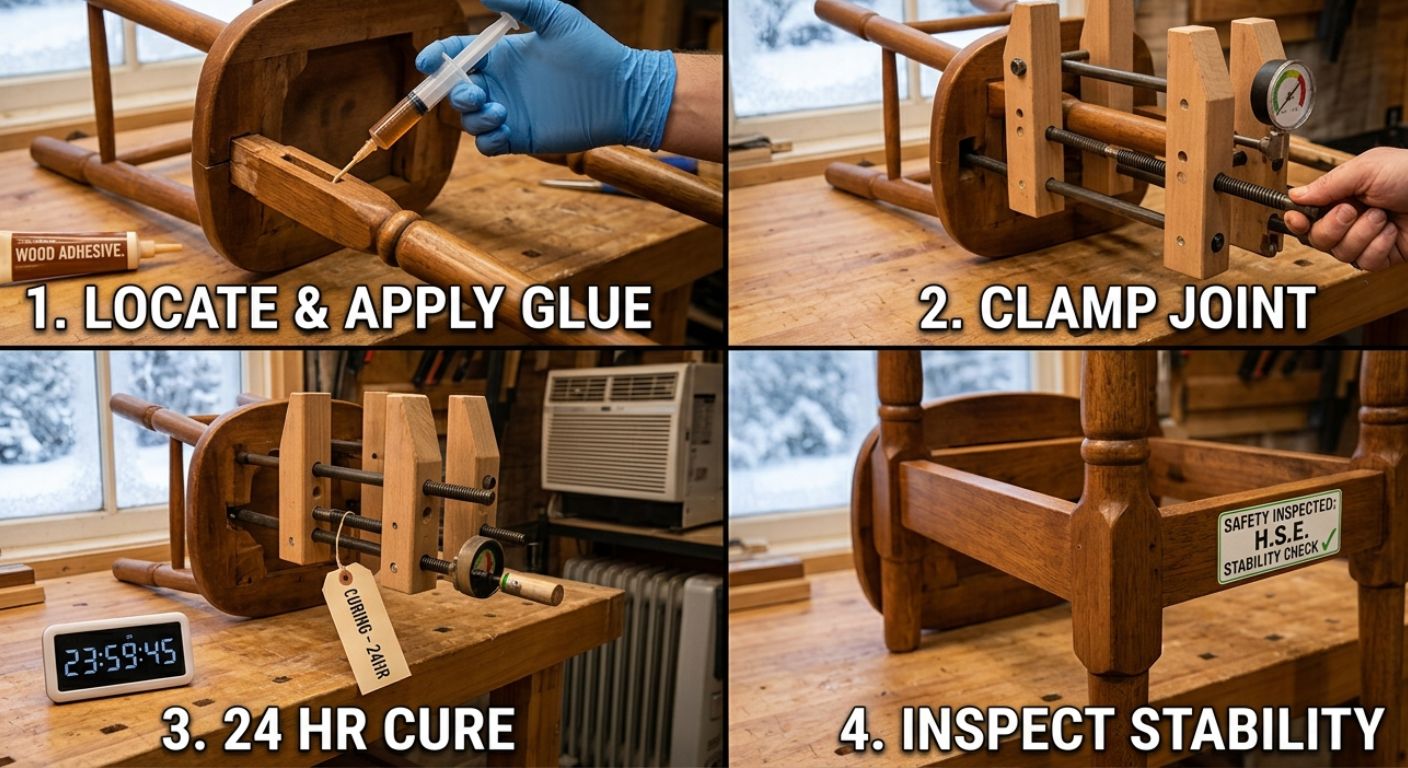
If the joint movement is minor, tightening fixings may solve the issue. For older stools with glued joints, wood adhesive is often needed.
For deeper joints:
- Locate the moving joint
- Use a fine syringe or narrow nozzle
- Inject wood glue carefully into the gap
- Clamp the joint if possible
- Allow at least 24 hours curing time
According to the Health and Safety Executive, unstable seating can become a safety issue if joints weaken significantly over time.
How To Stop Bar Stool Noise On Hard Floors
Sometimes the squeak is not coming from the stool mechanism at all. Hard floors such as laminate, tile, and wood can create scraping or chirping noises when stools move slightly during use.
Check the underside of each leg or base for worn floor protectors.
Common solutions include:
- Felt pads
- Rubber furniture caps
- Silicone chair leg covers
- Replacement floor glides
Measure the leg diameter before ordering replacement caps. Loose covers often create additional noise rather than solving it.
When A Squeaky Bar Stool Should Be Replaced
Not every squeak is worth repairing. If the stool has structural movement or visible damage, replacement is usually safer and more cost-effective.
Replace the stool if you notice:
- Cracked welds
- Bent frames
- Split wooden legs
- Missing swivel bearings
- Severe instability
- Repeated loosening after repair
Small noises are normally repairable. Structural instability is not.
How To Prevent Bar Stools From Squeaking Again
Regular maintenance reduces friction and helps stools last longer.
A simple maintenance routine includes:
- Tightening fixings every few months
- Cleaning dust from swivel mechanisms
- Replacing worn floor pads early
- Lubricating moving parts annually
- Avoiding excessive side-to-side pressure
If you are assembling a new stool, following the correct installation order also helps reduce long-term movement and noise. Our bar stool assembly guide explains the process step by step.
Frequently Asked Questions
Why does my bar stool squeak when I lean back?
This usually happens because the seat plate or fixing bolts loosen slightly under pressure. The movement creates friction between metal parts. Tightening the mounting hardware underneath the seat normally fixes the problem.
Can you fix a squeaky bar stool without WD-40?
Yes. Silicone spray and light machine oil are usually better long-term options because they stay lubricated longer and attract less dust. Graphite lubricant can also help with tighter joints.
Why do wooden bar stools squeak more in winter?
Dry air from central heating reduces moisture inside timber joints. This causes slight shrinking and increased friction where parts connect together, which creates creaking sounds during movement.
Is a squeaky bar stool dangerous?
Not always. Many squeaks are harmless and caused by friction. However, if the stool also wobbles, shifts unevenly, or has visible frame damage, it should be inspected carefully before continued use.
-
-
-
-
-
-
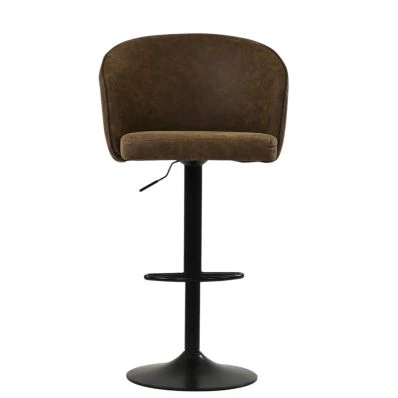
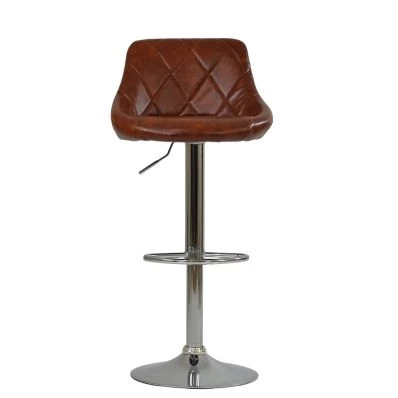
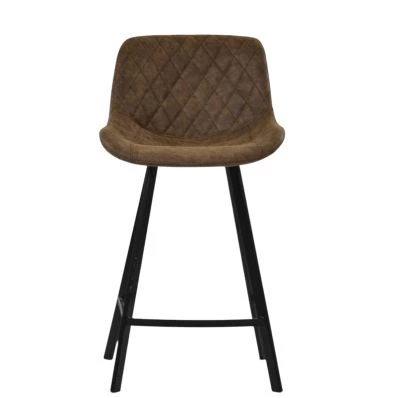 Matteo 65cm Bar Stool in Aged Brown Leather & Black BaseSpecial Price £59.99 Regular Price £74.99 Original price 20% Inc VATSaving £15
 -
-
-
-
-
Final Thoughts
Most squeaking bar stools can be repaired quickly by tightening hardware, lubricating moving parts, or replacing worn floor protectors. The key is identifying whether the noise comes from the swivel mechanism, gas lift, frame joints, or floor contact points.
If your stool is damaged beyond repair or you are replacing older seating, you can browse the full range of bar stools for fixed, swivel, and adjustable designs.


Comments