
 Chat with us on WhatsApp

How to Pick the Perfect Desk Chair for Your Child
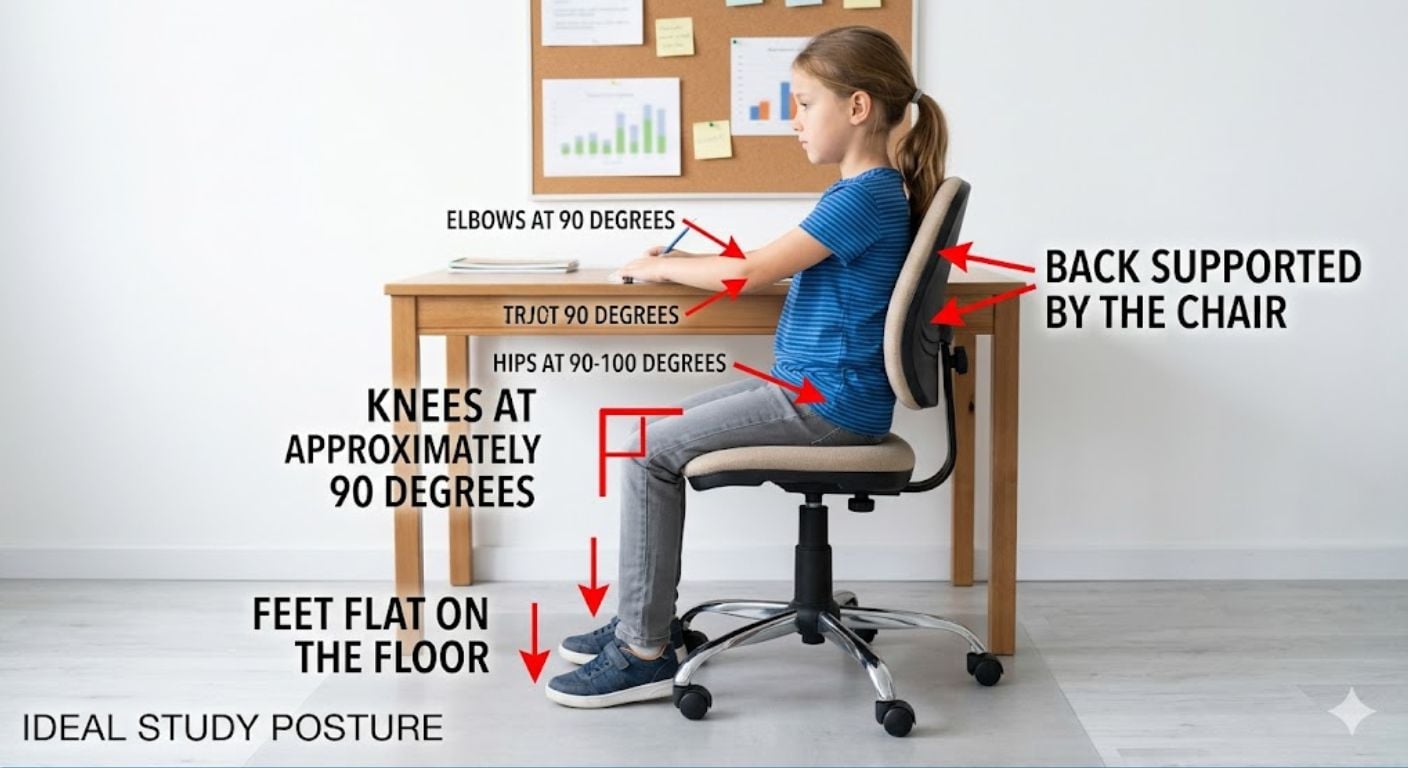
Choosing a desk chair for a child is often treated as a simple furniture purchase, but the right chair can make a significant difference to comfort, concentration, and long-term posture. Children use desks for homework, reading, crafts, gaming, and computer use, often spending several hours seated each week.
The challenge is that children grow quickly. A chair that fits today may not fit in two years, which is why adjustability and sizing matter more than appearance. This guide explains the key features to look for when choosing a desk chair for a child, how to check whether a chair fits properly, and which features are worth prioritising.
Start With Fit Before Features
The most important factor when choosing a desk chair for a child is whether the chair fits their current size.
A chair that is too high can leave feet dangling, while a chair that is too low can force knees into an uncomfortable position. Both can encourage slouching and frequent fidgeting.
As a simple guide, children should be able to:
- Place both feet flat on the floor or a footrest
- Keep knees bent at roughly 90 degrees
- Sit back against the backrest comfortably
- Reach the desk without raising their shoulders
Parents often assume children can simply "grow into" a larger chair, but poor sizing can create bad sitting habits that become difficult to correct later.
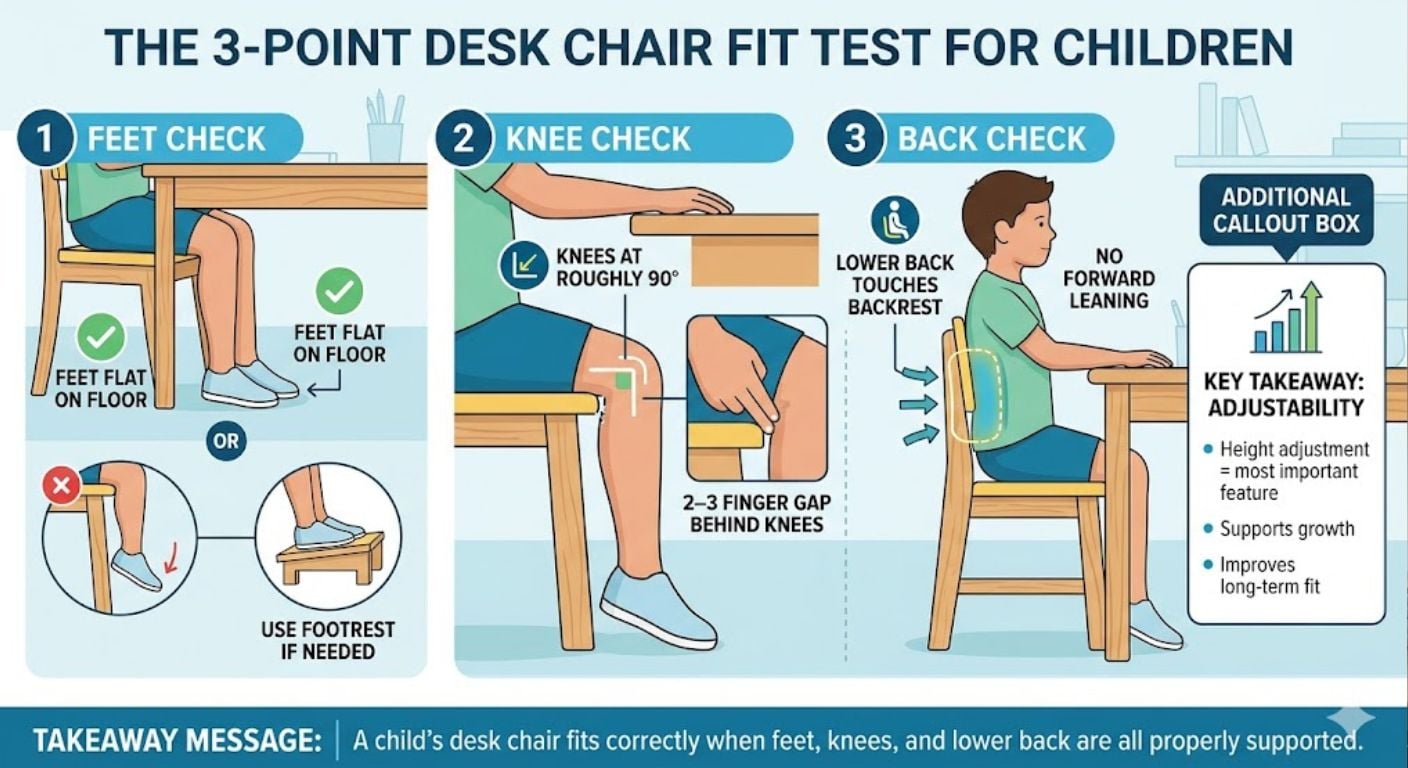
The 3-Point Chair Fit Test
A desk chair for a child fits correctly when three contact points are supported properly.
- Feet Check: Feet rest flat on the floor or footrest.
- Knee Check: There should be a small gap between the edge of the seat and the back of the knees.
- Back Check: The lower back should comfortably contact the backrest without leaning forward.
If one or more of these checks fails, the chair is likely the wrong size or requires adjustment.
Why Height Adjustment Matters Most
If there is one feature worth prioritising, it is seat height adjustment.
Children can gain several centimetres in height within a relatively short period. A height-adjustable chair allows the seating position to be altered as they grow, extending the usable lifespan of the chair.
Many adjustable chairs use a gas-lift mechanism similar to adult office chairs. This allows quick changes without tools and helps maintain proper positioning over time.
For detailed guidance on correct chair positioning, see our guide on setting up a desk chair correctly.
Back Support and Sitting Posture
Children naturally move around more than adults, but a supportive backrest still plays an important role.
A good desk chair for a child should encourage an upright sitting position without forcing the body into a rigid posture. The backrest should support the lower back while allowing normal movement.
Research from the NHS posture guidance highlights the importance of maintaining healthy sitting habits and reducing prolonged poor posture.
We often find our customers focus heavily on colours and fabrics, but the backrest shape usually has a much bigger impact on whether a chair remains comfortable after months of daily use.
If posture is your main concern, our complete guide to office chair posture and sitting position explains the wider principles in more detail.
Mesh, Fabric or Faux Leather?
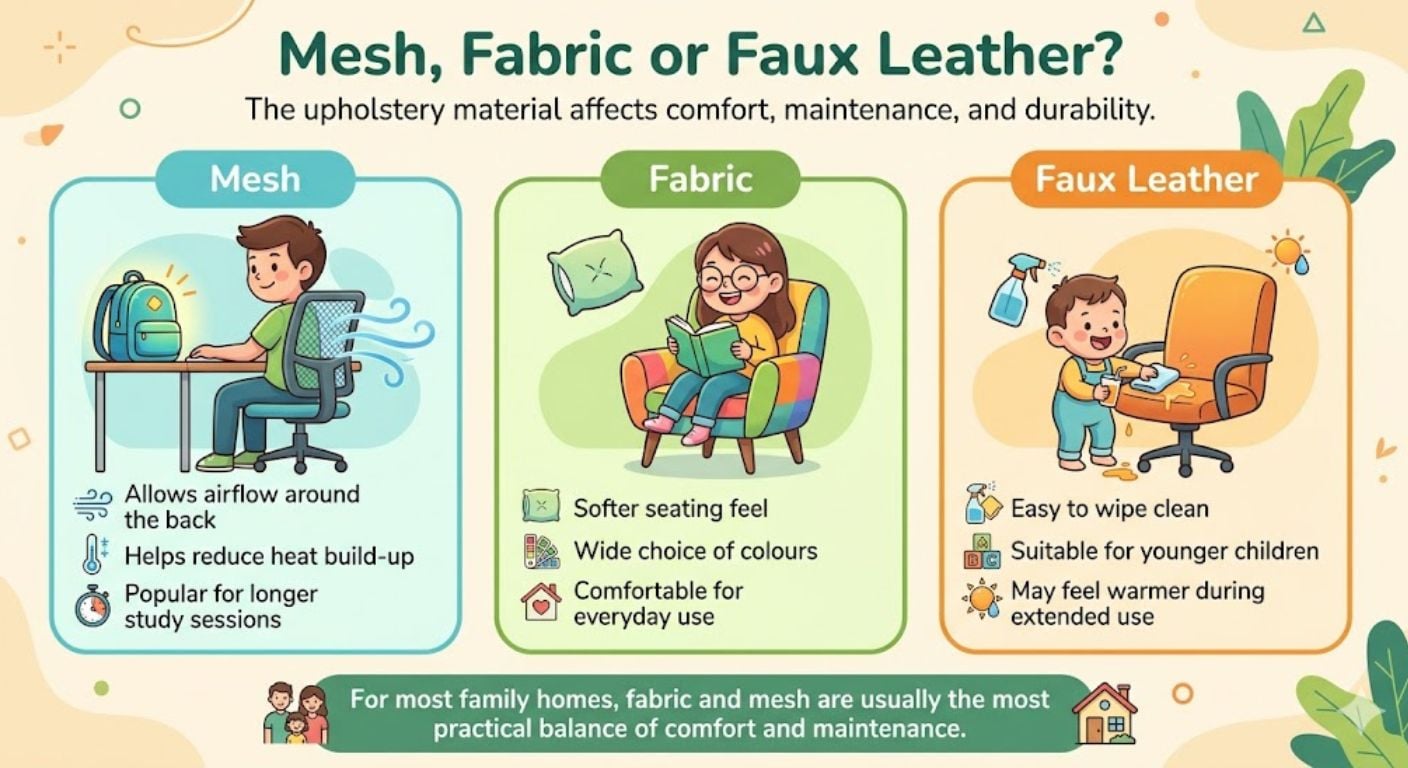
The upholstery material affects comfort, maintenance, and durability.
Mesh
- Allows airflow around the back
- Helps reduce heat build-up
- Popular for longer study sessions
Fabric
- Softer seating feel
- Wide choice of colours
- Comfortable for everyday use
Faux Leather
- Easy to wipe clean
- Suitable for younger children
- May feel warmer during extended use
For most family homes, fabric and mesh are usually the most practical balance of comfort and maintenance.
Should a Child's Desk Chair Have Wheels?
Desk chairs with wheels can be useful, but they are not always necessary.
Wheels allow children to move around a desk more easily and can improve flexibility in study spaces. However, some children become distracted by excessive movement, particularly younger users.
In smaller bedrooms or dedicated study areas, a stable chair base may be preferred. The decision often depends on the child's age, behaviour, and workspace layout.
Gaming Chair or Study Chair?
A gaming chair and a study chair are designed for slightly different purposes.
Gaming chairs often prioritise reclining positions, larger side bolsters, and visual styling. Study chairs typically focus on upright seating and desk-based tasks.
For homework, reading, and computer work, an upright seating position is usually more practical than a heavily reclined design.
If the chair will be used mainly for schoolwork, look for fit, adjustability, and support before considering gaming-specific features.
Buying for Growth Rather Than Age
Age alone is not always a reliable buying guide.
Two children of the same age can vary significantly in height and leg length. Instead of shopping purely by age range, consider:
- Seat height adjustment range
- Overall chair dimensions
- Maximum user weight
- Depth of the seat
- Whether feet can remain supported
A chair with a broad adjustment range often provides better long-term value than a fixed-size children's chair.
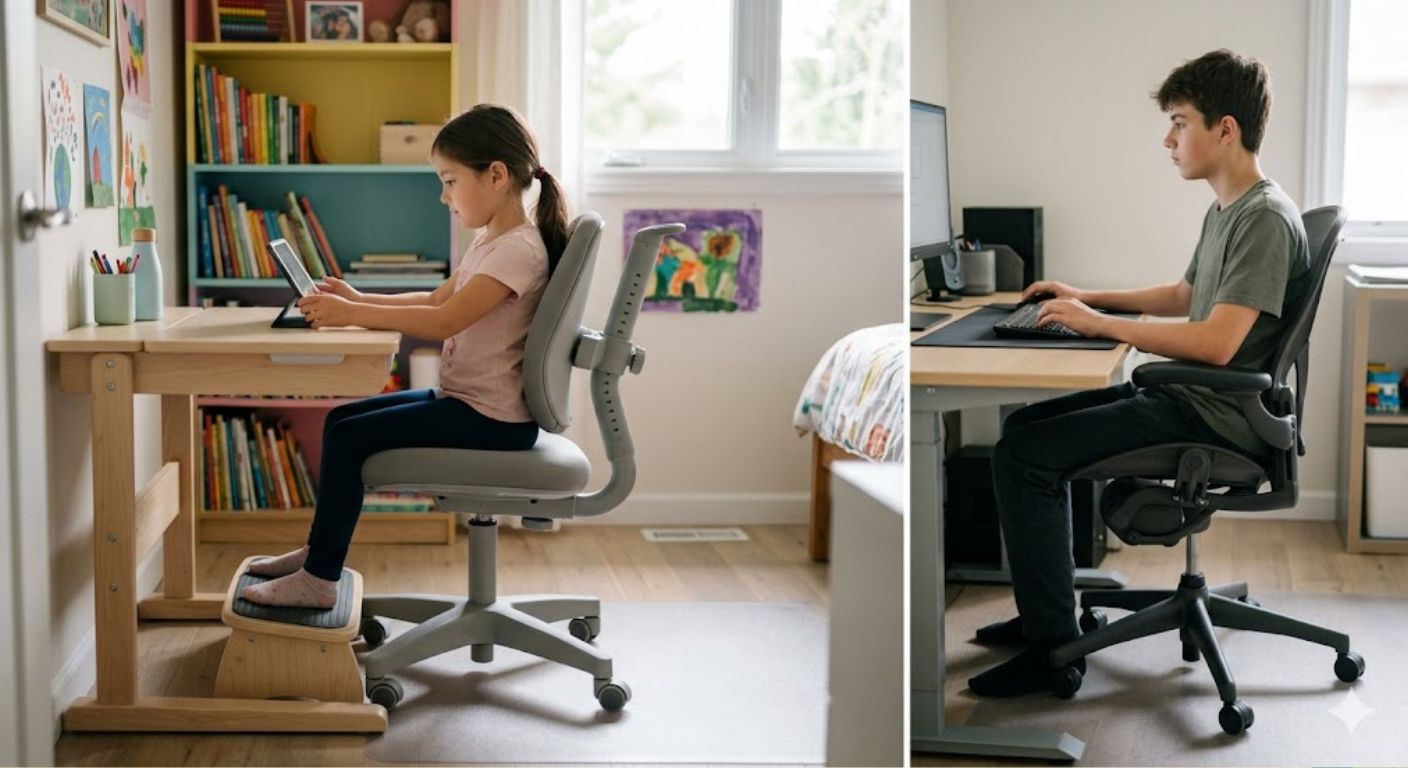
When a Children's Desk Chair Makes Sense
- Primary school children using desks regularly
- Children who need lower seat heights than standard office chairs
- Study spaces where proper desk fit is important
- Younger users who will benefit from easier adjustment
When an Adult Office Chair May Be Better
- Older teenagers approaching adult height
- Children above average height for their age
- Shared workspaces used by multiple family members
- Situations where long-term adjustability is the priority
Many teenagers eventually outgrow children's furniture entirely and are often better served by a compact adult office chair.
Our range of office chairs includes options suitable for smaller users and growing teenagers.
Frequently Asked Questions
What is the right chair height for a child?
The correct chair height allows both feet to rest flat on the floor while maintaining roughly a 90-degree knee angle. If feet cannot reach the floor comfortably, a footrest may be required.
Does a child's desk chair need armrests?
Not necessarily. Many children sit comfortably without armrests. If included, armrests should not prevent the chair from fitting under the desk or force the shoulders upwards.
Are adjustable chairs worth paying more for?
In most cases, yes. Height adjustment helps maintain proper fit as children grow and usually extends the useful lifespan of the chair significantly.
Can a teenager use a children's desk chair?
Some larger children's chairs may suit younger teenagers, but many teenagers are better matched to compact adult office chairs with greater adjustment ranges.
What is the most important feature to look for?
Height adjustment is usually the most valuable feature because it directly affects fit, comfort, and long-term usability.
-
-
-

-
-
-
-
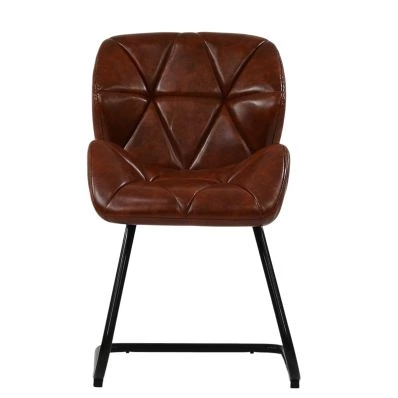
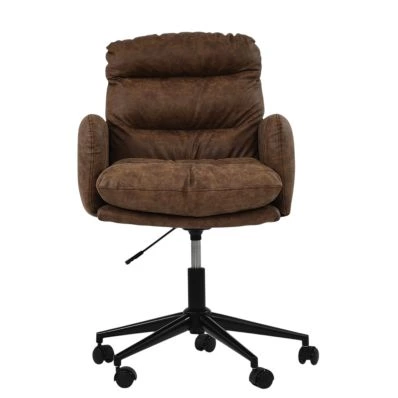
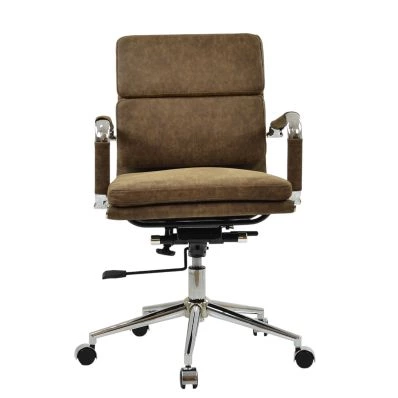 Chester Office Chair in Aged Brown LeatherSpecial Price £129.99 Regular Price £179.99 Original price 28% Inc VATSaving £50
 -
-
-
-
-
Final Thoughts
The best desk chair for a child is one that fits properly today while offering enough adjustment to accommodate future growth. Prioritising height adjustment, correct sizing, and supportive seating will usually have a greater impact than focusing on styling or decorative features.
For broader posture guidance, visit our article on correct office chair posture. If you're comparing available options, browse our collection of office chairs to see different sizes and adjustment styles.

Related Products
-
-
-
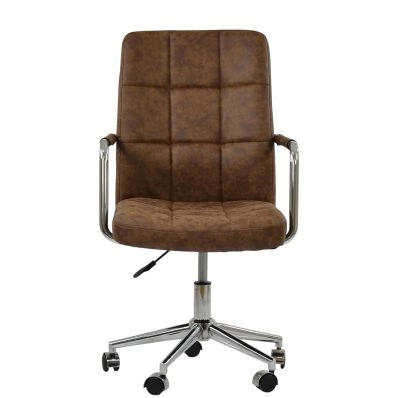 Vaughan Office Chair in Aged Brown LeatherSpecial Price £109.99 Regular Price £124.99 Original price 12% Inc VATSaving £15

Comments