
 Chat with us on WhatsApp

How to Use a Bedroom Chair: Placement, Styling & Making It Actually Useful
A bedroom chair can either improve how the room functions or become the place where clothes collect at the end of the day. The difference usually comes down to placement, scale, and purpose.
Most people choose a bedroom chair based on appearance first, then realise afterwards that it blocks walkways, feels oversized, or never gets used properly. In smaller bedrooms especially, the wrong chair can make the room feel cramped very quickly.
This guide explains how to choose a bedroom chair that fits the room properly and serves a clear function. It covers where to place a chair, what chair types work best for different layouts, how to make small bedrooms feel more open, and which materials are easiest to live with long term.
What Is a Bedroom Chair Actually For?
A bedroom chair works best when it has a defined purpose rather than simply filling empty floor space.
Most functional bedroom chairs fall into one of these categories:
- Reading chair
- Dressing chair
- Shoe or outfit chair
- Compact work chair
- Occasional seating
- Transitional seating between storage and dressing areas
The most successful setups separate the chair's function from the bed itself. A reading chair creates a separate relaxation area, while a dressing chair supports morning routines. A compact swivel chair may support occasional laptop use, while a firm chair near wardrobes helps with shoes and outfit changes.
We regularly see our customers buy oversized lounge chairs for bedrooms, then replace them later with smaller upright designs because the original chair reduced usable floor space too much.
Understanding Accent Chairs in Bedrooms
An accent chair is a standalone chair designed to add both seating and visual structure to a room. In bedrooms, accent chairs usually work best when they provide a practical secondary function rather than acting as decoration alone.
The best bedroom accent chairs usually share these characteristics:
- Compact footprint
- Upright seating position
- Slim or exposed legs
- Moderate seat depth
- Easy movement around surrounding furniture
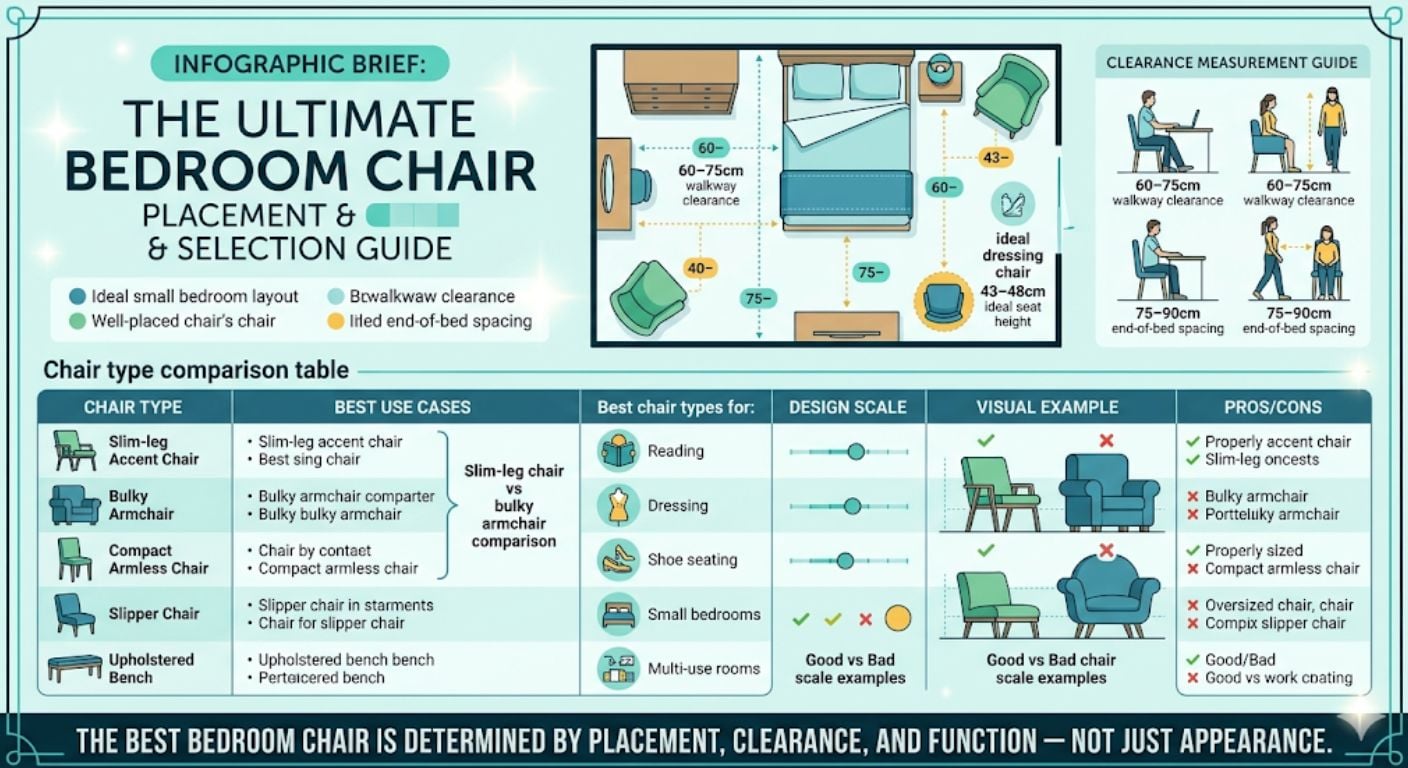
In practical terms, that means avoiding bulky living-room-style armchairs unless the bedroom is genuinely large enough to support them. For most UK bedrooms, chairs between 65cm and 80cm wide are easier to position without interrupting circulation space.
Where Should You Place a Chair in a Small Bedroom?
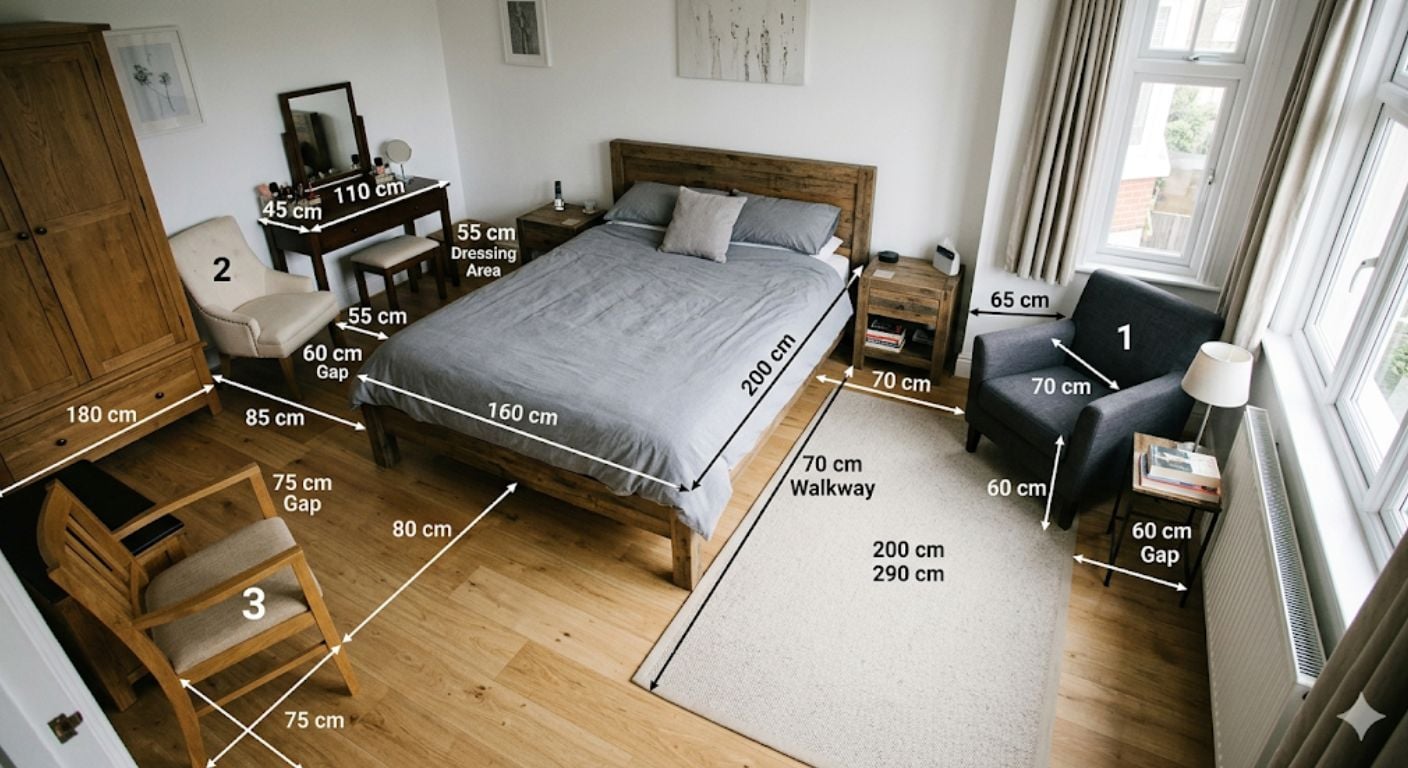
In a small bedroom, the best place for a chair is usually an underused corner, next to a window, or beside a dressing area. This keeps the chair functional without interrupting movement around the bed. Chairs with slim legs or open bases also help maintain visible floor space, which makes the room feel less crowded.
Corner Placement
Corners are usually the safest option in smaller rooms because they use otherwise inactive space.
A corner chair works best when paired with:
- A small side table
- Wall lighting or floor lighting
- A mirror to increase reflected light
- Slim-frame chairs with visible legs
Avoid deep armchairs in corners if wardrobes or drawers open nearby.
Window Placement
Positioning a chair beside a window creates a practical reading area without requiring additional zoning.
This works particularly well when:
- Natural light is limited elsewhere
- The room lacks space for a desk
- The chair is used for reading or occasional work
Avoid placing large chairs directly in front of radiators or blocking curtains from closing fully.
End of Bed Placement
Placing seating at the foot of the bed works best with benches, low-profile chairs, or compact occasional seating.
This layout is most effective in longer bedrooms where there is at least 75cm to 90cm clearance remaining after placement. If the walkway becomes tight, the room quickly starts feeling obstructed.
Dressing Area Placement
If the room includes a vanity or dressing area, the chair should align with mirror height and table clearance rather than simply matching the room visually.
For most setups:
- Seat height should remain around 43cm to 48cm
- Leave at least 25cm to 30cm knee clearance
- Allow enough pull-out room behind the chair
How to Make a Small Bedroom Feel Bigger With Furniture
The wrong chair can visually shrink a room even when the physical dimensions technically fit.
To maintain visual space:
- Choose chairs with exposed legs or open bases.
- Avoid oversized wingback or deep lounge chairs.
- Use lighter upholstery colours where possible.
- Position mirrors near the chair to reflect light.
- Keep floor visibility open underneath furniture.
- Match chair scale to surrounding furniture proportions.
Open-frame metal chairs, slim wooden legs, and compact swivel bases generally feel lighter visually than block-style upholstered seating.
Reflected light and clear sightlines affect how spacious a room feels, so placing a chair near natural light or a mirror can help compact bedrooms feel more open.
Choosing the Right Bedroom Chair Size
Size mistakes are one of the biggest causes of unusable bedroom seating.
Before buying a chair, measure:
- Distance from bed to wall
- Wardrobe door swing clearance
- Walkway width
- Window access
- Radiator position
- Dressing table clearance
Minimum Practical Clearances
| Area | Recommended Clearance |
|---|---|
| Walkways beside bed | 60cm to 75cm |
| Chair pull-out space | 70cm minimum |
| Dressing chair knee clearance | 25cm to 30cm |
| End-of-bed circulation | 75cm to 90cm |
| Chair beside wardrobe doors | 10cm to 15cm extra clearance |
If the chair interrupts natural movement through the room, it will usually become frustrating very quickly.
Best Types of Bedroom Chairs for Different Uses
Reading Chairs
Reading chairs work best with higher back support, slightly reclined seating, soft upholstery, side-table compatibility, and adequate lighting nearby.
Velvet and bouclé are common choices because they soften the visual feel of the room while remaining comfortable for longer sitting periods. Avoid overly deep seats in compact rooms.
Chairs for Putting on Shoes
For shoe seating, firmness matters more than softness.
Good options include:
- Upright accent chairs
- Low benches
- Compact occasional chairs
- Firm padded seating
Deep lounge chairs are awkward for footwear because they position the knees too high relative to the floor.
Bedroom Office or Gaming Chairs
Bedrooms increasingly serve multiple functions, especially in smaller homes.
Compact swivel chairs work well when:
- The chair rotates between desk and room
- Floor space is limited
- The room occasionally functions as a workspace
Avoid large office chairs unless the bedroom is permanently configured as a work area.
If posture support matters more than aesthetics, a compact ergonomic office chair is often the better decision. Lakeland's office chair range includes smaller-profile options that work better in bedrooms than oversized gaming chairs.
Nursing Chairs for Bedrooms
For nursing or feeding setups, prioritise:
- Arm support
- Easy-clean fabrics
- Gentle recline
- Stable bases
- Wider seating
Rocker or swivel movement can help, but clearance becomes important around cot placement and bedside furniture. Easy-clean upholstery matters more than many people anticipate during daily use.
Which Materials Work Best for Bedroom Chairs?
Material choice affects cleaning difficulty, visual weight, comfort, durability, heat retention, and long-term appearance.
Velvet
Velvet creates a softer and warmer visual finish, especially in dressing areas and reading corners.
Best for:
- Low-to-medium daily use
- Decorative seating
- Softer bedroom styling
Less ideal for:
- Pets
- Frequent spills
- High-contact use
One thing we regularly hear from our customers is that darker velvet shades hide pressure marks and directional fabric shading much better than lighter colours.
Bouclé
Bouclé works well in modern bedrooms because it adds texture without requiring bold colours.
Advantages:
- Soft appearance
- Comfortable feel
- Visually warm
- Works well in neutral interiors
Disadvantages:
- Harder to clean deeply
- Can trap dust more easily
- Not ideal for heavy daily use
Faux Leather
Faux leather works best where practicality matters more than softness.
Advantages:
- Easy cleaning
- Lower maintenance
- Compact visual appearance
- Better spill resistance
Disadvantages:
- Less warmth visually
- Can feel firmer
- May feel colder in winter
Linen and Woven Fabrics
Linen-look fabrics help keep bedrooms visually lighter.
Best for:
- Bright bedrooms
- Minimal interiors
- Compact spaces
Less suitable for:
- Heavy staining risk
- High abrasion use
How to Stop a Bedroom Chair Becoming a Clothes Pile
Most bedroom chairs fail because they become temporary storage instead of intentional seating.
The simplest fix is giving the chair a specific role.
For example:
- Reading chair only
- Shoe chair only
- Dressing chair only
- Occasional work chair only
Avoid placing the chair directly beside wardrobes or laundry baskets if possible. That positioning encourages overflow clutter.
Practical additions also help:
- Small side tables
- Hooks nearby
- Storage benches
- Defined tray surfaces
- Limited throw cushions
The more visually finished the chair setup feels, the less likely it becomes accidental storage.
Bedroom Chair Styling Without Overcrowding the Room
Bedroom chair styling works best when the chair supports the room rather than dominating it.
The safest approach is usually:
- One accent texture
- One supporting light source
- One small secondary surface
Examples include:
- Chair plus floor lamp
- Chair plus compact side table
- Chair plus mirror
- Chair plus footstool
Avoid layering too many soft furnishings around a compact bedroom chair. Oversized cushions and throws often make smaller rooms feel busier rather than more comfortable.
Bedroom Chair Decision Logic
If your bedroom is small
Choose slim legs, open-frame designs, chairs under 80cm wide, and light visual profiles.
Avoid deep armchairs, wide wingbacks, and bulky recliners.
If the chair will be used daily
Choose durable upholstery, upright support, easy-clean fabrics, and firmer seat cushioning.
Avoid delicate fabrics, oversoft seats, and low unsupported backs.
If the chair is mainly decorative
Choose softer textures, accent fabrics, sculptural shapes, and lower visual weight. Avoid oversized proportions that dominate the room.
If the chair will sit near a dressing table
Choose seat heights around 43cm to 48cm, compact arms or armless designs, easy pull-out movement, and slim rear profiles.
You can browse Lakeland's dressing table chairs for examples of compact bedroom seating designed around tighter layouts.
Frequently Asked Questions
What type of chair works best in a small bedroom?
Compact accent chairs with slim legs or open bases usually work best in small bedrooms. They keep more floor visible, which helps the room feel less crowded. Chairs under roughly 80cm wide are generally easier to position without blocking circulation space.
Where should I place a chair in a bedroom?
The best placement depends on the chair's purpose. Common positions include bedroom corners, beside windows, next to dressing tables, or at the foot of the bed. Avoid placing chairs where they interrupt wardrobe access or reduce walkway clearance below around 60cm.
Are bedroom chairs meant to match the bed?
Not necessarily. The chair should relate to the room overall rather than matching the bed exactly. Texture, scale, and proportion usually matter more than identical colours or materials. Slight contrast often creates a more balanced layout.
What is the best chair for putting on shoes?
Firm upright seating works better than deep lounge chairs for putting on shoes. Benches, compact accent chairs, and supportive occasional chairs are easier to sit down on and stand up from repeatedly.
Can you put an office chair in a bedroom?
Yes, especially in multi-use bedrooms. Compact office chairs or swivel chairs can work well where the room doubles as a workspace. Smaller-profile designs usually integrate better visually than large gaming-style chairs.
How much space should you leave around a bedroom chair?
Leave enough clearance for normal movement around the room. In most cases, 60cm to 75cm walkway space works comfortably, 70cm pull-out space is practical, and 75cm to 90cm clearance works best at the foot of the bed.
Structured Summary
Key Bedroom Chair Rules
- Define the chair's purpose before choosing style.
- Prioritise scale over visual impact in smaller rooms.
- Slim legs and open bases help maintain visible floor space.
- Keep walkways at least 60cm wide where possible.
- Upright chairs work better than deep lounge seating in compact rooms.
- Easy-clean fabrics matter for daily-use seating.
Common Mistakes
- Oversized chairs blocking circulation
- Deep armchairs in narrow bedrooms
- Placing chairs too close to wardrobes
- Buying decorative seating with no practical use
- Using soft lounge chairs for dressing or shoe seating
Fast Decision Shortcuts
| Situation | Better Choice |
|---|---|
| Small bedroom | Slim accent chair |
| Reading corner | High-back upholstered chair |
| Dressing area | Compact upright chair |
| Multi-use bedroom | Compact swivel chair |
| Easy cleaning priority | Faux leather |
| Soft visual finish | Velvet or bouclé |
For more compact seating designed around dressing spaces and bedroom layouts, you can browse Lakeland's dressing table chair collection.


Comments