
 Chat with us on WhatsApp

Kitchen Island Stool Guide: How Many Per Width?
Working out how many stools fit along a kitchen island is mainly a width and spacing decision, not a style decision. Most mistakes happen when people count stools based only on overall island length and ignore seat width, elbow room, and the gap needed for getting on and off each stool comfortably.
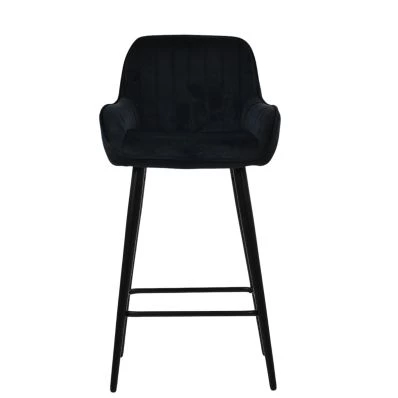
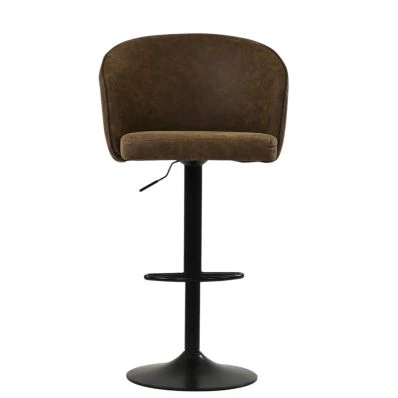
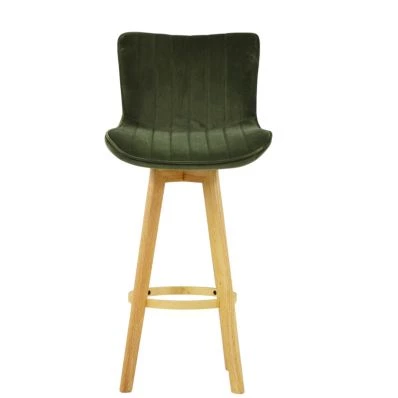
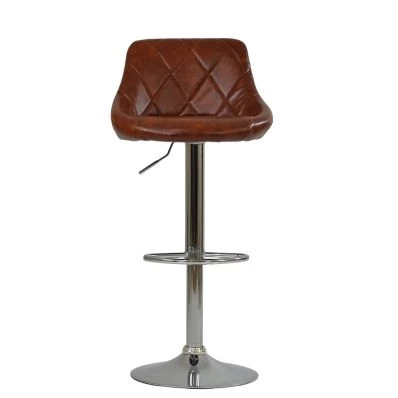
This guide focuses on stool count per width, how much room to allow for each seat, and when a layout will start to feel cramped. It does not replace broader sizing guidance. For the full picture on surface height, seat height, and fit, see the main Bar Stool Size guide. Once you know how many stools will fit, you can browse suitable options in Lakeland’s Kitchen Island bar stools category.
The core rule: how much width should you allow per stool?
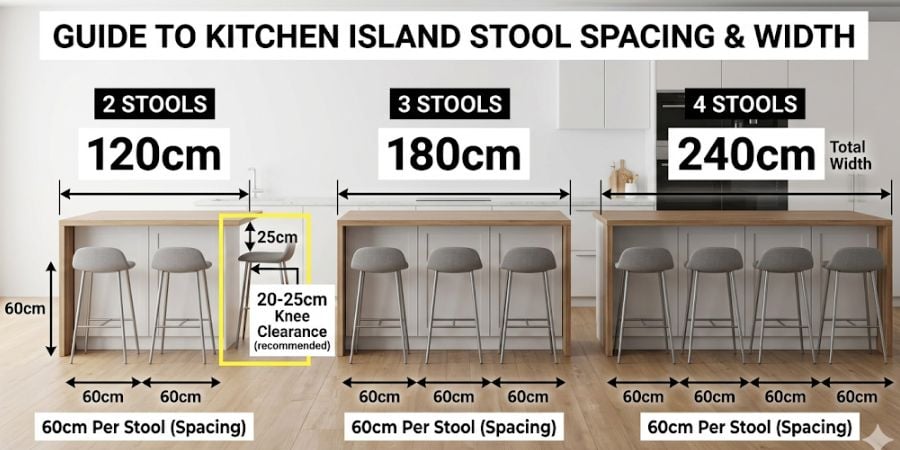
A practical starting point is to allow around 60cm per stool. That usually gives enough room for seating width plus a sensible gap between users, without making the island feel overcrowded.
That 60cm is not the seat width alone. It is the working width per person. It usually needs to cover:
- the width of the stool itself
- a gap between stools
- enough elbow room for eating, talking, or working at the island
In real terms, most layouts work best when you allow:
- 45 to 55cm stool width
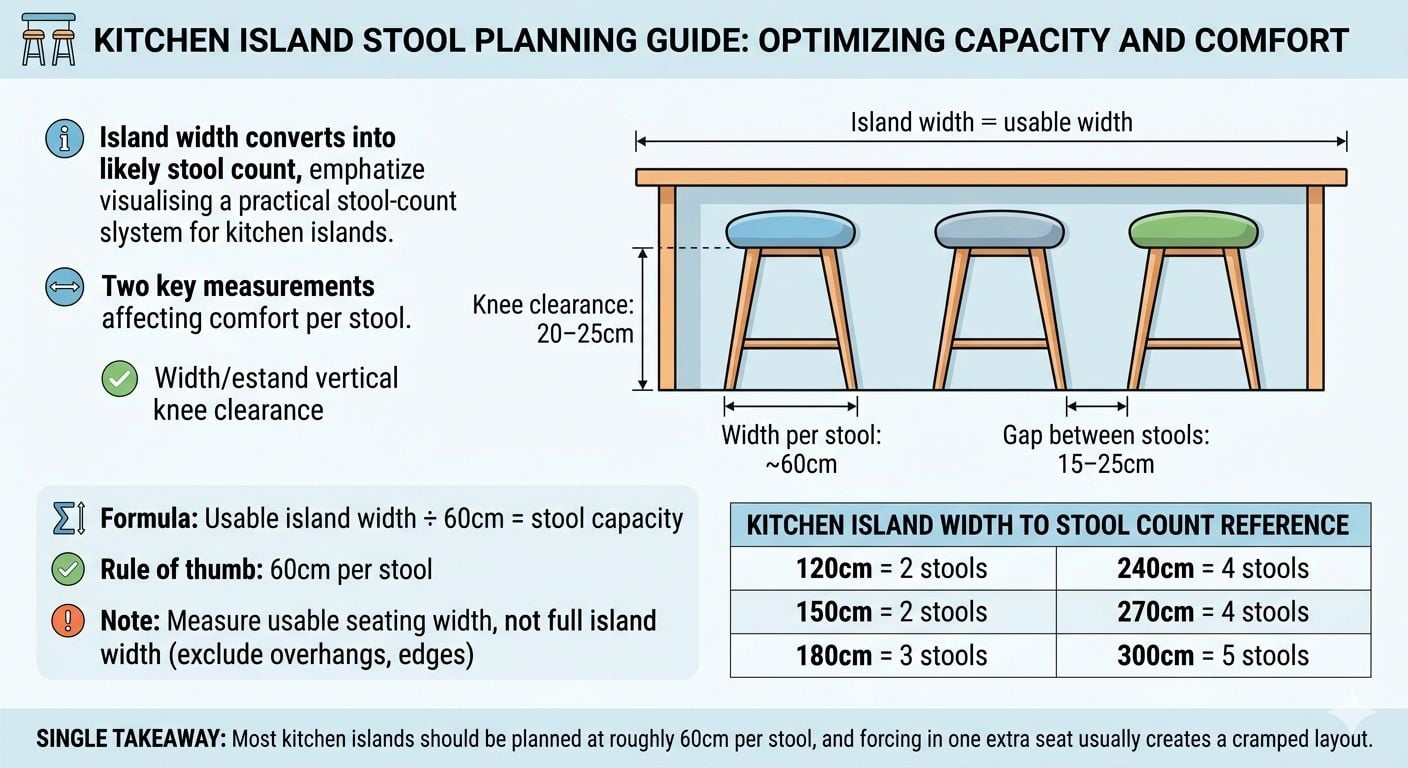
- 15 to 25cm between stool centres in practical use
- around 60cm total planning width per person
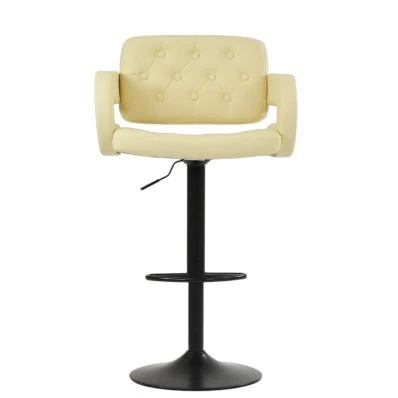
If the stools are wide, have arms, or are heavily padded, you may need more than 60cm each. If they are slim and backless, you can sometimes work slightly tighter, but pushing too far usually creates a cramped result.
How many stools fit on common kitchen island widths?
The simplest method is to divide the usable seating width by 60cm. That gives a realistic starting point for how many stools will fit comfortably.
Use the usable seating width, not always the full island width. End panels, overhang limits, leg supports, or corner details can reduce the space available for actual seating.
Quick reference table
| Usable island width | Typical stool count |
|---|---|
| 120cm | 2 stools |
| 150cm | 2 stools |
| 180cm | 3 stools |
| 210cm | 3 stools |
| 240cm | 4 stools |
| 270cm | 4 stools |
| 300cm | 5 stools |
| 360cm | 6 stools |
How many stools fit on a 6 foot kitchen island?
A 6 foot kitchen island will usually fit 2 to 3 stools, depending on stool width and how much space you leave between them.
A 6 foot island is roughly 183cm wide. In most cases:
- 2 stools gives a more open, generous layout
- 3 stools works if the stools are not too wide
- more than 3 stools is usually too tight for normal day-to-day use
If the island is used for quick breakfasts and occasional seating, 3 can work well. If it is used for longer meals, laptops, or family seating, 2 may feel better in practice.
Formula: how to calculate stool count properly
Use this formula:
Usable island width ÷ planning width per stool = stool capacity
For example:
- 180cm usable width ÷ 60cm = 3 stools
- 240cm usable width ÷ 60cm = 4 stools
- 210cm usable width ÷ 60cm = 3.5, so plan for 3 stools rather than squeezing in 4
Round down when the result is not a whole number. Trying to force in an extra stool is where many island layouts stop working.
A layout that looks efficient on paper can become awkward once people actually sit down, move their arms, or turn to get off the seat.
Why stool width matters more than people expect
Many buyers focus on island width first and only check the stool dimensions later. That is backwards. A narrow island can sometimes work well with slim stools, while a wide island can still feel crowded if the seats are oversized.
Pay attention to:
- overall stool width
- whether the seat flares wider than the frame
- whether arms add extra bulk
- whether swivel motion needs side clearance
- whether backs stop the stools tucking in neatly
Backless models are often easier to plan into tighter widths because they take up less visual and physical space. If your priority is compact use, the article on bar stools with backs vs backless bar stools covers that decision in more detail.
What spacing should be left between stools?
The proper amount of space between bar stools is usually around 15 to 25cm. That gives people enough elbow room and enough space to get onto or off the stool without bumping into the next person.
That spacing is a practical range, not a rigid rule. The tighter end may work for slim stools in a compact kitchen. The wider end is usually better where:
- users sit for longer periods
- stools have arms or wider seats
- more than one person uses the island at once
- the island is used for eating rather than occasional perching
Spacing that is too tight creates three common problems:
- elbows clash during meals
- stools cannot be pulled out cleanly
- the island looks overfilled even when the count seems correct
The other measurement people miss: knee space
Even if the stool count is right, the seating can still feel wrong if there is not enough vertical clearance between the seat and the underside of the counter.
As a rule of thumb, allow around 20 to 25cm between the top of the seat and the underside of the worktop. That usually gives comfortable knee room for normal use.
This matters because a layout can seem fine on width but fail on comfort. If users feel boxed in under the counter, they will sit awkwardly or avoid the island completely.
For full measurement logic around seat height and surface height, go back to the main Bar Stool Size guide. If you are working with a standard 90cm worktop, the piece on which stools suit kitchen islands can also help narrow the right format.
When should you choose fewer stools than the maths allows?
Choose fewer stools when the island is used heavily, the stools are wider, or the kitchen needs easier movement around the seating area.
This usually makes sense when:
- the stools have arms
- the seats are generously padded
- family members sit there for meals or homework
- the island sits in a tighter kitchen layout
- you want a cleaner, less crowded look
An island that technically fits 4 stools may function better with 3. That is especially true in working kitchens where people move around the island while others are seated.
When does a tighter layout make sense?
A tighter layout can work when the stools are slim, backless, and mainly used for short periods rather than long seated meals.
This suits:
- smaller kitchens
- narrow breakfast bars
- occasional seating
- islands where tucking the stools fully underneath matters
It does not suit:
- wide-bodied or armed stools
- regular work-from-island use
- households where multiple adults sit side by side often
- layouts already short on circulation space
Common mistakes when planning stools per width
Counting the full island width instead of the usable seating width
The seating side may be interrupted by panels, supports, waterfall ends, or limited overhang. Measure the actual usable section, not the full furniture width.
Using stool count before checking stool dimensions
Always check the product width before deciding how many seats you want. Wider stools can change the layout quickly.
Squeezing in an extra stool
This is the most common mistake. If the result is borderline, remove one stool. The layout will usually work better.
Ignoring how the island is used
Quick morning seating needs less generosity than evening meals, laptop use, or family seating. Function should decide how tightly you plan.
If you are still comparing layout types, the article on swivel vs fixed bar stools can help with practical day-to-day use.
Practical decision guide
Choose your stool count by starting with width, then pressure-testing the layout against real use.
This approach makes sense when:
- you need to plan a new island seating layout
- you want a quick stool-count estimate
- you are comparing compact and standard stool options
- you want to avoid overcrowding and poor spacing
Be more cautious when:
- the stools have arms or wide backs
- the kitchen is narrow around the island
- the seating side has limited overhang
- the island is used for meals, work, or long sitting periods
If there is any doubt, it is usually safer to reduce the stool count rather than force in one more seat.
FAQs
How many stools fit at a 7 foot kitchen island?
A 7 foot island is roughly 213cm wide, so it will usually fit 3 stools comfortably. In some cases 4 may look possible on paper, but that often becomes too tight once stool width and spacing are added properly. For most kitchens, 3 is the safer working layout.
How many stools fit at an 8 foot kitchen island?
An 8 foot island is roughly 244cm wide, which usually makes 4 stools a realistic fit. That assumes the stools are not oversized and the full seating width is genuinely usable. If the stools are wide or have arms, 3 may still be the better choice.
How much gap should there be between a stool seat and the counter?
Allow around 20 to 25cm between the top of the stool seat and the underside of the counter. That usually gives enough knee space for comfortable sitting. Less than that can feel restrictive, even if the stool count across the island is correct.
Should I measure to the edge of the stool or plan by centre spacing?
For buying decisions, start with the actual stool width and then allow practical space around each seat. Centre spacing can help when sketching layouts, but product width is the more useful real-world number because it affects both visual fit and elbow room.
Final takeaway
For most kitchen islands, planning around 60cm per stool is the safest way to estimate how many seats will fit without overcrowding the space. Then check the actual stool width, the usable seating area, and the knee clearance before committing to a final count.
For the wider fit and measurement framework, go to the main Bar Stool Size guide. If you are ready to compare real options, browse Lakeland’s full range of bar stools.


Comments