
 Chat with us on WhatsApp

Should Dining Chairs Have Arms or Be Armless?
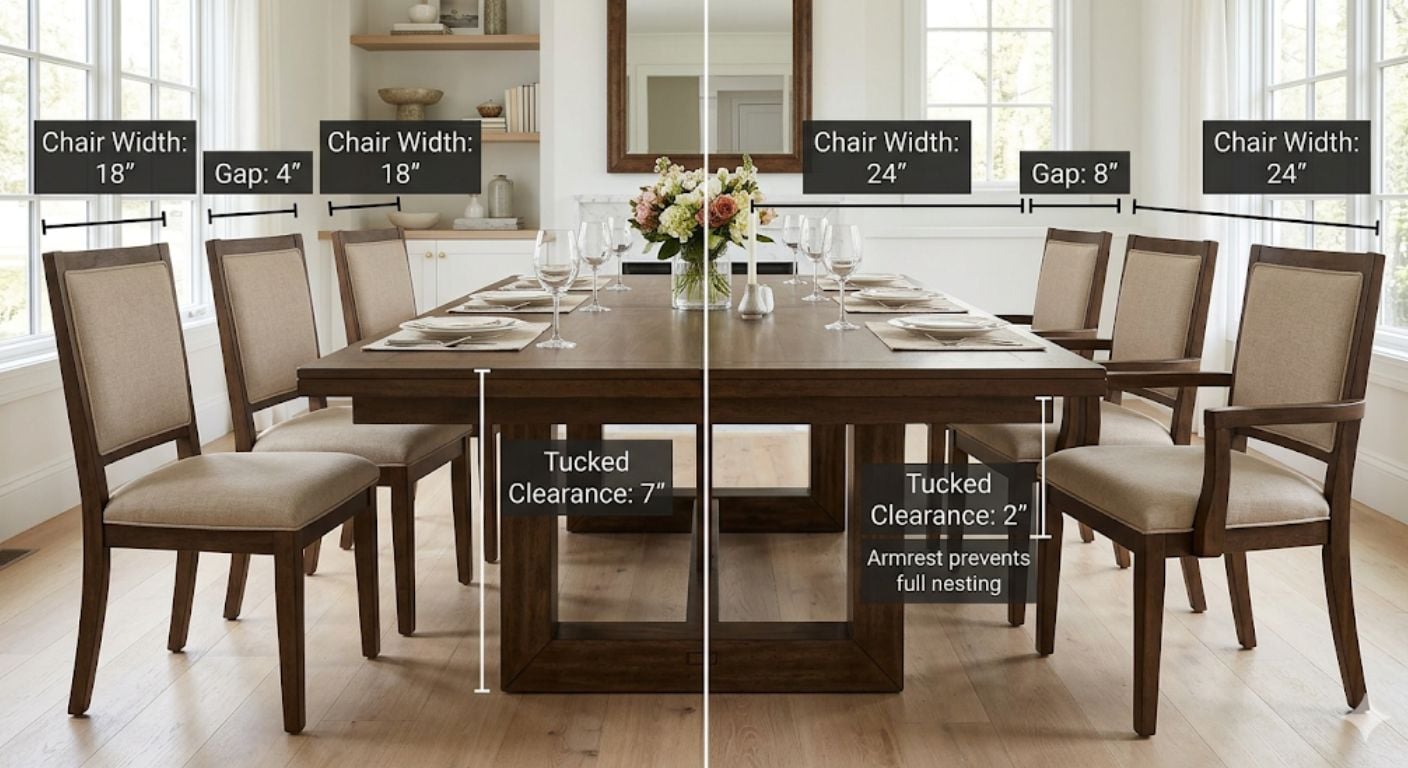
Choosing between dining chairs with arms and armless dining chairs comes down to a trade-off between comfort, space efficiency, and table compatibility. Chairs with arms generally provide more support and a more relaxed sitting position, while armless dining chairs allow tighter spacing, easier movement, and better flexibility around smaller tables.
For most homes, the right answer is not strictly one or the other. Many dining setups work best with a mixed layout using armchairs at the ends of the table and armless chairs along the sides. That approach improves comfort without sacrificing seating capacity or making the room feel crowded.
If you are still deciding on overall dining chair proportions, it also helps to understand broader dining chair size considerations before choosing a specific chair style.
Dining Chairs With Arms vs Armless: The Practical Difference
The biggest difference is how much physical space each chair occupies.
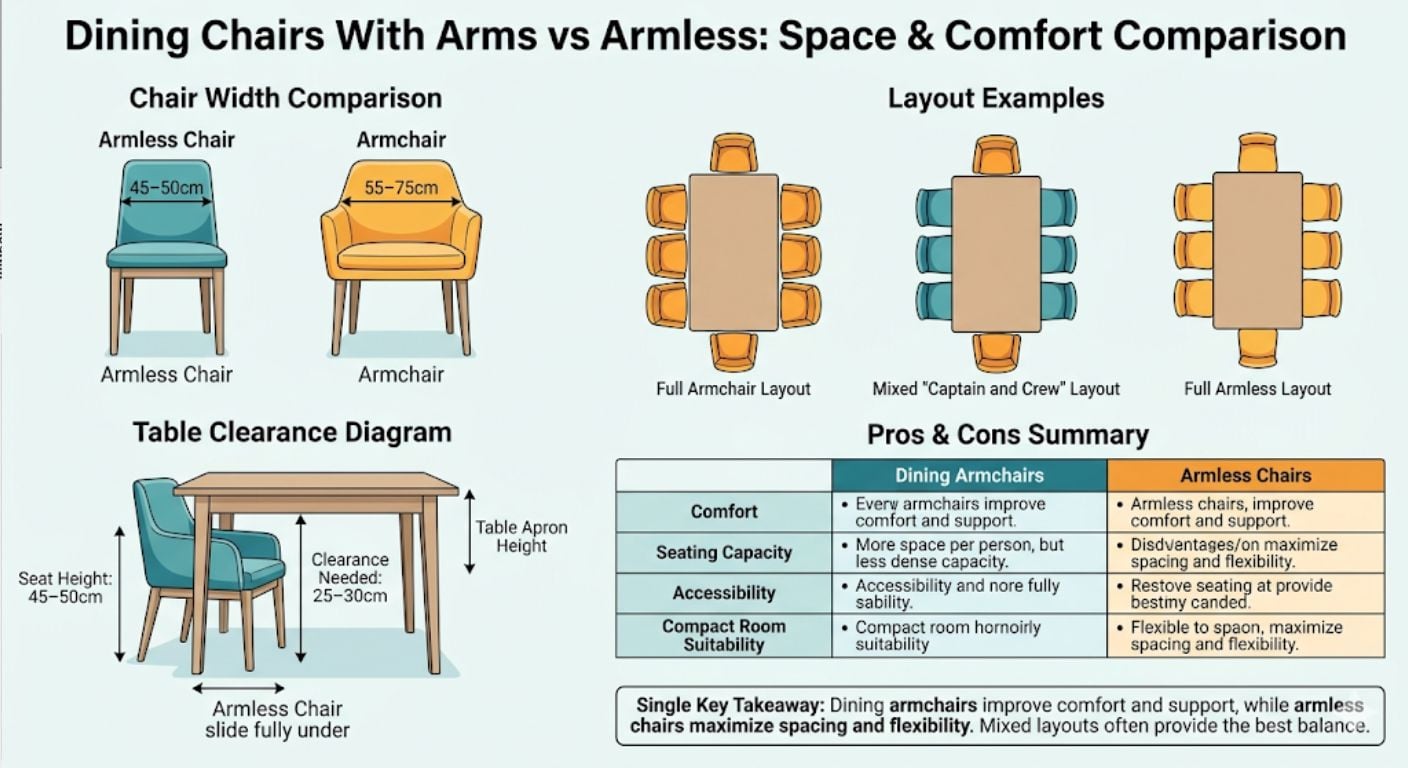
Armless dining chairs are usually narrower and easier to position tightly around a table. Dining chairs with arms require additional clearance both beside the chair and underneath the table.
| Chair Type | Typical Width |
|---|---|
| Armless dining chair | 45–50cm |
| Dining chair with arms | 55–75cm |
That extra width changes:
- How many chairs fit around the table
- Whether chairs slide fully underneath
- How open or crowded the room feels
- How easy it is to get in and out of the chair
In practical terms, armchairs prioritise comfort and support, while armless chairs prioritise efficiency and flexibility.
Are Dining Chairs With Arms More Comfortable?
Yes, in most cases dining chairs with arms are more comfortable for longer sitting periods.
Armrests naturally reduce shoulder tension and provide support when sitting upright for extended periods. They also create a more relaxed posture during slower meals, entertaining, or multi-use spaces where people remain seated for longer.
Armchairs can be particularly useful for:
- Long evening meals
- Open-plan kitchen dining spaces
- Older users needing extra leverage when standing
- Dining spaces that double as work areas
The advantage becomes more noticeable with padded or upholstered dining chairs, especially models with supportive backs and thicker seat cushioning.
One thing we regularly hear from our customers is that arm support matters far more in everyday use than people expect before buying, particularly in homes where the dining table is used for working as well as eating.
That said, comfort depends on proportions. Oversized arms can restrict movement and make the chair awkward at tighter tables.
For broader guidance on seating comfort factors, see our article on what actually makes a dining chair comfortable.
When Armless Dining Chairs Make More Sense
Armless dining chairs are usually the safer choice where space efficiency matters more than lounge-style comfort.
They work particularly well in:
- Smaller dining rooms
- Compact kitchen diners
- Narrow rectangular tables
- High-capacity seating layouts
- Homes where chairs need moving regularly
Because the sides remain open, armless chairs are easier to slide sideways and reposition quickly. They also allow more flexibility when guests are added temporarily.
Visually, they create a lighter footprint around the table. That becomes important in smaller rooms where bulky chair arms can make the dining area feel compressed.
If space is already limited, armchairs can unintentionally reduce the practical seating capacity of the table by one or two places.
For compact layouts specifically, our guide to choosing dining chairs for compact spaces goes deeper into footprint planning.
Will Dining Chairs With Arms Fit Under The Table?
This is the most overlooked buying mistake with dining armchairs.
The arm height must clear the underside of the table apron. If it does not, the chair will not push fully underneath the table.
For comfortable dining clearance:
- Seat height is typically 45–50cm
- There should usually be around 25–30cm between the seat and the underside of the table
- Arm height must sit below the apron height
Before buying dining chairs with arms:
- Measure floor-to-apron height
- Measure arm height from floor
- Leave clearance for movement
A chair that technically fits can still become frustrating if the arms constantly hit the underside during movement.
Mixing Armchairs and Side Chairs Usually Works Best
The most practical layout is often a hybrid arrangement.
This typically means:
- Armchairs at the ends of the table
- Armless side chairs along the sides
This layout works because it balances comfort with seating efficiency.
Why Mixed Seating Layouts Work
The armchairs create visual structure and slightly more relaxed seating for the head positions, while the side chairs maintain flexibility and capacity.
It also reduces several common problems:
- Less crowding around the centre of the table
- Easier movement between chairs
- Better compatibility with narrower dining rooms
- Lower risk of arm collisions
Simple Rules For Mixing Dining Chairs
If mixing styles, keep at least one element consistent:
- Leg finish
- Upholstery colour
- Chair height
- Overall silhouette
The layout should feel intentional rather than mismatched.
Our guide on choosing the right dining chair back can also help when combining different chair profiles.
Quick Comparison: Armchairs vs Armless Dining Chairs
| Feature | Dining Chairs With Arms | Armless Dining Chairs |
|---|---|---|
| Comfort for long sitting | Higher | Moderate |
| Space efficiency | Lower | Higher |
| Seating capacity | Reduced | Better |
| Ease of movement | Moderate | Easier |
| Accessibility support | Better | Lower |
| Table compatibility risk | Higher | Lower |
| Compact room suitability | Moderate | Better |
| Formal dining appearance | Stronger visual presence | Cleaner, lighter look |
Are Dining Chairs With Arms Better For Older Users?
Often, yes.
Armrests provide leverage when sitting down and standing up, which can make dining chairs noticeably easier to use for:
- Older family members
- Users with reduced mobility
- Anyone with knee or hip discomfort
The support also encourages a more stable sitting position during longer meals.
However, accessibility only improves if the chair dimensions remain practical. Extremely wide armchairs can become harder to manoeuvre around tighter tables.
Slim-profile dining armchairs usually work better than oversized lounge-style designs in everyday dining environments.
Should You Avoid Armchairs In Small Dining Rooms?
Not necessarily, but full armchair layouts rarely work well in compact spaces.
The main issue is cumulative width. Even an additional 10cm per chair quickly reduces circulation space around the table.
In smaller rooms:
- Use armchairs only at table ends
- Choose narrow arm profiles
- Avoid oversized upholstered frames
- Prioritise chairs that tuck underneath fully
Many compact dining rooms function better with visually lighter armless chairs, especially where the table already dominates the room footprint.
Are Armchairs Practical For Everyday Dining?
They can be, provided the proportions are correct.
Problems usually appear when buyers choose dining armchairs that behave more like lounge chairs. Oversized arms, deep seats, and heavy upholstery may look comfortable but become awkward for daily dining use.
For everyday practicality:
- Keep seat depth moderate
- Choose wipeable or durable upholstery
- Avoid excessively wide frames
- Check arm clearance carefully
This matters particularly in family homes where chairs are moved repeatedly throughout the day.
If you are browsing current options, our dining chairs collection includes both armchairs and armless styles designed for standard dining table use.
Frequently Asked Questions
Should dining chairs have armrests?
Dining chairs should have armrests if comfort, support, and longer sitting periods matter more than maximum seating capacity. Armless chairs are usually better for smaller rooms, tighter layouts, and flexible seating arrangements.
Do dining chairs with arms take up more space?
Yes. Dining armchairs are usually 10–25cm wider than armless dining chairs. That extra width affects circulation space, seating capacity, and whether the room feels crowded.
Can dining armchairs fit under all tables?
No. The arm height must clear the underside of the table apron. Always measure the clearance before buying to avoid chairs that cannot slide underneath properly.
Is it normal to mix armchairs and armless dining chairs?
Yes. Mixed layouts are extremely common. Many dining rooms use armchairs at the ends of the table with armless side chairs to balance comfort and spacing.
Are armless dining chairs less comfortable?
Not always. A well-shaped armless dining chair with good seat support can still be comfortable for normal meal durations. Armchairs simply provide additional support during longer sitting periods.
Which style is better for small dining rooms?
Armless dining chairs are usually better for compact rooms because they reduce visual bulk and allow tighter seating layouts around the table.
-
-
-
-
-
-
-
-
-
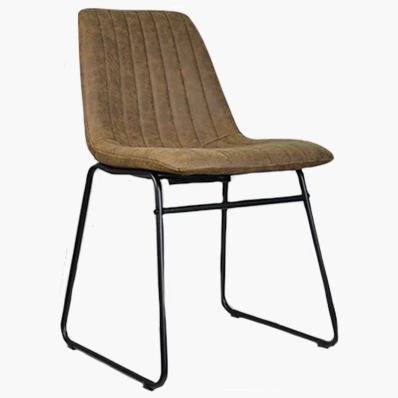 Plato Dining Chair in Aged Brown LeatherSpecial Price £59.99 Regular Price £89.99 Original price 33% Inc VATSaving £30
 -
-
-
Final Thoughts
Dining chairs with arms are usually more comfortable and supportive, while armless dining chairs offer better flexibility and space efficiency. The right choice depends less on style preference and more on room layout, table clearance, and how the dining space is actually used day to day.
For most homes, a mixed layout gives the best balance between comfort and practicality.
If you are still comparing overall dining chair proportions, spacing, and table compatibility, our full guide to dining chair sizing covers the wider framework in more detail.

Related Products
-
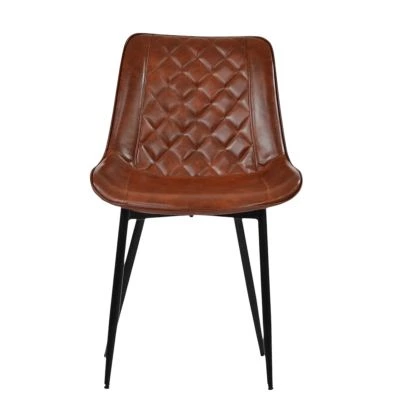 Hogan Dining Chair in Vintage Brown LeatherSpecial Price £44.99 Regular Price £69.99 Original price 36% Inc VATSaving £25Out of stock
 -
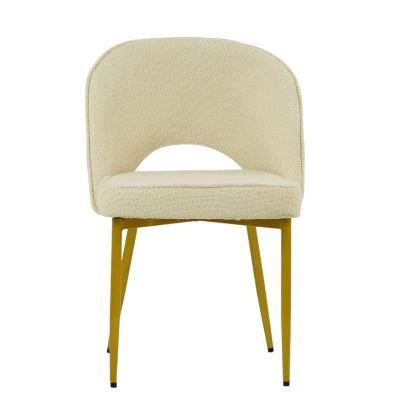 Flair Dining Chair in Cream Boucle & Gold BaseSpecial Price £54.99 Regular Price £79.99 Original price 31% Inc VATSaving £25
 -

Comments