
 Chat with us on WhatsApp

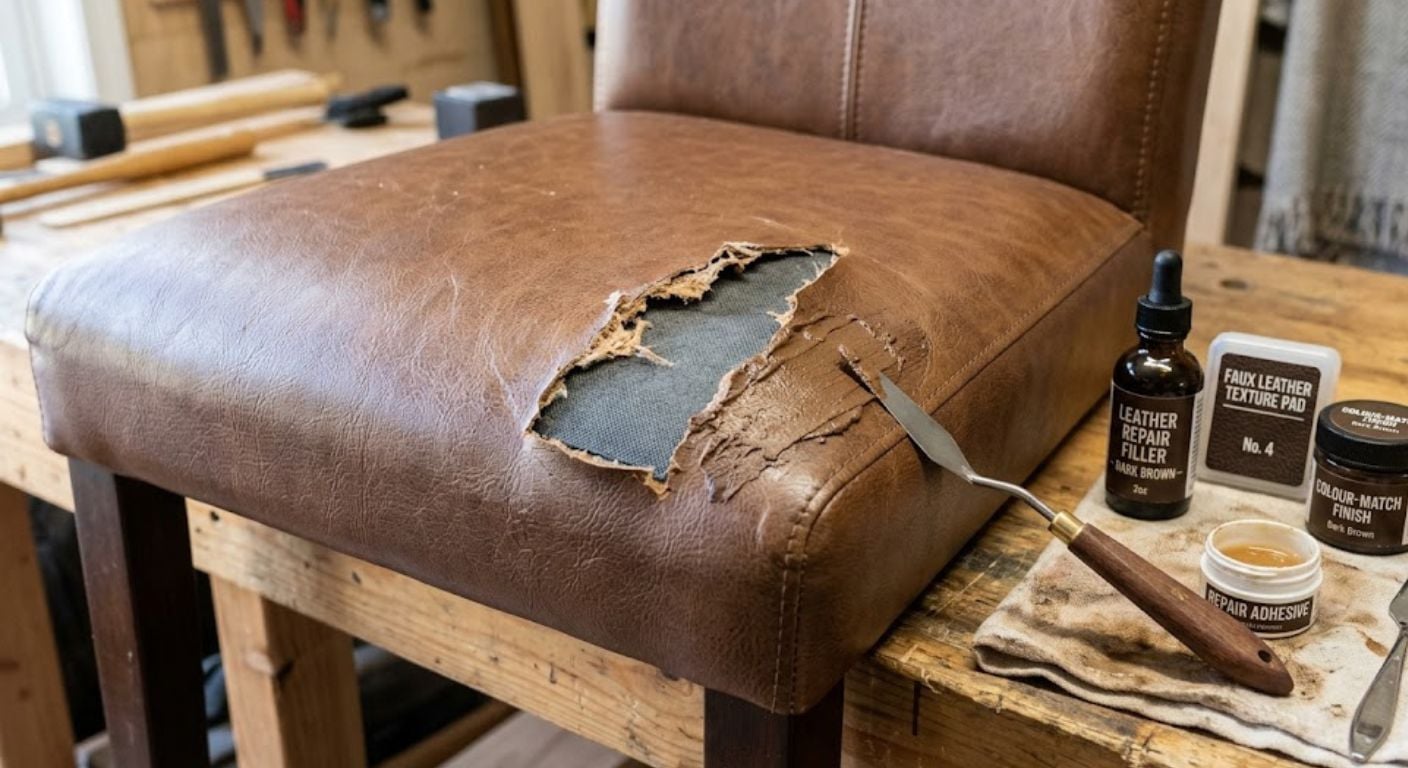
How to Repair a Tear in Faux Leather Furniture
Faux leather furniture is popular because it offers the appearance of leather at a lower cost and is generally easy to clean. However, tears, cracks, peeling, and worn areas can develop over time, particularly on frequently used chairs and seating. The good news is that many small tears can be repaired at home using the correct materials and techniques.
Successful faux leather repair depends on the type of damage, the size of the tear, and the condition of the surrounding material. Small splits can often be repaired effectively, while widespread peeling or flaking may indicate that the surface coating is reaching the end of its lifespan. Understanding the difference helps you decide whether repair is worthwhile or whether replacement is the more practical option.
Why Does Faux Leather Tear and Peel?
Faux leather peels when its polyurethane (PU) coating separates from the fabric backing underneath. This process is often caused by age, friction, heat, humidity, or exposure to direct sunlight. Once the coating begins to fail, cracks, tears, and flaking can spread quickly.
Unlike genuine leather, faux leather does not develop a patina over time. Instead, the synthetic surface gradually breaks down. This is particularly common on seat cushions, chair backs, armrests, and edges that experience constant pressure.
For a deeper understanding of upholstery materials, it is also useful to read our guide explaining what boucle fabric is and how different furniture coverings age over time.
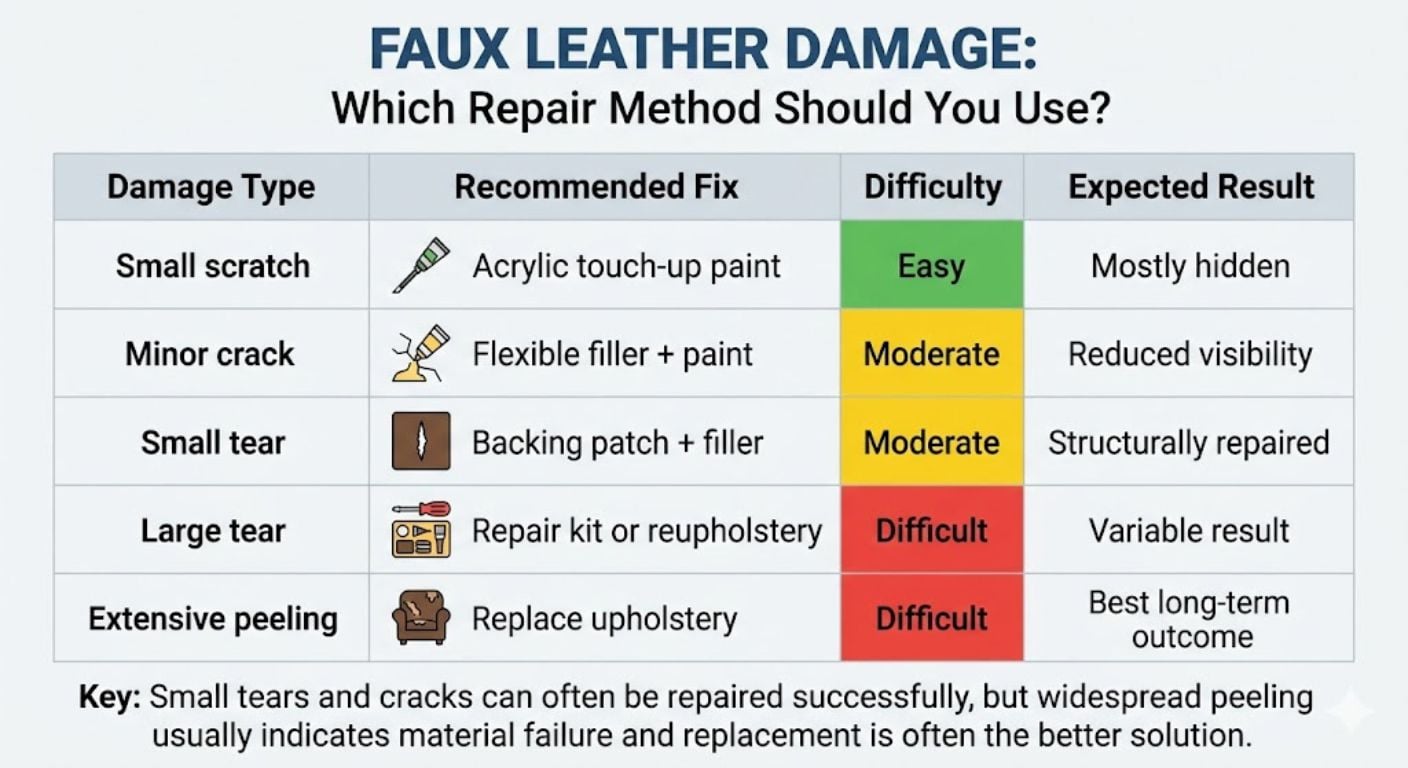
Common Types of Faux Leather Damage
| Damage Type | Recommended Fix | Notes |
|---|---|---|
| Small surface tear | Flexible adhesive and filler | Usually suitable for DIY repair |
| Deep split | Sub-patch and repair compound | Requires structural support underneath |
| Cracking | Leather filler and colour restoration | Works best before material begins peeling |
| Peeling or flaking | Remove loose coating, repaint surface | May be temporary if deterioration is widespread |
| Large damaged section | Professional repair or replacement | Often more economical long term |
What You Need Before Starting
- Faux leather repair kit
- Flexible leather adhesive
- Repair compound or leather filler
- Backing fabric or sub-patch
- Fine sandpaper
- Cleaning alcohol or upholstery cleaner
- Colour-matched acrylic leather paint
- Soft cloth
- Palette knife or applicator
Using products designed specifically for flexible upholstery materials is important. Standard household glues often become brittle and can cause the repair to fail.
How to Repair a Tear in Faux Leather Furniture
The most reliable method for repairing a tear follows five straightforward steps.
- Remove any loose material around the damaged area.
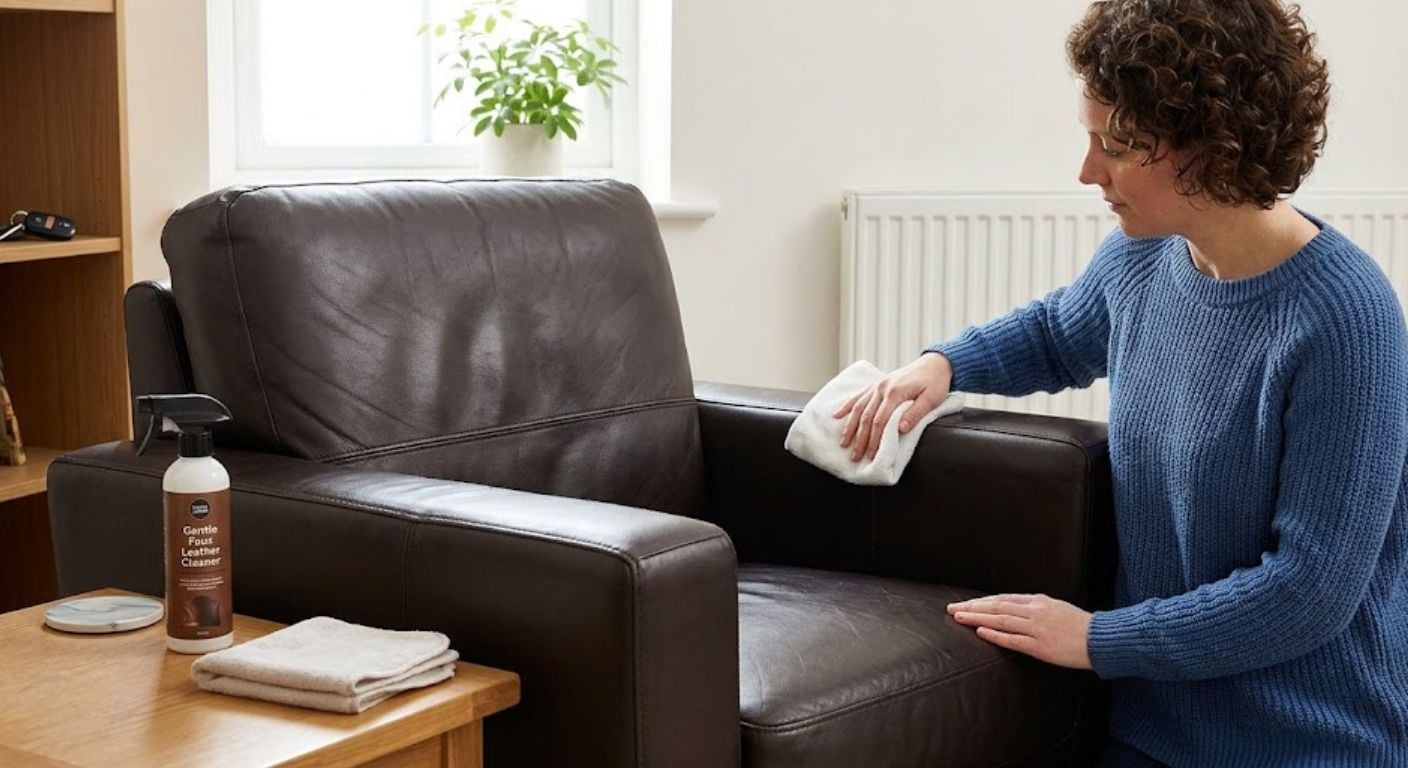
- Clean the surface thoroughly using alcohol or upholstery cleaner.
- Insert a backing patch underneath larger tears.
- Apply flexible leather filler and smooth the surface.
- Restore the colour using matching acrylic leather paint.
Step 1: Clean the Damaged Area
Remove dirt, oils, and debris before attempting any repair. A clean surface allows adhesives and fillers to bond properly. Allow the area to dry completely before moving to the next stage.
Step 2: Trim Loose Edges
If the tear has ragged edges or lifting material, carefully trim away loose sections. Avoid cutting healthy material, as this can make the damage larger.
Step 3: Add a Backing Patch for Larger Tears
For tears longer than a few centimetres, place a backing fabric underneath the damaged section. This provides structural support and prevents the repair from sinking into the gap.
The best glue for repairing tears in faux leather furniture is usually a flexible upholstery adhesive used together with a backing patch. Super glue may hold temporarily but often becomes rigid and can crack when the furniture flexes.
Step 4: Apply Leather Filler
Spread a thin layer of repair compound across the damaged area. Allow it to dry according to the manufacturer's instructions before applying additional layers if necessary.
Several thin layers generally produce a smoother finish than one thick application.
Step 5: Restore Colour and Texture
Once the filler has cured, lightly sand any uneven areas. Apply colour-matched acrylic leather paint in thin coats until the repair blends with the surrounding surface.
Where possible, finish with a protective top coat designed for faux leather repairs.
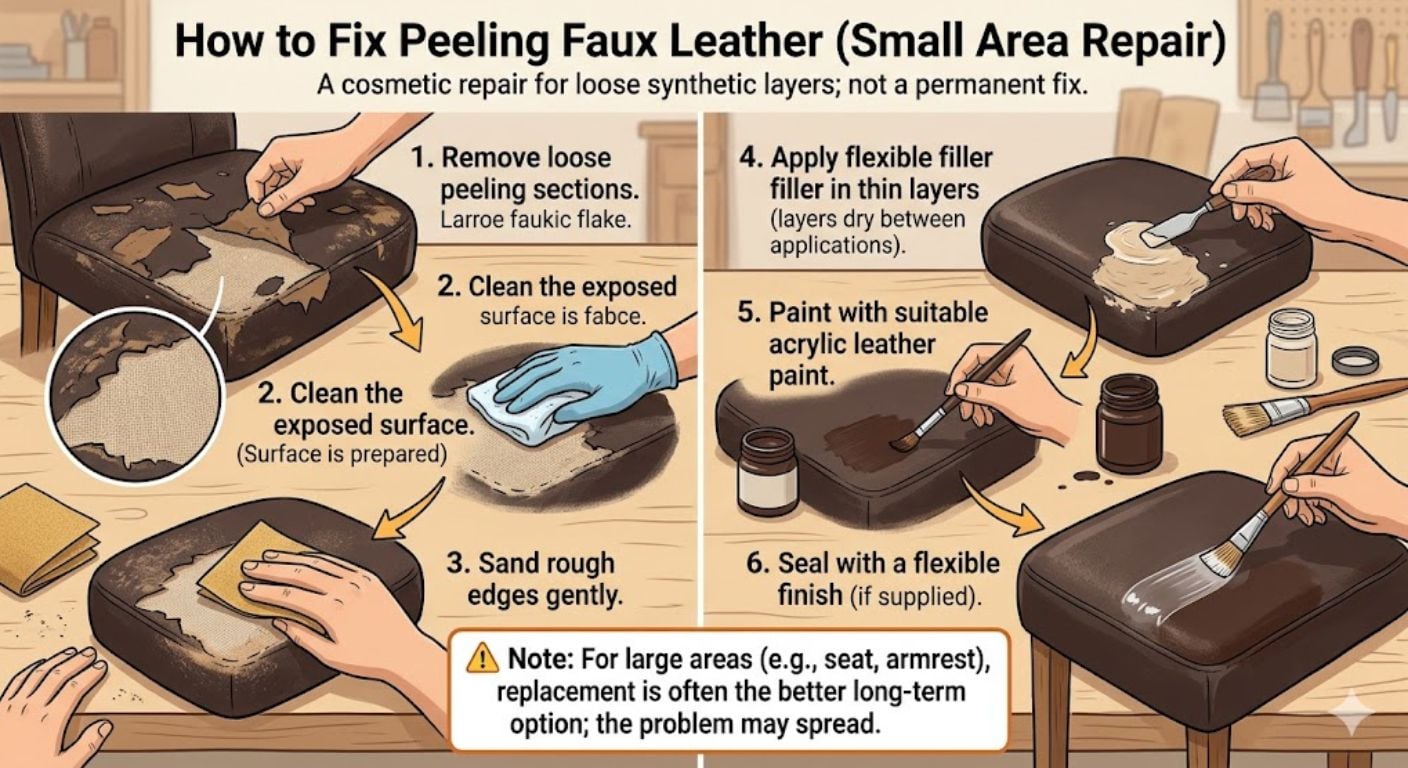
How to Repair Peeling Faux Leather
Peeling requires a slightly different approach because the damaged coating must be removed before refinishing the surface.
- Remove all loose and flaking material.
- Clean the exposed surface.
- Sand rough edges smooth.
- Apply flexible filler where needed.
- Paint using thin coats of acrylic leather paint.
- Apply a protective finisher.
One thing we regularly hear from our customers is that peeling often starts in one small area but spreads far faster than expected once daily use continues. Early intervention usually produces better results.
PU Leather vs Bonded Leather Peeling
PU leather and bonded leather often fail in similar ways, but they are different materials.
- PU leather: Fabric backing coated with polyurethane.
- Bonded leather: Leather fibres mixed with synthetic materials and coated with polyurethane.
Both materials can suffer from delamination, where the surface layer separates from the backing. Once widespread peeling starts, repairs become increasingly difficult because the surrounding material is often close to failure as well.
When Repair Makes Sense
- Small tears and splits
- Localised cracking
- Minor peeling
- Furniture that is otherwise structurally sound
- Damage in low-visibility areas
When Replacement May Be Better
- Large areas of peeling
- Multiple damaged sections
- Repeated repair failures
- Furniture nearing the end of its lifespan
- Damage affecting appearance across the entire seat
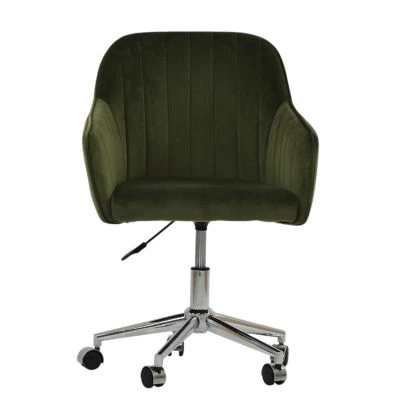
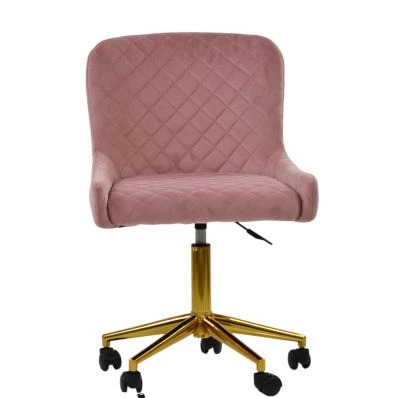
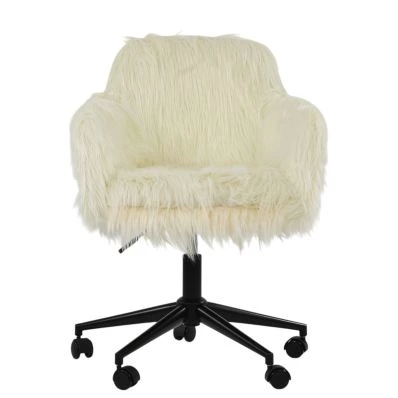
If replacement becomes the more practical option, browsing modern office chairs, dining chairs, or bar stools can often be more cost-effective than repeated repairs.
For additional information about material durability and furniture care, the UK government's consumer advice resources available through consumer protection guidance provide useful information about furniture ownership and maintenance.
Frequently Asked Questions
Can faux leather be repaired?
Yes. Small tears, cracks, and localised peeling can often be repaired successfully using filler, flexible adhesive, and colour restoration products. Results depend heavily on the condition of the surrounding material.
Can you use nail polish to fix peeling faux leather?
Nail polish is generally considered a temporary cosmetic fix. It may crack, become brittle, or discolour over time. Acrylic leather paint designed for upholstery repairs usually provides a more durable result.
How long does a faux leather repair last?
A well-executed repair can last months or years depending on usage. High-friction areas such as seat cushions typically wear faster than decorative sections or chair backs.
Can faux leather furniture be painted?
Yes. Flexible acrylic leather paints are commonly used to restore colour after repairs. Multiple thin coats generally provide the most natural finish.
What causes faux leather to peel after only a year?
Premature peeling can result from poor-quality materials, heavy use, direct sunlight, humidity, or manufacturing differences in the polyurethane coating.
-
-
-
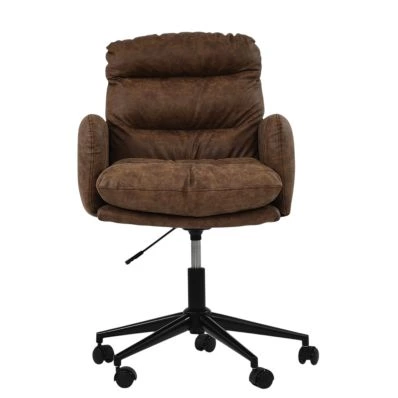
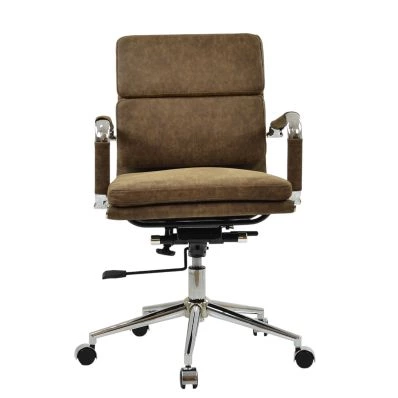 Chester Office Chair in Aged Brown LeatherSpecial Price £119.99 Regular Price £179.99 Original price 33% Inc VATSaving £60
 -
-
-
-
-
-
-
-
-
Final Thoughts
Most small tears in faux leather furniture can be repaired successfully if addressed early. Cleaning the area, reinforcing larger splits with a backing patch, applying flexible filler, and restoring colour with acrylic leather paint provides the best chance of a durable repair.
When damage is widespread or peeling affects large sections of the furniture, replacement is often the more practical long-term solution. Understanding the condition of the material before starting helps avoid spending time and money on repairs that may not last.


Comments