
 Chat with us on WhatsApp

Tik Tok Cross Legged Office Chairs
Cross legged office chairs have become popular because they suit the way many people actually sit at a desk. Instead of sitting with both feet flat on the floor all day, some people change position, tuck one leg under, or sit cross-legged for comfort, focus, or habit.
The problem is that not every office chair works well for this. A chair may look wide enough online but still feel restrictive once you add armrests, seat depth, cushion shape, and desk height into the decision. A good cross legged office chair should give enough seat space without removing the support needed for normal desk work.
This guide explains what to look for, what to avoid, and when a cross-legged sitting chair makes sense.
What Is A Cross Legged Office Chair?
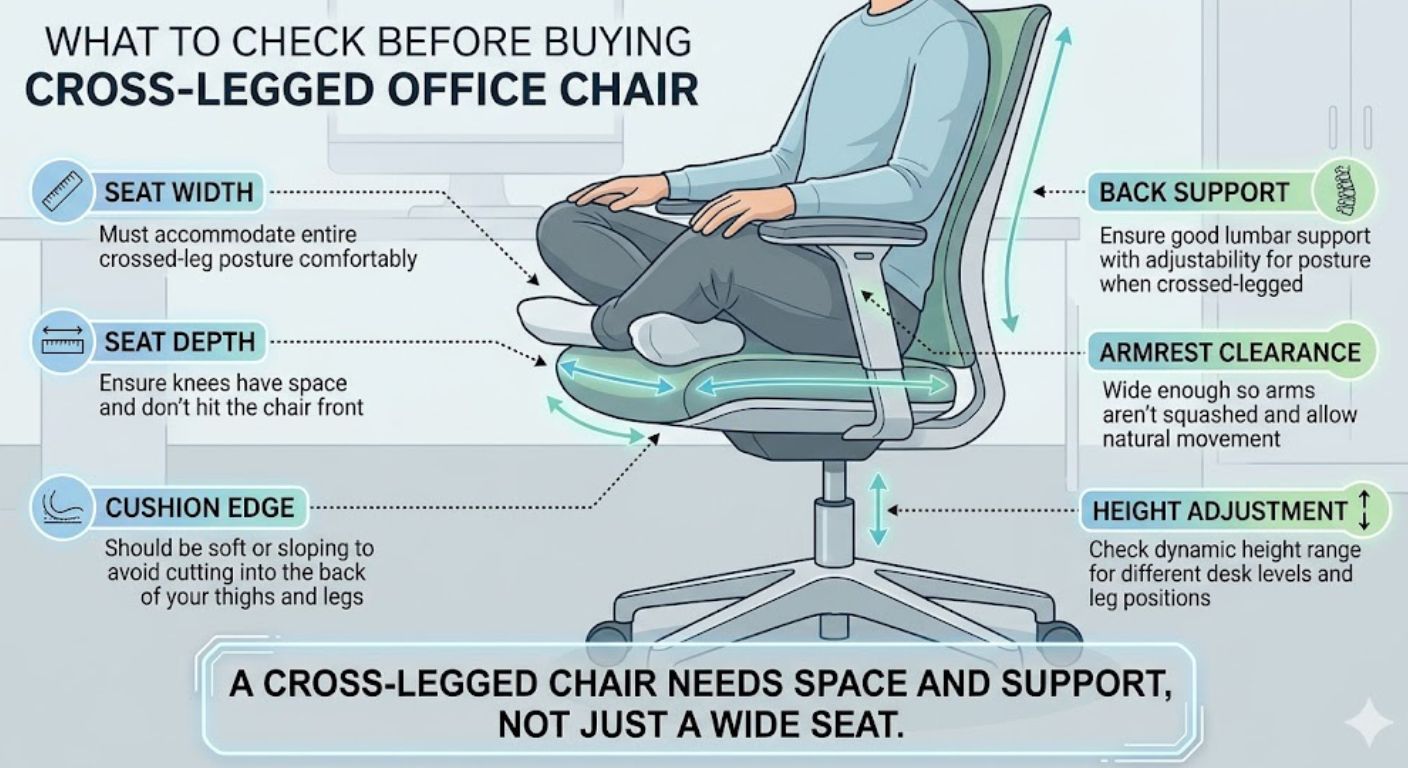
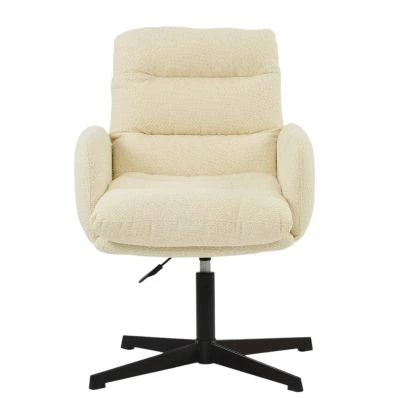
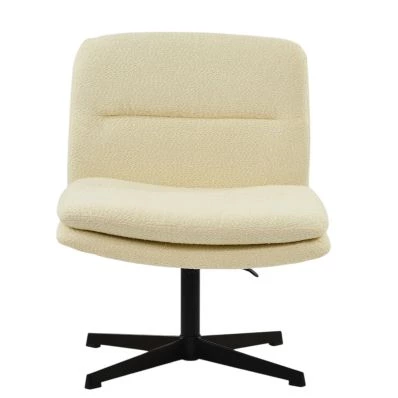
A cross legged office chair is usually a desk chair with a wider seat, fewer side restrictions, and enough room to change sitting position. Many viral TikTok-style versions are armless, rounded, and padded, but the useful part is not the trend. It is the extra seat space.
The best designs normally include:
- A wide, flat seat base
- Minimal side bolsters
- Enough seat depth for support
- Adjustable height
- Room to move your legs without catching the arms
A chair does not need to be completely armless to work. Flip-up arms, removable arms, or wider-set arms can also help, provided the chair still supports your upper body when typing.
Why Are Cross Legged Office Chairs Popular?
They are popular because many people do not sit in one fixed position for long periods. Some people feel more grounded sitting cross-legged. Others use it as a way to shift pressure, reduce restlessness, or feel more comfortable while working from home.
This is especially common in home offices, where people often want a chair that feels less rigid than a traditional task chair. The issue is that comfort and support are not the same thing. A chair can feel relaxed at first but still cause strain if it lacks height control, back support, or enough seat structure.
For broader setup guidance, it is worth reading this office chair posture guide alongside this article, as the right chair still needs to work with your desk, screen, and arm position.
How Wide Should A Cross Legged Office Chair Be?
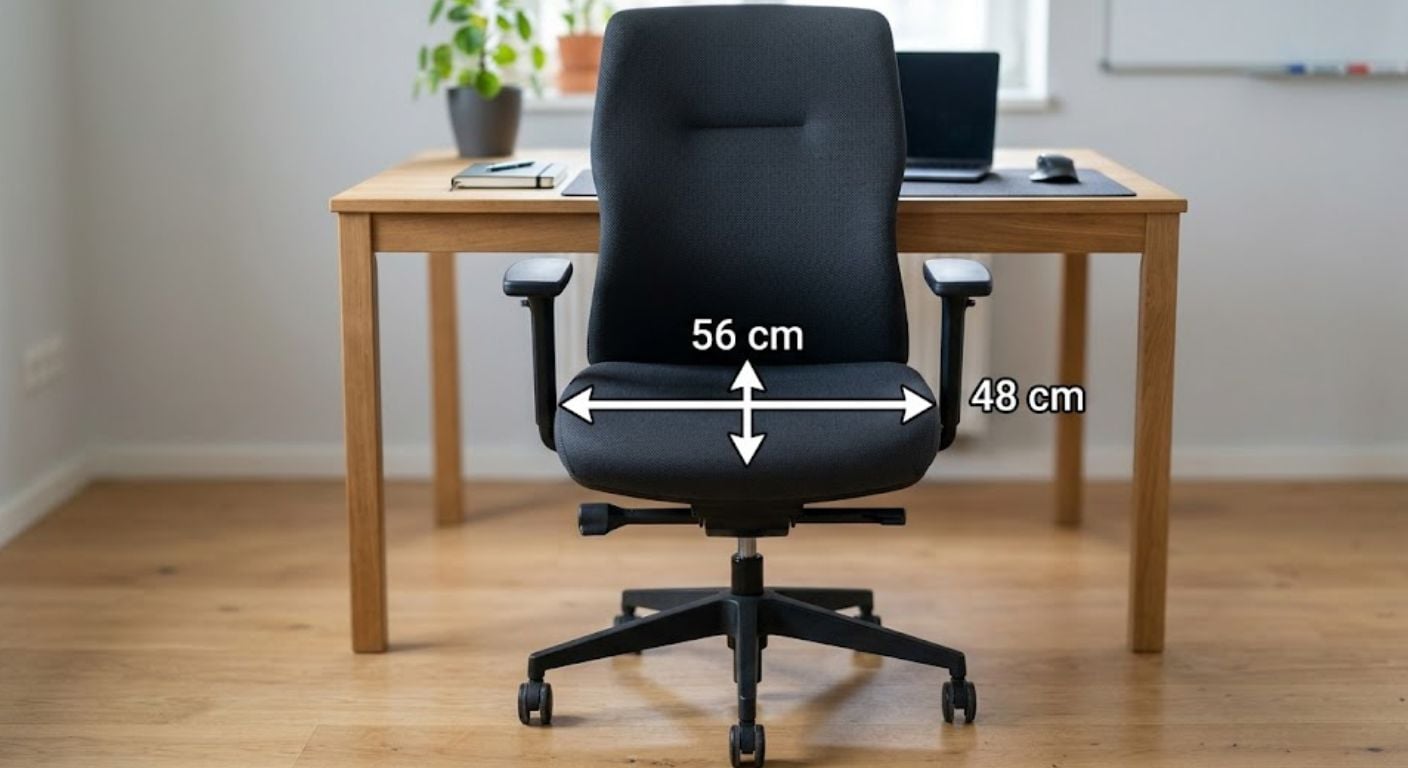
For most adults, a seat width of around 50cm to 56cm is a useful starting point for sitting cross-legged. Wider seats give more room for knees and ankles, but width alone is not enough. The seat also needs the right depth and shape.
Look for:
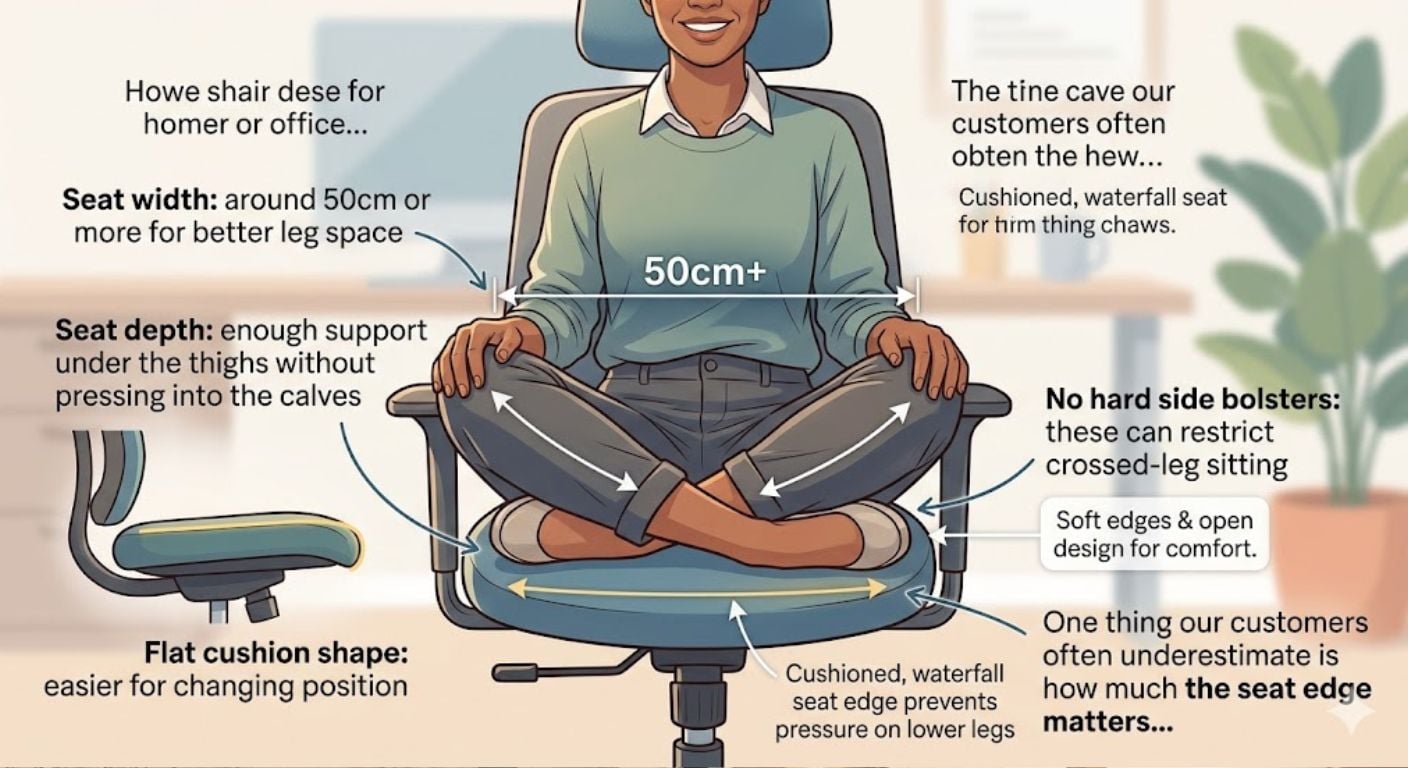
- Seat width: around 50cm or more for better leg space
- Seat depth: enough support under the thighs without pressing into the calves
- Flat cushion shape: easier for changing position
- No hard side bolsters: these can restrict crossed-leg sitting
One thing our customers often underestimate is how much the seat edge matters — if the front edge presses into the lower leg, the chair can feel uncomfortable even when the seat is technically wide enough.
Are Armless Office Chairs Better For Sitting Cross Legged?
Armless chairs give more leg freedom, but they are not always better for long working sessions. Without arm support, your shoulders and neck may work harder when typing, especially if your desk height is not right.
An armless chair can make sense if you:
- Regularly tuck your legs under or sit cross-legged
- Use the chair for shorter work sessions
- Need the chair to slide fully under a desk
- Prefer a less restrictive seat shape
However, adjustable or flip-up arms may be better if you work at a desk for most of the day. They give you space when you want to change position, but still support your arms when typing.
Can Sitting Cross Legged At A Desk Cause Problems?
Sitting cross-legged is not automatically bad, but staying in any fixed position for too long can become uncomfortable. The main issues are pressure, reduced movement, and uneven weight distribution through the hips and lower back.
Possible problems include:
- Numbness or pins and needles in the legs
- Pressure around the ankles or calves
- Hip tightness after long periods
- Lower back discomfort if the pelvis tilts awkwardly
- Poor upper-body position if the chair is too low or unsupported
External ergonomics guidance from Cambridge University Hospitals also highlights the importance of adjusting the chair and changing position regularly, rather than treating one sitting position as correct all day.
What Features Matter Most?
Wide Seat Base
The seat needs enough width for your legs without forcing your knees into the armrests. A flat, open seat usually works better than a narrow sculpted seat.
Adjustable Height
Height adjustment matters because the chair still needs to work at your desk. If the chair is too low, your shoulders may lift while typing. If it is too high, your legs may feel unsupported when sitting normally.
Supportive Cushioning
Very soft padding can feel comfortable at first but may compress quickly. A medium-firm cushion usually gives better support for mixed sitting positions.
Back Support
A cross-legged chair should still support your back when you sit normally. A wide seat without back support may feel casual, but it is less useful for longer desk sessions.
Armrest Design
Fixed arms can get in the way. Armless, flip-up, removable, or adjustable arms are usually better choices for people who often change position.
Who Does A Cross Legged Office Chair Suit?
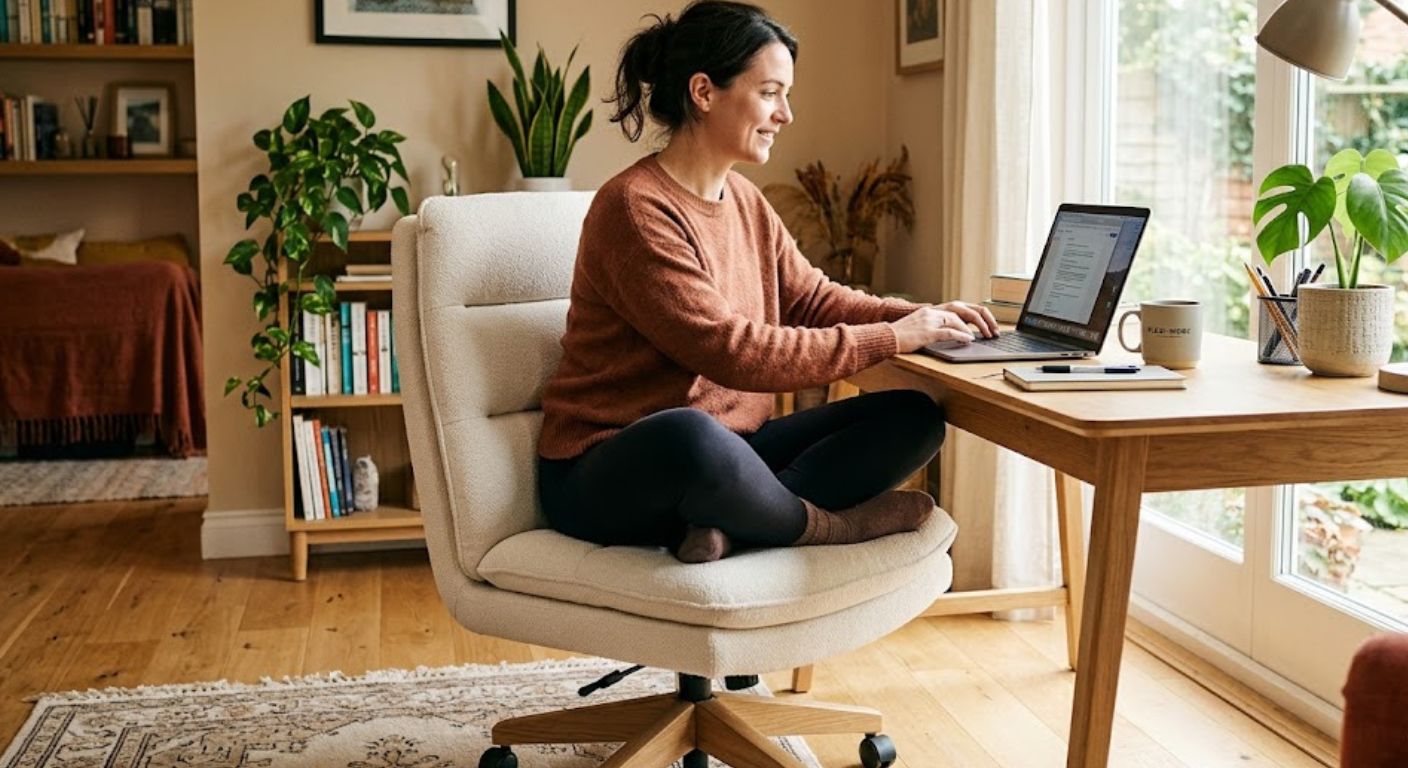
A cross legged office chair can suit people who shift position often, sit tucked up at a desk, or find standard task chairs too restrictive. It can also suit home offices where comfort and flexibility matter as much as a formal office look.
It may be a good option if you:
- Often sit cross-legged without thinking about it
- Need a wider desk chair
- Prefer an armless or open-sided design
- Work from home and change position during the day
- Want a softer-looking chair for a bedroom or home office
If you are comparing different seating options, our main office chairs category gives a broader view of styles, materials, and adjustable options.
When Should You Avoid One?
A cross-legged chair is not always the best choice. If you need strong structured support for long working hours, a more traditional adjustable office chair may be better. The same applies if you rely heavily on armrests for typing support.
You may want to avoid a TikTok-style cross-legged chair if:
- You sit at a desk for full working days
- You need strong arm and back support
- You often experience leg numbness
- You need a chair for heavy commercial use
- Your desk requires precise seat height and arm positioning
For longer working sessions, a chair that allows movement but still gives structured support is usually the safer decision.
Cross Legged Chair Vs Standard Office Chair
| Feature | Cross Legged Office Chair | Standard Office Chair |
|---|---|---|
| Seat space | Usually wider and more open | Often narrower and more structured |
| Armrests | Often armless or flexible | Often fixed or adjustable |
| Best for | Changing position and relaxed home working | Longer desk sessions and structured support |
| Main risk | Less upper-body support | Can feel restrictive for leg movement |
How To Use A Cross Legged Office Chair More Comfortably
The best approach is to use the chair for movement, not as permission to sit in one position all day. Change between normal sitting, cross-legged sitting, standing, and short movement breaks.
- Keep the chair close enough to the desk to avoid leaning forward
- Adjust the seat height so your arms are relaxed when typing
- Change position before your legs go numb
- Avoid sitting on one foot for long periods
- Use the backrest when sitting normally
If you are unsure whether the issue is the chair or the setup, this desk chair setup guide explains how height, armrests, and screen position work together.
FAQ
Are cross legged office chairs ergonomic?
They can be comfortable, but they are not automatically ergonomic. The chair still needs the right seat height, width, cushioning, and back support. A wide seat helps with leg space, but support and movement matter just as much.
What is the best office chair for sitting cross legged?
The best option is usually a wide-seat office chair with a flat cushion, adjustable height, and either no arms or arms that move out of the way. Avoid narrow seats, hard side bolsters, and fixed arms that restrict knee movement.
Do I need an armless chair to sit cross legged?
No, but armless chairs often make it easier. Flip-up or adjustable arms can also work because they allow more leg space while still giving arm support when needed.
Why do my legs go numb when I sit cross legged?
Numbness usually comes from pressure on nerves or reduced circulation from staying in one position too long. If this happens often, change position sooner and avoid chairs with hard seat edges or restricted leg space.
Are TikTok cross legged chairs good for working from home?
They can work well for light to moderate home working, especially if you change position often. For full-day desk work, choose carefully and make sure the chair still gives enough back support, height adjustment, and typing comfort.
-
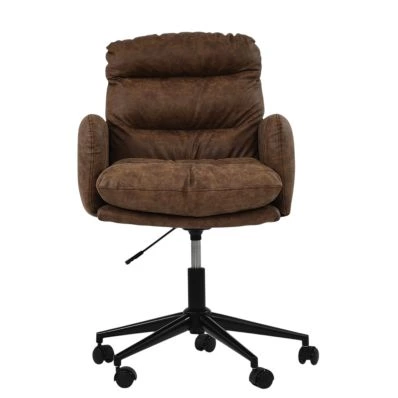
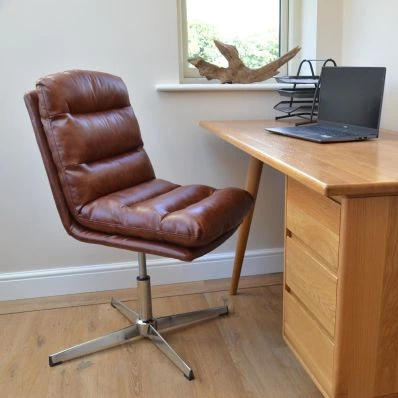
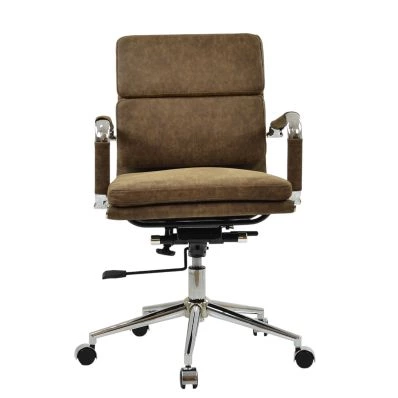 Chester Office Chair in Aged Brown LeatherSpecial Price £129.99 Regular Price £179.99 Original price 28% Inc VATSaving £50
 -
-
-
-
-
-
-
-
-
-
-
Final Takeaway
A good cross legged office chair is not just a wide seat with a trendy shape. It should give enough room to move while still supporting normal desk work. Focus on seat width, cushion shape, height adjustment, and armrest design before choosing.
For wider buying guidance, compare this article with the main office chair posture guide and the full range of office chairs.


Comments