
 Chat with us on WhatsApp


Vanity Chair vs Dining Chair: Why Vanity Chairs Are Smaller
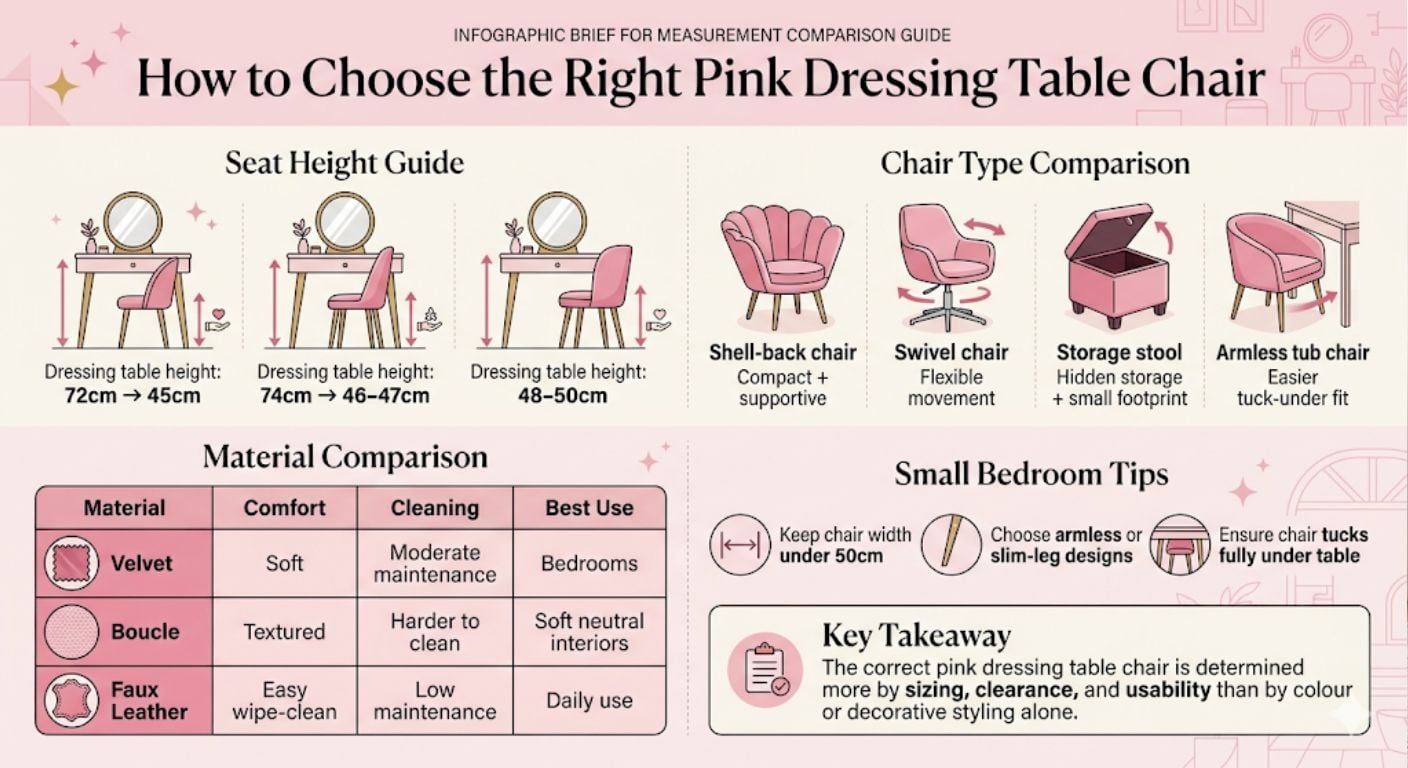
A vanity chair and a dining chair may look similar at first glance, but they are designed for different types of use. The biggest difference is size. Vanity chairs are usually lower, narrower, and easier to tuck underneath a dressing table, while dining chairs are built around standard dining table dimensions and longer seated use.
That size difference matters in smaller bedrooms where clearance space is limited. A bulky dining chair can stop drawers opening properly or leave the dressing table area feeling cramped. A dedicated vanity chair is designed to work within tighter spaces while still giving enough comfort for daily routines.
If you are comparing different bedroom seating options, the wider guide on choosing a bedroom chair covers the broader decision process in more detail: Choose the Right Bedroom Chair.
Vanity Chair vs Dining Chair at a Glance
| Feature | Vanity Chair | Dining Chair |
|---|---|---|
| Typical Seat Height | 45–50 cm | 46–52 cm |
| Overall Width | Compact | Usually wider |
| Designed to Tuck Under Table | Yes | Not always |
| Back Support | Moderate | Usually stronger |
| Best for Small Bedrooms | Yes | Sometimes too bulky |
| Best for Long Sitting Sessions | Depends on design | Usually better |
Why Vanity Chairs Are Smaller
Vanity chairs are built around dressing table dimensions rather than dining table dimensions. Most dressing tables are shallower than dining tables, and bedrooms usually have less free circulation space than dining rooms.
That changes the chair design in several ways:
- Smaller seat footprint
- Lower overall height
- Reduced arm width or no arms at all
- Lighter frame construction
- Easier movement around confined spaces
A standard dining chair is normally designed to stay visible around a dining table. A vanity chair is usually expected to slide underneath the dressing table when not in use.
That difference alone explains why vanity seating tends to look more compact.
Ideal Vanity Chair Height
The seat height of a vanity chair should usually sit 25–30 cm below the dressing table surface. For a standard 76 cm dressing table, a seat height of roughly 46–50 cm normally gives comfortable leg clearance and sitting posture.
Most dressing table setups work best when there is enough room for:
- Knee clearance
- Drawer access
- Comfortable elbow positioning
- Space to cross legs or reposition easily
One issue we see with our customers is that many people measure the tabletop height but forget to account for the apron or drawer underneath, which can reduce usable knee clearance more than expected.
Can You Use a Dining Chair as a Vanity Chair?
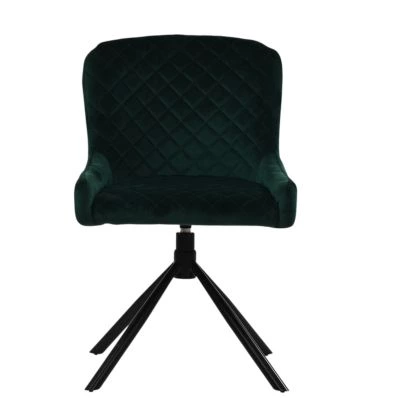
Yes, you can use a dining chair as a vanity chair, but there are trade-offs. Dining chairs usually provide better back support, but they are often bulkier and may not slide fully underneath the dressing table.
A dining chair works better when:
- The bedroom has more floor space
- The dressing table is wider or deeper
- You spend longer periods seated
- You prefer stronger back support
A dedicated vanity chair usually works better when:
- Space is limited
- You want the chair tucked away neatly
- The dressing table is compact
- The room layout is tight around wardrobes or beds
Some dining chairs also sit too high visually beside lower-profile dressing tables. The proportions can look awkward even if the measurements technically fit.
Why Small Bedrooms Usually Need Smaller Vanity Chairs
In smaller bedrooms, circulation space matters more than seat size. A chair that extends too far from the dressing table can interfere with:
- Wardrobe doors
- Bed clearance
- Walkways
- Drawer access
That is why many dressing table chairs use:
- Armless designs
- Curved backs
- Compact swivel bases
- Stool-style frames
- Rounded silhouettes
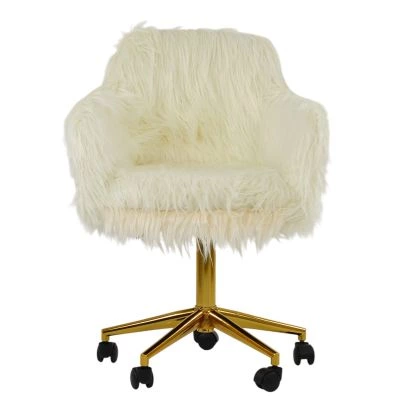
Many buyers looking through dressing table chairs are primarily trying to solve a space problem rather than a styling problem.
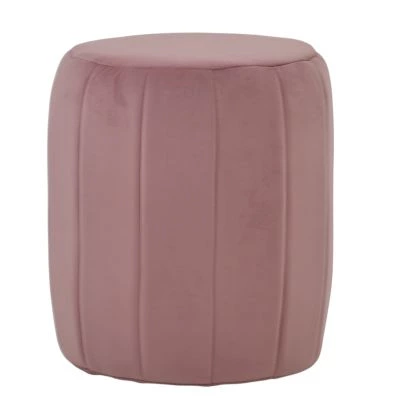
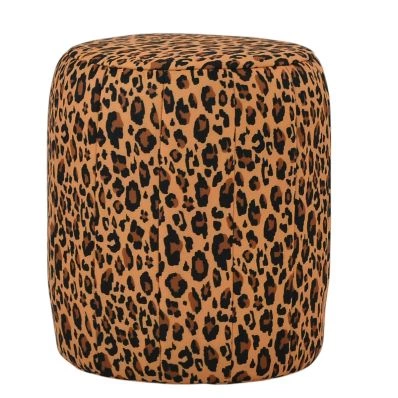
If the room is particularly compact, fully backless stools or small pouffe-style seats are often the easiest option because they can disappear completely underneath the table.
Vanity Chair Comfort vs Dining Chair Comfort
Dining chairs are normally designed for longer seated periods during meals, which is why they often include:
- Taller backrests
- Broader seat pads
- More rigid frame support
- Wider sitting position
Vanity chairs prioritise compactness first. Comfort still matters, but the design balance shifts toward space efficiency.
For shorter daily routines, many people prefer compact vanity chairs because they:
- Take up less visual space
- Move more easily
- Keep the dressing area uncluttered
- Fit smaller furniture proportions better
For longer makeup routines, work-from-bedroom setups, or hair styling sessions, a fully upholstered chair with a supportive backrest usually becomes more practical than a small stool.
Velvet, Boucle and Faux Leather: Which Materials Work Best?
Velvet
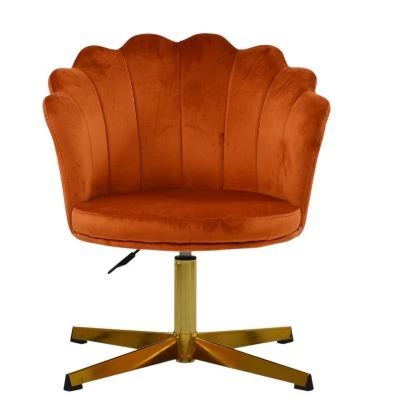
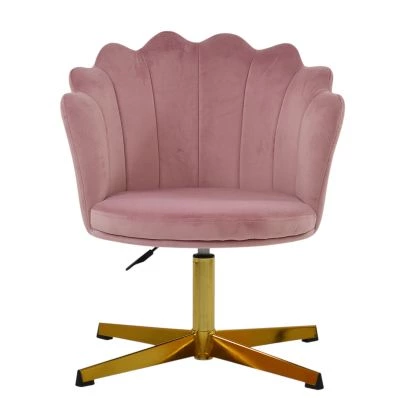
Velvet remains one of the most common upholstery choices for vanity seating because it adds softness without making the chair visually heavy. It works particularly well on compact chairs with rounded backs.
The downside is maintenance. Velvet can mark more easily from makeup powders, oils, or pets.
Boucle
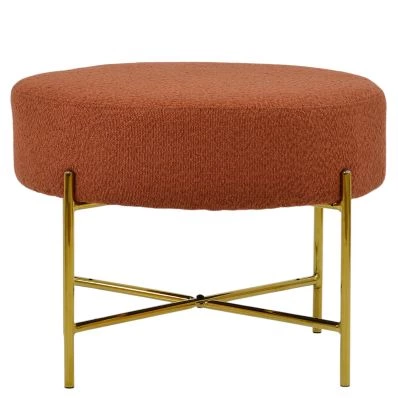
Boucle creates a textured finish that works well in softer bedroom interiors. It also hides light creasing better than smooth fabrics.
However, boucle is harder to spot-clean after spills because makeup residue can catch within the textured weave.
Faux Leather
Faux leather or PU upholstery is easier to wipe clean and generally more durable against cosmetic spills.
It is often the most practical option where the chair will be used daily for makeup application or hair styling.
Swivel and Adjustable Vanity Chairs
Some modern vanity chairs include practical movement features such as:
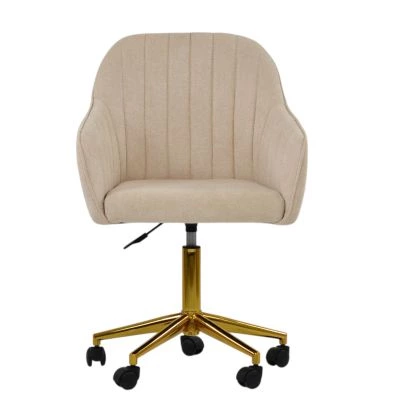
- 360-degree swivel bases
- Gas lift height adjustment
- Small castor wheels
- Rotating seat mechanisms
These features are useful when the dressing table doubles as a work desk or when multiple people use the same setup.
Height adjustment also helps if the dressing table sits outside standard dimensions.
However, larger office-style bases can make compact rooms feel visually crowded. In smaller bedrooms, a fixed-height chair often keeps the setup cleaner and easier to move around.
4-Step Buyer’s Checklist
- Measure the full clearance area
Measure width, depth, knee space, and drawer clearance — not just tabletop height. - Decide how long you normally sit
Short routines can work well with compact stools. Longer sessions usually benefit from a supportive backrest. - Check whether the chair fully tucks underneath
This matters more in smaller bedrooms than most buyers initially expect. - Choose materials based on practical use
Velvet and boucle create a softer finish, while faux leather is usually easier to maintain.
When a Dining Chair Makes More Sense
A dining chair can still be the better option in some setups.
It usually makes more sense when:
- The dressing table is full-sized rather than compact
- The room has generous floor space
- You already own matching bedroom furniture
- You prioritise support over compactness
- The chair will be used for occasional desk work
In larger bedrooms, the extra width and visual weight are less noticeable.
FAQ
What is the ideal height for a vanity chair?
The seat height should normally sit around 25–30 cm below the dressing table surface. For most standard dressing tables, this means a chair seat height of roughly 46–50 cm.
Are vanity chairs suitable for small bedrooms?
Yes. Most vanity chairs are specifically designed for smaller spaces. Narrow frames, armless designs, and tuck-under seating help reduce how much floor space the chair occupies when not in use.
Is a stool or chair better for a dressing table?
A stool usually saves more space and can slide fully underneath the table. A chair with a backrest is generally more comfortable for longer routines or daily use.
Can a dining chair damage a dressing table setup?
Not directly, but oversized dining chairs can restrict movement around the dressing table and make smaller bedrooms feel crowded. They may also prevent drawers opening fully if the chair is too deep.
Final Thoughts
Vanity chairs are smaller because they are designed around compact bedroom layouts, lower-profile dressing tables, and limited clearance space. Dining chairs prioritise broader seating support and longer use, which naturally creates a larger frame.
The right choice depends less on style and more on how the chair will function within the room. Measuring clearance properly and understanding how the chair will be used usually matters more than appearance alone.
For more guidance on choosing bedroom seating layouts and dimensions, see the main pillar guide: Choose Perfect Bedroom Chair.
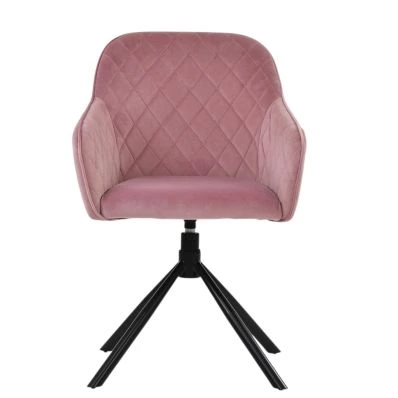
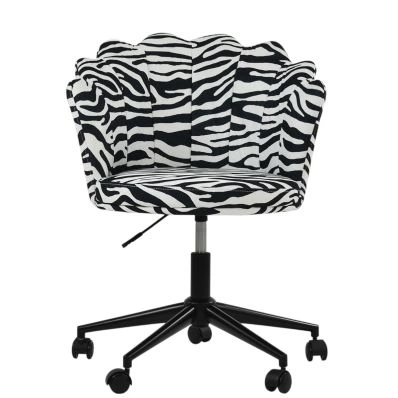
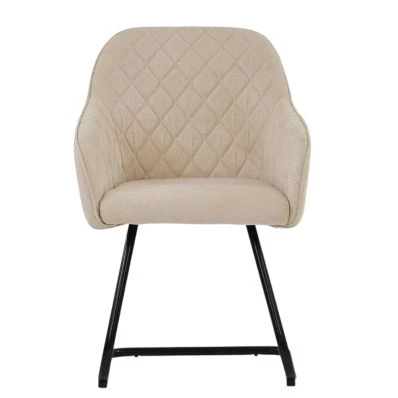
You can also browse the current range of dressing table chairs for compact seating options designed specifically for bedroom use.


Comments