
 Chat with us on WhatsApp

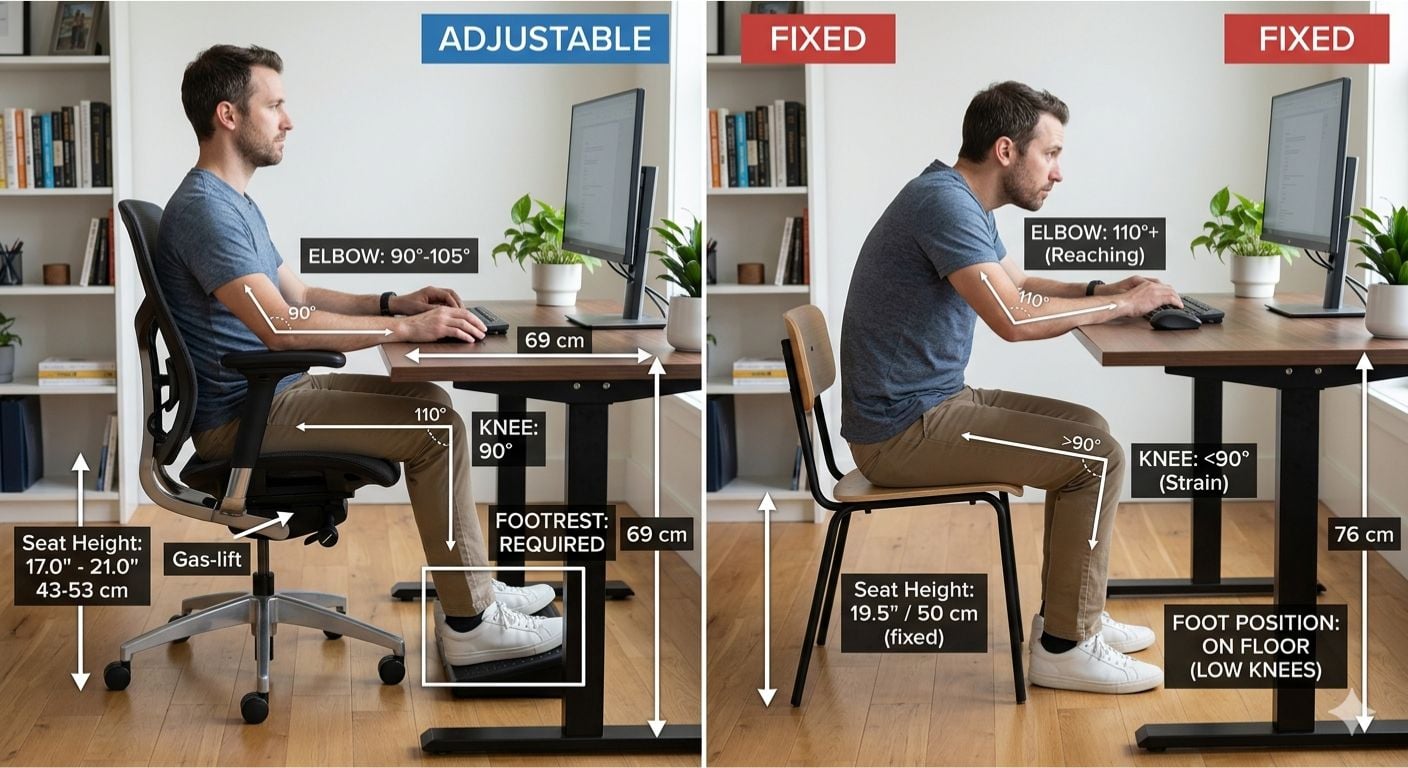
Adjustable Vs Fixed Height Office Chairs
Choosing between an adjustable and fixed height office chair affects more than comfort alone. Seat height changes how your feet sit on the floor, how your elbows line up with the desk, and whether your shoulders stay relaxed during long periods of work. A chair that sits too high or too low can gradually create poor posture habits, especially in home office setups where desks are often fixed in place.
Adjustable height office chairs are now the standard for most full-time work environments because they accommodate different body sizes and desk heights more effectively. Fixed height chairs still have a place, particularly in occasional-use rooms, shared dining-style workspaces, and design-led interiors where simplicity matters more than ergonomic flexibility.
This guide explains the practical differences between adjustable and fixed height office chairs, where each option works best, and what buyers should realistically expect from both.
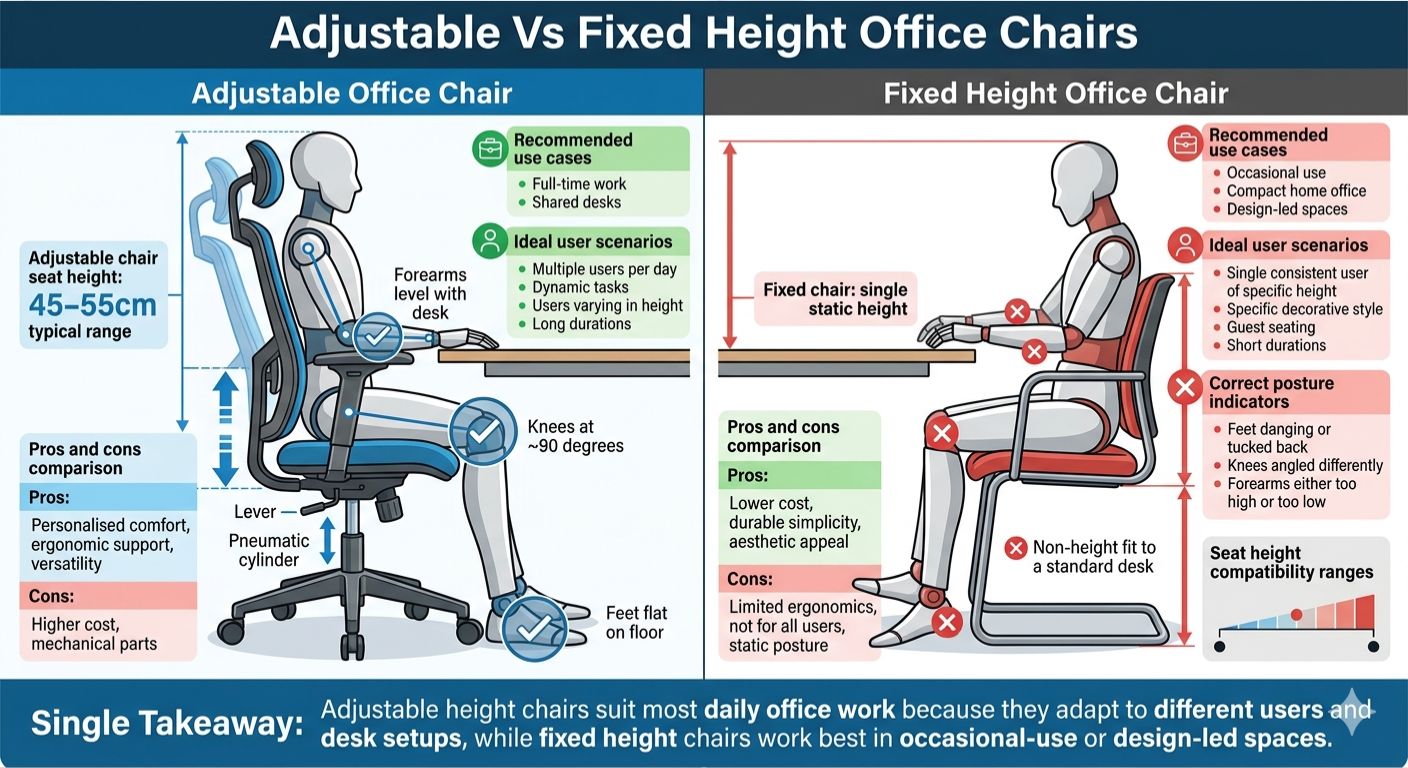
What Is the Difference Between Adjustable and Fixed Height Office Chairs?
An adjustable height office chair uses a gas-lift mechanism to raise or lower the seat position. Most adjustable chairs operate within a seat height range of approximately 45–55cm, although some ergonomic models offer wider adjustment ranges.
A fixed height office chair stays at one seat height permanently. The frame height cannot be changed after assembly.
The main difference is adaptability. Adjustable chairs allow the seating position to match different users and desk setups, while fixed height chairs rely on the user fitting the chair correctly from the start.
| Feature | Adjustable Height Chair | Fixed Height Chair |
|---|---|---|
| Seat height changes | Yes | No |
| Typical mechanism | Gas-lift lever | Fixed frame |
| Better for shared use | Yes | No |
| Works with multiple desk heights | Yes | Limited |
| Simpler structure | No | Yes |
| Common use | Full-time office work | Occasional or design-led spaces |
Why Seat Height Matters More Than Most Buyers Expect
Correct office chair height is when your feet stay flat on the floor, your knees remain close to a 90-degree angle, and your forearms sit comfortably level with the desk surface.
When the chair height is wrong, users usually compensate without noticing. Common posture changes include:
- Raising the shoulders while typing
- Leaning forward from the lower back
- Sitting on one leg
- Allowing feet to hang unsupported
- Sliding forward in the seat
Over time, these positions can contribute to neck tension, shoulder fatigue, and circulation issues.
According to the UK’s Health and Safety Executive, workstation setup and seating position both play a major role in reducing musculoskeletal strain during desk work.
One thing we see regularly is that our customers often focus heavily on upholstery or colour first, then realise afterwards that seat height compatibility with their desk matters far more during daily use.
Advantages of Adjustable Height Office Chairs
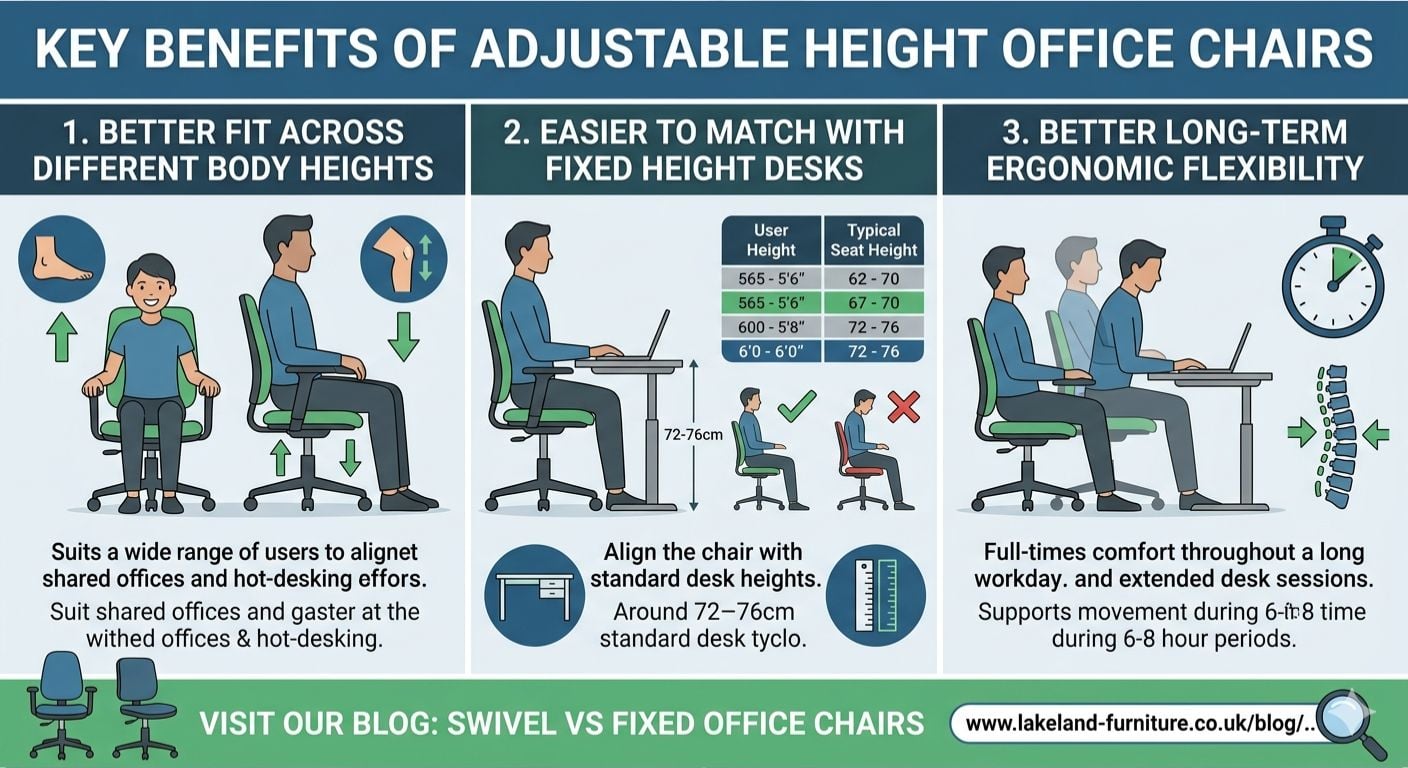
Better Fit Across Different Body Heights
Adjustable office chairs suit a wider range of users because the seat height can move to accommodate leg length and desk height differences.
This becomes particularly important for:
- Shorter users whose feet may not reach the floor
- Taller users needing more knee clearance
- Shared home office setups
- Hot-desking environments
Most ergonomic office seating is built around adjustability because there is no single fixed height that suits everyone equally.
Easier to Match With Fixed Height Desks
Many home office desks are fixed between
72–76cm high. An adjustable chair allows the user to align themselves properly with that desk height rather than adapting their posture around it.
For example:
| User Height | Typical Seat Height Range | Typical Desk Height |
|---|---|---|
| 5'0"–5'4" | 40–46cm | 72–74cm |
| 5'5"–5'10" | 45–52cm | 72–76cm |
| 5'11"+ | 50–56cm | 74–78cm |
These are general guidelines rather than strict rules, but they demonstrate why adjustability matters in multi-user environments.
Better Long-Term Ergonomic Flexibility
Height adjustment also supports movement throughout the day. Small position changes can reduce pressure buildup in the hips and thighs during extended sitting periods.
This matters more in:
- Full-time remote work
- 6–8 hour desk sessions
- Study environments
- Multi-purpose office rooms
If you are also comparing other ergonomic movement features, our guide on swivel vs fixed office chairs explains how mobility changes day-to-day usability.
Advantages of Fixed Height Office Chairs
Cleaner Appearance in Design-Led Rooms
Fixed height office chairs are often chosen because they resemble dining or accent chairs more than traditional task seating.
This suits:
- Dressing table setups
- Compact apartment offices
- Occasional-use desks
- Open-plan rooms where the chair remains visible
Many buyers prefer fixed height chairs when they want the workspace to blend into the room rather than look overtly corporate.
For buyers prioritising appearance alongside practicality, office chairs that don’t look like office chairs covers this in more detail.
Fewer Moving Parts
Fixed chairs have simpler construction because there is no gas-lift mechanism underneath the seat.
Benefits can include:
- Reduced mechanical wear
- Lower maintenance
- Slightly firmer seat feel
- Cleaner silhouette
However, simplicity only works if the chair height already suits both the user and desk setup.
Better for Occasional Rather Than Full-Time Use
A fixed height office chair can work well when:
- The chair is used for short sessions
- The desk height already matches the user
- Ergonomic adjustability is not the priority
- The room doubles as another living space
They are less suitable for full-time daily desk work where posture consistency becomes more important over time.
When Adjustable Height Chairs Make More Sense
Adjustable chairs are usually the safer option when:
- Multiple people use the same workspace
- You work from home full-time
- Desk height cannot be changed
- You spend more than 4 hours daily seated
- You are unsure about the ideal seat height
They also reduce the risk of buying a chair that visually fits the room but physically feels uncomfortable after longer use.
Most buyers looking at office chairs for regular weekday use benefit more from adjustable seating than fully fixed designs.
When Fixed Height Chairs Make More Sense
Fixed height office chairs work best when:
- The desk setup is already ergonomically compatible
- The chair is mainly decorative or occasional-use
- The workspace prioritises visual consistency
- You prefer a simpler structure without adjustment levers
They can also work well in dressing rooms, compact study areas, or hybrid dining/work spaces where full ergonomic functionality is not necessary.
If you are comparing posture-focused features beyond seat height alone, our article on lumbar support, tilt and seat depth explains how other chair adjustments affect long-term comfort.

Adjustable Vs Fixed Height Office Chairs: Pros and Cons
| Type | Pros | Cons |
|---|---|---|
| Adjustable Height | Better ergonomic flexibility, suits multiple users, easier desk matching | More moving parts, slightly bulkier appearance |
| Fixed Height | Cleaner design, simpler construction, often lighter visually | Limited fit flexibility, less suitable for long sessions |
FAQ
Are adjustable office chairs better for posture?
Yes, in most cases adjustable office chairs support posture more effectively because the seat height can align properly with the desk and floor position. This helps keep the shoulders relaxed, feet supported, and knees positioned correctly during longer periods of sitting.
Can a fixed height office chair still be comfortable?
Yes, but only if the seat height already matches the user and desk setup properly. Fixed height chairs often work best for shorter sitting sessions or occasional-use workspaces rather than full-time office use.
What happens if my feet do not reach the floor?
If your feet hang unsupported, pressure increases underneath the thighs and circulation can become restricted. A footrest or lower seat height usually solves this issue more effectively than changing posture to compensate.
How long should a good office chair last?
A budget office chair may last 2–4 years with regular use, while better mid-range ergonomic chairs commonly last 5–7 years. Premium commercial-grade seating can often exceed 10 years if maintained properly.
Do adjustable chairs always look more corporate?
Not necessarily. Many modern adjustable office chairs now combine ergonomic adjustment with softer upholstery, curved silhouettes, and more domestic styling intended for home offices rather than traditional commercial spaces.
-
-
-
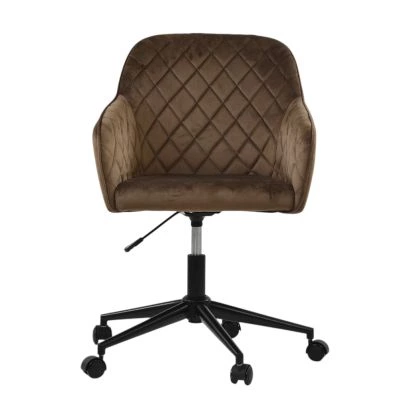
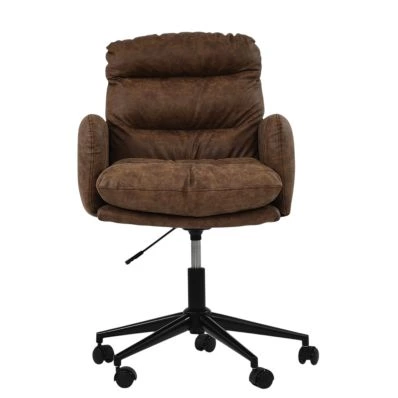
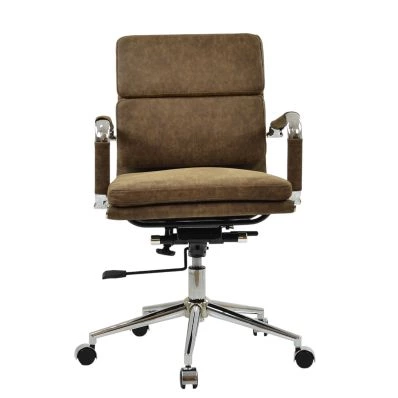 Chester Office Chair in Aged Brown LeatherSpecial Price £119.99 Regular Price £179.99 Original price 33% Inc VATSaving £60
 -
-
-
-
-
-
-
-
-
Conclusion
Adjustable height office chairs provide greater flexibility, better ergonomic compatibility, and stronger long-term practicality for most home office users. Fixed height chairs remain useful in occasional-use spaces and interiors where appearance and simplicity matter more than daily ergonomic adjustment.
The right option depends on how often the chair will be used, whether the workspace is shared, and how closely the desk height already matches the user.
If you are still comparing ergonomic seating features, our guide to buying an ergonomic office chair explains the wider decision framework in more detail.

Related Products
-
-
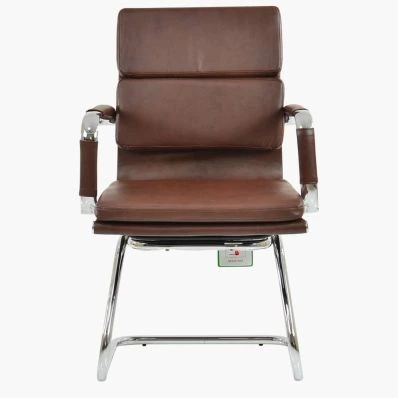
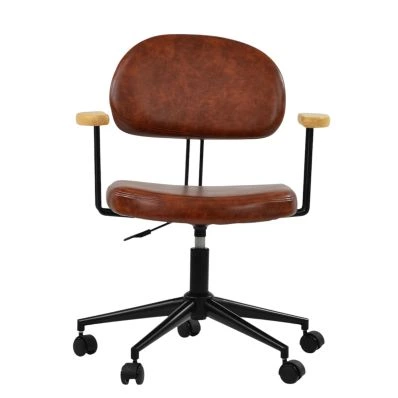 Laxi Office Chair in Vintage Brown LeatherSpecial Price £84.99 Regular Price £139.99 Original price 39% Inc VATSaving £55
 -
-
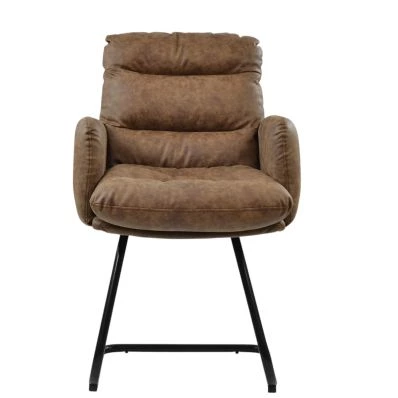
Chester Office Chair in Aged Brown LeatherSpecial Price £119.99 Regular Price £179.99 Original price 33% Inc VATSaving £60

Comments