
 Chat with us on WhatsApp

Advantages And Disadvantages Of Plastic Dining Chairs
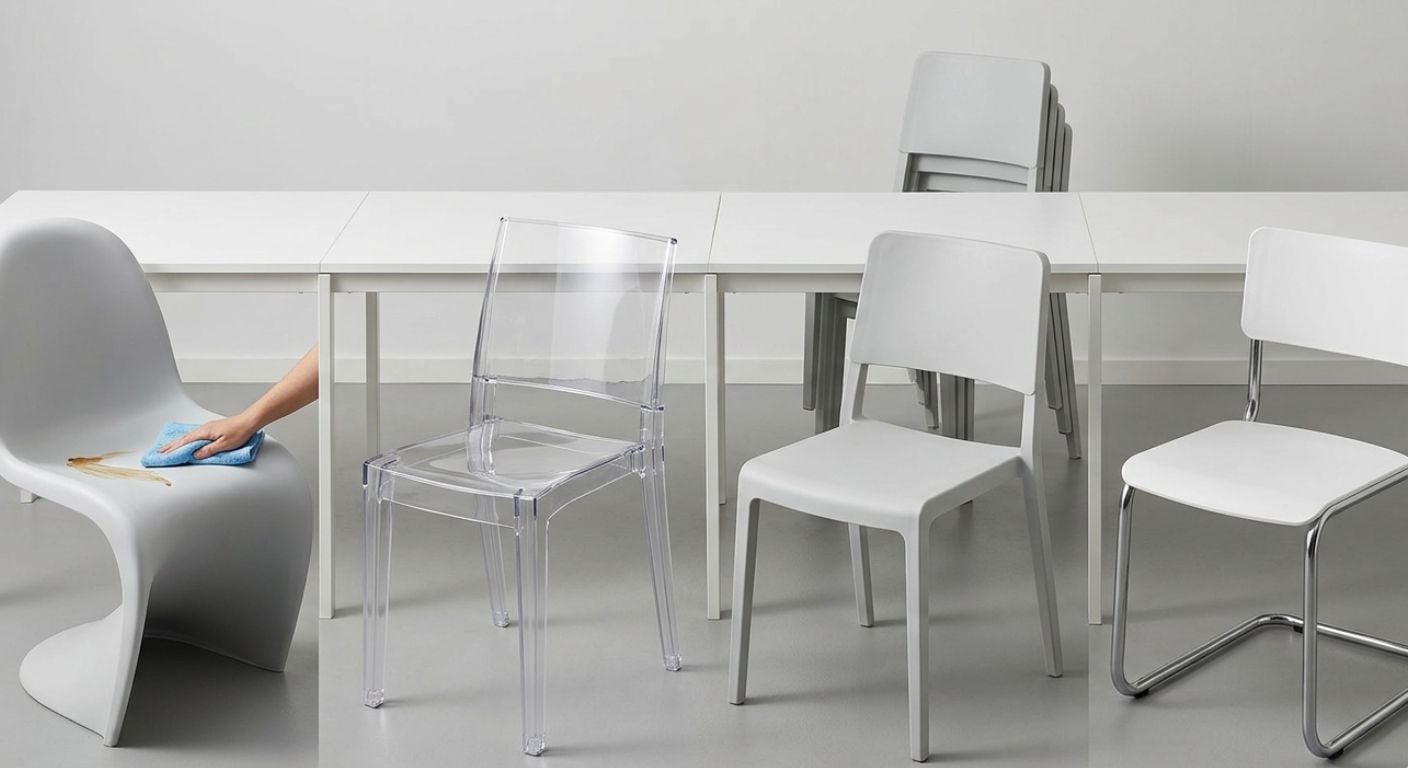
Plastic dining chairs divide opinion more than most dining chair materials. Some buyers see them as practical, lightweight, and easy to maintain. Others associate them with temporary seating or lower-quality furniture. The reality sits somewhere in the middle and depends heavily on the type of plastic chair being considered.
Modern plastic dining chairs now range from low-cost polypropylene shells to reinforced moulded designs with metal frames, UV protection, and commercial-grade durability. For some households, they solve problems that upholstered or wooden chairs cannot. For others, they create compromises around comfort, appearance, or long-term perception.
If you are comparing materials as part of a broader dining chair decision, this guide focuses specifically on where plastic dining chairs work well, where they fall short, and what buyers should check before choosing them.
Advantages Of Plastic Dining Chairs
Low Maintenance And Easy Cleaning
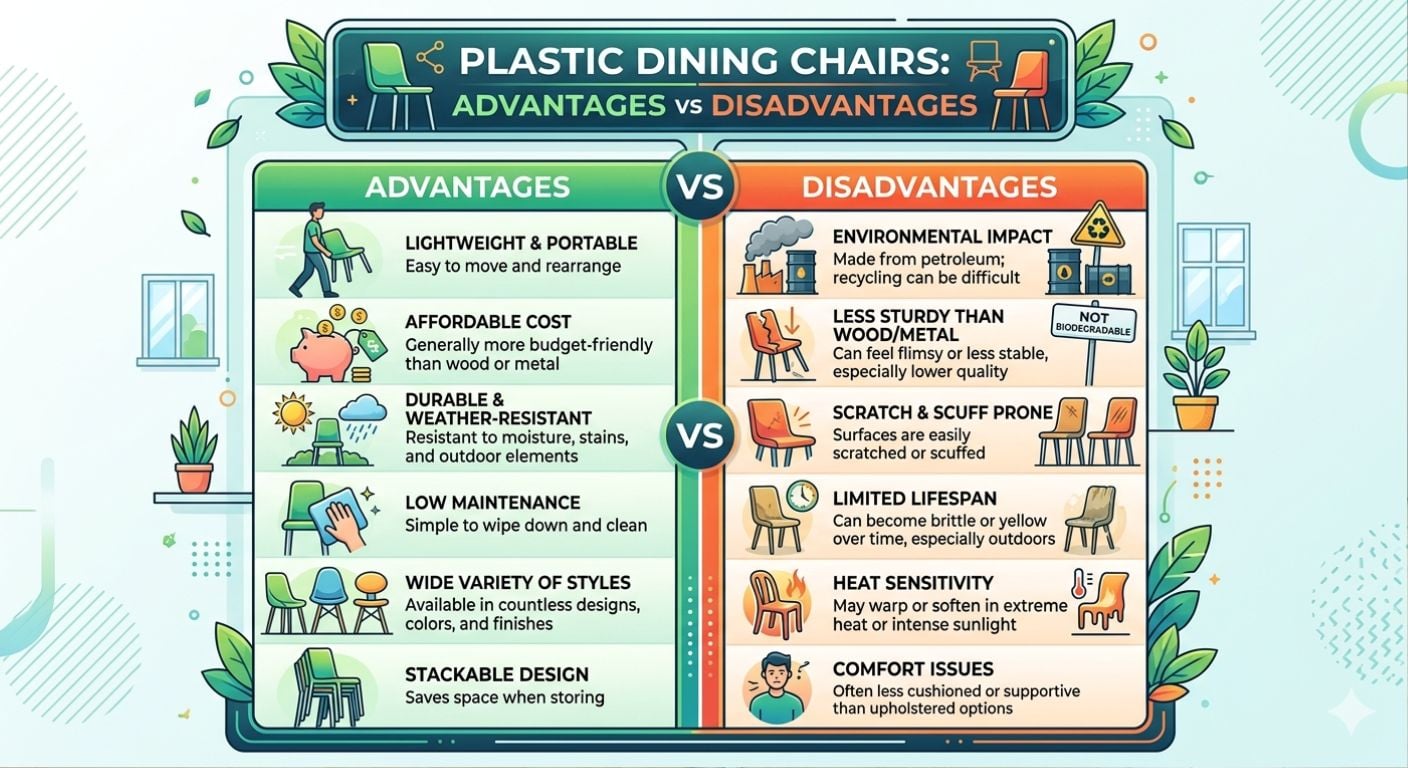
One of the main reasons buyers choose plastic dining chairs is maintenance simplicity. Most plastic chairs have non-porous surfaces that can be wiped clean quickly without specialist products.
This makes them useful for:
- Family dining spaces
- Homes with young children
- Rental properties
- Holiday lets
- Everyday kitchens
Unlike fabric seating, plastic does not absorb spills easily. It also avoids issues such as fabric staining, moisture retention, or regular conditioning requirements associated with some other materials.
For buyers comparing wipe-clean materials directly, this overlaps with the wider discussion around upholstered and wipe-clean seating covered in our guide to velvet dining chairs vs leather.
Lightweight And Easy To Move
Plastic dining chairs are normally lighter than solid wood or heavily upholstered alternatives. This makes them easier to reposition around the table or move during cleaning.
In smaller homes, lightweight seating can also help with:
- Temporary extra seating
- Flexible layouts
- Storage between use
- Moving chairs between indoor and outdoor spaces
Stackable plastic models are especially useful in compact kitchens where spare seating needs to be stored efficiently.
Weather Resistance
Plastic performs better outdoors than many traditional indoor chair materials. UV-stabilised polypropylene and HDPE designs resist moisture, rust, and humidity far better than untreated wood or fabric upholstery.
Plastic is often considered one of the strongest materials for occasional outdoor dining use because it does not warp, absorb water, or corrode easily. The UK Government’s waste and recycling guidance also explains how recycled plastics are increasingly being reused in durable furniture manufacturing.
UK government recycling guidance
That said, outdoor performance still depends heavily on quality. Cheaper plastics can fade, become brittle, or weaken after prolonged UV exposure.
Affordability
Plastic dining chairs are usually less expensive than upholstered or hardwood alternatives. This makes them practical for buyers furnishing larger dining spaces or purchasing multiple chairs at once.
The lower entry price is often attractive for:
- First homes
- Student accommodation
- Rental properties
- Temporary furnishing setups
- Secondary dining areas
However, low price can also create quality variation. Two plastic chairs may appear visually similar while using very different grades of material and reinforcement.
Modern Designs Have Improved Significantly
Older plastic dining chairs were often associated with basic garden furniture. Modern moulding techniques have changed that perception considerably.
Current designs include:
- Curved shell seating
- Transparent acrylic styles
- Matt textured finishes
- Metal-frame hybrids
- Scandinavian-inspired shapes
Plastic chairs are now commonly paired with wood, glass, and metal dining tables rather than used purely as utility furniture.
One thing we see regularly is that our customers often assume plastic chairs will feel flimsy until they try reinforced shell designs with proper frame support underneath.
Disadvantages Of Plastic Dining Chairs
Comfort Can Be Limited
Comfort is still one of the main compromises with plastic dining chairs, especially during longer sitting periods.
Common complaints include:
- Hard seating surfaces
- Limited cushioning
- Reduced lumbar support
- Cold surfaces during winter
- Less flexibility compared with upholstered chairs
Some designs improve comfort with curved shells or seat pads, but fully plastic seating rarely feels as soft as upholstered alternatives during extended meals or working sessions.
If comfort is the priority rather than practicality, other materials may be more suitable.
Lower Perceived Quality
Even when structurally durable, plastic furniture can still carry a lower perceived value than wood, leather, or upholstered dining chairs.
This matters most in:
- Formal dining rooms
- Higher-end interiors
- Traditional homes
- Long-term furnishing plans
Some buyers simply associate plastic with temporary or budget furniture regardless of actual performance.
Modern designs reduce this issue, but material perception still affects buying decisions.
Weight Capacity Varies Widely
Not all plastic dining chairs are designed for the same load capacity. Reinforced commercial-grade models can comfortably support 110–150kg or more, while cheaper hollow designs may flex significantly under heavier use.
When checking specifications, buyers should look for:
- Reinforced legs
- Metal subframes
- Commercial testing standards
- Published weight ratings
- UV-stabilised polypropylene or HDPE construction
Extremely low-cost chairs often prioritise price over reinforcement.
Plastic Vs Wood Dining Chairs
| Feature | Plastic Dining Chairs | Wooden Dining Chairs |
|---|---|---|
| Cleaning | Wipe-clean surface | Requires more maintenance |
| Weight | Lightweight | Usually heavier |
| Comfort | Often firmer | Depends on seat construction |
| Outdoor Use | Better moisture resistance | Can warp outdoors |
| Appearance | Modern or casual | Traditional or premium feel |
| Durability | Resistant to moisture and stains | Strong but can scratch |
| Price | Usually lower cost | Often higher cost |
| Storage | Stackable options common | Less commonly stackable |
This comparison becomes more relevant for family homes where durability and cleaning speed matter more than formal appearance.
Plastic tends to suit high-use practical environments, while wood usually suits buyers prioritising long-term appearance and material feel.
Recycled Vs Recyclable Plastic Chairs
These terms are often confused but mean different things.
Recycled Plastic Chairs
These are chairs manufactured using previously used plastic materials that have been processed and reused during production.
Benefits include:
- Reduced landfill waste
- Lower raw plastic demand
- Improved sustainability positioning
Recyclable Plastic Chairs
These are chairs capable of being recycled at the end of their usable life if local recycling facilities accept the material type.
A chair can be recyclable without containing recycled content.
Buyers focused on sustainability should check:
- Whether recycled materials were used
- The exact plastic type
- Manufacturer recycling guidance
- Product lifespan expectations
Long lifespan matters because durable furniture replaced less often generally creates lower waste overall.
How Long Do Plastic Dining Chairs Last?
Good-quality plastic dining chairs used indoors can last well over 10 years in normal domestic environments. Commercial or outdoor usage usually shortens lifespan because of heavier use and UV exposure.
Longevity depends on:
- Plastic grade
- UV protection
- Reinforcement
- Weight load
- Storage conditions
- Exposure to temperature changes
Cheap plastics tend to fail through brittleness, fading, or cracking around stress points first.
When Plastic Dining Chairs Make Sense
Plastic dining chairs usually work well when buyers prioritise practicality over traditional material appearance.
They suit:
- Family kitchens
- Rental properties
- Compact dining spaces
- Occasional outdoor dining
- Flexible seating layouts
- Easy-clean environments
They make less sense when buyers want:
- Soft seating comfort
- Formal dining aesthetics
- Traditional materials
- Heavier premium-feel furniture
For broader comparisons across seating materials, see our dining chair materials guide.
You can also browse the full range of dining chairs to compare material types directly.
Frequently Asked Questions
How much weight can a plastic dining chair hold?
Most good-quality plastic dining chairs support between 110kg and 150kg. Reinforced commercial-grade designs can exceed this. Budget chairs without metal reinforcement usually have lower weight limits and may flex more during use.
Are plastic dining chairs suitable for everyday use?
Yes, many plastic dining chairs are designed for daily domestic use. The main difference is comfort level. For shorter meals and practical kitchens they work well, but heavily padded seating is usually more comfortable for extended sitting.
Are plastic dining chairs good for families?
Plastic chairs are often practical for families because they are wipe-clean, resistant to spills, and easier to move. They also avoid many fabric staining issues. However, very lightweight models can slide more easily on hard floors.
Can plastic dining chairs be used outdoors?
Some can, particularly UV-stabilised polypropylene or HDPE models. Indoor-only plastic chairs may fade or weaken outdoors over time, so buyers should always check manufacturer guidance before outdoor use.
-
-
-
-
-
-
-
-
-
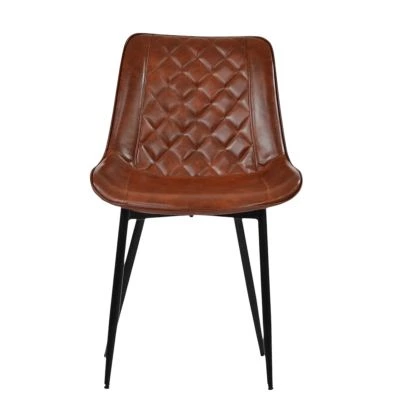
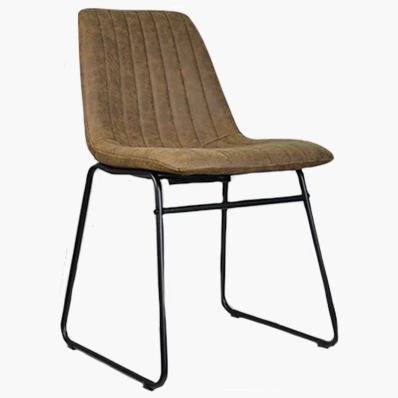 Plato Dining Chair in Aged Brown LeatherSpecial Price £49.99 Regular Price £89.99 Original price 44% Inc VATSaving £40
 -
-
-
Conclusion
Plastic dining chairs offer clear advantages around maintenance, mobility, affordability, and moisture resistance. They are particularly useful in practical dining spaces where easy cleaning and flexible seating matter more than traditional material appearance.
Their main drawbacks remain comfort perception, lower premium appeal, and quality variation between budget and reinforced designs.
For buyers comparing materials across practicality, cleaning, and long-term use, plastic can be a sensible option when matched to the right environment and expectations.
If you are comparing wipe-clean seating materials more broadly, our guide to velvet dining chairs vs leather explores how different materials perform in everyday use.


Comments