
 Chat with us on WhatsApp

Dining Chair Materials Guide: Wood vs Upholstered vs Plastic vs Metal
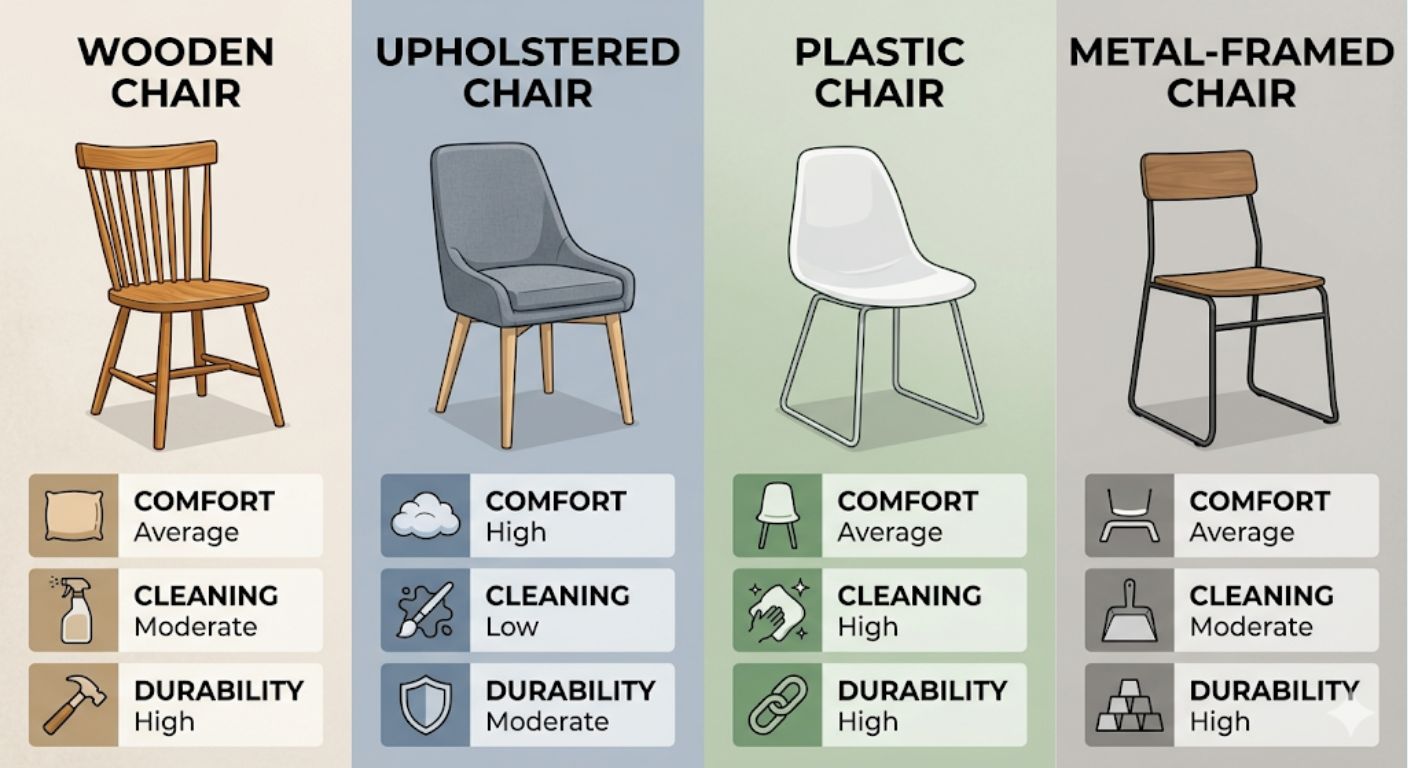
Choosing the right dining chair material affects daily use more than most people expect. The frame, seat surface, upholstery, finish, and cleaning requirements all change how suitable a chair is for your home.
This dining chair materials guide compares wood, upholstered, plastic, and metal dining chairs clearly. It explains how each material performs for durability, cleaning, comfort, appearance, pets, children, and long-term value.
The aim is not to say one material is always better. The right choice depends on how often the chairs are used, who uses them, how much cleaning you want to do, and whether comfort or wipe-clean practicality matters more.
Use this guide to narrow the decision before comparing individual products. Once the material is right, details such as frame shape, seat padding, leg finish, and table pairing become easier to judge.
Quick comparison: dining chair materials at a glance
| Material | Best for | Main weakness | Cleaning level | Comfort level |
|---|---|---|---|---|
| Wood | Long-term use, classic dining rooms, sturdy frames | Can mark, scratch, or need finish care | Medium | Medium |
| Upholstered | Comfort, longer meals, softer seating | More vulnerable to stains | Medium to high | High |
| Plastic | Easy cleaning, lighter use, family dining | Can feel less premium | Low | Low to medium |
| Metal | Slim frames, modern rooms, strong structure | Can feel cold or firm | Low | Low to medium |
The material choice should come before colour or finish. A chair that looks right but performs badly for your household will cause more frustration than a slightly simpler design that suits daily use.
Wooden dining chairs
Wooden dining chairs are strong, stable, and long-lasting when the frame is well made. They work well in homes where durability and structure matter more than soft cushioning.
Wood is usually the safest long-term choice if you want a chair that feels substantial. It can handle regular dining use, but the finish still needs sensible care. Scratches, dents, water marks, and heat marks are the main risks.
Wooden chairs are a good fit if:
- You want a solid, weighty chair
- You prefer a natural or traditional material
- Your dining area is used every day
- You want a chair that does not rely on fabric
- You are prepared to wipe spills quickly
The main thing to check is the finish. A sealed wooden chair is easier to live with than an untreated or lightly finished chair. Painted and stained finishes can hide some variation, but they may show chips if knocked against table legs or hard flooring.
Upholstered dining chairs
Upholstered dining chairs are usually the best choice when comfort is the priority. Padding softens the seat and back, which makes a noticeable difference during longer meals or regular evening use.
The trade-off is maintenance. Fabric, velvet, faux leather, and leather all behave differently around spills, crumbs, pet hair, and daily marks. Upholstery is not one single material group, so the exact surface matters.
Common upholstery options include:
- Velvet: soft, textured, more sensitive to pressure marks and pet hair
- Faux leather: wipeable, practical, usually easier to clean than fabric
- Real leather: durable when maintained correctly, but more expensive
- Fabric: comfortable and varied, but depends heavily on weave and stain resistance
- Microfibre or performance fabric: practical for frequent use where available
For dining chairs, upholstery should be judged on three points: abrasion resistance, stain behaviour, and ease of cleaning. A fabric can look strong but still absorb spills quickly. A wipeable surface can be easier day to day but may feel less soft than woven fabric.
One thing our customers often underestimate is how quickly dining chair upholstery is tested by real use: sauces, jeans, pets, children, and chair backs being touched with food on hands all matter more than showroom appearance.
If the chair will be used by children or pets every day, choose a surface that can be cleaned quickly. Faux leather and performance fabrics are usually more practical than delicate fabric. Velvet can still work, but it needs more care and is better suited to households that accept some visible pile movement. If you're considering velvet, it's worth understanding how it performs in everyday family homes, including how it handles spills, marks, cleaning, and regular use. Our guide on Are Velvet Dining Chairs Practical? Staining, Cleaning & Daily Use explains what to expect before making a decision.
Plastic dining chairs
Plastic dining chairs are practical, light, and easy to clean. They suit households where wipe-clean use matters more than a soft, premium feel.
The main benefit is low maintenance. Most plastic dining chairs can be wiped down quickly after meals, which makes them useful in busy kitchens, casual dining areas, and homes with children.
Plastic chairs are a good fit if:
- You want a simple wipe-clean surface
- Chairs need to be moved often
- You prefer a lighter chair
- You want a modern or minimal look
- You do not need deep cushioning
The limitation is comfort and perceived quality. Plastic can feel firmer than wood or upholstery, especially without a shaped seat. It may also flex depending on construction. A moulded plastic chair with a supportive curve will usually feel better than a flat, basic shell.
Plastic is also more exposed to surface scuffs. Darker colours may show scratches differently from lighter colours, while glossy finishes can show fingerprints more easily than matt finishes.
For the full pros and cons, read our guide to the advantages and disadvantages of plastic dining chairs.
Metal dining chairs
Metal dining chairs are strong, slim, and practical. They are often used where a lighter visual profile is wanted, especially with slender legs or open-frame designs.
Metal is usually very durable structurally, but comfort depends on the seat design. A metal-framed chair with an upholstered seat can be a strong compromise: stable frame, softer sitting surface, and easier styling across modern dining rooms.
Metal chairs are a good fit if:
- You want slim legs or a lighter frame profile
- The dining area has a modern or industrial feel
- You want a strong frame material
- You need something easy to wipe
- You are choosing a mixed-material chair
Metal can feel cold or hard if the seat and back are also metal. For home dining, many buyers choose metal legs with an upholstered, plastic, or faux leather seat instead of a fully metal chair.
Powder-coated finishes are usually easier to live with than highly polished metal because they hide fingerprints and minor marks better. Chrome and polished finishes can look sharper but may need more frequent wiping.
Upholstered vs non-upholstered dining chairs
Upholstered chairs are better for comfort. Non-upholstered chairs are better for quick cleaning. The right choice depends on whether your dining chairs are used mainly for relaxed seating or fast, practical daily meals.
Choose upholstered chairs if:
- You sit at the table for longer periods
- Comfort is more important than wipe-clean speed
- You want a softer backrest or padded seat
- The dining room is used for hosting as well as daily meals
Choose non-upholstered chairs if:
- Meals are quick and practical
- Children use the chairs daily
- You want lower cleaning effort
- Spills are common
- You prefer a lighter, simpler chair
A mixed-material chair often solves the trade-off. For example, a wooden or metal frame with a padded faux leather seat gives more comfort than a hard chair while staying easier to clean than woven fabric.
Browse Lakeland’s main dining chairs range to compare material, colour, and finish options in one place.
How durable should dining chair fabric be?
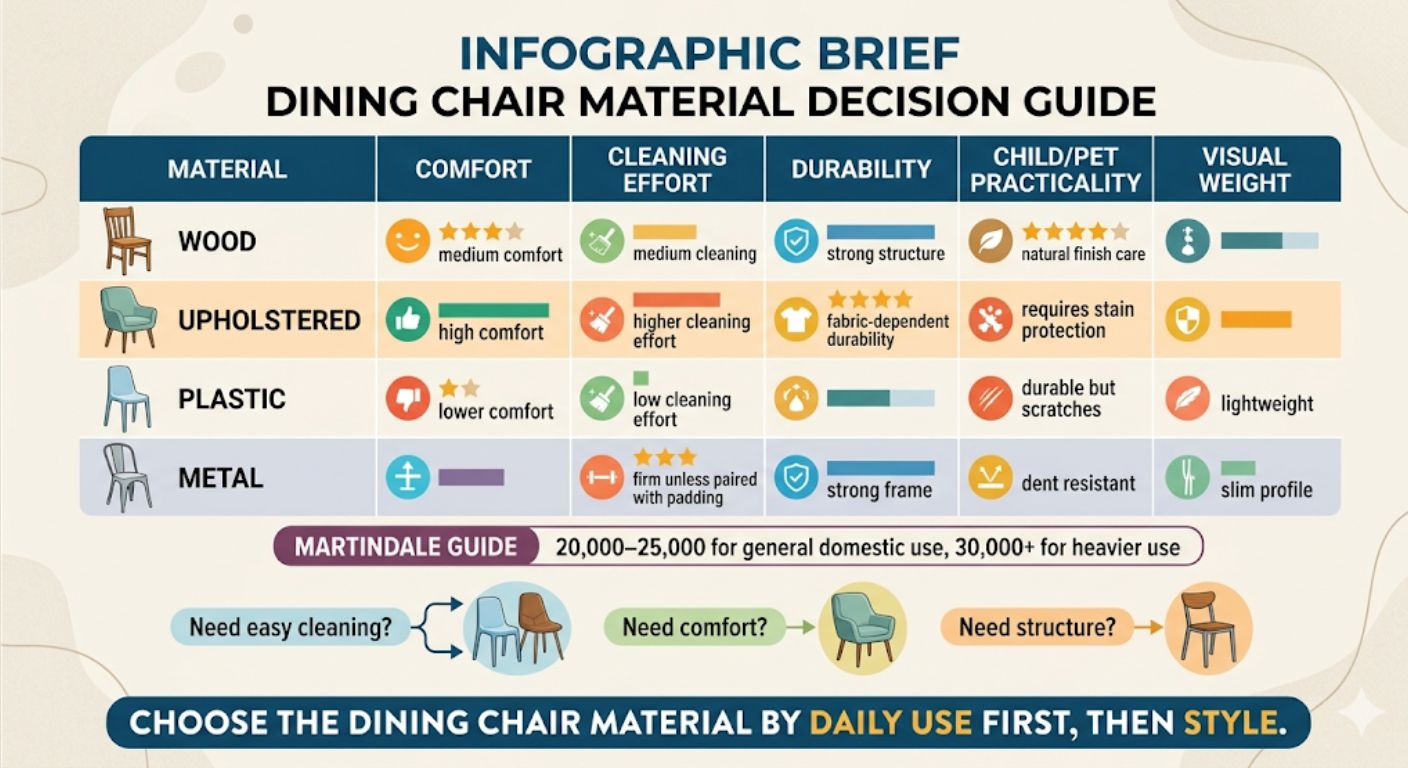
For everyday dining chairs, choose upholstery with at least 20,000–25,000 Martindale rubs for general domestic use. For heavier household use, aim for 30,000+ rubs where the information is available.
The Martindale test measures abrasion resistance. It helps show how well fabric can withstand repeated sitting, rubbing, and daily wear.
A practical guide:
- Under 10,000 rubs: decorative or very light use
- 10,000–20,000 rubs: light domestic use
- 20,000–25,000 rubs: general domestic use
- 30,000+ rubs: heavy domestic or light commercial use
- 50,000+ rubs: very hard-wearing upholstery
Rub count is useful, but it is not the only measure. Stain resistance, weave tightness, fabric texture, and cleaning instructions still matter. A high rub count does not automatically make a fabric easy to clean.
For family dining, a wipeable surface may be more useful than a high-rub woven fabric. For adult-only dining rooms, softer upholstery may be worth the extra care.
Cleaning and maintenance by material
Cleaning should be matched to the material, not guessed. The wrong method can damage finishes, flatten velvet pile, or mark leather surfaces.
Wood
Wipe with a soft, slightly damp cloth. Dry the surface after cleaning. Avoid soaking the wood or using harsh cleaners, especially on painted or stained finishes.
Fabric
Vacuum regularly using an upholstery attachment. Blot spills rather than rubbing them. Check the care label before using cleaning products.
Velvet
Brush gently with the pile and avoid aggressive scrubbing. Velvet can show pressure marks and directional shading, even when the fabric is not damaged.
Faux leather
Wipe with a damp cloth and dry afterwards. Avoid abrasive pads, strong chemicals, and excess moisture around seams.
Real leather
Use leather-appropriate cleaners and avoid drying the surface with harsh products. Real leather can last well, but it needs more controlled care than faux leather.
Plastic
Wipe with mild soapy water and dry with a soft cloth. Avoid abrasive cleaners that can dull the surface.
Metal
Wipe with a damp cloth and dry to prevent water marks. Pay attention to joints, welds, and foot ends where dirt can collect.
Fire safety and UK upholstery rules
Upholstered dining chairs sold for domestic use in the UK must meet furniture fire safety requirements. This is especially relevant when buying upholstered chairs, reupholstering existing chairs, or replacing foam.
The UK’s Furniture and Furnishings (Fire) (Safety) Regulations set requirements for domestic upholstered furniture, including ignition resistance standards linked to BS 5852 testing. You can view the legislation at legislation.gov.uk.
For buyers, the practical rule is simple: do not treat dining chair upholstery as just decorative fabric. Upholstery fabric, foam, liners, and fillings must be suitable for furniture use.
If you are reupholstering dining chairs, confirm that:
- The fabric is suitable for upholstery
- Any foam used is compliant
- Fire-resistant liners are used where required
- The upholsterer understands UK furniture regulations
- The finished chair remains suitable for domestic use
This matters most with older chairs, imported fabrics, and DIY upholstery projects.
How to choose the right dining chair material
Use the material decision before looking at colour. The right material should match the room’s use first, then the style.
If you have young children
Choose plastic, faux leather, sealed wood, or performance upholstery. Avoid delicate fabrics unless you accept more cleaning and visible wear.
If you have pets
Choose tightly woven fabric, faux leather, plastic, or sealed wood. Be cautious with velvet if pet hair, claw marks, or pile movement will bother you.
If you want the easiest cleaning
Choose plastic or faux leather. Both are easier to wipe after meals than woven upholstery.
If you want the most comfort
Choose upholstered dining chairs. Padding makes the biggest difference, especially on the seat and lower back.
If you want long-term structure
Choose wood or metal frames. The frame construction matters as much as the visible material.
If the dining area is visually busy
Choose slimmer frames, lighter finishes, or open metal-leg designs. Heavy wooden chairs can make a room feel more grounded but also more visually full.
If the chairs are used occasionally
You can prioritise appearance and comfort more. Lower-maintenance materials still help, but daily resilience is less important.
If the chairs are used every day
Prioritise cleanability, frame strength, and surface durability. This is where material choice has the biggest impact.
Common material mistakes to avoid
The most common mistake is choosing by appearance only. Dining chairs are handled, moved, pulled across floors, sat on daily, and exposed to food and drink.
- Choosing pale fabric in a high-spill household
- Buying velvet without accepting pile marks
- Choosing hard plastic when long sitting comfort matters
- Assuming all wood finishes clean the same way
- Using non-upholstery fabric for re-covering chairs
- Choosing polished metal if fingerprints will bother you
- Ignoring frame construction because the fabric looks right
- Buying chairs that are too visually heavy for the table and room
Material choice should reduce friction. If a chair needs constant care in your household, it is the wrong material even if it looks right.
Where Lakeland’s dining chair range fits
Lakeland’s dining chair range includes upholstered, faux leather, velvet, wooden, plastic, and mixed-material options. The useful starting point is to decide the surface first: wipe-clean, padded, textured, or hard-wearing.
For customers comparing upholstered options, the upholstered dining chairs category can help narrow the choice without comparing every material at once.
Advice first, product second: choose the material that suits your household, then compare colour, leg finish, and seat shape within that material group.
Frequently asked questions
What is the best material for dining chairs?
The best material depends on use. Upholstered chairs are best for comfort, plastic and faux leather are easiest to clean, wood offers long-term structure, and metal works well for slim, strong frames. For everyday family dining, wipe-clean surfaces usually perform better than delicate fabric.
Are upholstered dining chairs hard to keep clean?
They can be harder to clean than plastic, wood, or faux leather. The exact fabric matters. Tightly woven, stain-resistant, or performance fabrics are more practical than delicate materials. For heavy daily use, avoid pale woven fabrics unless you are prepared for regular care.
Are plastic dining chairs durable enough for daily use?
Good-quality plastic dining chairs can work well for daily use, especially in casual dining areas. The key factors are shell thickness, leg stability, and seat shape. Plastic is easy to clean, but it may not feel as substantial or comfortable as wood or upholstery.
Is wood or metal better for dining chair frames?
Wood feels warmer and more traditional, while metal usually gives a slimmer, more modern frame. Both can be durable when well made. Choose wood for a more solid feel and metal for a lighter frame profile or mixed-material chair.
What dining chair material is easiest to clean?
Plastic and faux leather are usually the easiest to clean because they can be wiped quickly after meals. Sealed wood is also practical, but spills should still be dried promptly. Woven fabric and velvet need more careful cleaning.
How many Martindale rubs are suitable for dining chairs?
For normal domestic dining chairs, look for around 20,000–25,000 Martindale rubs where stated. For heavier use, 30,000+ is a stronger target. Rub count measures abrasion resistance, not stain resistance, so cleaning instructions still matter.
Are velvet dining chairs suitable for everyday use?
Velvet dining chairs can be used every day, but they need more care than plastic, faux leather, or simple woven fabrics. Velvet may show pile movement, pressure marks, and pet hair more clearly. For a deeper answer, use the dedicated velvet dining chair guide.
What should I check when reupholstering dining chairs?
Check that the fabric is upholstery-grade, the foam is suitable, and fire safety requirements are met. In the UK, upholstered furniture must comply with fire safety rules, so re-covering dining chairs is not just a fabric choice.
Summary: choosing the right dining chair material
Material rules
- Choose upholstered chairs for comfort.
- Choose plastic or faux leather for easier cleaning.
- Choose wood for a solid, long-term feel.
- Choose metal for slim frames and structural strength.
- Choose mixed-material chairs when you need balance.
Cleaning rules
- Wipe spills quickly on all materials.
- Do not soak wood, leather, velvet, or fabric.
- Use mild cleaning methods first.
- Follow the care label where supplied.
- Avoid abrasive cleaners on plastic, metal, and faux leather.
Durability rules
- For fabric dining chairs, 20,000–25,000 Martindale rubs suits general domestic use.
- For heavier use, 30,000+ rubs is a stronger target.
- Frame strength matters as much as surface material.
- Upholstery durability does not automatically mean stain resistance.
Common mistakes
- Choosing by colour before material.
- Assuming all fabric performs the same.
- Buying velvet without considering pets.
- Choosing hard chairs when comfort matters.
- Ignoring fire safety when reupholstering.
- Choosing a heavy-looking chair for a visually tight dining space.
Decision shortcuts
- Busy family home: plastic, faux leather, sealed wood, or performance upholstery.
- Comfort-led dining room: upholstered chairs.
- Low-maintenance dining area: plastic or faux leather.
- Long-term structure: wood or metal frame.
- Modern, lighter look: metal legs or slim mixed-material designs.
-
-
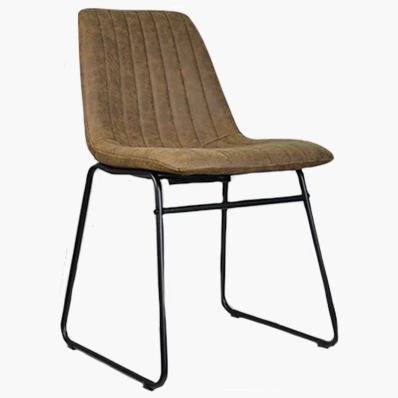 Plato Dining Chair in Aged Brown LeatherSpecial Price £59.99 Regular Price £89.99 Original price 33% Inc VATSaving £30
 -
-
-
-
-
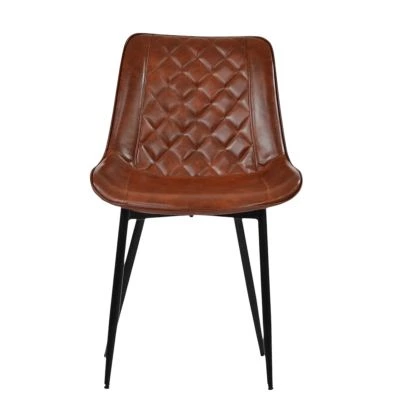 Hogan Dining Chair in Vintage Brown LeatherSpecial Price £44.99 Regular Price £69.99 Original price 36% Inc VATSaving £25Out of stock
 -
-
-
-
-
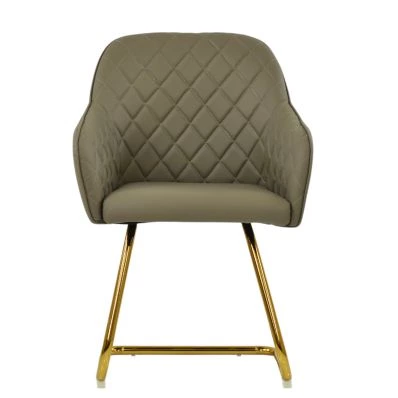
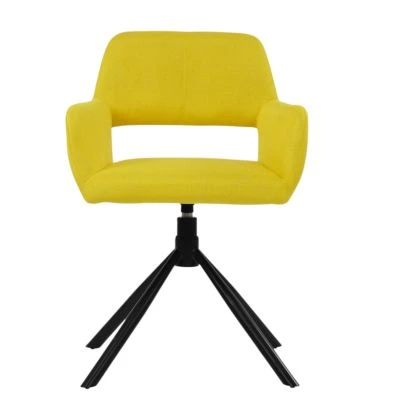
For comparison across materials, colours, and finishes, Lakeland’s main dining chairs category is the natural next step after deciding which material suits your home.


Comments