
 Chat with us on WhatsApp

Family Kitchen Bar Stools: Wipe-Clean Materials & Swivel Safety
Choosing bar stools for a family kitchen is usually less about style and more about practicality. Daily use means spills, sticky hands, school bags, and constant movement around the kitchen island. Materials that look good in a showroom can quickly become difficult to maintain once children are using them every day.
For most family kitchens, the main buying decisions come down to three areas: how easy the stool is to clean, how stable it feels during use, and whether moving parts like swivel mechanisms or gas lifts are genuinely helpful or likely to create problems. Material choice also affects durability, maintenance, and how well the stools cope with long-term wear.
Upholstery and surface finishes can make a significant difference to how much time you spend cleaning and maintaining your seating. Some materials cope well with food spills, sticky hands and everyday family life, while others require more care to keep them looking their best. Our guides to family kitchen bar stools and wipe-clean materials: what to avoid explain which options are most practical for busy household
If you are still comparing different upholstery types overall, it helps to start with the broader guide to bar stool materials for different situations before narrowing down family-specific priorities.
What Materials Work Best in a Family Kitchen?
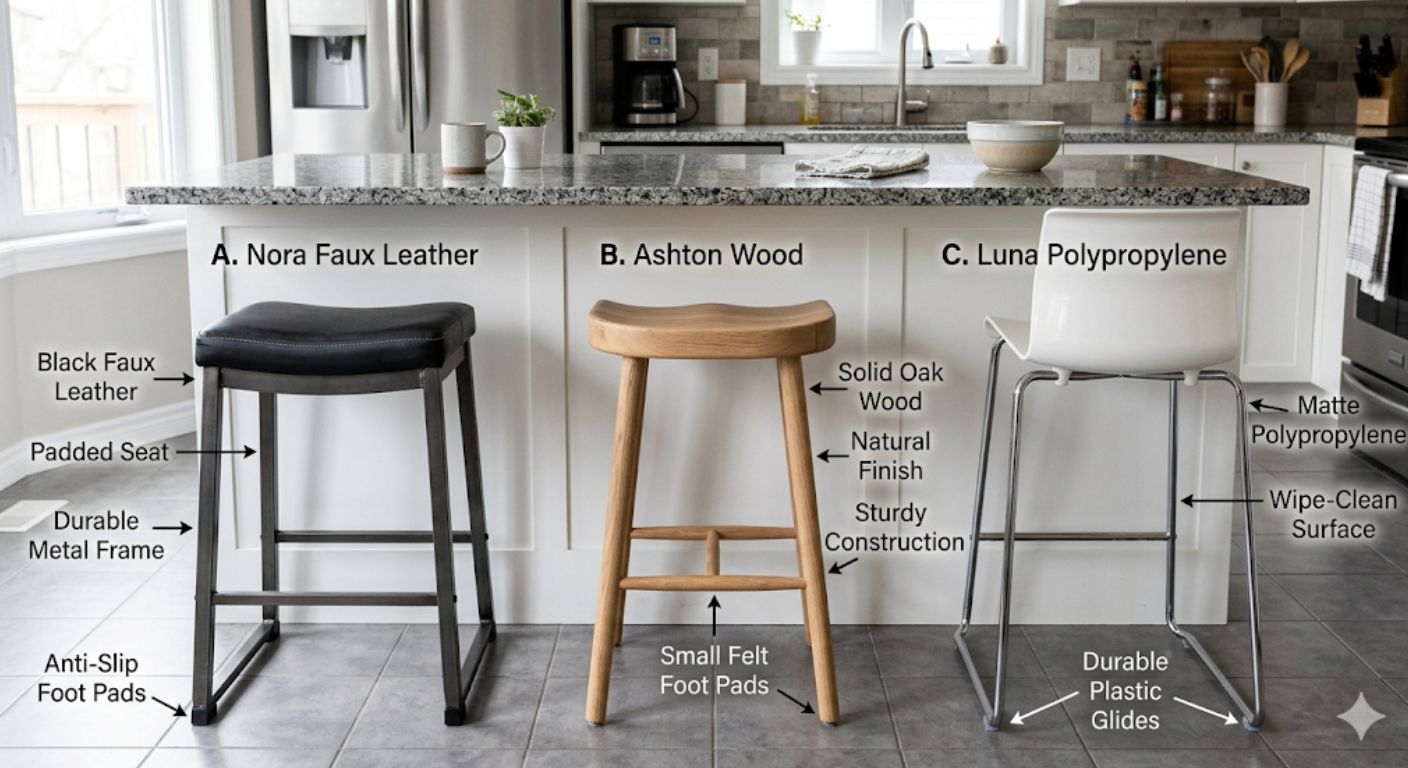
The most practical family kitchen bar stools are usually made from wipe-clean materials with minimal texture or absorbency. In real use, this means faux leather, treated wood, polypropylene, or powder-coated metal frames tend to outperform softer or more delicate finishes.
Faux Leather and PU Upholstery
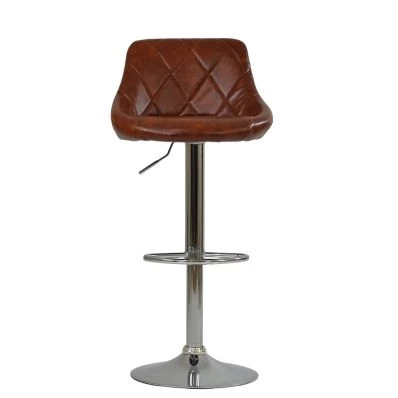
Faux leather remains one of the most practical middle-ground options for busy kitchens. It offers more comfort than bare wood or plastic while still allowing fast cleanup after spills.
- Wipes clean with a damp cloth
- Less absorbent than fabric
- Handles food spills better than velvet or woven upholstery
- Usually lower maintenance than real leather
- Available across both fixed and swivel stools
For families with younger children, smooth PU upholstery is generally easier to maintain than textured fabrics because crumbs and dried liquids do not settle into the surface as easily.
We often find our customers focus heavily on colour during purchase, but after a few months the main thing they care about is whether the seat can be cleaned quickly without special products.
Treated Wood and Solid Seats
Wooden stools with sealed finishes can work well in family kitchens because they are durable and simple to wipe down. They also avoid some of the cracking risks associated with lower-grade faux leather over time.
However, fully wooden seats are usually less forgiving during long periods of sitting, especially for homework spaces or extended family meals.
Wood works best when:
- The finish is sealed rather than raw
- The seat shape has some contouring
- The frame includes foot support
- The stool is used for shorter seating periods
Avoid unfinished timber in high-spill environments because liquids can stain or swell the surface.
Plastic and Polypropylene Seats
Moulded plastic or polypropylene seats are among the easiest options to maintain. These are often chosen in households where cleaning speed matters more than upholstery comfort.
- Fully wipe-clean surfaces
- Water resistance
- Minimal maintenance
- Lower risk of staining
- Usually lightweight and easy to move
The trade-off is that cheaper plastic stools can feel less stable or less comfortable during extended use, particularly without padded seats or supportive backs.
Are Swivel Bar Stools Safe for Children?
Swivel bar stools can be safe in family kitchens, but stability matters more than the swivel feature itself. A well-balanced stool with a strong base is usually safer than a lightweight fixed stool with poor weight distribution.
The main concerns with swivel stools are:
- Children spinning excessively
- Leaning while rotating
- Increased movement during climbing
- Tipping risk on narrow bases
For younger children, a controlled swivel mechanism or heavier frame often works better than very lightweight rotating stools.
For general safety expectations around domestic seating, guidance from the British Standards Institution is useful because furniture safety standards often consider stability, strength, and repeated-use testing.
Features That Improve Stability
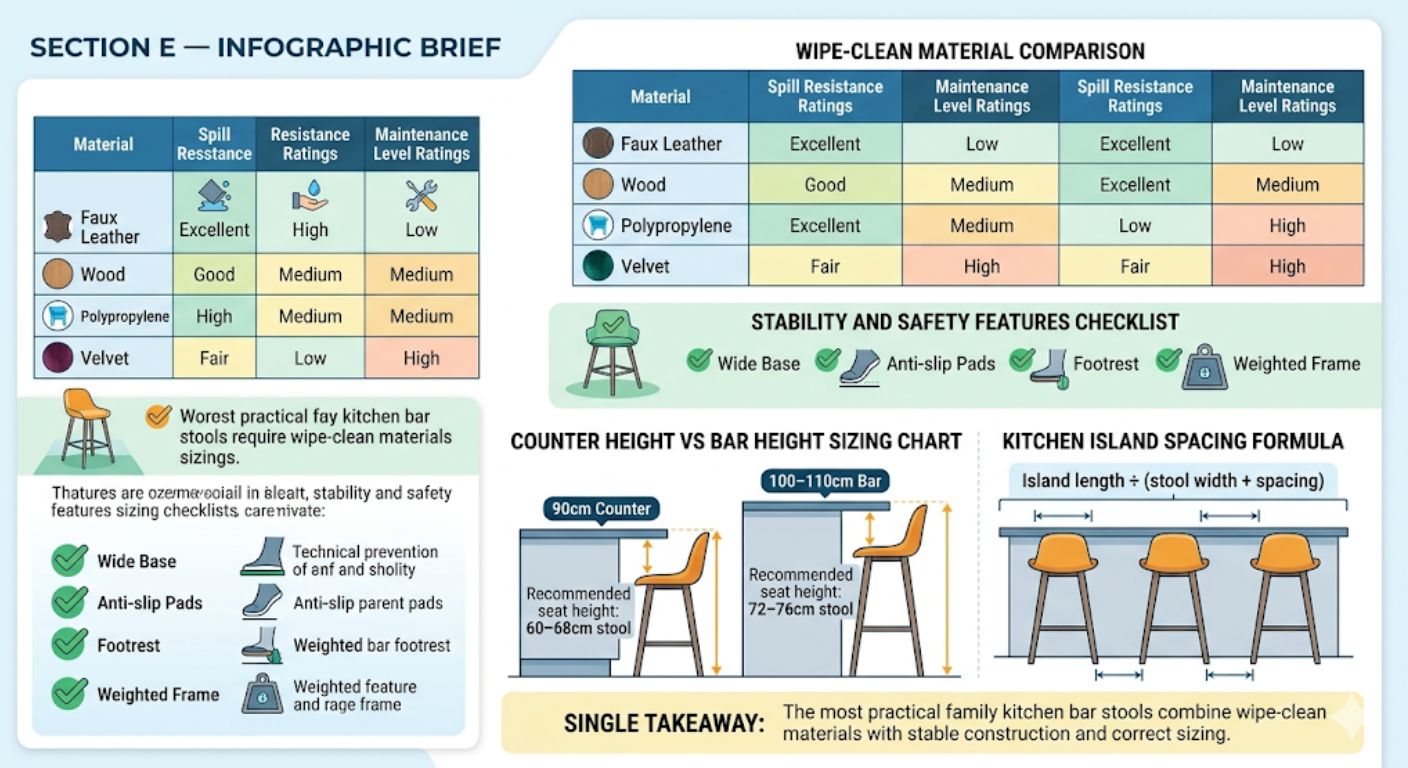
When assessing stability, look for:
- Wide leg positioning
- Heavier frame construction
- Anti-slip floor pads
- Integrated footrests
- Lower centre of gravity
- Stable circular bases on pedestal stools
Rubber floor protectors also help reduce movement on wood or tile flooring while protecting the surface underneath.
If you have hard flooring, avoid stools with exposed metal feet or poorly fitted plastic glides because repeated movement can mark flooring surprisingly quickly.
Fixed vs Swivel Stools in Busy Kitchens
Neither option is universally better. The decision depends on how the kitchen is used.
| Fixed Stools | Swivel Stools |
|---|---|
| More controlled movement | Easier to get on and off |
| Often slightly more stable | Helpful in tighter spaces |
| Fewer moving parts | Better for social seating |
| Lower maintenance risk | Can reduce dragging across floors |
| Better for younger children | More movement during use |
Swivel stools are often more practical around kitchen islands where users regularly turn between cooking, dining, and conversation areas. Fixed stools generally suit households prioritising stability and minimal movement.
Wipe-Clean Materials Compared
| Material | Spill Resistance | Maintenance Level | Comfort | Family Suitability |
|---|---|---|---|---|
| Faux Leather / PU | High | Low | Medium-High | Strong |
| Real Leather | Medium | Medium | High | Moderate |
| Treated Wood | Medium-High | Low | Medium | Strong |
| Polypropylene | High | Very Low | Medium | Strong |
| Velvet | Low | Higher | High | Lower |
| Woven Fabric | Low-Medium | Higher | High | Moderate |
Velvet and woven fabrics can still work in family kitchens, but they require more active maintenance. If durability concerns are your priority, the separate guide on velvet bar stool durability and wear points explains where problems usually appear first. You may also want to explore our guides on are velvet bar stools practical?, cleaning bar stools, and pet-proofing bar stools to understand how different fabrics cope with spills, everyday use, and homes with pets before making your final choice.
Counter Height vs Bar Height Measurements
Many family kitchen problems come from incorrect sizing rather than the stool itself.
| Surface Height | Recommended Seat Height |
|---|---|
| 90cm kitchen counter | 60–68cm stool |
| 100–110cm breakfast bar | 72–76cm stool |
A good rule is to leave roughly 25–30cm between the seat and the underside of the worktop. This gives enough leg room without leaving the stool feeling too low.
If you need more detailed measurement guidance, use the dedicated bar stool height guide rather than estimating from product photos.
How Many Bar Stools Fit on a Kitchen Island?
Most kitchens need approximately 50–60cm of width per stool for comfortable spacing.
A simple working formula is:
Island Length ÷ (Stool Width + Clearance Space)
For example:
- 300cm island
- 45cm stool width
- 15cm spacing allowance
This allows roughly five stools comfortably across the island.
Avoid pushing stools tightly together in family kitchens because children tend to move seats more aggressively during use, increasing collision damage and wear.
For a more detailed spacing breakdown, see the separate bar stool spacing guide.
Practical Buying Priorities for Family Kitchens
Choose Wipe-Clean Before Soft Upholstery
Soft fabrics often look appealing initially but become harder to maintain long-term. If the stools are used daily by children, wipe-clean surfaces generally age better.
Avoid Extremely Lightweight Frames
Very lightweight stools can move easily during use and feel less secure for younger children.
Prioritise Footrests
Footrests reduce swinging legs and improve sitting posture, especially during longer periods at the kitchen island.
Gas Lift Stools Are Not Always Necessary
Height-adjustable stools can help in multi-use spaces, but fixed-height stools usually have fewer moving parts and less maintenance risk.
Consider Floor Protection Early
Rubber rings, anti-slip pads, and softer glides matter more than many buyers expect, particularly on wood or laminate flooring.
You can browse the wider range of bar stools by material, base style, and seat type depending on how heavily used the kitchen seating will be.
Frequently Asked Questions
Are swivel bar stools safe for 3 year olds?
Swivel bar stools can be safe if the base is stable and the stool is not excessively lightweight. Wider bases, anti-slip pads, and controlled movement are more important than whether the seat rotates. Younger children often treat swivel stools as toys, so supervision and stability matter more than the swivel feature itself.
What is the easiest bar stool material to clean?
Polypropylene and faux leather are usually the easiest materials to maintain. Both can be wiped quickly after spills and do not absorb liquids easily. Faux leather typically offers more comfort, while polypropylene usually requires the least maintenance overall.
How do you stop bar stools scratching wooden floors?
Rubber floor protectors, anti-slip pads, and built-in base rings help reduce scratching. Swivel stools can also reduce dragging because users rotate instead of pulling the stool sideways repeatedly across the floor.
Are gas lift bar stools suitable for family kitchens?
They can work well in shared kitchens where adults and children use the same seating area, but fixed-height stools generally involve fewer moving parts and lower maintenance over time.
-
-
-
-
-
-
-
-
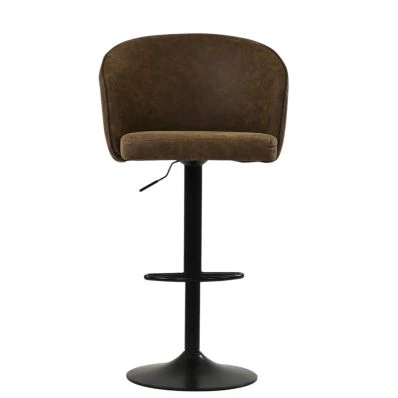
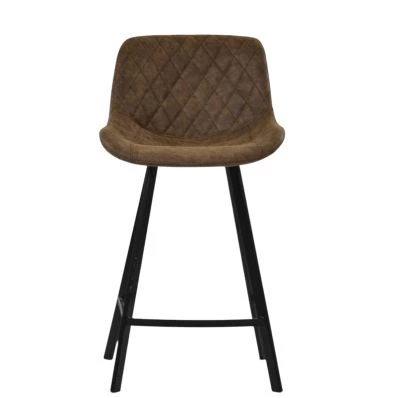 Matteo 65cm Bar Stool in Aged Brown Leather & Black BaseSpecial Price £59.99 Regular Price £74.99 Original price 20% Inc VATSaving £15
 -
-
-
-
Closing Thoughts
For family kitchens, practicality usually matters more than trend-driven finishes. Wipe-clean upholstery, stable frames, floor protection, and sensible sizing all make a bigger long-term difference than decorative details.
Faux leather, treated wood, and polypropylene typically offer the best balance between maintenance and durability for everyday family use. Swivel mechanisms can work well too, provided the stool has a stable base and sensible weight distribution.
If you are still comparing broader material differences across kitchen seating, the main guide to bar stool materials for different situations covers where each material performs best.


Comments