
 Chat with us on WhatsApp

Best Bar Stools for Small Kitchens & Narrow Breakfast Bars
Small kitchens and narrow breakfast bars create a specific constraint: limited width, limited clearance, and often restricted movement space. The wrong bar stool can make the area feel cramped, block walkways, or simply not fit properly.
This guide focuses on how to choose bar stools that work within tight spaces. It covers width, tuck-under behaviour, movement, and material choices, all aimed at helping you make a practical decision that fits your layout.
For a full breakdown of sizing rules and measurement logic, see the main bar stool size guide.
What makes a bar stool suitable for small kitchens?
Bar stools for small kitchens need to minimise visual and physical bulk while still remaining usable day to day. The key factors are narrow seat width, the ability to tuck under the counter, a low visual profile, and controlled movement so the stool does not obstruct walkways.
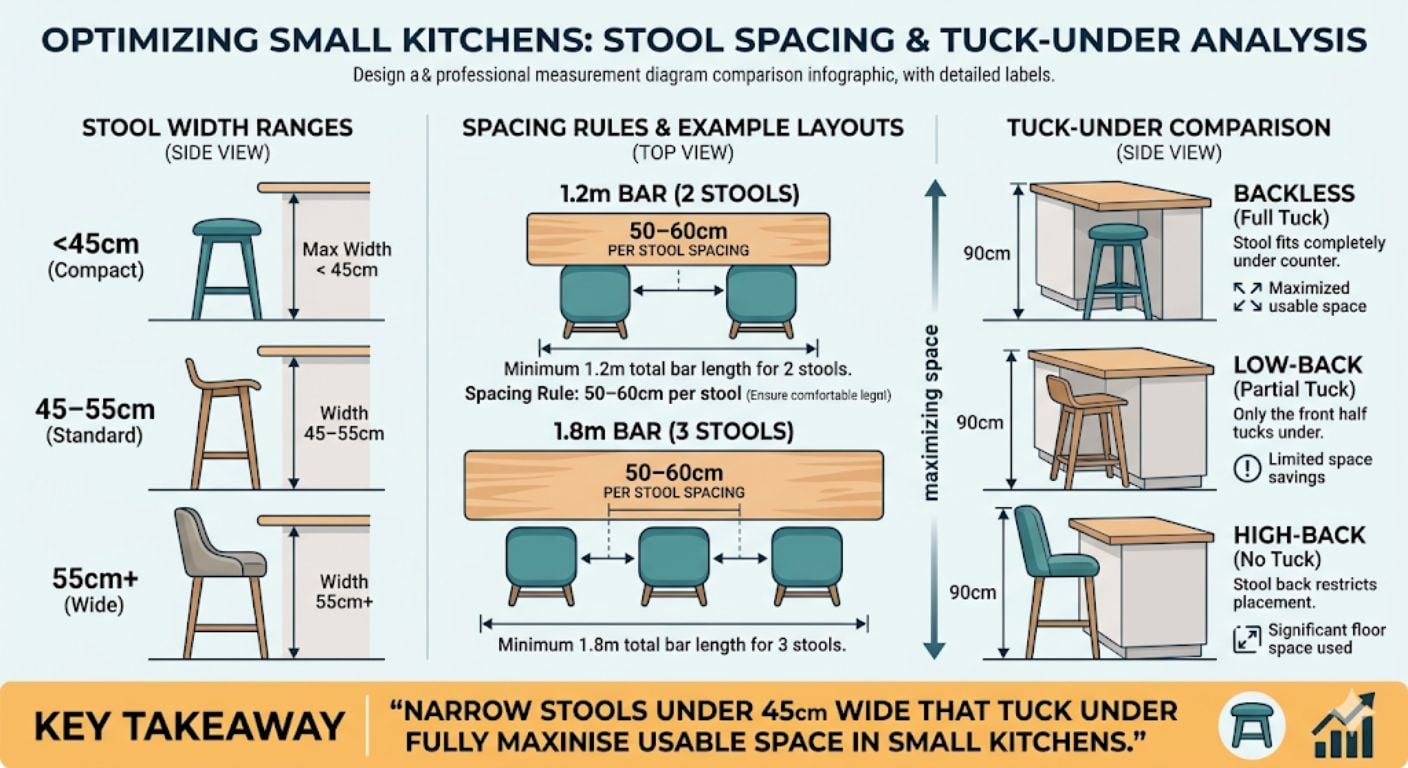
In practical terms, most small kitchens benefit from stools that are under 45cm wide, with a compact frame that does not flare outward at the legs.
If stools extend too far beyond the counter edge when not in use, they reduce usable floor space. This is usually the main problem in tighter layouts.
Width and spacing: the constraint most people underestimate
Width becomes the limiting factor faster than height in narrow layouts.
- Allow around 50–60cm per stool for comfortable use.
- In tighter spaces, this can reduce slightly.
- Below roughly 45cm per stool, seating starts to feel restrictive.
For example, a 1.8m breakfast bar usually fits three stools comfortably. A 1.2m bar is usually limited to two stools.
If the space behind the stools is also narrow, you need to factor in movement clearance. The bar stool spacing guide covers walkway considerations in more detail.
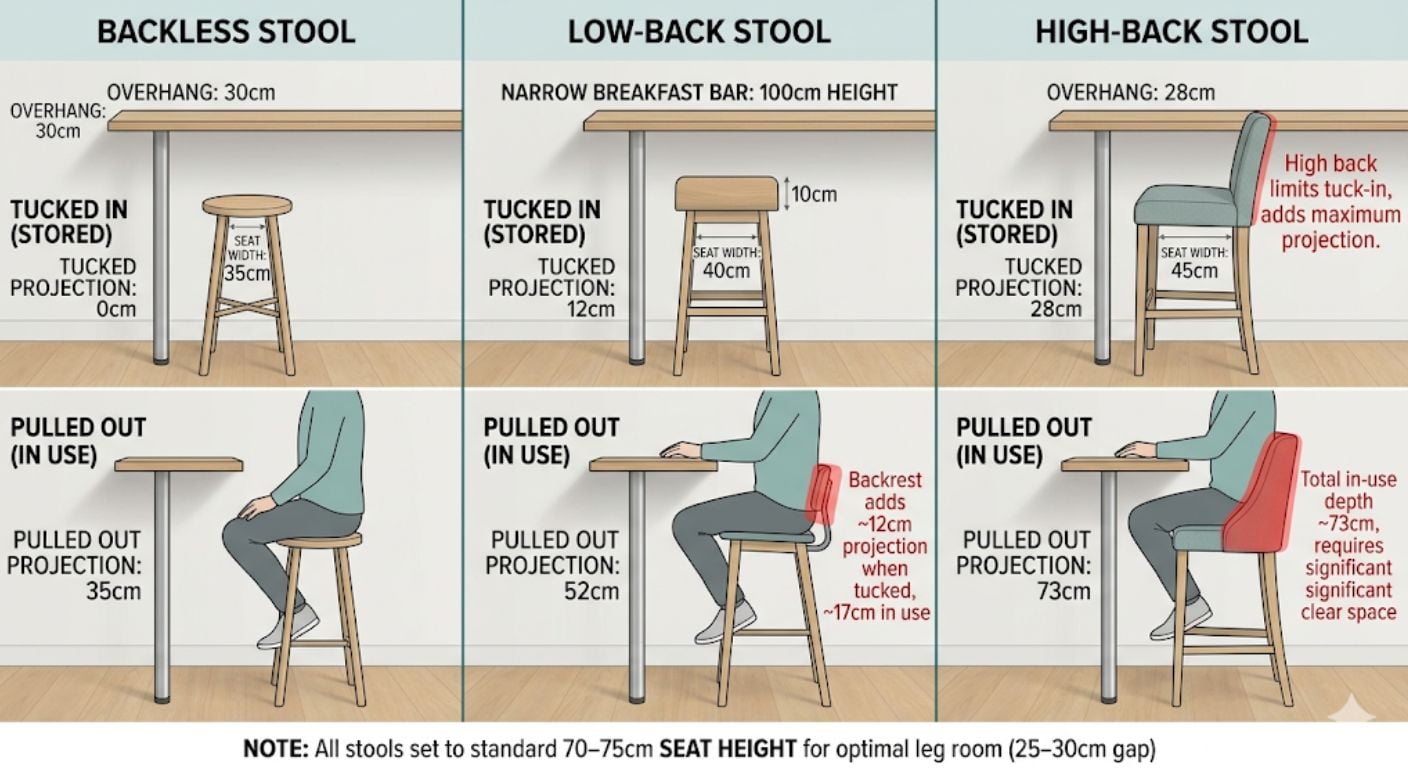
Do bar stools tuck under in small kitchens?
Yes. In small kitchens, this is often the deciding factor. A stool that tucks fully under the counter reduces how much space it occupies when not in use.
This depends on three things:
- Seat depth
- Back height
- Counter overhang
As a general rule, backless stools tuck in fully, low-back stools tuck in partially, and high-back stools rarely tuck under completely.
One thing we see often is customers focusing only on seat height and missing how far the stool projects out when pushed in. That is usually what causes problems in narrow kitchens.
Backless vs low-back: what works better in tight spaces?
In small kitchens, the choice is usually between backless and low-back stools.
Backless stools
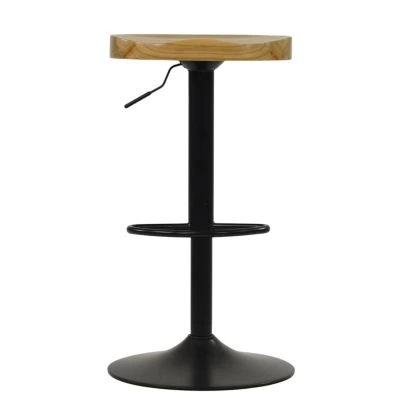
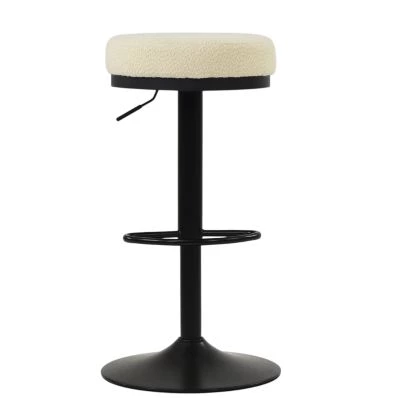
- Fully tuck under the counter
- Take up the least visual space
- Are easier to move around
- Work well for quick, casual use
Low-back stools
- Provide more support than backless stools
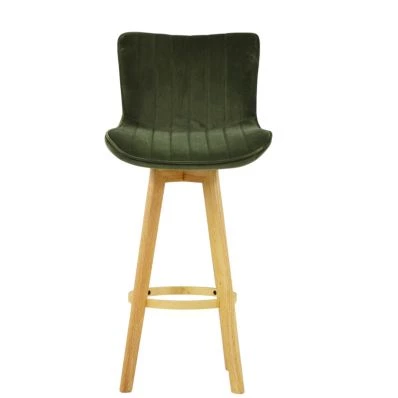
- Still keep a relatively compact profile
- May not tuck fully depending on back height and counter overhang
Backless designs tend to work best when the bar is used briefly for breakfast, quick meals, or occasional seating. Low-back stools make more sense when you sit for longer periods and have enough overhang for the stool to sit partly under the counter.
Fixed vs swivel stools in narrow layouts
Movement matters more in tight spaces than most people expect.
Fixed stools
- Stay aligned with the counter
- Are easier to control in narrow walkways
- Are less likely to knock into units or walls
Swivel stools
- Make it easier to get on and off without pulling the stool out
- Can help when space behind the stool is restricted
- May rotate into walkways or cabinets if the space is very tight
Swivel stools work best when there is enough clearance behind the seat. If the space is tight on both sides, fixed designs are usually more predictable.
For a fuller comparison, see swivel vs fixed bar stools.
Materials that work in small, high-use kitchens
In smaller kitchens, stools are used frequently and are more likely to be knocked, moved, or exposed to spills. Materials should prioritise durability and easy cleaning.
- Faux leather or real leather: easy to wipe clean and practical for daily use.
- Metal frames: slim, strong, and visually lighter than bulky frames.
- Compact wooden frames: suitable where the legs do not flare too far outward.
Fabric upholstery can work, but in tighter spaces it tends to show wear more quickly because of regular contact and movement.
For general guidance on keeping home environments safe and practical, the Health and Safety Executive’s home working guidance is a useful reminder that frequently used spaces need clear movement routes and suitable furniture positioning.
Practical selection: what actually works and what does not
Choose this setup if space is tight
- Backless or low-back stools
- Seat width under 45cm
- Slim metal or compact frame
- Fixed base unless clearance behind the stool is very limited
- Seat depth that allows full or near-full tuck-under fit
Avoid this in narrow kitchens
- Wide padded seats with arms
- Deep seats that cannot tuck under the counter
- Bulky frames that flare outward
- High-back stools without enough counter overhang
- Excessive swivel in tight walkways
When small-space bar stools make sense
Small-space bar stools work well when the kitchen is used for short, regular seating and the breakfast bar forms part of a working kitchen layout. They are especially useful where space behind the stools is limited.
They are less suitable when the bar is used for long sitting periods, such as working from a laptop or eating full meals every day. In those cases, a slightly wider, more supportive stool is usually the better long-term choice, even if it reduces how many stools fit.
FAQs
What width bar stool is best for a small kitchen?
For small kitchens, stools under 45cm wide are usually the safest option. This allows multiple stools to fit without crowding and helps maintain usable space around the kitchen.
How many stools fit on a 6ft breakfast bar?
A 6ft breakfast bar is roughly 1.8m wide and usually fits three stools comfortably. This is based on allowing around 50–60cm per stool to maintain usable seating space.
Are backless stools better for narrow spaces?
Yes. Backless stools are easier to tuck fully under the counter, which reduces how much space they take up when not in use. This makes them the most practical option in tighter layouts.
Are swivel stools suitable for small kitchens?
They can be, but only if there is enough clearance around the stool. In narrow kitchens, fixed stools are often easier to manage and less likely to obstruct movement.
-
-
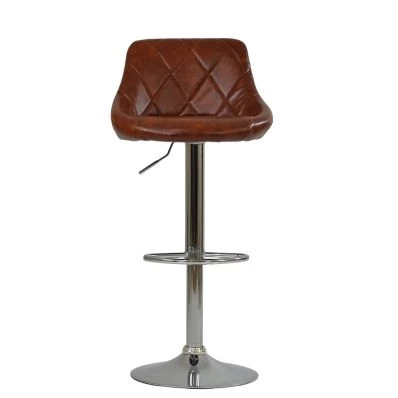
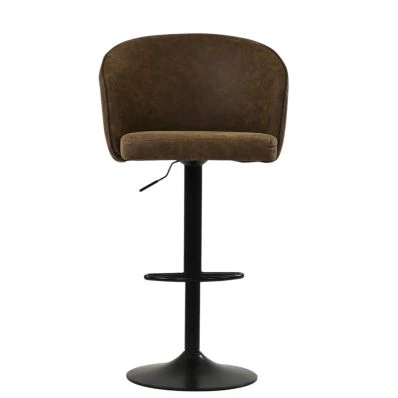
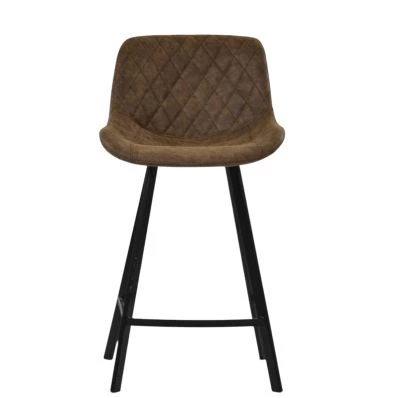 Matteo 65cm Bar Stool in Aged Brown Leather & Black BaseSpecial Price £59.99 Regular Price £74.99 Original price 20% Inc VATSaving £15
 -
-
-
-
-
-
-
-
-
-
Final thoughts
In small kitchens and narrow breakfast bars, the priority is controlling width, depth, and movement. Narrow, low-profile stools that tuck under properly will keep the space usable day to day.
If you are comparing options, focus on how the stool behaves when not in use as much as when you are sitting on it.
You can explore suitable options in the bar stools range, and refer back to the bar stool size guide for full measurement context.


Comments