
 Chat with us on WhatsApp

Office Chairs Without Wheels: When to Use Them & What to Look For
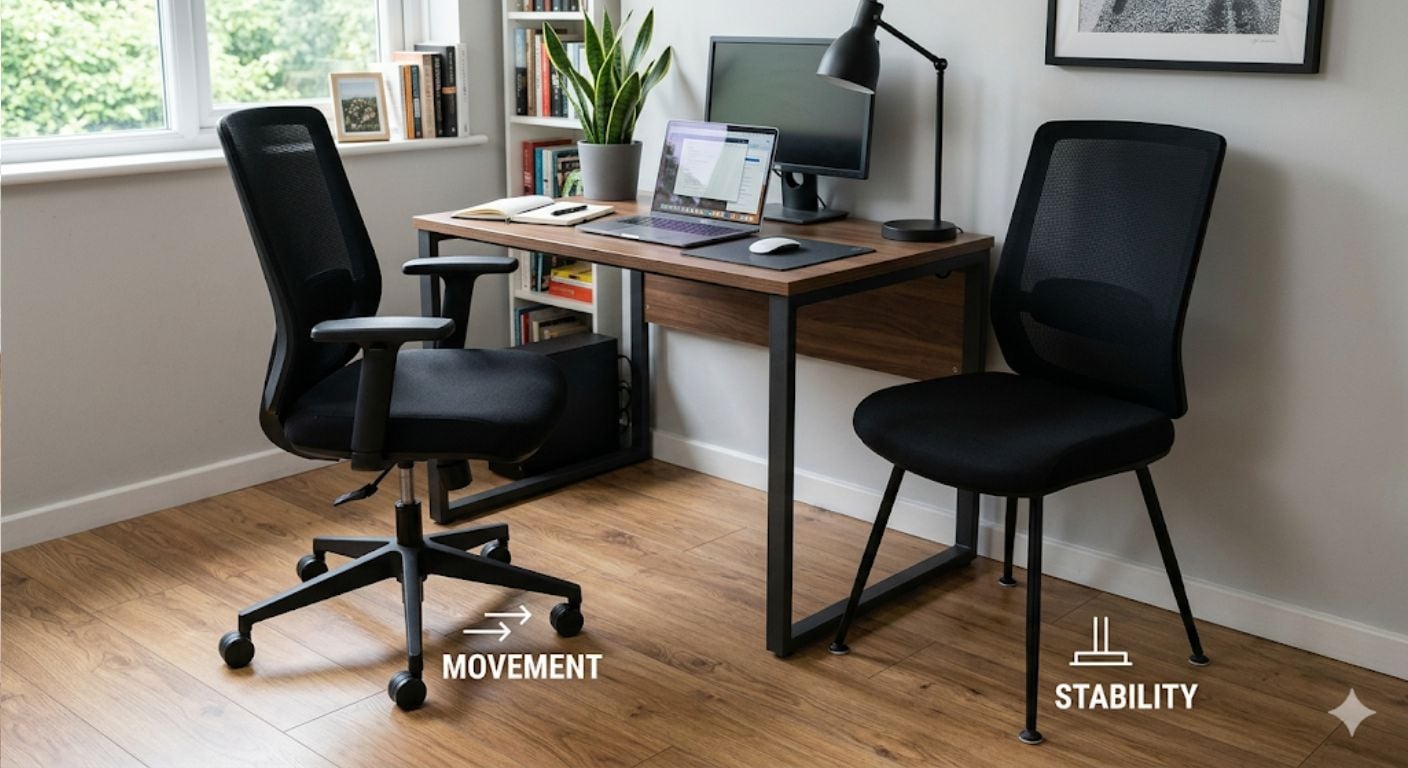
Office chairs without wheels are designed for workspaces where stability, floor protection, and a more fixed seating position matter more than rolling movement. They can work well in home offices, bedrooms, shared living spaces, compact rooms, and areas with delicate flooring.
The main decision is not whether wheels are “better” or “worse”. It is whether your workspace needs mobility. If you regularly move between drawers, printers, side desks, or multiple screens, wheels may still make sense. If your desk setup is fixed and you want the chair to stay put, a non-rolling office chair can be the cleaner choice.
This guide explains when to use office chair without wheels, what to check before buying, and when a wheeled or hybrid option may be more practical.
What is an office chair without wheels?
An office chair without wheels is a desk chair that uses fixed legs, glider feet, a sled base, or a fixed swivel base instead of castors. It is intended to stay in position rather than roll across the floor during use.
These chairs can still vary a lot. Some are simple fixed-height desk chairs. Others include a swivel seat, gas lift height adjustment, arms, padding, or a more supportive backrest. The important detail is the base. Without castors, the chair behaves more like a stable piece of furniture than a traditional rolling task chair.
For a wider view of office chair features, see our guide to buying an ergonomic office chair.
When should you use an office chair without wheels?
You should use an office chair without wheels when your workspace is fixed, your floor needs protection, or you dislike chairs moving while you sit down, type, or stand up. They are especially useful in compact home offices where rolling movement adds little practical value.
Use one in a small room or bedroom office
In a small bedroom, spare room, or corner workstation, rolling around is usually unnecessary. A chair without wheels keeps the footprint more controlled and reduces the risk of bumping into furniture, wardrobes, bedside tables, or walls.
This matters most when the desk is against a wall and everything you need is already within arm’s reach. In that setup, wheels can become more of a nuisance than a benefit.
Use one on delicate flooring
Hardwood, laminate, vinyl, and some tiled floors can mark over time if a chair rolls repeatedly in the same area. Carpet can also develop tracks or compressed patches under daily castor movement.
A non-rolling chair spreads movement differently. Fixed legs or glider feet are usually easier to control, especially when paired with suitable floor protectors. If floor condition is a major concern, check the feet as carefully as the seat.
For office and home workstation guidance, the Health and Safety Executive explains that seating should be considered as part of the wider display screen equipment setup, not chosen in isolation. The HSE’s DSE posture guidance is a useful reference for checking the full workstation rather than only the chair. :contentReference[oaicite:0]{index=0}
Use one when you want the chair to stay put
Some people find wheeled chairs distracting because they drift slightly when sitting down, leaning forward, or pushing away from the desk. This is more noticeable on hard floors or slightly uneven surfaces.
A fixed chair gives a more grounded feel. It can also be safer in rooms used by children, pets, or multiple family members, because the chair is less likely to slide unexpectedly.
Use one when the chair is part of a visible room
Many home offices are not separate offices. They are part of bedrooms, dining rooms, or living spaces. A chair without wheels can look more like a normal furniture piece and less like workplace equipment.
This does not mean choosing style over function. It means checking that the chair still suits the desk height, sitting time, and support needs. One thing we hear from our customers is that the chair often has to do two jobs: work properly at the desk and still look acceptable when the laptop is closed.
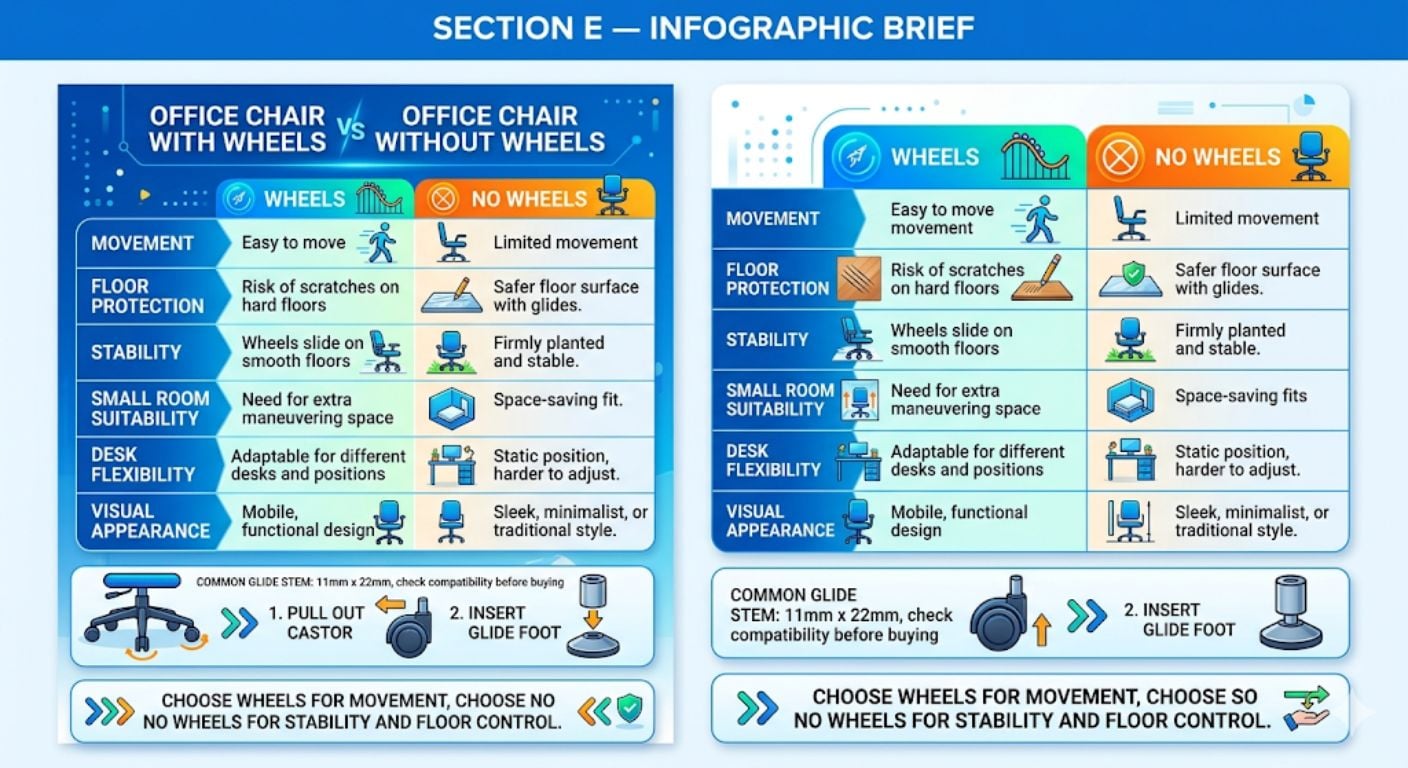
Wheels vs no wheels: quick comparison
| Decision point | Chair with wheels | Chair without wheels |
|---|---|---|
| Movement | Better for moving around a wider workstation | Better for fixed desk setups |
| Floor protection | Can mark floors without suitable castors or a mat | Usually easier to control with glides or pads |
| Stability | May shift slightly on hard floors | Stays more firmly in place |
| Small rooms | Can feel bulky or mobile in tight spaces | Often better for compact layouts |
| Workstation flexibility | Useful for reaching nearby storage or equipment | Less useful if you need frequent movement |
| Room appearance | Usually looks more like a standard office chair | Can look more furniture-like |
What to look for in an office chair without wheels
Check the seat height first
Seat height is one of the most important checks. A chair can look right but still feel wrong if the seat is too high or too low for the desk.
As a general guide, your feet should rest flat on the floor and your forearms should sit comfortably near desk height when typing. If the chair is fixed height, check the listed seat height before buying. If it has gas lift adjustment, check the minimum and maximum seat height range.
For more detail on fixed and adjustable options, see our guide to adjustable vs fixed height office chairs.
Check the base type
The base affects stability, movement, and how the chair feels in daily use. Common options include:
- Four-leg base: stable, simple, and furniture-like.
- Sled or cantilever base: slightly flexible, often used for visitor-style seating.
- Fixed swivel base: allows turning without rolling.
- Glider feet: replace castors or sit under the chair to reduce movement.
If you want the chair to stay completely still, choose fixed legs or a stable sled base. If you want to turn towards storage or a second screen, a swivel chair with no wheels may be more practical.
Check floor contact points
Look at what actually touches the floor. Narrow hard plastic feet may concentrate pressure on one point. Wider glides, rubberised pads, or felt protectors can reduce marking and make the chair easier to move when needed.
For hard floors, avoid dragging the chair sideways unless the feet are designed for it. For carpet, check that the base will not sink too heavily or catch when pulled out from the desk.
Check back shape and sitting time
A no-wheel chair is not automatically suitable for long working days. The backrest shape, seat padding, and sitting posture still matter.
For short admin sessions, a simple padded chair may be enough. For regular home working, look for a supportive back shape, suitable seat depth, and enough padding to remain comfortable beyond quick tasks.
For a clearer breakdown of support features, read back support explained.
Check armrests and desk clearance
Armrests can be useful, but only if they fit under or around the desk. In smaller spaces, arms may stop the chair from tucking in neatly.
Before buying, compare the arm height with the underside of your desk. If space is tight, an armless office chair without wheels may be easier to position and store.
Can you convert an office chair with wheels to a stationary chair?
Yes, many wheeled office chairs can be converted by removing the castors and fitting chair glides instead. This works best when the castor stems match the replacement glides, commonly listed as 11mm wide by 22mm long on many standard office chair fittings.
The process is usually simple:
- Turn the chair on its side or upside down on a protected surface.
- Pull each castor firmly from the base.
- Check the stem size and fitting type.
- Push the replacement glides into the same sockets.
- Place the chair upright and test stability before use.
This is useful if you already own a chair that suits your posture and desk height but you want less rolling movement. It is not always the cleanest visual option, but it can be practical.
Who suits an office chair without wheels?
An office chair without wheels usually suits:
- People working at a single fixed desk position.
- Home offices in bedrooms, dining rooms, or shared spaces.
- Users with hardwood, laminate, vinyl, or marked carpet concerns.
- People who dislike chairs drifting while typing.
- Rooms where a furniture-style chair looks more appropriate.
- Compact workspaces where rolling movement is unnecessary.
They are also useful where the chair is used for mixed tasks, such as laptop work, paperwork, dressing table use, or occasional study.
When should you avoid an office chair without wheels?
Avoid an office chair without wheels if you need to move frequently across a wide workstation, reach side storage throughout the day, or change position often between different desk zones. A non-rolling chair can become frustrating if movement is part of your normal workflow.
You may be better with a wheeled chair if:
- You work across multiple screens or desk surfaces.
- You regularly move between drawers, filing, printers, or side units.
- You need a wide range of chair adjustments.
- You sit for long hours and need a more task-focused office chair.
- Your workspace is set up like a full office rather than a home desk corner.
If your main concern is the chair rolling too much, a fixed-base swivel chair or glider conversion may be a better compromise than a fully static chair.
FAQ
Are office chairs without wheels good for home working?
They can be good for home working if your desk setup is fixed and you do not need to roll around. They work especially well in smaller rooms, bedrooms, and shared living spaces. For longer daily use, check seat height, back shape, padding, and desk clearance before choosing.
Do office chairs without wheels protect floors better?
They can reduce repeated rolling marks, especially on hard floors and carpets. However, the feet still matter. Look for glides, rubberised pads, or felt protectors where appropriate. A fixed chair with poor floor contact points can still mark delicate flooring if dragged regularly.
Is a swivel chair without wheels a good option?
A swivel chair without wheels is useful when you want to turn without rolling. It can suit compact desks, dressing table workstations, or home offices where you need some movement but still want the chair to stay in one place.
Can you remove wheels from any office chair?
Not every chair is suitable, but many standard office chairs allow castors to be pulled out and replaced with glides. Check the stem size and fitting type first. Many common replacements use an 11mm by 22mm stem, but you should confirm compatibility before ordering.
What is the best office chair without wheels for a small bedroom?
For a small bedroom, choose a compact chair with a stable base, suitable seat height, and no oversized arms. A furniture-style chair can look cleaner in the room, but it still needs to fit the desk properly and support the amount of time you actually sit.
-

-
-
-
-
-
-
-
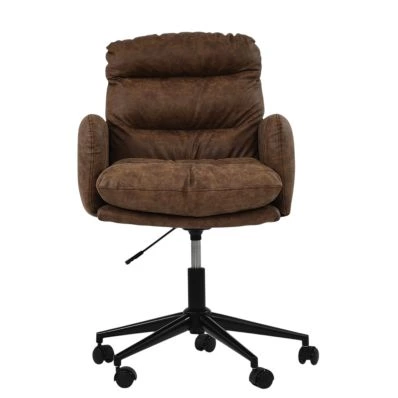
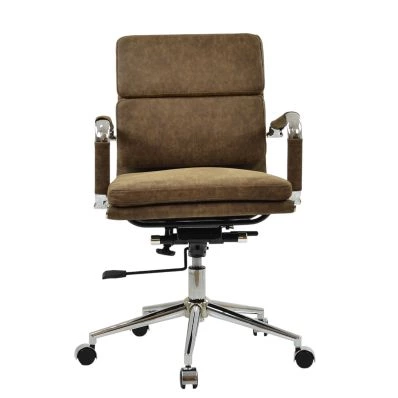 Chester Office Chair in Aged Brown LeatherSpecial Price £119.99 Regular Price £179.99 Original price 33% Inc VATSaving £60
 -
-
-
-
Final takeaway
An office chair without wheels makes sense when stability, floor protection, and a controlled footprint matter more than rolling mobility. It is a practical choice for many home offices, especially where the chair sits in a bedroom, living area, or compact workspace.
The key is to check the base, seat height, floor contact points, and sitting time before choosing. For suitable options, view our range of office chairs without wheels, or use the wider office chair buying guide if you are still comparing chair types.


Comments