
 Chat with us on WhatsApp

Child-Friendly Dining Chairs: Materials, Leg Styles & What to Avoid
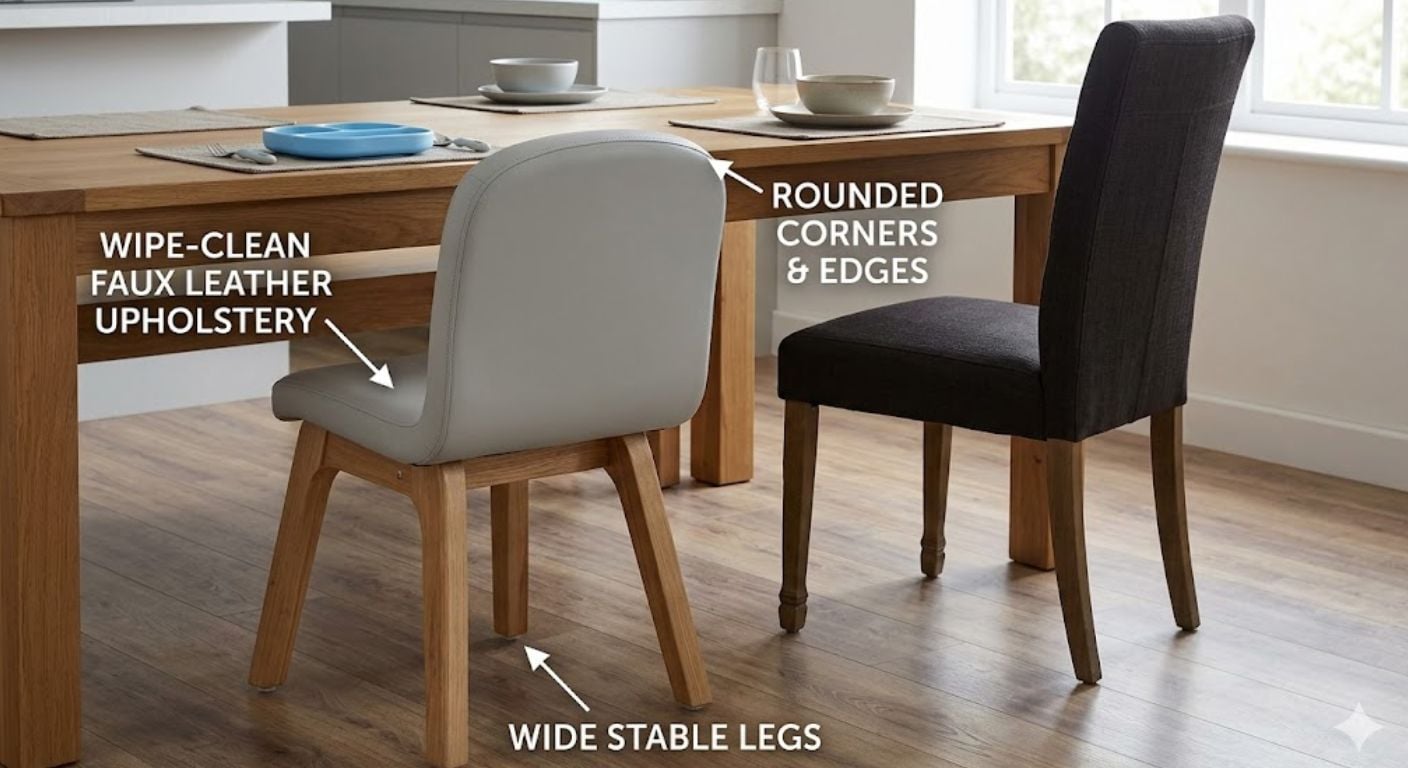
Choosing child friendly dining chairs is mostly about balancing durability, stability, and easy cleaning without making your dining space feel temporary. The best options are usually sturdy chairs with wipeable surfaces, rounded edges, and leg designs that stay stable when children climb, lean, or wriggle during meals.
For most families, practical details matter more than appearance trends. Chairs that stain easily, wobble on uneven floors, or tip when climbed on often become frustrating quickly. If you are comparing different materials or styles, it helps to focus on how the chairs will actually be used day to day rather than how they look in staged product photos.
If you are also trying to make a dining area work in a tighter room layout, our guide to dining chairs for smaller spaces covers compact layouts and flexible seating setups in more detail.
What Makes a Dining Chair Child-Friendly?
A child-friendly dining chair combines four main things: stability, easy-clean materials, safe edge profiles, and durable finishes. The chair should stay steady when children move around in it and should not show permanent damage after regular spills, wiping, or knocks.
- Wider leg footprints
- Rounded seat corners
- Wipeable upholstery
- Strong frame joinery
- Non-slip floor protectors
- Mid-weight or heavier construction
Very lightweight chairs can slide backwards too easily, while fragile decorative frames often loosen over time in busy family homes.
Best Materials for Family Dining Chairs
1. Faux Leather
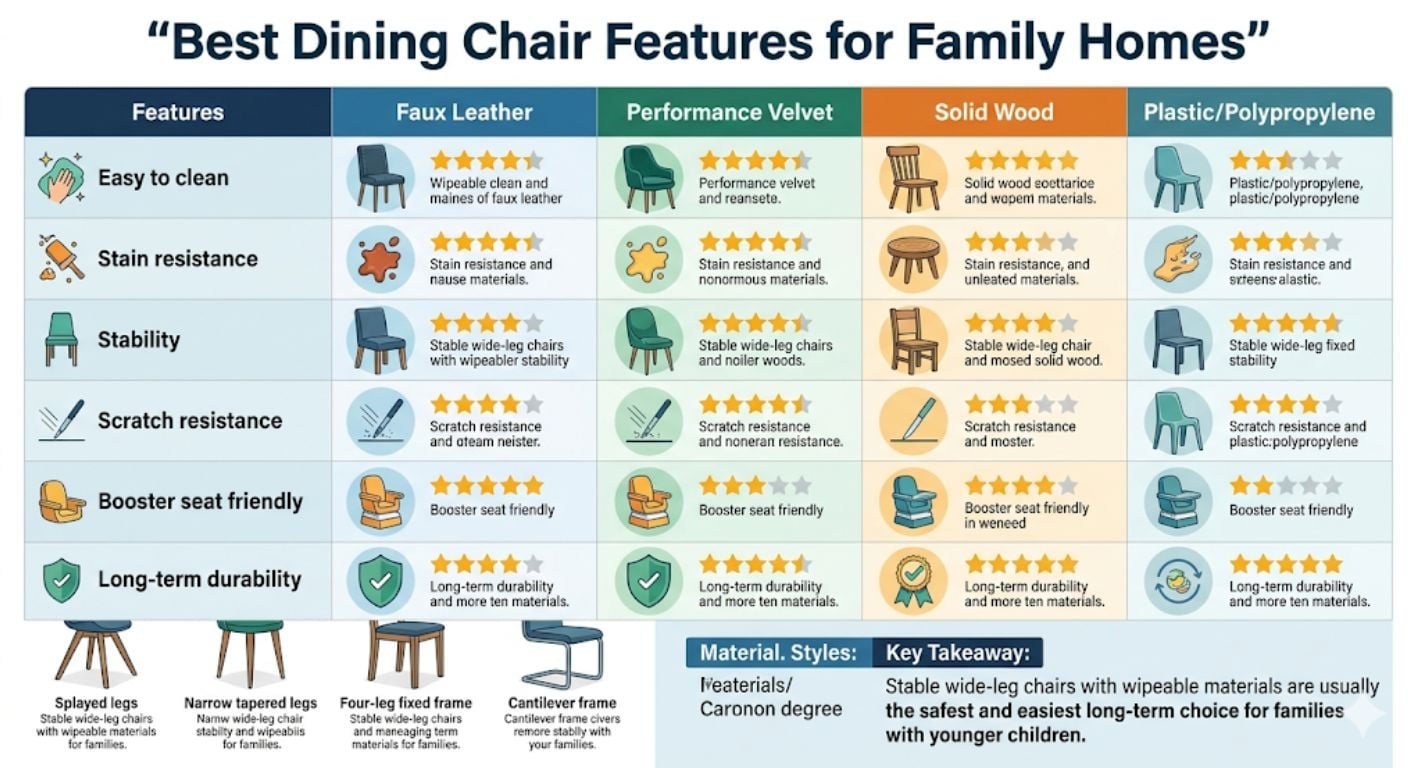
Faux leather is usually the safest overall option for families with younger children. Most spills can be wiped away quickly before they soak in, and darker colours tend to hide marks well.
Advantages:
- Easy to wipe clean
- Resists liquid absorption
- Usually durable against regular use
- Works well with booster seats
Disadvantages:
- Lower-quality PU can crack over time
- Sharp toys or buckles can scratch surfaces
For homes with toddlers, faux leather generally creates fewer maintenance problems than woven fabrics.
2. Performance Velvet
Performance velvet differs from traditional velvet because it is designed with stain resistance and durability in mind. Some modern velvets clean surprisingly well, especially when treated with protective coatings.
Advantages:
- Softer seating feel
- More forgiving visually than flat fabrics
- Better stain resistance than traditional velvet
Disadvantages:
- Still requires faster spill cleanup than faux leather
- Light colours show marks more easily
One thing our customers often mention after buying is that pale velvet can look excellent initially but needs more regular upkeep once children start climbing in and out independently.
If you are comparing upholstery types more broadly, our guide to velvet vs leather dining chairs explains the cleaning and maintenance differences in more detail.
3. Solid Wood
Solid wood chairs are often the most durable long-term option structurally. Hardwood frames cope well with years of daily use and can usually tolerate knocks better than thinner metal frames.
Advantages:
- Long lifespan
- Strong and stable
- Harder to tip over
- Easier to repair than upholstered frames
Disadvantages:
- Harder seating surface
- Painted finishes can chip
- Some woods mark easily without protective coatings
4. Polypropylene and Moulded Plastic
Plastic dining chairs work well for younger families because they are lightweight, washable, and resistant to food stains.
Advantages:
- Very easy to clean
- Moisture resistant
- Affordable to maintain
- Usually stackable
Disadvantages:
- Can slide easily on hard floors
- Lightweight models may tip more easily
- Lower-end plastics can scratch quickly
Plastic works particularly well in kitchens where chairs are moved frequently.
Which Dining Chair Leg Styles Work Best Around Children?
Wide-Leg and Splayed-Leg Chairs
Wider leg positioning creates better balance and reduces tipping risk. Splayed legs distribute weight more evenly and cope better with children leaning sideways or climbing onto the chair.
This style works especially well for:
- Younger children
- Busy kitchens
- Hard flooring
- Homes using booster seats
Four-Leg Fixed Frames
Traditional four-leg frames are usually more stable than cantilever or pedestal-style dining chairs. Simpler construction also tends to loosen less over time.
Look for:
- Thick leg sections
- Reinforced corner joints
- Solid foot contact with the floor
Avoid ultra-thin decorative legs if the chairs will see heavy daily use.
Metal Frame Chairs
Metal-framed dining chairs can work well for families provided the frame is properly reinforced and not excessively lightweight.
The better options usually include:
- Cross-bracing
- Welded joints
- Powder-coated finishes
- Wider bases
Thin tubular metal frames sometimes flex more than expected when children rock backwards.
Leg Styles to Avoid in Family Dining Areas
Narrow Tapered Legs
Very narrow tapered legs can become unstable on uneven floors and may feel less secure when children climb onto the chair independently.
Cantilever Chairs
Cantilever chairs flex naturally when weight shifts forward or backward. Adults may find this comfortable, but younger children often bounce or swing excessively on them.
Sharp-Angled Metal Frames
Angular metal bases with exposed corners increase the likelihood of bumps around dining tables, especially in tighter spaces.
Lightweight Decorative Frames
Very light dining chairs move too easily when children push away from the table or climb into the seat themselves.
What Seat Height Works With Booster Seats?
Most standard dining chairs sit around 45–48cm seat height, which works well with most clip-on or strap-mounted booster seats.
For booster compatibility, check:
- Flat seat surfaces
- Strong backrest support
- Enough seat depth for straps
- Clearance underneath the table
Very sculpted or curved seats can make booster fitting awkward.
If you need a broader overview of chair sizing and compatibility, our dining chair size guide explains standard measurements in more detail.
Easy-Clean Features Worth Paying For
Certain features make a noticeable difference in long-term maintenance.
Prioritise:
- Wipe-clean upholstery
- Removable seat pads
- Darker colour finishes
- Textured fabrics that disguise marks
- Protective floor glides
- Sealed wood finishes
Features that often disappoint:
- Delicate boucle fabrics
- Unsealed natural linen
- Deep button detailing
- Open woven backs
- Light untreated wood
Food debris collects quickly inside deep stitching and decorative seams.
When Child-Friendly Dining Chairs Make Sense
These styles work best for:
- Families with toddlers or younger children
- Kitchen diners
- High-use dining spaces
- Homes where chairs move regularly
- Multi-purpose dining rooms
The goal is normally to reduce maintenance and avoid premature wear rather than create a completely child-proof setup.
If you are furnishing a high-use family dining area, practical wipeable options from our dining chair collection tend to hold up better long-term than delicate statement pieces.
When to Avoid Certain Materials or Styles
Some dining chair styles become difficult to live with in busy family homes.
You may want to avoid:
- Very pale fabric upholstery
- Thin chrome sled bases
- Fragile boucle fabrics
- High-maintenance natural fibres
- Extremely lightweight chairs
- Gloss-painted finishes prone to chipping
This does not mean every family needs purely functional furniture. It usually means choosing surfaces and structures that tolerate everyday use without constant upkeep.
Frequently Asked Questions
What is the safest dining chair style for toddlers?
The safest dining chair styles for toddlers are usually sturdy four-leg wooden chairs with wide bases and rounded edges. Heavier frames are harder to tip, and simple leg layouts tend to stay more stable during climbing or movement around the table.
Are fabric dining chairs practical with children?
Some are. Performance fabrics and treated velvets can work well, but untreated woven fabrics usually stain more easily. Faux leather remains the easiest overall material for regular cleaning and spill resistance.
How do I stop dining chairs tipping when children climb them?
Look for wider leg footprints, splayed legs, and heavier construction. Chairs with narrow central bases or lightweight frames move more easily and are generally less stable for younger children.
What colour dining chairs hide marks best?
Mid and darker shades usually hide marks best. Grey, charcoal, brown, and darker neutrals tend to disguise minor food stains and scuffs better than pale cream or white upholstery.
Final Thoughts
The best child friendly dining chairs are usually the ones that stay stable, clean easily, and still look acceptable after years of daily use. In most homes, durability and structure matter more than trend-led styling.
If you are comparing broader dining chair options, materials, or layouts, you can browse the full dining chair range or read related guides covering upholstery, sizing, and practical family setups.


Comments