
 Chat with us on WhatsApp

Comfortable Dining Chairs: What Actually Makes Them Comfortable
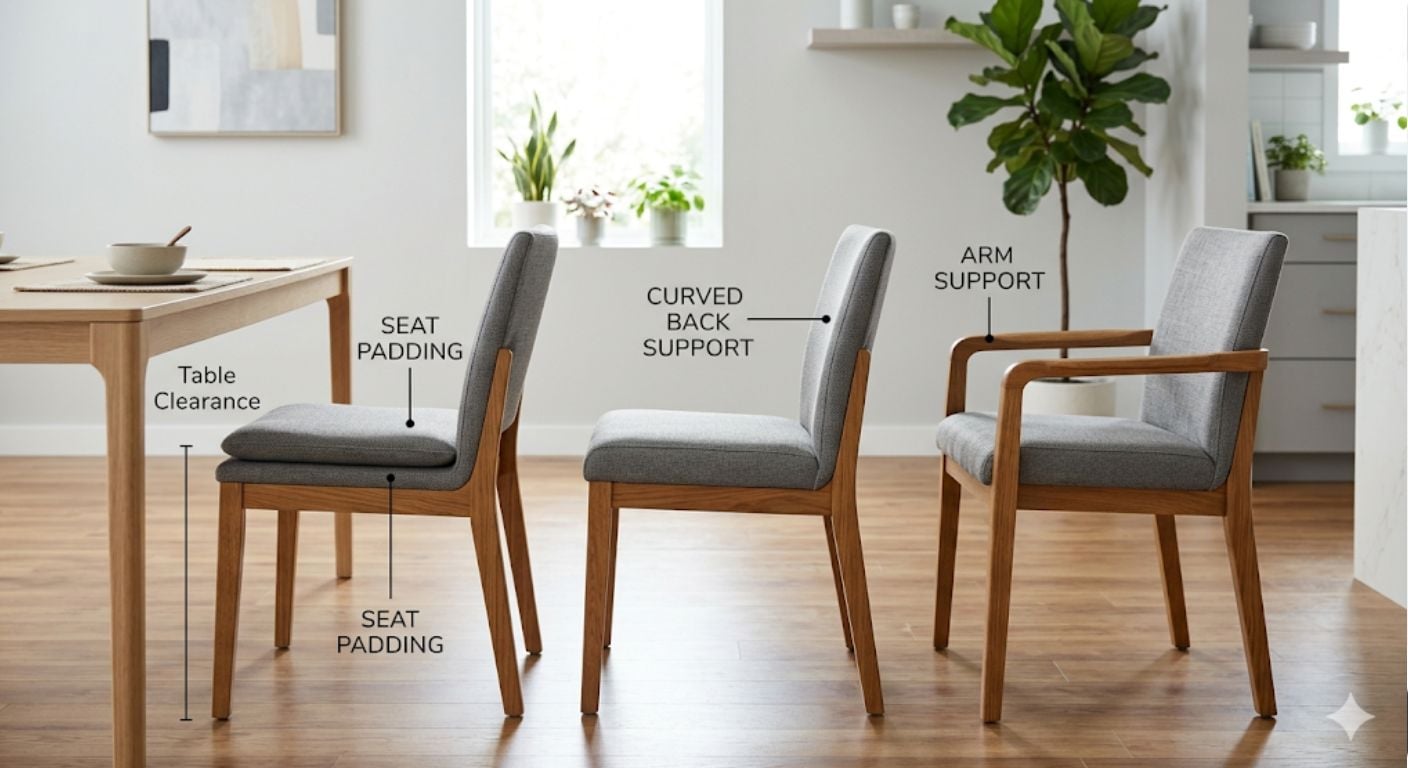
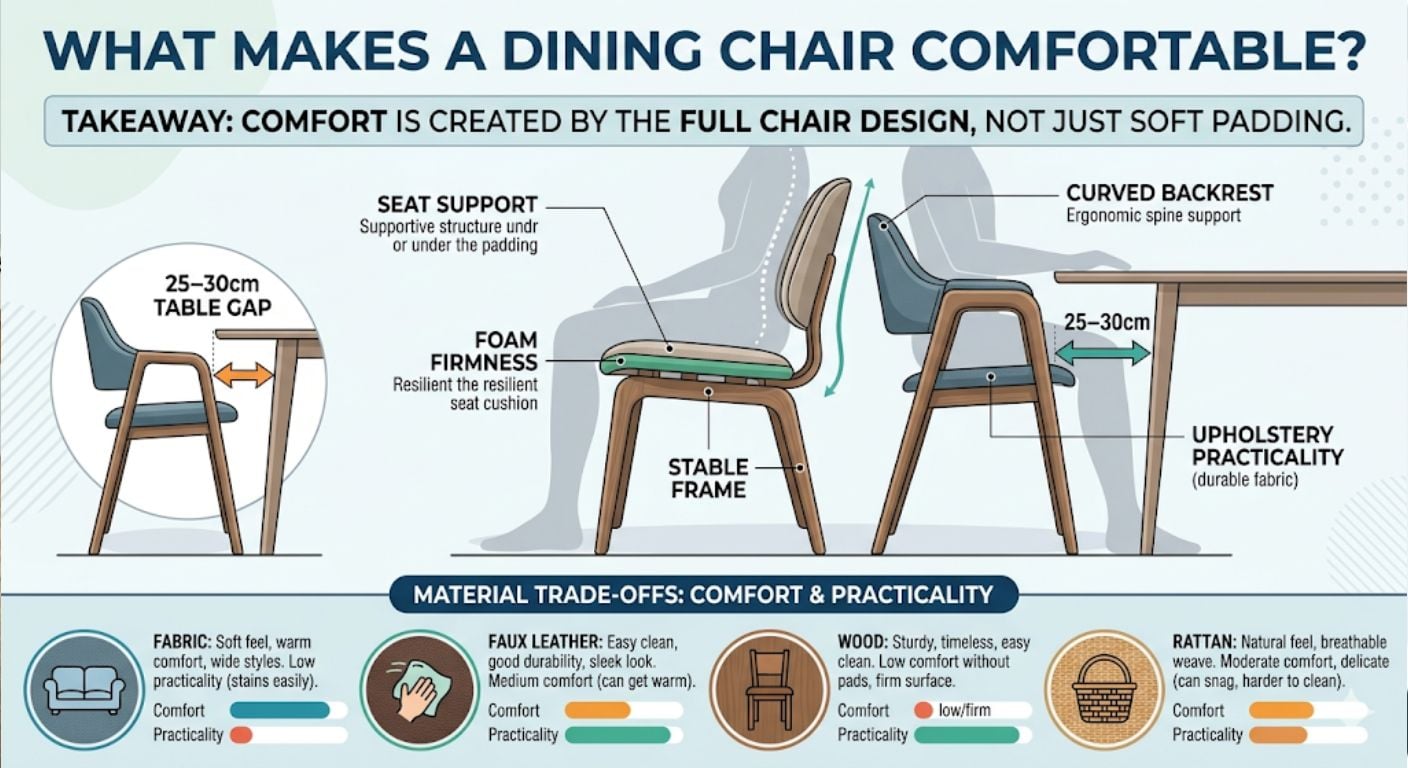
Comfortable dining chairs are not just chairs with soft padding. Real comfort comes from the way the seat, backrest, frame, upholstery and table clearance work together. A chair can feel soft for five minutes but still become uncomfortable during a long meal if the seat is too deep, the back is too upright, or the frame feels unstable.
The most comfortable option for one home may not be the right choice for another. A padded fabric chair may suit longer meals, while a wipe-clean faux leather or wooden chair may work better in a busy family kitchen. This guide focuses on the features that make dining chairs comfortable in daily use, without turning the topic into a full sizing guide. For detailed measurements, see our dining chair height and width guide.
The Seat Needs Support, Not Just Softness
A comfortable seat should spread weight evenly without feeling flat or unstable. Very soft padding can feel appealing at first, but if the foam compresses too quickly, the chair may feel hard after a short time.
For regular use, look for:
- A padded or gently contoured seat
- Firm support beneath the cushion
- Enough width to sit naturally without feeling squeezed
- A front edge that does not press into the back of the legs
- Padding that returns to shape after use
High-density foam is usually better for longer sitting than very soft, low-density filling. It gives support rather than just surface softness. This matters most if you often sit at the table for meals, working, homework, board games or long family gatherings.
A scooped or shaped seat can also help because it reduces the feeling of sliding forward. It does not need to be dramatic. A slight curve is often enough to make the chair feel more settled.
Back Shape Makes a Bigger Difference Than Many People Expect
The backrest should support the lower and middle back without forcing you into a stiff position. A chair with a slightly curved back usually feels more natural than one with a completely flat back.
For longer meals, look for:
- A gentle curve through the backrest
- Enough height to support the lower and mid-back
- A back angle that lets you sit upright without leaning forward
- No sharp frame edge pressing into the spine or shoulders
The NHS explains that full back support and avoiding a perched sitting position can help reduce strain when seated for longer periods, which is relevant when choosing any chair used regularly at home. See the NHS seating and ergonomics guidance.
A high back can feel more supportive, but it is not automatically more comfortable. If the angle is wrong or the top edge catches the shoulders, it can feel restrictive. A lower curved back can sometimes feel better for casual dining because it supports the body without locking it in place.
Upholstery Usually Feels More Comfortable, But It Has Trade-Offs
Upholstered fabric is often the safest choice for comfort because it adds softness, warmth and pressure relief. Fabric, velvet, chenille and bouclé can all feel more forgiving than hard materials, especially during longer meals.
The trade-off is maintenance. Softer fabrics can hold crumbs, pet hair and marks more easily than smooth finishes. In homes with children or pets, comfort needs to be balanced against cleaning.
| Chair type | Comfort strength | Practical concern |
|---|---|---|
| Fabric upholstered | Soft, warm, supportive | Can mark or absorb spills |
| Faux leather | Padded and wipe-clean | Can feel warmer in summer |
| Velvet | Soft and cushioned feel | Can show pressure marks |
| Wood | Firm and durable | Less forgiving without shaping |
| Rattan or cane back | Breathable and flexible | Less plush than upholstery |
One thing our customers often underestimate is how much the upholstery choice changes daily use — the softest chair in the showroom is not always the easiest chair to live with around children, pets or regular food spills.
The Right Table Gap Helps Comfort
For most dining setups, there should be around 25–30cm between the top of the chair seat and the underside of the table or table apron. This gives enough room for legs to sit naturally under the table.
If the gap is too small, the chair may feel cramped even if the seat itself is comfortable. If the gap is too large, the table can feel too high, which may make eating or working at the table awkward.
This article is not trying to replace a full measurement breakdown. For seat height, table height and spacing checks, use our seat height vs table height guide.
Arms Can Add Comfort, But Only If They Fit
Dining chairs with arms can be more comfortable for people who like extra support when sitting down, standing up or relaxing after a meal. They can be useful for older users or anyone who prefers a more enclosed chair shape.
However, arms can cause problems if they are too high, too wide or unable to tuck beneath the table. Before choosing arms, check:
- Whether the arms fit under the table edge
- Whether they leave enough elbow room
- Whether the chair still moves easily around the table
- Whether the extra width reduces how many chairs fit
For a fuller comparison, see our guide to dining chairs with arms vs armless dining chairs.
Stability Is Part of Comfort
A chair that wobbles, creaks or shifts under weight will never feel properly comfortable. Structural comfort comes from confidence. You should be able to sit, move and stand without feeling the chair flex too much.
When buying online, check for:
- Clear product dimensions
- A sensible product weight
- Strong leg construction
- Secure frame joints
- A stable base shape
- Upholstery that looks tightly fitted
A very lightweight chair is not always poor quality, but weight can give a useful clue. If a chair is upholstered, padded and framed but still unusually light, it may not feel as planted as expected.
Which Comfortable Dining Chairs Suit Different Homes?
Choose upholstered dining chairs if comfort is the main priority and the chairs will be used for longer meals or regular sitting. They suit dining rooms, open-plan spaces and homes where the table is used beyond mealtimes.
Choose faux leather or wipe-clean finishes if spills, children or pets are a bigger concern. These can still be comfortable if the seat is padded and the backrest has a supportive curve.
Choose wooden or mixed-material chairs if durability and easy maintenance matter more than softness. For better comfort, look for shaped seats, curved backs or add a removable cushion.
Choose chairs with arms if support getting in and out of the chair matters. Avoid them if space around the table is tight or if the arms will hit the underside of the table.
For the full range, browse our dining chairs.
FAQ
What makes dining chairs comfortable?
Comfort comes from the combination of seat support, back shape, padding, stability and table clearance. Padding helps, but it is not enough by itself. A supportive curved back, firm seat base and enough legroom under the table usually make more difference during longer sitting.
Are upholstered dining chairs always more comfortable?
Upholstered dining chairs are usually more comfortable for longer sitting because they reduce pressure points and feel warmer than hard materials. They are not always the most practical option, though. In family homes, a wipe-clean padded chair may be a better balance of comfort and maintenance.
Are wooden dining chairs uncomfortable?
Wooden dining chairs are not automatically uncomfortable. A shaped wooden seat and curved back can feel supportive for everyday meals. However, they usually feel firmer than padded chairs, so they may not suit people who sit at the table for long periods.
Are rattan back dining chairs comfortable for daily use?
Rattan or cane back dining chairs can be comfortable because the back has some natural flexibility and breathability. They are less cushioned than upholstered chairs, so they suit lighter everyday use better than long sitting unless the seat is well padded.
What dining chairs are best for older people?
Stable chairs with arm support, a firm padded seat and a supportive back are usually better for older users. Avoid very low seats, unstable swivel bases or chairs that slide too easily. The chair should feel secure when sitting down and standing up.
Final Takeaway
Comfortable dining chairs are built around support, not softness alone. The best choice depends on how long you sit, how much cleaning the chair needs, and whether the chair fits your table properly. For measurement checks, use the main dining chair size pillar, then compare styles within the dining chairs category.


Comments