
 Chat with us on WhatsApp

Dining Chairs for Small Spaces: Compact, Stackable & Space-Saving Options
Small dining spaces create a different set of buying problems than larger rooms. The issue is not simply whether chairs fit around a table. It is whether people can move comfortably, pull chairs out properly, clean around them easily, and use the room without it feeling cramped.
Dining chairs for small spaces are seating options designed to reduce visual bulk and physical footprint while still remaining practical for daily use. The best options balance narrow dimensions, movement clearance, comfort, and flexibility.
This guide explains which dining chair shapes work best in limited spaces, when stackable or slim-frame chairs make sense, how much clearance to leave around a table, and how to avoid layouts that make a room feel crowded.
What Makes a Dining Chair Suitable for Small Spaces?
A dining chair works well in a small space when it reduces both physical footprint and visual heaviness. That usually means slim leg profiles, narrow overall width, open-frame or lower-back designs, and chairs that tuck fully under the table.
The mistake most people make is focusing only on table size. In practice, chair bulk affects how spacious the room feels far more than many expect.
- Slim metal or wooden legs reduce visual heaviness.
- Armless designs save width between chairs.
- Open backrests make the room feel less crowded.
- Lightweight frames are easier to move and reposition.
- Stackable construction helps when space is shared or occasional.
- Low-profile padding keeps comfort without excessive bulk.
You can browse Lakeland’s full range of dining chairs to compare different frame styles and seating formats suited to tighter layouts.
How Much Space Should You Leave Around Dining Chairs?
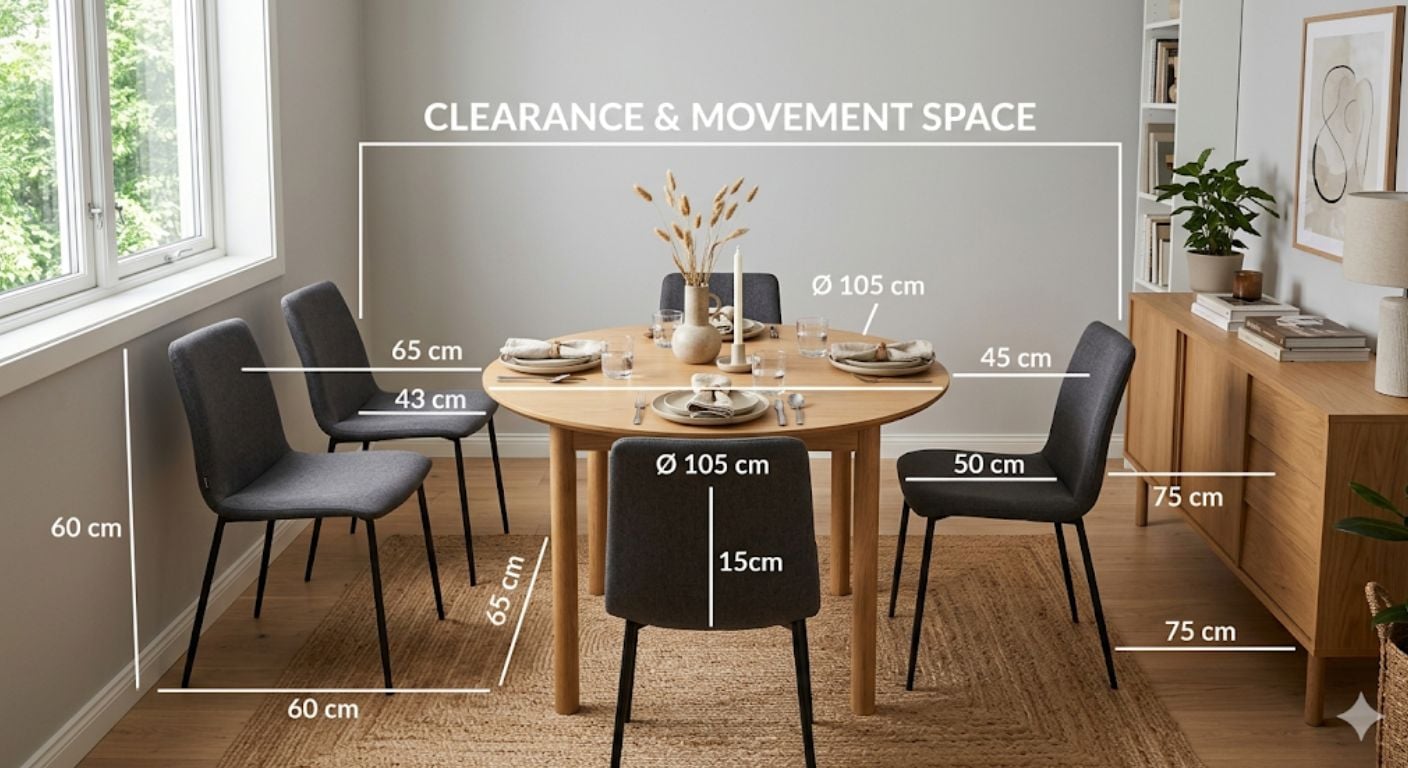
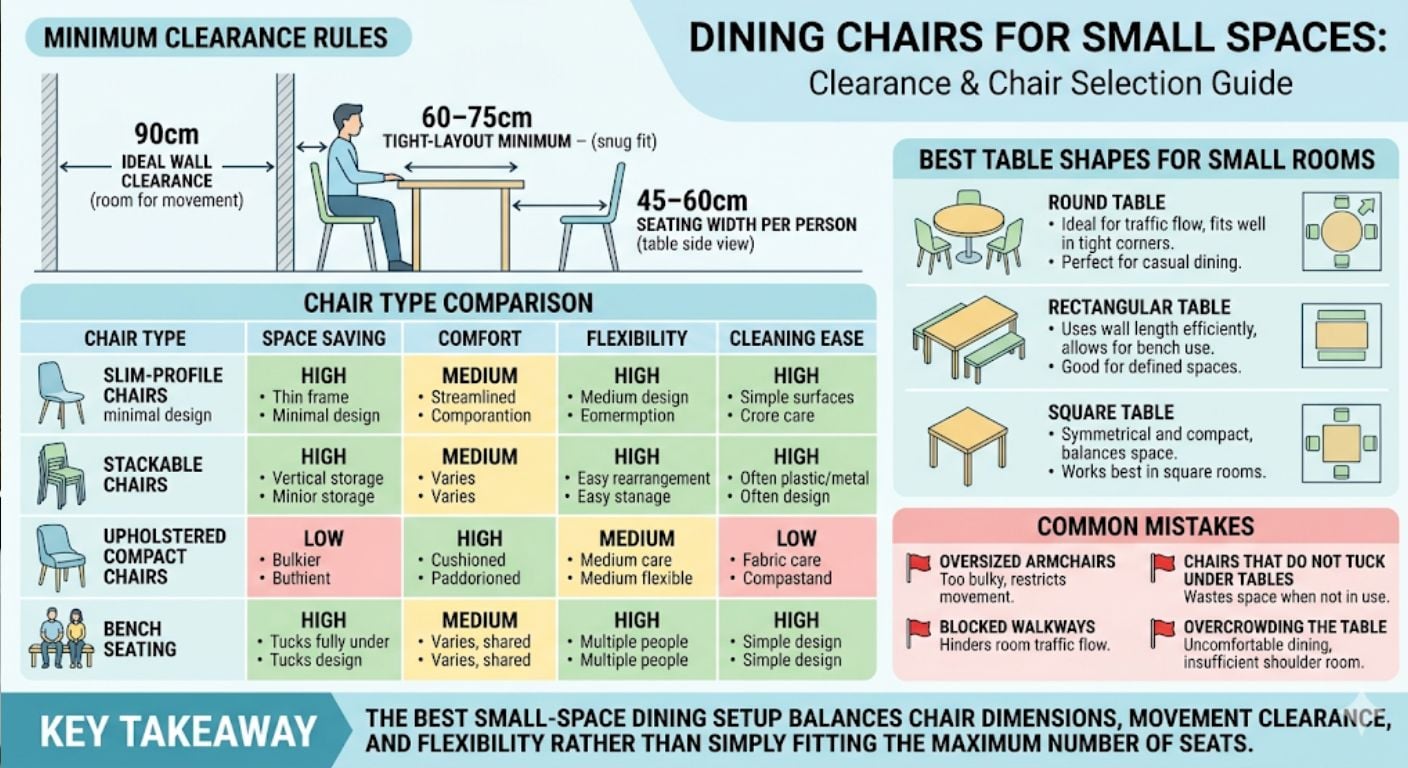
Most small-space layout problems come from insufficient clearance rather than chair size alone. Ideally, leave around 90cm between the edge of the table and the wall where possible. In tighter rooms, 60–75cm can still work, but movement becomes more restricted.
| Layout Need | Recommended Space |
|---|---|
| Comfortable everyday clearance | 90cm |
| Tight apartment layout | 60–75cm |
| Walkway behind active chairs | 90–110cm |
| Width per seated person | 45–60cm |
The House Beautiful dining layout guide also recommends maintaining adequate circulation space around dining furniture to avoid restricted movement in compact rooms.
Best Dining Chair Types for Small Spaces
Slim Profile Dining Chairs
Slim-profile chairs are usually the safest option for compact dining areas. They reduce side-to-side crowding, visual bulk, and obstruction around walkways.
Look for narrow seat widths, straight legs rather than wide splayed bases, lower backs where possible, and minimal arm structures. Scandinavian and mid-century-inspired frames tend to work particularly well because they prioritise lighter proportions and exposed leg structures.
One thing we see regularly with our customers is that heavily padded chairs often look manageable online but feel significantly larger once placed around a real table. Seat depth and back thickness matter more in smaller rooms than most buyers expect.
Stackable Dining Chairs
Stackable chairs are one of the most practical solutions for homes where dining space serves multiple functions. They work especially well for flats, open-plan kitchens, dining areas inside living rooms, and homes that occasionally seat extra guests.
Modern stackable chairs are far more comfortable than older commercial-style stacking designs. The best options now include padded seats, curved back support, upholstered finishes, and lightweight metal or moulded frames.
Armless Dining Chairs
Arms add significant width. In compact rooms, armless chairs usually allow more chairs around the table, easier movement, cleaner visual lines, and better table tuck-in depth.
Armchairs can still work at the ends of rectangular tables if space allows, but using them on all sides of a compact table usually creates crowding quickly.
Bench and Chair Combinations
Bench seating can reduce spatial pressure on one side of the table. This works well when a table sits against a wall, one side faces a walkway, or the room doubles as a kitchen circulation route.
A bench can slide fully underneath the table when not in use, reducing obstruction. However, benches are not always ideal for older users or anyone needing stronger back support for longer meals.
Are Upholstered Dining Chairs Practical in Small Spaces?
Yes, but upholstery choice matters more in compact rooms because chairs are moved more often and sit closer to walls, kitchens, and circulation routes.
| Material | Best For | Considerations |
|---|---|---|
| Faux leather | Easy cleaning | Can feel firmer |
| Technical fabric | Everyday family use | Usually more durable |
| Velvet | Softer appearance | Marks more easily |
| Plastic moulded seats | Maximum practicality | Less cushioned |
| Boucle | Textured styling | Harder to maintain |
Can Dining Chairs Be Used as Extra Seating Around the Home?
Yes. In smaller homes, dining chairs often work best when treated as flexible seating rather than fixed dining furniture. This is especially useful in studio apartments, open-plan layouts, flats with limited lounge seating, and homes used for entertaining.
Lightweight dining chairs can easily move into living rooms, home office setups, bedroom corners, or occasional guest seating. This makes chair weight and manoeuvrability important buying considerations.
How to Fit Four Dining Chairs in a Small Apartment
Fitting four chairs successfully depends more on layout efficiency than room size alone. The most space-efficient setup usually includes a round or compact rectangular table, armless dining chairs, slim leg structures, and chairs that tuck fully underneath.
If the room is extremely tight, push one side of the table closer to a wall, use a bench on one side, or keep stackable spare chairs away until needed.
Layout Mistakes That Make Small Rooms Feel Smaller
- Thick armchairs around every side
- Wide swivel bases
- Deep bucket-seat designs
- Excessively dark bulky upholstery
- Oversized dining tables paired with narrow walkways
The room should still function comfortably when every chair is occupied and pulled out.
Are Stackable Dining Chairs Comfortable for Everyday Use?
Modern stackable dining chairs can work for everyday dining if the design includes proper seat shaping and back support. The key differences between comfortable and uncomfortable stackable chairs are usually seat padding density, backrest angle, seat depth, frame stability, and support.
Cheap stacking chairs often fail because they prioritise storage efficiency over sitting comfort. Higher-quality stackable models now commonly include upholstered seats, ergonomic shaping, curved back support, and solid metal reinforcement.
For daily use, avoid ultra-thin seats or completely flat backs where possible. If comfort matters most, read our separate guide on what actually makes a dining chair comfortable rather than relying on appearance alone.
Which Table Shapes Work Best in Small Dining Rooms?
Round Tables
Round tables usually work best for apartments, small square rooms, open-plan spaces, and tight walkways. They improve movement flow, remove sharp corners, and allow more flexible chair positioning.
Rectangular Tables
Rectangular tables usually work best for narrow rooms, kitchen diners, and wall-adjacent layouts. They are efficient against walls and easier to pair with benches.
Square Tables
Square tables are best suited to two-person layouts, compact breakfast areas, and symmetrical small rooms. The tighter the room becomes, the more important movement flow becomes relative to raw seating capacity.
Dining Chair Materials That Work Best in Compact Rooms
Wooden Dining Chairs
Wooden dining chairs are good for durability, lightweight movement, and slim-frame construction. They often work well visually because exposed legs create more visible floor space.
If you already own wooden chairs that need attention, our guide on repairing dining chairs covers common fixes and maintenance considerations.
Metal Dining Chairs
Metal dining chairs are good for slim profiles, modern styling, and lightweight construction. They can feel colder visually in some rooms, but they often perform well where space is limited.
Upholstered Dining Chairs
Upholstered dining chairs are good for longer sitting comfort, softer visual finish, and noise reduction. The drawback is that they often have a larger physical footprint and can be harder to clean in compact kitchens.
Decision Logic: Which Dining Chair Type Should You Choose?
- If your room is extremely tight: choose slim armless chairs with exposed legs and minimal padding.
- If you regularly host guests: choose stackable dining chairs or bench-and-chair combinations.
- If you have children: choose wipe-clean faux leather or moulded plastic seats.
- If chairs move between rooms often: choose lightweight wooden or metal-frame chairs.
- If your dining area is part of the living room: choose visually lighter chair designs with open backs.
- If comfort matters more than maximum seating: choose moderately upholstered chairs with compact proportions.
- If your table sits against a wall: use a bench on the wall side and chairs on the open side.
Common Small-Space Dining Chair Mistakes
Buying Based Only on Table Measurements
The room itself matters just as much as the table footprint. Always account for pull-out distance, walking routes, nearby doors, kitchen access, and chair back depth.
Choosing Chairs That Cannot Tuck Under the Table
This creates constant visual clutter. Always check arm height, seat height, and overall chair depth before buying.
Prioritising Style Over Movement
Small rooms fail quickly when movement becomes awkward. Good dining layouts should still feel usable when all chairs are occupied.
Using Oversized Upholstery
Deep padded seats often overwhelm smaller rooms physically and visually. Compact padding usually performs better in apartments and kitchen diners.
Frequently Asked Questions
What are the best dining chairs for small spaces?
The best dining chairs for small spaces usually have slim frames, narrow widths, and lightweight construction. Armless chairs with exposed legs and compact seat depths help reduce visual bulk while improving movement around the table.
How much space should I leave between dining chairs and the wall?
Ideally leave around 90cm between the table edge and the wall. In tighter layouts, 60–75cm can still work, but movement becomes more restricted when chairs are occupied.
Are stackable dining chairs good for everyday use?
Yes, modern stackable dining chairs can work well for daily use if they include supportive backrests and proper seat padding. Higher-quality designs are far more comfortable than older commercial stacking chairs.
What chair material is easiest to clean in small dining rooms?
Faux leather and moulded plastic are usually the easiest materials to maintain. They wipe clean quickly and cope better with tighter layouts where chairs are moved regularly.
Can upholstered dining chairs work in apartments?
Yes, but slimmer upholstered designs work best. Avoid oversized bucket seats or thick armchairs that dominate the room visually and reduce movement space.
Are round tables better for small dining areas?
Usually yes. Round tables improve traffic flow, remove sharp corners, and allow more flexible chair positioning in tighter layouts.
Can dining chairs be used elsewhere in the home?
Yes. Lightweight dining chairs often work well as occasional seating in living rooms, bedrooms, or home office spaces, especially in smaller homes where furniture needs to be multi-functional.
Summary: Key Rules for Choosing Dining Chairs in Small Spaces
Measurement Rules
- Leave 90cm clearance where possible.
- Use 60–75cm only for tighter layouts.
- Allow 45–60cm width per diner.
- Prioritise movement over maximum seating count.
Best Chair Features
- Slim frames
- Armless designs
- Open backs
- Lightweight construction
- Chairs that tuck fully underneath tables
Best Practical Options
- Stackable chairs for flexibility
- Faux leather for easier cleaning
- Bench combinations for wall-side seating
- Round tables for improved flow
Common Mistakes
- Oversized upholstery
- Bulky armchairs
- Poor circulation space
- Buying for appearance alone
- Ignoring pull-out clearance
If you are comparing layouts, upholstery types, or compact seating formats, Lakeland’s full collection of dining chairs includes slim-profile, upholstered, and space-conscious options suited to smaller dining areas.
-
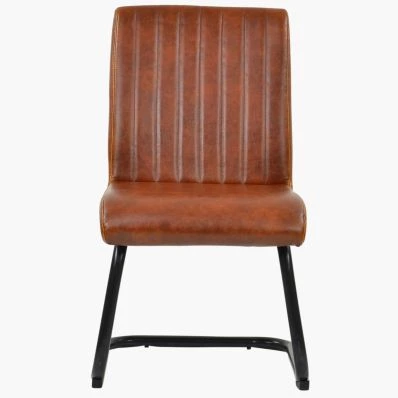
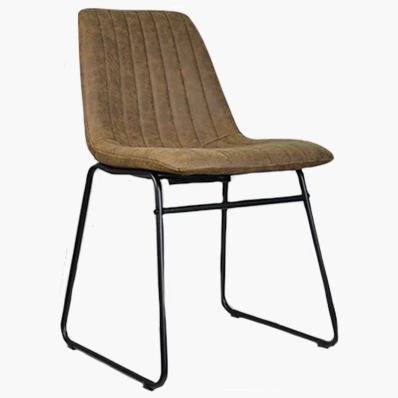 Plato Dining Chair in Aged Brown LeatherSpecial Price £59.99 Regular Price £89.99 Original price 33% Inc VATSaving £30
 -
-
-
-
-
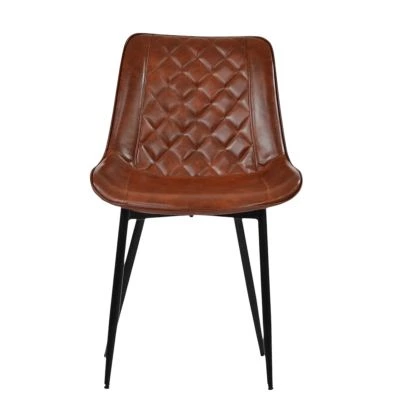 Hogan Dining Chair in Vintage Brown LeatherSpecial Price £44.99 Regular Price £69.99 Original price 36% Inc VATSaving £25Out of stock
 -
-
-
-
-
-


Comments