
 Chat with us on WhatsApp

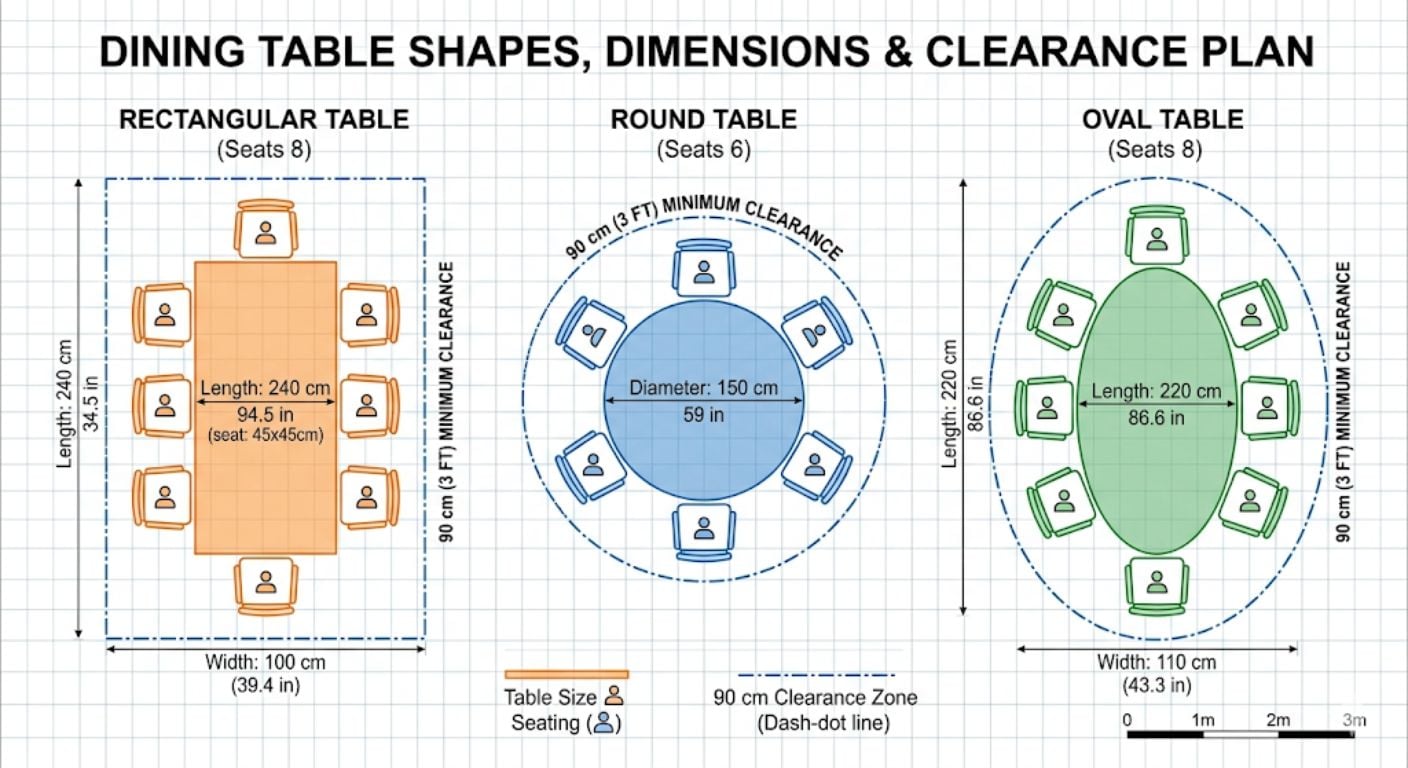
Dining Table Size Seating Guide
Choosing the right dining table size comes down to two things: how many people you need to seat, and how much space you can realistically give the table. Most sizing mistakes happen when one of those is prioritised over the other.
This guide focuses on table dimensions, seating capacity, and spacing rules. It works alongside chair selection — if you’re aligning table height and seating proportions, refer to the dining chair size guide for compatibility.
How many people can a dining table seat?
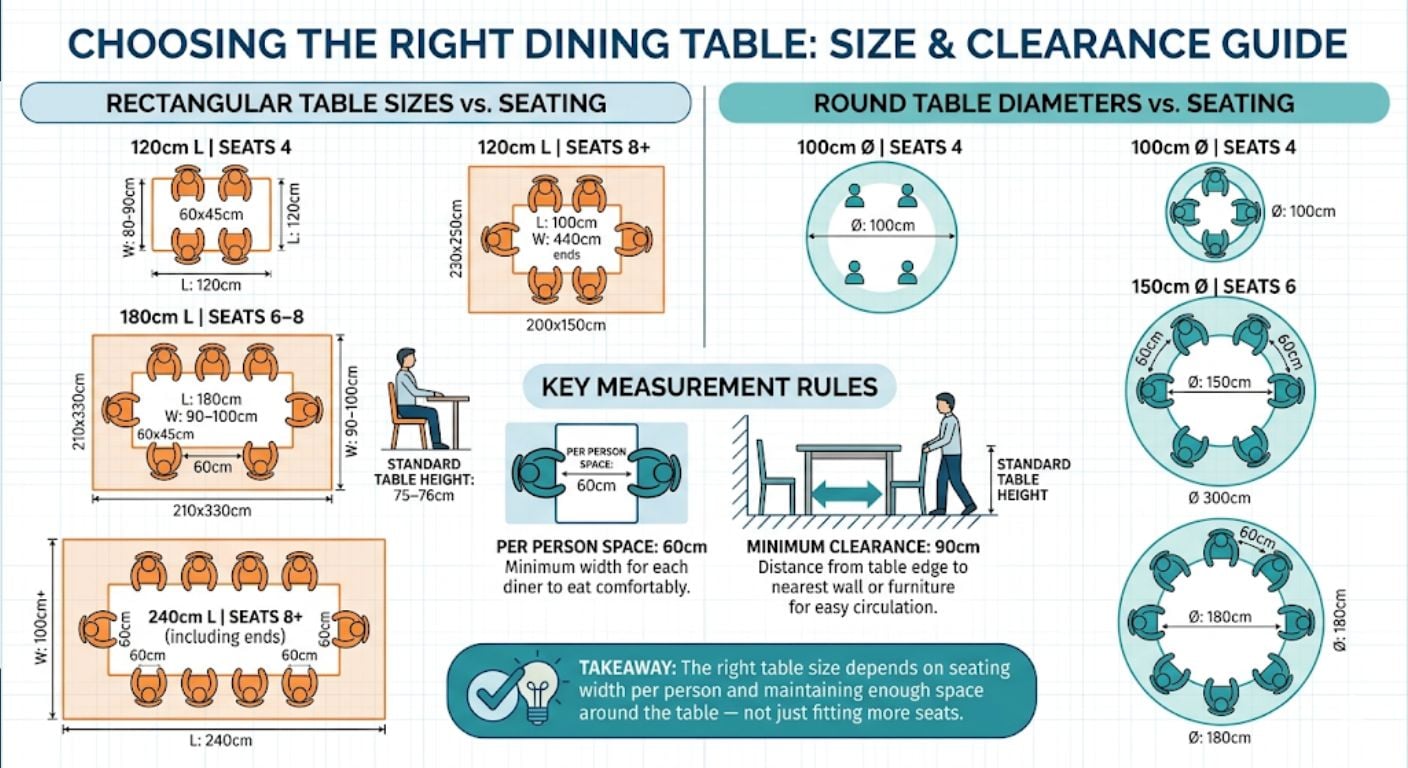
Dining table capacity is determined by the usable edge space per person, not just overall length or diameter. As a baseline:
- Allow 60cm width per person for comfortable seating
- Reduce to 50cm only if space is tight
- Increase to 65–70cm for wider chairs or more elbow room
Typical seating capacity by table size
Rectangular tables
| Length (cm) | Seats |
|---|---|
| 120 | 4 |
| 140–160 | 4–6 |
| 180 | 6–8 |
| 200–220 | 8 |
| 240+ | 10+ |
Round tables
| Diameter (cm) | Seats |
|---|---|
| 90–100 | 2–4 |
| 110–120 | 4 |
| 130–150 | 4–6 |
| 150–180 | 6–8 |
Direct answers to common queries:
- 180cm rectangular table: typically seats 6 comfortably, 8 if using narrower chairs or adding head positions
- 150cm round table: seats 6 with standard chairs, but needs more if using armchairs
- 120cm round table: works for 4, not 6 in practical use
If chair width increases, such as arms or thicker upholstery, capacity reduces. This is where table size and chair selection need to be considered together.
What size dining table do I need for 6 people?
For six people, table shape makes a noticeable difference to both space use and comfort.
- Rectangular: 150–180cm long, 80–90cm wide
- Round: 130–150cm diameter
- Oval: similar length to rectangular but slightly more flexible on corners
Rectangular layouts are more space-efficient in long rooms. Round tables improve interaction but need more clearance around them.
If using armchairs, increase the size slightly:
- Round tables should be closer to 150cm diameter
- Rectangular tables should lean toward 180cm length
How much space should you leave around a dining table?
Allow at least 90cm clearance on all sides of the table.
This ensures chairs can be pulled out fully, people can sit and stand without obstruction, and movement around the table remains practical.
For higher traffic areas or open-plan layouts, 100–120cm clearance improves flow significantly.
Accessibility requirement
For wheelchair access, allow at least 100cm clearance. Ideally, 120cm+ gives better turning space and movement.
Ignoring clearance is the main reason tables feel too large in a room, even when the table size itself is correct.
Standard dining table height (UK)
In the UK, dining tables are typically 75–76cm high.
This works with standard seating proportions where seat height sits around 43–48cm, allowing enough legroom and comfortable arm positioning.
If the table is outside this range, compatibility issues appear quickly, particularly with thicker seat pads or armchairs. Even a difference of a few centimetres can affect knee clearance, seating posture, and overall comfort at the table.
For a more detailed explanation of compatibility measurements and clearance requirements, see our guide to dining chair seat height vs table height, which explains how seat height, tabletop thickness, and legroom work together.
How table shape affects space and seating
Rectangular tables
- Most efficient for seating capacity
- Work well in long or narrow rooms
- Easier to place against walls if needed
Round tables
- Better for conversation and equal spacing
- No “head of table” positions
- Require more surrounding clearance
Oval tables
- Combine rectangular seating efficiency with softer edges
- Easier to move around in tighter layouts
Square tables
- Suitable for small groups of 2–4
- Less efficient for larger seating
Shape should match room proportions first, then seating needs.
Extendable tables and flexible seating
Extendable tables solve the common problem of daily use versus occasional hosting.
They allow you to use a smaller footprint most of the time and add extra seating when needed.
Typical use looks like this:
- Daily use: 4–6 seats
- Extended use: 6–8 seats
This is often the most practical option for UK homes where space is limited.
Practical application: choosing the right size
When a larger table makes sense
- You regularly seat 6+ people
- The room allows full 90–120cm clearance
- You’re using narrower chairs without arms
When to avoid oversizing
- Clearance drops below 80–90cm
- Chairs feel cramped or difficult to move
- The table dominates the room layout
When to prioritise flexibility
- Occasional larger gatherings
- Mixed use spaces such as kitchen-dining areas
- Limited room size
In smaller spaces, a slightly smaller table with well-chosen chairs often performs better than forcing a larger capacity.
-
-
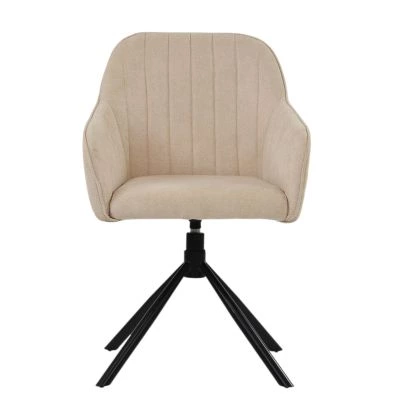
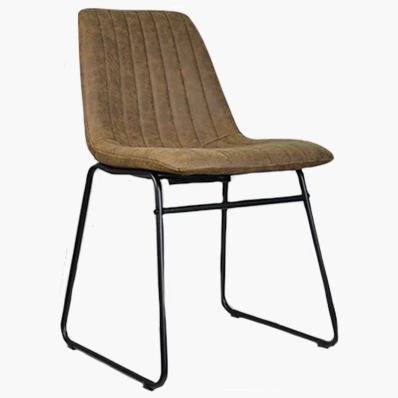
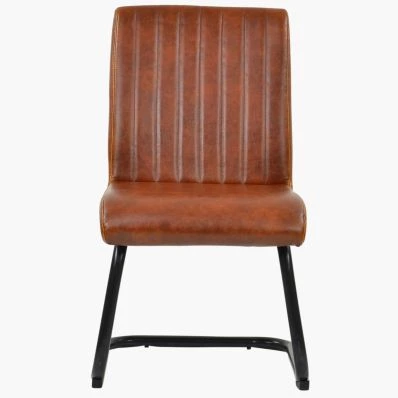
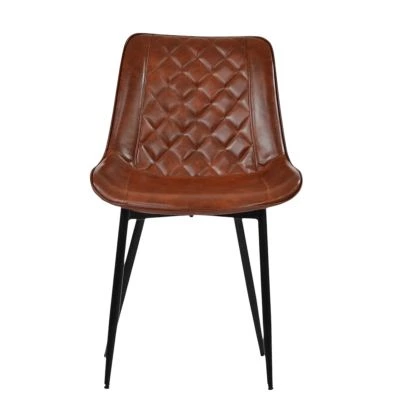 Hogan Dining Chair in Vintage Brown LeatherSpecial Price £44.99 Regular Price £69.99 Original price 36% Inc VATSaving £25Out of stock
 -
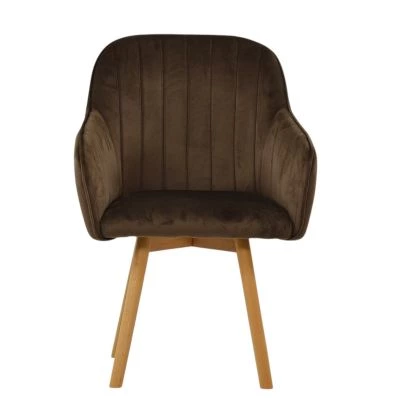
 Plato Dining Chair in Aged Brown LeatherSpecial Price £59.99 Regular Price £89.99 Original price 33% Inc VATSaving £30
 -
-
-
-
-
-
-
-
-
Frequently asked questions
How much space do I need around a dining table?
You need at least 90cm clearance on all sides of the table to allow chairs to be pulled out and people to move comfortably. For better flow, especially in open-plan rooms, aim for 100–120cm. Wheelchair access requires a minimum of 100cm, ideally more for turning space.
What size round table for 6 with armchairs?
A round table for 6 people using armchairs should be at least 150cm in diameter. Armchairs take up more width than standard chairs, so smaller tables will feel cramped and restrict movement.
How many people fit at a 180cm dining table?
A 180cm rectangular table typically seats 6 people comfortably. It can seat up to 8 if chairs are narrower and positioned at both ends, but spacing will be tighter.
What is the smallest room size for a 6-seater dining table?
A minimum room size of around 3m x 3m is needed for a 6-seater table, assuming you maintain at least 90cm clearance around the table. Larger rooms allow better movement and flexibility.
What is standard dining table height in the UK?
Most dining tables in the UK are 75–76cm high. This works with standard chair seat heights between 43–48cm and ensures comfortable legroom and seating position.
Closing
Dining table sizing is a balance between seating capacity and usable space. Most issues come from ignoring clearance or overestimating how many people a table can realistically seat.
Use the 60cm-per-person rule, maintain 90cm clearance, and match the table shape to your room. Then align your seating with the table dimensions to avoid spacing issues.
For chair compatibility and sizing alignment, refer to the chair size and fit guide, browse the full dining chair range, or see related guide compact dining spaces.


Comments