
 Chat with us on WhatsApp

Dressing Table Stool vs Chair: Which Is Better for Your Setup?
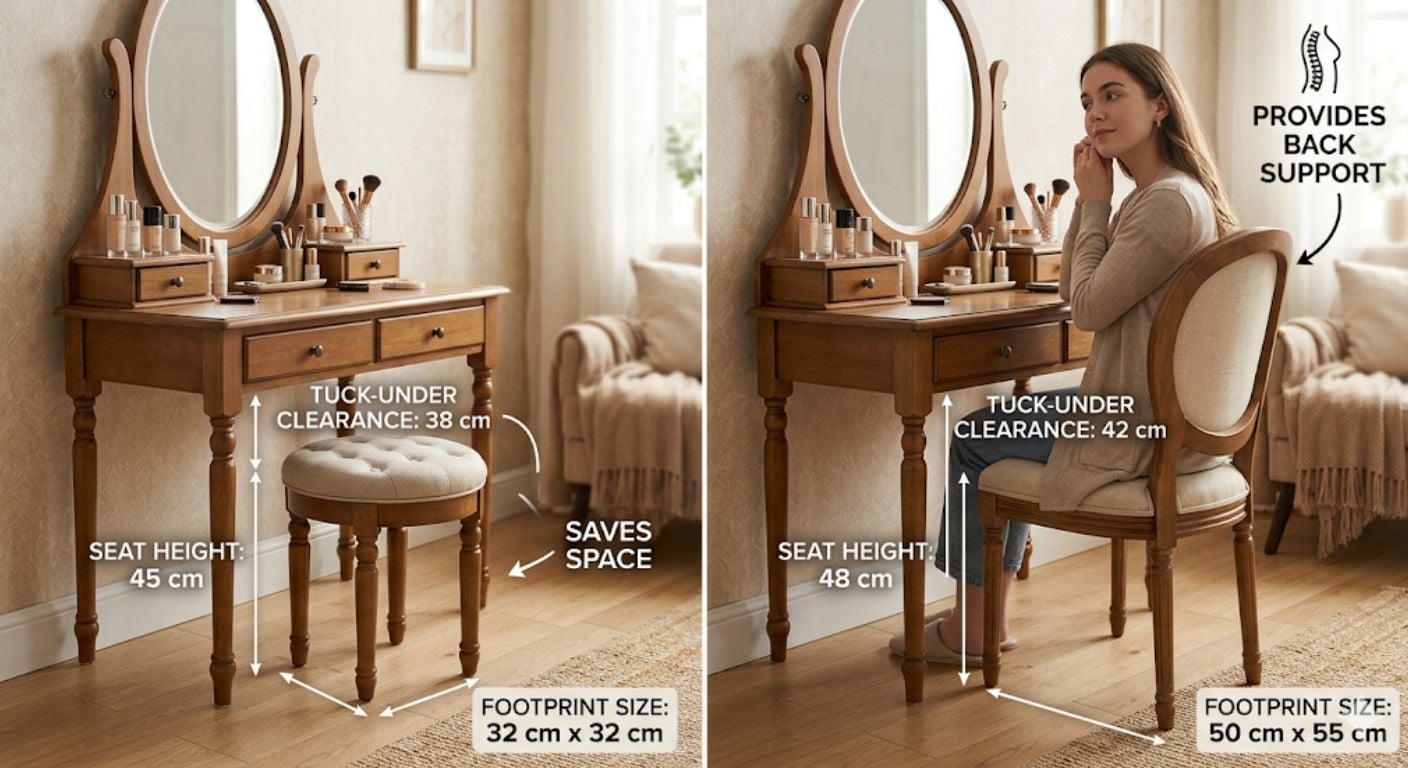
Choosing between a dressing table stool and a chair affects more than appearance. It changes how comfortably you sit, how much floor space your setup uses, how easily the seat stores away, and whether the setup still works after longer daily use.
The right choice depends on the size of the room, how long you sit at the table, the height and clearance under the table, and whether you prioritise compact storage or back support.
A stool usually saves space and tucks neatly underneath the table. A chair generally offers better posture support and works better for longer routines. Neither is automatically better. The correct option depends on how the dressing table is used and the amount of space available around it.
What Is the Difference Between a Dressing Table Stool and a Chair?
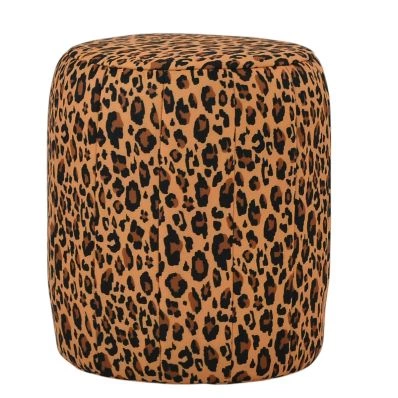
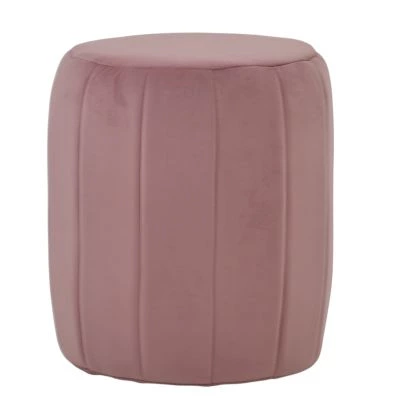
A dressing table stool is usually smaller, lighter, and easier to tuck underneath the table. It may be backless, low-backed, round, square, upholstered, or built as a small ottoman-style seat.
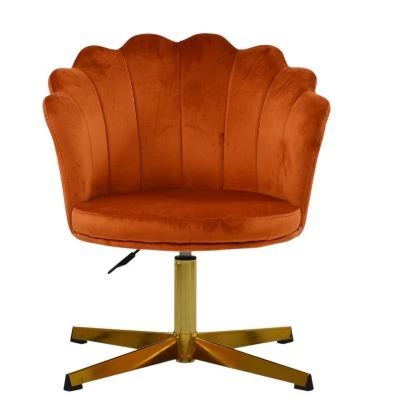
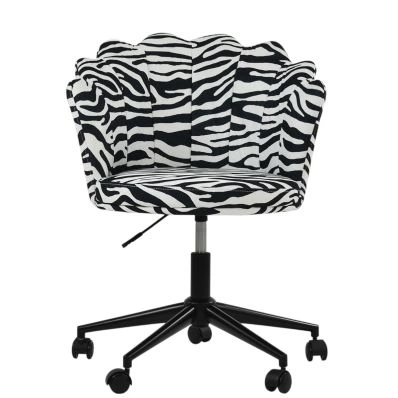
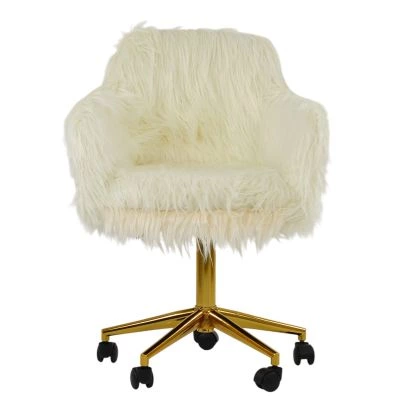
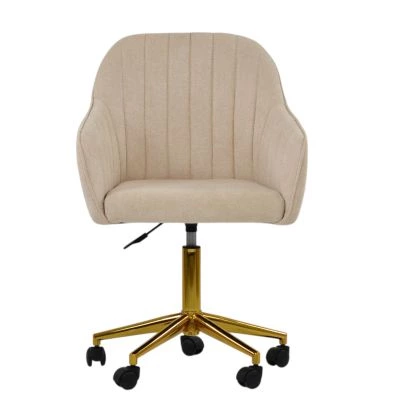
A dressing table chair usually has a full backrest, a deeper seat, and a larger overall footprint. It is better for posture support but needs more space around the table.
- Choose a stool if compact storage and floor clearance matter most.
- Choose a chair if comfort and support matter most.
The biggest practical difference is support versus compactness. Stools reduce visual bulk and maximise floor clearance. Chairs improve comfort and posture, especially if the dressing table doubles as occasional workspace seating or is used daily for extended periods.
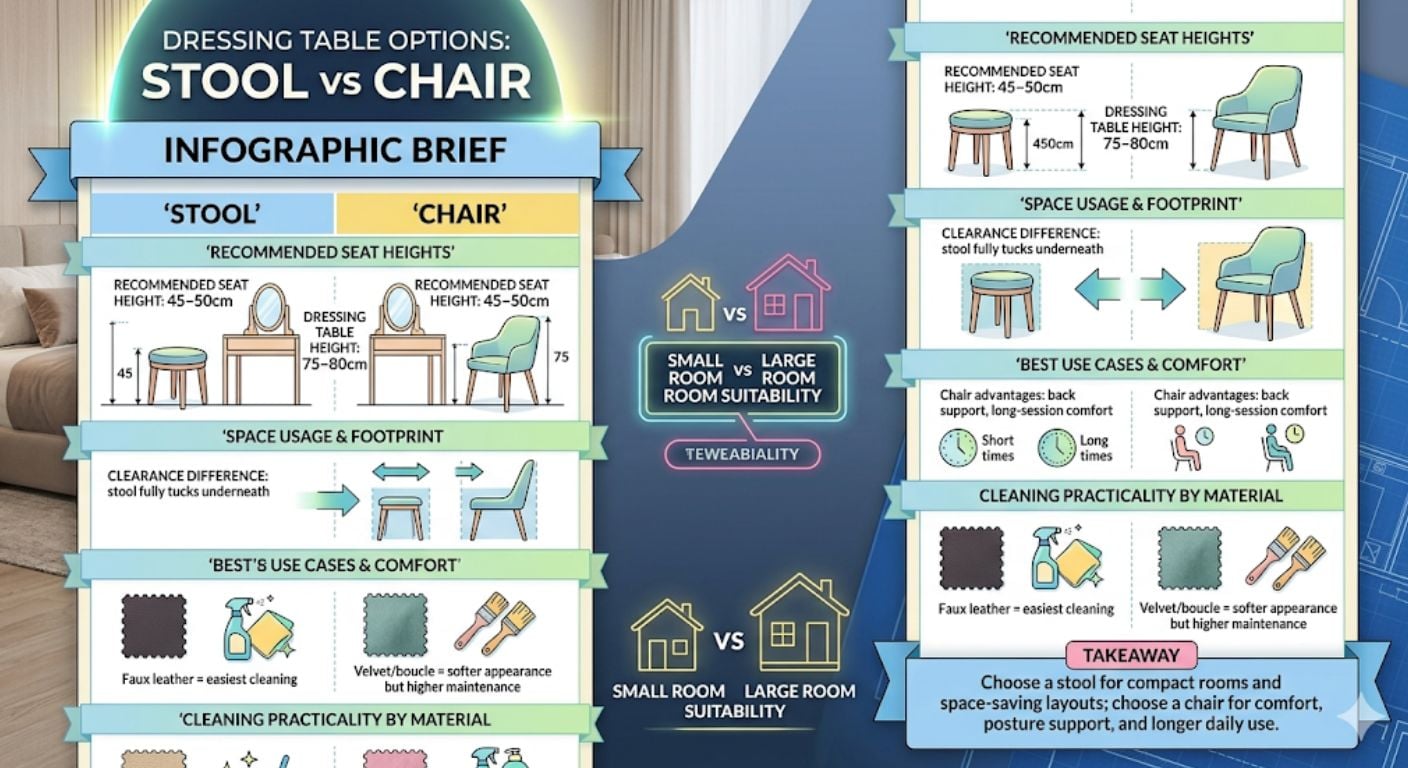
Dressing Table Stool vs Chair Comparison
| Feature | Dressing Table Stool | Dressing Table Chair |
|---|---|---|
| Space usage | Compact | Larger footprint |
| Tucks underneath table | Usually yes | Sometimes |
| Back support | Minimal or none | Full support |
| Long-session comfort | Limited | Better |
| Best for small bedrooms | Usually yes | Only if compact |
| Visual impact | Lower | Higher |
| Ease of movement | Usually lighter | Usually heavier |
| Storage options | More common | Less common |
| Best overall use case | Compact rooms and shorter routines | Daily use and longer routines |
Which Option Is Better for Small Bedrooms?
For smaller bedrooms, a stool usually works better because it can slide fully underneath the dressing table when not in use. This keeps the floor area clearer and reduces the chance of the seat blocking wardrobes, drawers, walkways, or the space around the bed.
This matters more than many people expect. A chair that permanently protrudes into the room can make narrow walkways feel cramped, even if the chair technically fits.
If space is limited, look for:
- Backless designs
- Round stools
- Armless seats
- Narrow-leg frames
- Seats under 50cm wide
- Enough clearance for the seat to tuck fully underneath the table
Most compact setups work best when the seat disappears visually underneath the table.
We regularly find our customers underestimate how much usable space a protruding chair removes from smaller bedrooms until the furniture is actually in place.
If the room is tight, avoid oversized vanity chairs, wingback styles, wide armrests, deep cushioned seats, and large accent-style chairs. These may look comfortable, but they often overpower a small dressing area.
You can browse dedicated dressing table chairs and compact seating options if you need seating designed for smaller bedroom layouts.
When Is a Chair Better Than a Stool?
A chair is better when comfort and support matter more than compact storage. This usually applies when the dressing table is used every day or for longer routines.
Choose a chair if:
- You sit at the dressing table for more than 20–30 minutes at a time
- The table is also used as occasional desk space
- You prefer upright posture support
- You experience lower back discomfort
- The room has enough clearance around the table
- The dressing table is part of a larger bedroom or dressing room
Back support makes a clear difference during longer sessions. A proper backrest helps reduce forward leaning, improves shoulder position, and makes the seat more comfortable for makeup, hair styling, or laptop use.
If comfort is the priority, choose:
- An upholstered backrest
- Medium-firm padding
- A stable frame
- A seat depth of around 40–45cm
- A design without bulky arms if the seat needs to tuck under the table
How Tall Should a Dressing Table Stool or Chair Be?
A dressing table stool or chair should normally sit around 25–30cm lower than the tabletop. For most standard dressing tables around 75–80cm high, the ideal seat height is usually around 45–50cm.
The aim is simple: your legs should fit comfortably underneath the table, your feet should rest flat on the floor, and your shoulders should stay relaxed when using the mirror or surface.
| Dressing Table Height | Recommended Seat Height |
|---|---|
| 75cm | 45–47cm |
| 76cm | 46–48cm |
| 78cm | 47–49cm |
| 80cm | 48–50cm |
For more detailed measuring guidance, see this dressing table seating measurement guide.
The UK Health and Safety Executive guidance on seated posture also explains why relaxed shoulders, supported posture, and correct knee positioning matter during seated tasks.
Should You Choose Adjustable Seating?
Adjustable seating is useful when more than one person uses the dressing table or when the table height is slightly unusual. A gas-lift stool or chair removes some of the risk of choosing the wrong fixed height.
Adjustable seating works best when:
- Multiple people share the dressing table
- The table height is not standard
- The seat is used for more than one purpose
- You are unsure which height will feel most comfortable
The main downside is stability. Some lightweight adjustable stools feel less secure on thick carpet than fixed-leg chairs or stools.
If choosing adjustable seating, check the minimum and maximum seat height, the width of the base, the footrest position, and whether the seat remains stable when raised.
Are Stools or Chairs More Comfortable?
For short routines, a stool can be comfortable enough. For longer sessions, a chair usually wins because it provides back support and encourages better posture.
A stool relies more on the user’s own posture. This is fine for quick use but can become uncomfortable during longer makeup routines, hair styling, or work at the table.
Seat Padding
Medium-firm padding usually works better than very soft padding. Overly soft seats compress quickly and can become less supportive over time.
Seat Depth
Deep seats can push shorter users too far away from the mirror or dressing table surface. A seat depth around 40–45cm is usually more practical for dressing table use.
Back Support
A lightly upright backrest works better than a reclined accent chair. Dressing table seating needs to support active sitting, not lounging.
Swivel Function
Swivel seating can be useful for wider dressing tables because it lets you reach drawers, mirrors, and side storage without twisting awkwardly.
Best Materials for Dressing Table Seating
Material choice affects cleaning, comfort, and long-term appearance. This matters because dressing table seating is often exposed to cosmetics, hair products, water marks, and regular contact from clothing.
Velvet
Velvet has a soft finish and a warmer appearance, but it needs more care. It can show pressure marks, collect dust, and be harder to clean after cosmetic spills.
- Best for: Softer bedroom schemes and occasional use
- Avoid if: You need easy wipe-clean maintenance
Faux Leather
Faux leather is one of the most practical choices for dressing table seating because it is easier to wipe clean and usually handles light cosmetic marks better than fabric.
- Best for: Daily use and easy cleaning
- Avoid if: You prefer a softer fabric texture
Boucle
Boucle gives a soft textured look but catches debris more easily. It is less forgiving around makeup, powders, and hair products.
- Best for: Low-mess bedroom seating
- Avoid if: The dressing table is used heavily every day
Rattan or Wood
Harder materials are durable and easier to clean, but they are less comfortable unless paired with a cushion.
- Best for: Occasional use and low-maintenance setups
- Avoid if: You need long-session comfort
Should Your Dressing Table Seat Have Storage?
Storage stools and ottoman-style seats can work well in smaller bedrooms where every piece of furniture needs to be useful. They are especially practical when the dressing table has limited drawer space.
Storage seating can be useful for:
- Cosmetic bags
- Hair tools
- Spare mirrors
- Chargers
- Small accessories
However, storage stools are often bulkier than standard stools. Always check whether the seat can still tuck underneath the table before buying.
Heated styling tools should only be stored once fully cooled. A storage stool is convenient, but it should not become a place where hot tools are placed immediately after use.
Which Seat Works Best With Different Dressing Table Layouts?
Compact Dressing Tables
Compact dressing tables work best with round stools, backless seats, slim metal frames, and narrow upholstered designs. Avoid oversized chairs that dominate the table.
Wide Dressing Tables
Wider dressing tables can support a larger chair visually and practically. A fully backed chair or swivel seat can work well if there is enough room behind it.
Corner Dressing Tables
Corner layouts benefit from swivel seating because it allows easier movement between the mirror, surface, and storage areas.
Floating Dressing Tables
Floating dressing tables usually work best with lightweight stools. Heavy chairs can make the setup look unbalanced and may reduce the clean, compact benefit of a wall-mounted table.
Dressing Table Stool vs Chair: Decision Rules
Use the room and the way you sit to make the decision. Do not choose only by appearance.
- If space-saving matters most, choose a stool.
- If posture support matters most, choose a chair.
- If the room is small, prioritise tuck-under clearance.
- If the setup is used daily for long periods, prioritise back support.
- If multiple people share the setup, choose adjustable seating.
- If cleaning simplicity matters, choose faux leather or wipe-clean upholstery.
- If the dressing table doubles as workspace seating, avoid backless stools.
- If the room already contains bulky furniture, avoid oversized vanity chairs.
Common Buying Mistakes
Choosing by Appearance Alone
Visual style often overrides sizing logic. This causes many fit problems. Always measure table height, under-table clearance, seat width, and the available space behind the chair or stool.
Ignoring Tuck-Under Clearance
Some chairs technically fit underneath the table but still protrude because of the backrest, arms, or seat depth. Check the full chair dimensions, not just the seat width.
Buying Lounge-Style Accent Chairs
Deep lounge-style chairs rarely work well at dressing tables. They place the user too far back from the mirror and table surface.
Forgetting Flooring Type
Small wheeled stools can be less stable on thick carpet. Fixed legs or wider bases usually work better on softer flooring.
Choosing Oversized Seats for Small Rooms
A wide chair can quickly dominate a compact bedroom. In small rooms, the best seat is often the one that disappears neatly when not in use.
Are Dressing Table Chairs Worth It?
Dressing table chairs are worth it when the setup is used daily or for longer periods. They provide better back support, a more stable sitting position, and better comfort than most stools.
For occasional use or smaller bedrooms, a stool may still be the more practical choice. It saves space, stores neatly, and keeps the room easier to move around.
There is no universal best option. The right choice depends on how the dressing table functions in the room.
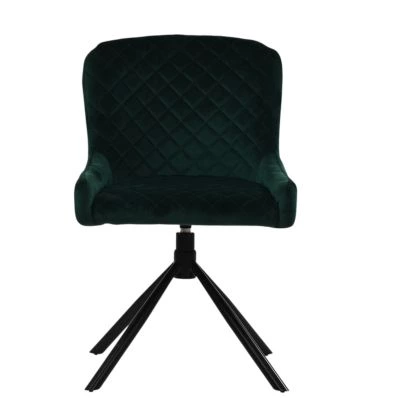
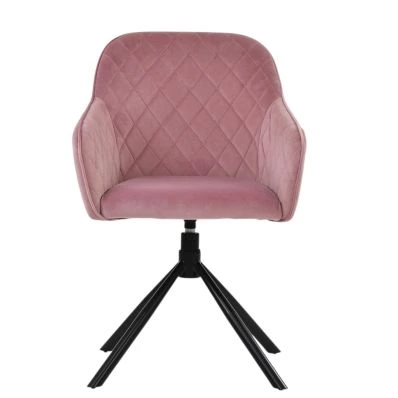
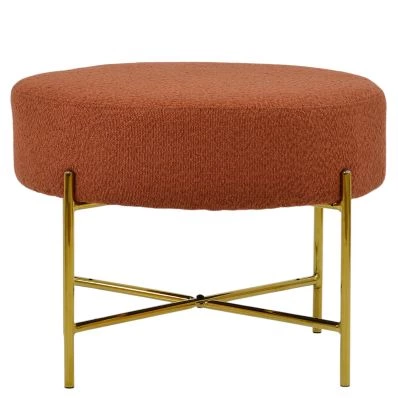
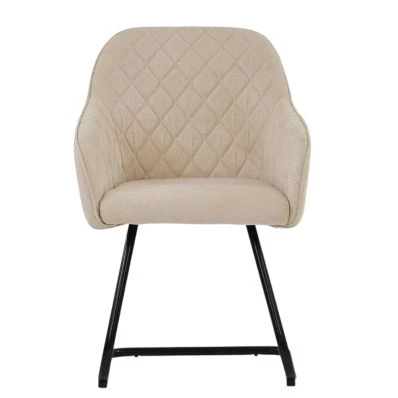
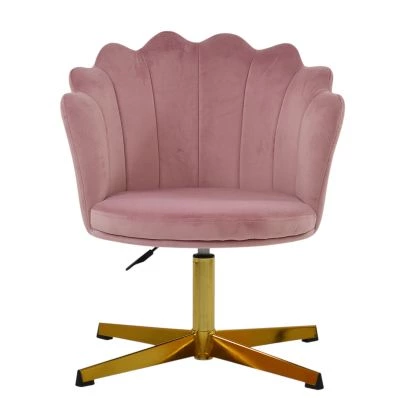
If you are comparing compact upholstered seating, swivel options, or supportive vanity-style seating, Lakeland’s dressing table chair collection includes both space-saving and supportive designs suited to different room sizes and layouts.
Frequently Asked Questions
How tall should a vanity stool be?
A vanity stool should usually sit 25–30cm lower than the tabletop. For a standard 75–80cm dressing table, most people need a seat height around 45–50cm for comfortable posture and leg clearance.
Are stools better for small bedrooms?
Usually, yes. Stools take up less visual and physical space and can often tuck fully underneath the dressing table when not in use. This improves walkway clearance and keeps the room less cluttered.
Is a chair more comfortable than a stool?
For longer sitting periods, yes. Chairs provide better back support and posture control, making them more comfortable for extended makeup routines, hair styling, or occasional desk use.
What is the easiest dressing table seat material to clean?
Faux leather and wipe-clean synthetic upholstery are generally easiest to maintain. They resist cosmetic staining better than velvet, boucle, or textured woven fabrics.
Should a dressing table chair have armrests?
Usually not. Armrests often prevent the chair from sliding fully underneath the table and can reduce usable clearance space in smaller bedrooms.
Are swivel dressing table stools worth it?
Swivel seating can be useful for larger dressing tables because it reduces twisting when reaching mirrors, drawers, or side storage. Stability matters, especially on carpet.
Summary: Stool or Chair?
Quick Decision Rules
- Small room: choose a stool
- Long daily use: choose a chair
- Shared setup: choose adjustable seating
- Easy cleaning priority: choose faux leather
- Tight floor clearance: avoid armrests
- Compact table: choose backless seating
- Multi-purpose setup: choose supportive seating
Common Measurement Rules
- Seat height should sit around 25–30cm below the tabletop
- Most dressing table seats fall around 45–50cm high
- Compact seats under 50cm wide work best in smaller bedrooms
- Leave enough surrounding clearance for movement around the table
Common Mistakes to Avoid
- Choosing oversized accent chairs
- Ignoring tuck-under dimensions
- Buying based only on appearance
- Forgetting carpet or flooring stability
- Using deep lounge seating at a standard-height dressing table
If you are still deciding between compact stools and supportive chairs, compare Lakeland’s full range of dressing table seating options by size, upholstery style, and seating format.


Comments