
 Chat with us on WhatsApp

High Back Dining Chairs: When They Work & When to Avoid Them
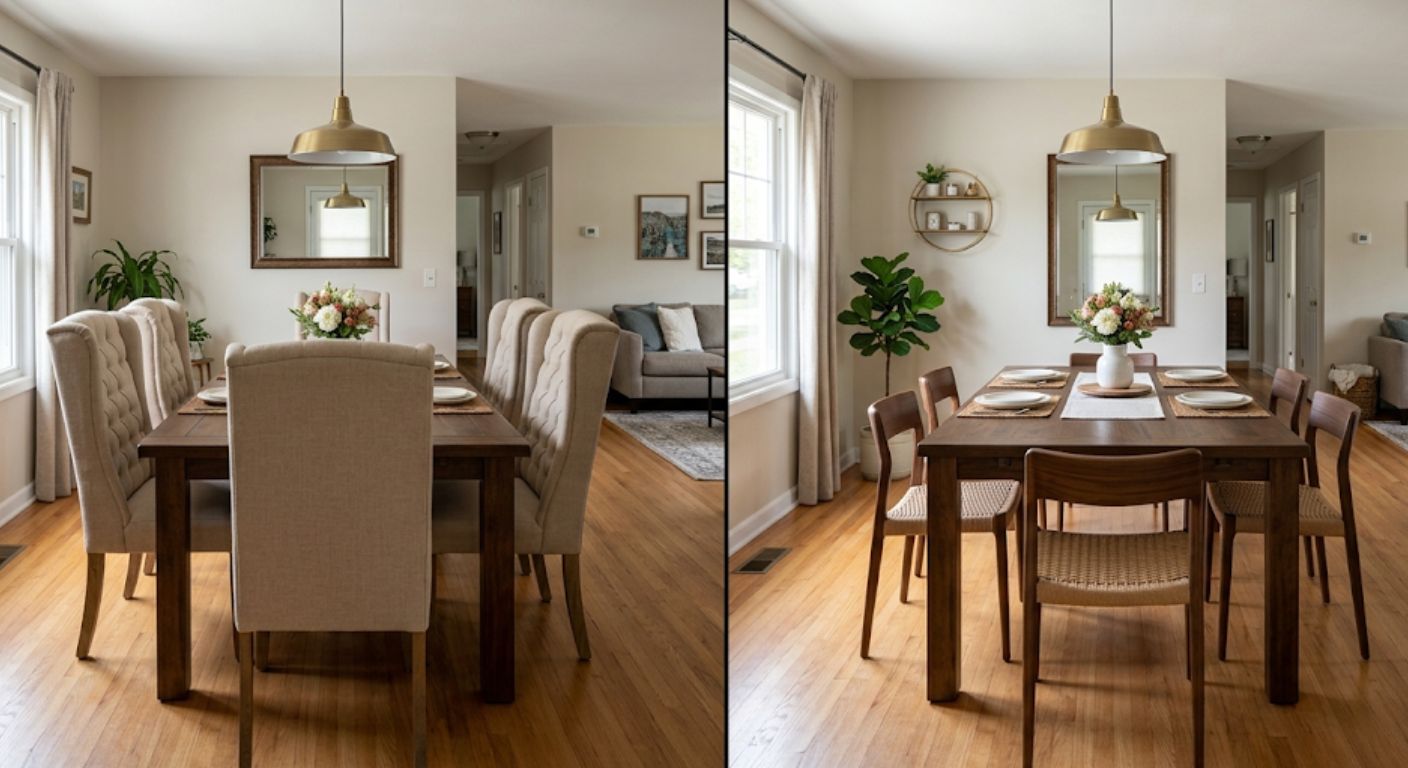
High back dining chairs can make a dining room feel more supportive, formal, and visually structured, but they are not the right fit for every layout. The extra height changes both comfort and how the room feels as a whole. In some homes they improve posture and long-meal comfort. In others they make the space feel crowded and heavy.
The key is understanding where high back dining chairs work best and where lower-profile seating may create a better balance. Room size, table shape, chair spacing, household use, and sight lines all matter more than most buyers expect.
If you are still comparing broader dining chair styles, it helps to start with our complete dining chair styles guide before narrowing down back height specifically.
What Counts as a High Back Dining Chair?
Most standard dining chair backs sit around 32–34 inches high (81–86cm). High back dining chairs usually extend noticeably above this, creating more upper-back and shoulder support.
The taller profile changes three main things:
- Support during longer periods of sitting
- The visual weight of the dining area
- How enclosed or open the room feels
High back chairs are commonly paired with rectangular dining tables, larger dining rooms, and more formal layouts where the chairs are intended to make a stronger visual statement.
Pros of High Back Dining Chairs
Better Back and Shoulder Support
The biggest advantage is comfort during longer meals or extended sitting. A taller backrest supports more of the spine and shoulders, which reduces fatigue compared to lower-backed designs.
This becomes especially noticeable in homes where the dining table is used for:
- Working from home
- Long family meals
- Board games or social evenings
- Older family members needing more support
Many buyers focus only on seat padding, but the shape and height of the backrest often matter more for long-term comfort.
We regularly find our customers underestimate how much upper-back support changes the feel of a dining chair after an hour or two of sitting.
They Create a More Structured Look
High back chairs naturally create more visual definition around a dining table. They can make a room feel more formal, symmetrical, and complete.
This tends to work particularly well in:
- Dedicated dining rooms
- Larger open-plan layouts
- Long rectangular tables
- Spaces with higher ceilings
The taller silhouette also helps upholstered fabrics stand out more clearly, especially textured materials like velvet or stitched faux leather.
Added Privacy Around the Table
In open-plan homes, higher chair backs can create a more enclosed dining zone without adding physical dividers. This subtle separation can make the table feel less exposed within larger kitchen-dining spaces.
Cons of High Back Dining Chairs
They Can Make Small Rooms Feel Crowded
This is the main downside. High back dining chairs add visual mass around the table, particularly when fully upholstered.
In compact dining rooms or smaller kitchen diners, the extra height can reduce the sense of openness and make the room feel tighter than it actually is.
Lower-profile chairs usually maintain better sight lines across the room, which helps smaller spaces feel less visually blocked.
If space efficiency is your priority, lower-backed seating often works better than taller, heavily padded designs.
They Usually Need More Space Around the Table
High back chairs are often physically deeper and heavier than compact dining chairs. That means you need more clearance behind the table for people to pull the chairs out comfortably.
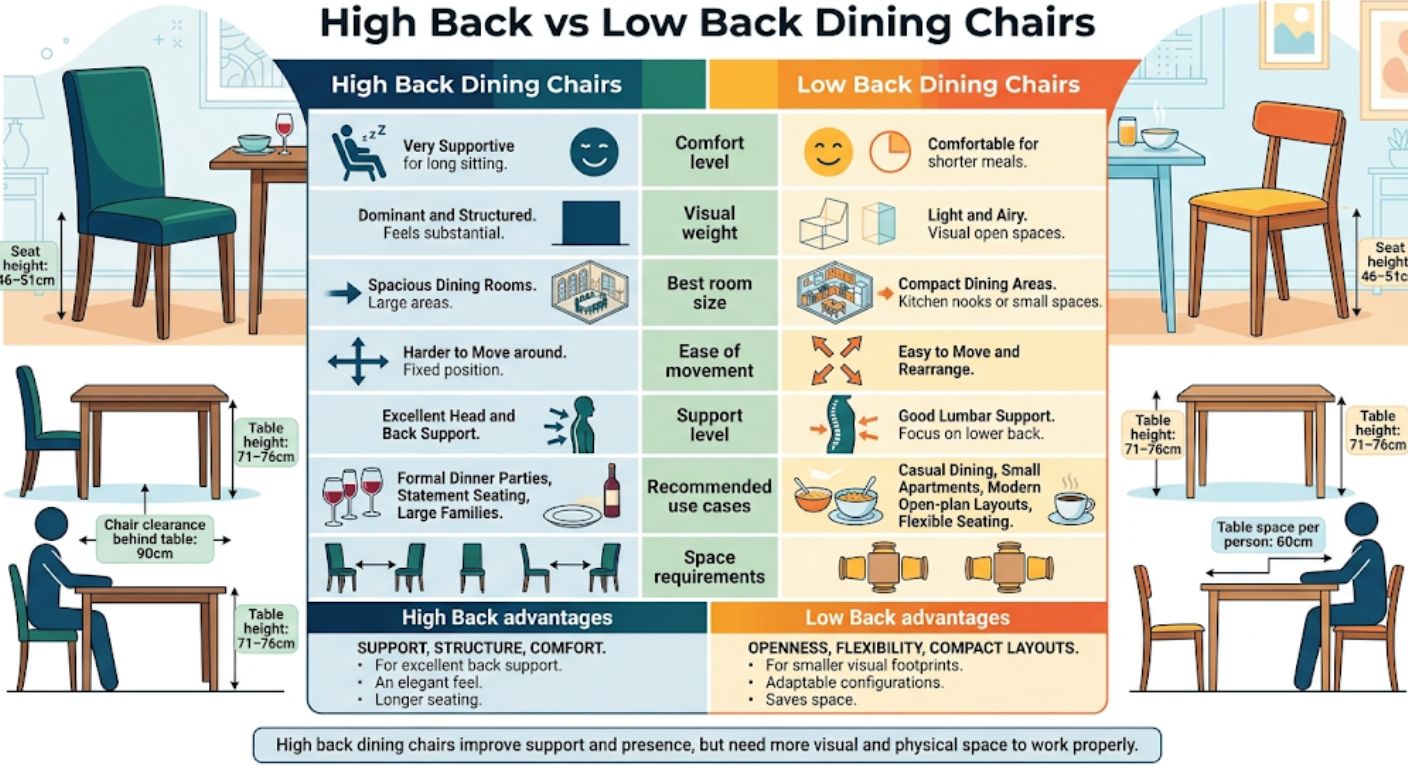
A good rule is to leave around 90cm between the table edge and the wall or nearby furniture. This allows guests to move chairs without scraping walls or restricting movement.
According to the National Kitchen and Bath Association, maintaining adequate circulation space around dining furniture is important for safe movement and usability in open-plan layouts.
Heavier Chairs Are Less Flexible
Fully upholstered high back dining chairs can be noticeably heavier to move. This matters more in daily use than many people expect.
Large high back chairs may feel less practical if you:
- Move chairs frequently
- Have children using the table daily
- Need flexible seating arrangements
- Have elderly family members repositioning chairs
Swivel dining chairs can partially solve this by reducing how much the chair needs to be physically pulled away from the table.
When High Back Dining Chairs Work Best
Large Dining Rooms
High back chairs suit larger spaces because the room can visually absorb the extra height without feeling overcrowded.
In rooms with wider walkways and larger tables, the chairs feel proportionate rather than dominant.
Long Dining Tables
Rectangular dining tables often look more balanced with taller chair backs, especially six-seater and eight-seater layouts.
The repeated vertical lines create a more intentional dining setup compared to lower-profile seating.
Homes That Prioritise Comfort
If comfort matters more than minimalism, high back dining chairs usually perform better.
Look for:
- Curved backrests
- Integrated lumbar shaping
- Supportive foam density
- Stable leg structures
Older buyers often prefer taller backs because they provide more support when sitting upright and standing back up.
When to Avoid High Back Dining Chairs
Small Dining Areas
Compact dining rooms generally benefit from visually lighter seating. Large chair backs can dominate smaller spaces quickly.
This is especially noticeable when using:
- Dark upholstery
- Chunky legs
- Wide padded frames
- Fully enclosed side panels
Lower-backed chairs usually help maintain cleaner sight lines and better visual flow.
Open-Plan Minimalist Layouts
Modern minimalist interiors often work better with dining chairs that visually disappear into the room rather than becoming the focal point.
If your kitchen-dining area already contains:
- Large pendant lighting
- Feature cabinetry
- Statement flooring
- Bold kitchen islands
then oversized high back chairs can start to compete visually with the rest of the room.
Busy Family Homes Needing Easy Maintenance
Tall upholstered backs increase fabric surface area, which means more exposure to spills, pet hair, marks, and wear.
For family homes, faux leather and wipe-clean performance fabrics are usually easier to maintain than delicate textured fabrics.
If material practicality is your main concern, our dining chair materials guide breaks down the differences more fully.
Do High Back Dining Chairs Work in Open-Plan Living?
Yes, but only when the room is large enough to support the extra visual height. In open-plan layouts, high back chairs create more presence and separation around the dining area, while lower-backed chairs keep the room feeling more open and connected.
Neither option is universally better. The right choice depends on whether you want the dining area to stand out or blend into the wider room.
Spacing Rules That Matter Before Buying
Back height alone is not the only measurement that matters. The overall footprint of the chair affects how usable the dining space feels day to day.
Useful spacing guidelines include:
- Allow around 60cm of table width per person
- Leave approximately 90cm behind chairs for movement
- Maintain around 25–30cm between the seat and the underside of the table
These measurements become more important with high back chairs because they are usually physically larger overall.
Are High Back Dining Chairs Better Than Low Back Chairs?
High back dining chairs are usually better for comfort, support, and formal styling. Low back chairs are usually better for compact spaces, lighter visual flow, and flexible layouts.
The best option depends more on the room itself than the chair in isolation.
High back chairs generally suit:
- Larger rooms
- Long dining sessions
- Formal dining setups
- Support-focused seating
Low back chairs generally suit:
- Smaller spaces
- Minimal interiors
- Compact layouts
- Rooms needing visual openness
Frequently Asked Questions
Are high back dining chairs comfortable for elderly people?
Yes. High back dining chairs usually provide better upper-back and shoulder support, which can make sitting for longer periods more comfortable. Stable frames and supportive upholstery also help when standing up from the table. Swivel chairs can further improve accessibility by reducing the need to drag the chair backwards.
How much space should you leave behind dining chairs?
A practical rule is to leave around 90cm between the back of the chair and the wall or nearby furniture. This allows enough space to pull chairs out comfortably and move around the table without restriction.
Do high back dining chairs make a room look smaller?
They can. Taller chair backs create more visual weight around the table, particularly in smaller rooms. In compact spaces, lower-backed chairs usually keep sight lines clearer and help the room feel more open.
What is the standard dining chair seat height?
Most dining chair seats sit between 46–51cm high. Standard dining tables are usually around 71–76cm tall, leaving roughly 25–30cm of leg clearance between the seat and the underside of the table.
-
-
-
-
-
-
-
-
-
-
-
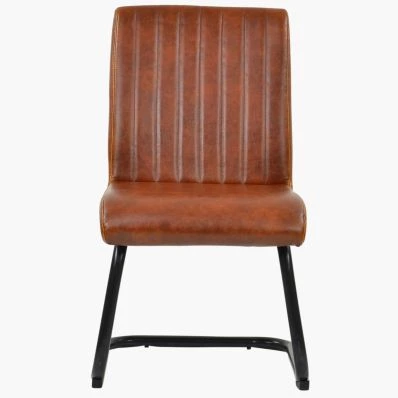
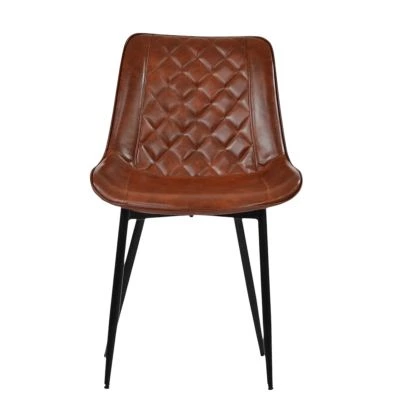
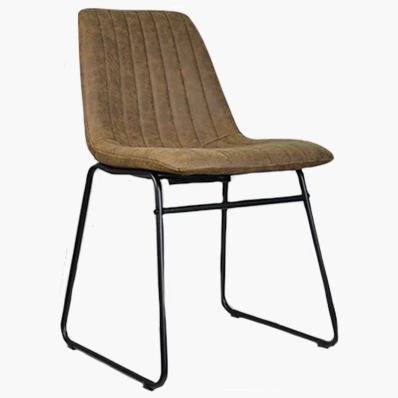 Plato Dining Chair in Aged Brown LeatherSpecial Price £49.99 Regular Price £89.99 Original price 44% Inc VATSaving £40
 -
Final Thoughts
High back dining chairs work best when comfort, support, and stronger visual structure matter more than minimalism or compact spacing. In larger rooms they can improve both posture and presence. In smaller rooms they can quickly feel oversized.
The most effective dining setups balance chair scale with the size and openness of the room itself rather than choosing purely on appearance.
If you are comparing different dining chair styles and layouts, you can browse the full dining chair collection here or return to the wider dining chair styles guide for broader comparisons.


Comments