
 Chat with us on WhatsApp

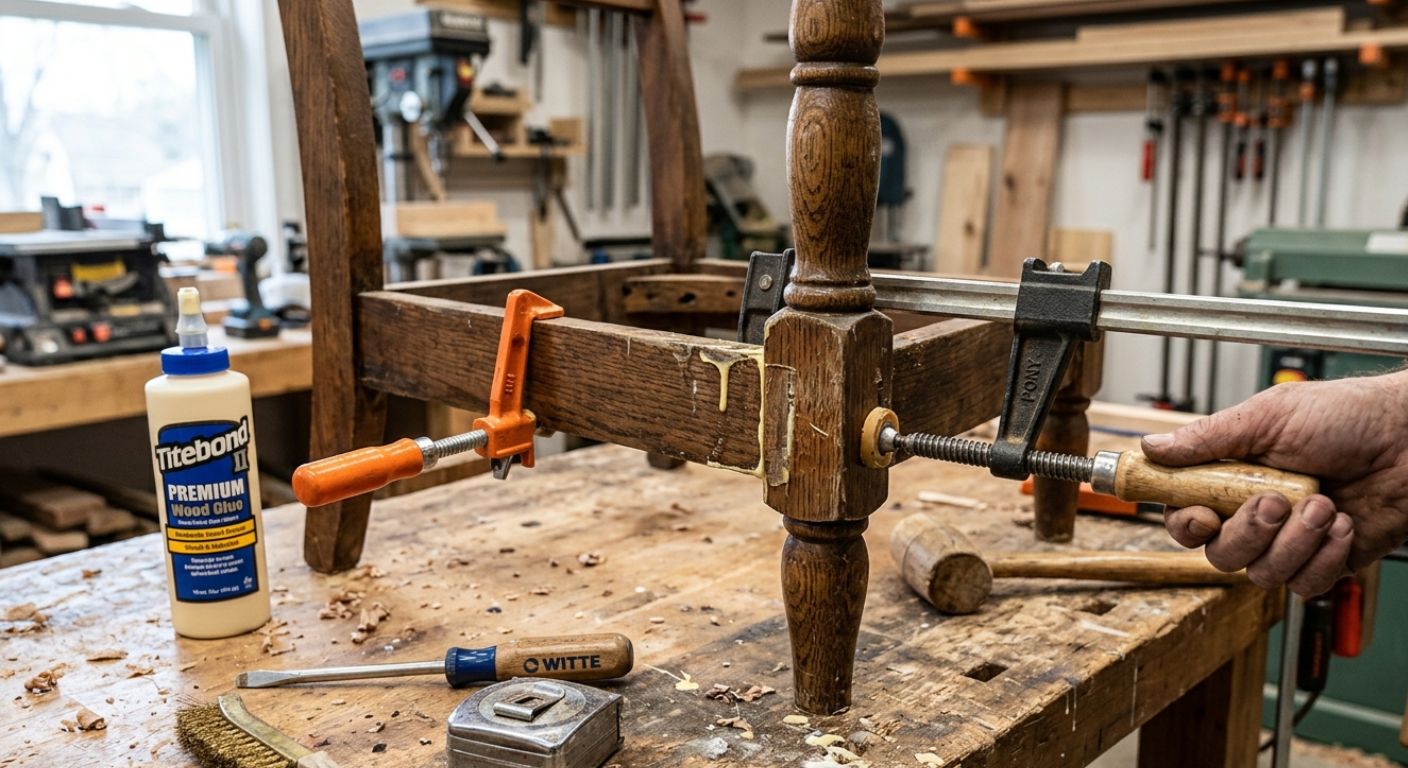
How Can I Repair My Dining Chairs
Dining chairs take more stress than most furniture in the home. They are moved repeatedly, leaned back on, dragged across floors, and exposed to changing temperatures and humidity. Over time, even a solid chair can develop loose joints, wobbling legs, sagging seats, or cracked frames.
Most dining chair problems can be repaired if the damage is caught early. Simple issues like loose screws or weakened glue joints are usually fixable with basic tools and careful reassembly. More serious structural damage may need reinforcement or professional restoration, especially on older hardwood chairs.
If you are deciding whether to repair or replace a chair, it helps to understand which faults are cosmetic and which affect long-term stability. For buyers comparing new seating options, our guide to dining chairs for small spaces also explains how construction and frame design affect durability over time.
Why Do Dining Chairs Become Wobbly?
Typically, a dining chair becomes wobbly because the joints connecting the legs, seat, and back loosen over time. This usually happens because wood naturally expands and contracts with temperature changes, while repeated movement slowly weakens glue joints and fixings.
- Loose mortise and tenon joints
- Worn dowel joints
- Failed wood glue
- Loose bolts or screws
- Uneven leg pressure on the floor
- Cracked stretchers or rails
- Warped wooden frames
Modern dining chairs with bolted frames often loosen gradually through repeated use. Traditional wooden chairs are more likely to fail at glued joints.
One thing we notice with our customers is that wobbling is often ignored until the chair starts creaking heavily, but repairing a loose joint early is normally much easier than rebuilding a split frame later.
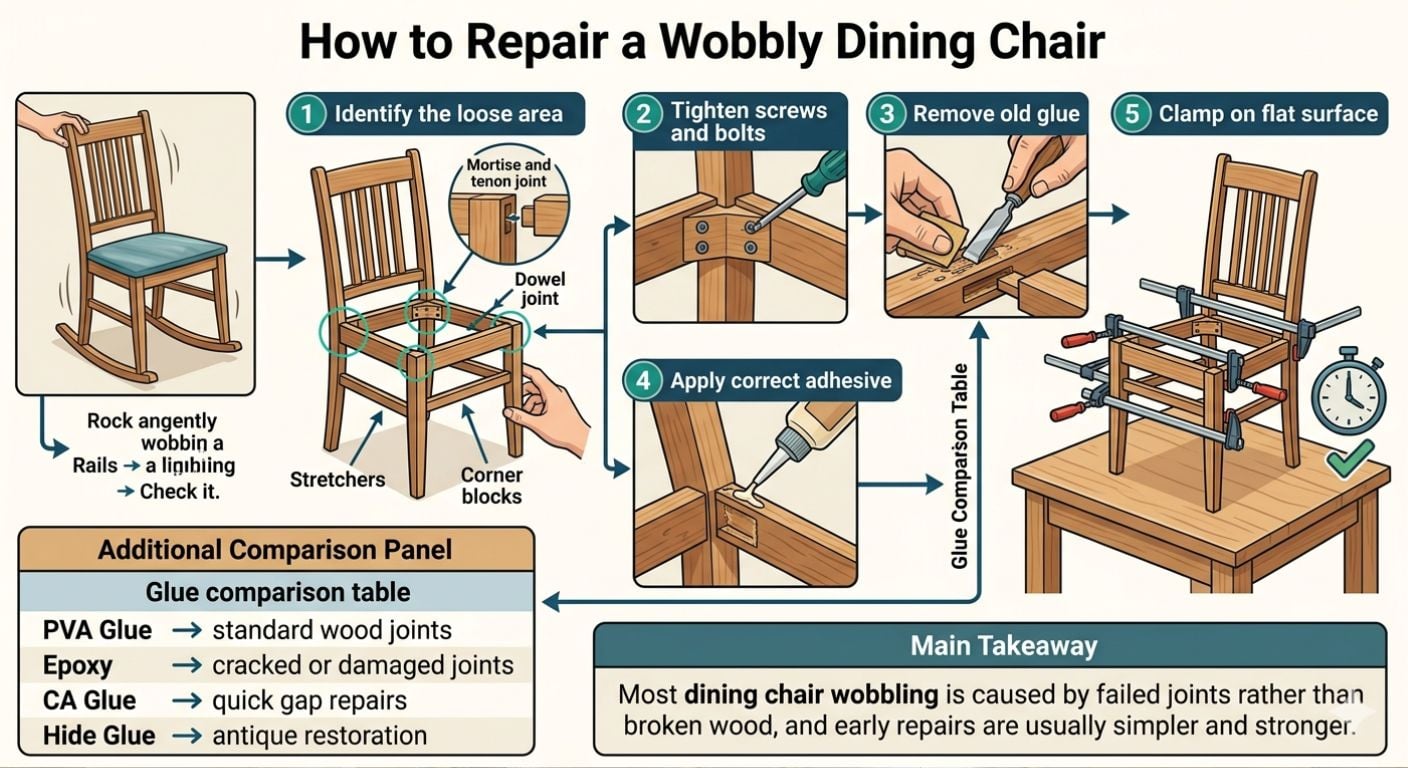
How to Fix a Wobbly Dining Chair in 6 Steps
1. Identify Where the Movement Is Coming From
Place the chair on a completely flat surface and gently rock it side to side.
Check:
- Front and rear legs
- Seat frame corners
- Stretchers between legs
- Backrest joints
- Screws underneath the seat
If the chair rocks unevenly but the joints feel tight, the issue may simply be uneven leg alignment rather than structural damage.
2. Tighten Any Visible Fasteners
Before dismantling the chair, tighten all accessible:
- Bolts
- Screws
- Allen key fixings
- Corner brackets
Do not overtighten hardwood frames, especially oak or beech, as this can split the timber around the fixing point.
For modern dining chairs with bolt-on legs, a simple self-levelling method often works:
- Loosen the leg bolts slightly
- Place the chair on a flat surface
- Apply body weight evenly to the seat
- Retighten the bolts while pressure is applied
This helps all four legs settle evenly against the floor.
Best Glue for Loose Wooden Dining Chair Joints
The best glue depends on the condition of the joint and how much movement exists inside the frame.
| Repair Situation | Recommended Glue | Best Use |
|---|---|---|
| Clean bare wood joint | PVA wood glue | Standard loose joints |
| Small hairline gaps | Thin CA glue | Fast repairs without dismantling |
| Larger damaged gaps | Two-part epoxy | Structural rebuilding |
| Antique chair restoration | Hide glue | Traditional restoration work |
PVA wood glue is normally the safest option for most dining chair repairs because it dries strong while allowing slight flexibility in the wood.
Epoxy works better when parts are cracked or gaps have developed inside the joint. Thin CA glue can sometimes wick into slightly loose joints without fully dismantling the chair.
According to the Woodworking Network standards resources, adhesive selection matters because different wood densities absorb glue differently and affect bond strength over time.
How to Re-Glue Loose Chair Joints Properly

Remove Old Glue First
New glue will not bond correctly to hardened old adhesive.
Carefully:
- Disassemble the loose joint
- Scrape away old glue residue
- Sand lightly if needed
- Remove dust before reassembly
Avoid forcing the frame apart aggressively. Older joints can crack if twisted.
Apply Glue Evenly
Apply glue inside:
- Mortise holes
- Dowel holes
- Tenon surfaces
- Joint faces
Do not flood the joint excessively. Too much glue weakens clamping pressure and creates squeeze-out.
Clamp the Chair on a Flat Surface
Once reassembled:
- Clamp the chair evenly
- Check leg alignment
- Leave on a flat surface while drying
- Allow full curing time before use
Most PVA wood glues need at least 24 hours before weight is applied safely.
Repairing Cracked Chair Legs and Rails
Cracked chair parts need more than surface glue.
Small splits can sometimes be repaired by:
- Opening the crack slightly
- Injecting wood glue deeply
- Clamping firmly
- Allowing full cure time
Larger structural cracks may need:
- Replacement dowels
- Reinforcement blocks
- Epoxy filler
- Internal brackets
If a leg is fully broken across a load-bearing section, replacement is often safer than repair.
How to Repair a Sagging Dining Chair Seat
Sagging upholstered seats are usually caused by worn webbing, compressed foam, or loose seat boards.
Common signs include:
- Sinking in the centre
- Uneven support
- Loose upholstery fabric
- Seat movement while sitting
Typical Upholstery Repair Process
- Remove the seat base
- Remove old staples and fabric
- Replace damaged webbing if needed
- Add new foam or padding
- Re-stretch upholstery evenly
- Staple securely underneath
Elastic webbing creates a softer seat feel, while jute webbing is firmer and traditionally used on heavier dining chairs.
If the plywood seat board itself is cracked, replacing the board is normally more reliable than patching it.
When It Makes Sense to Repair Dining Chairs
Repairing dining chairs usually makes sense when:
- The frame is solid hardwood
- The damage is isolated
- The chair matches an existing set
- The upholstery is still usable
- The repair cost stays reasonable
Repair becomes less practical when:
- Multiple joints are failing
- Frames are heavily warped
- Particleboard construction has cracked
- Structural parts are missing
- Repair costs exceed replacement value
For households replacing several damaged chairs at once, browsing modern dining chairs may be more cost-effective than repeated structural repairs.
Should You Repair or Replace an Older Dining Chair?
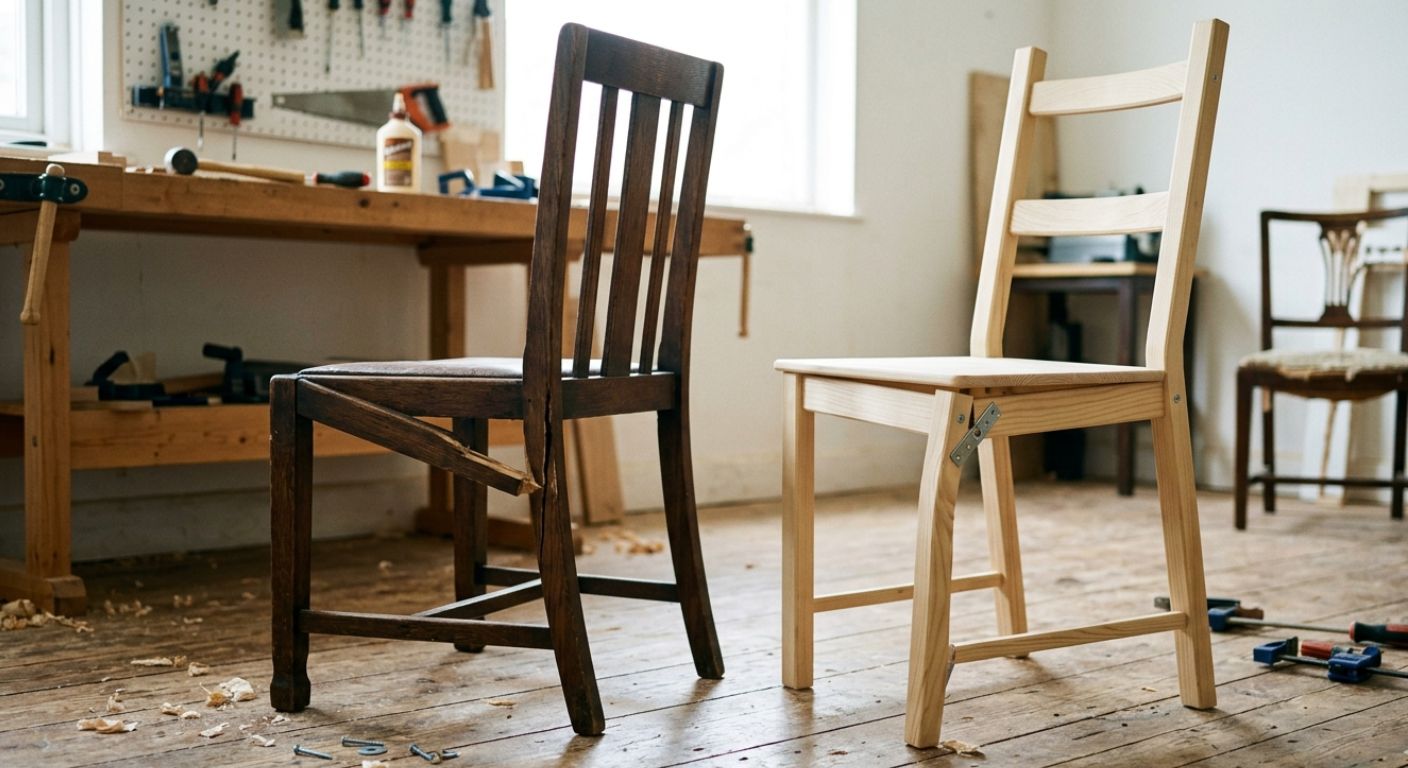
Older hardwood dining chairs are often worth repairing because the frame construction is usually stronger than many lower-cost modern alternatives.
Softwood or flat-pack dining chairs can be harder to restore long term because repeated repairs weaken the fixing points over time.
If the chair:
- Continues wobbling after re-gluing
- Has repeated leg failures
- Shows major frame twisting
- Has widespread joint movement
Replacement is usually the safer option.
If you are comparing long-term practicality across different household setups, our guide to child-friendly dining chairs also explains which construction types tend to handle daily wear more effectively.
Frequently Asked Questions
Can you repair a dining chair without taking it apart?
Yes, minor looseness can sometimes be repaired using thin CA glue or glue injection methods. These work best when the movement is slight and the joint is still structurally intact. Fully loose joints usually need dismantling and re-gluing properly for a long-term repair.
Why do dining chair joints keep coming loose?
Repeated movement, humidity changes, and dried-out glue are the most common causes. Chairs used daily often loosen gradually because small movements inside the joints slowly break down the adhesive bond over time.
Is it cheaper to repair dining chairs or replace them?
It depends on the frame quality and extent of damage. Solid hardwood chairs are often worth repairing. Lower-cost flat-pack chairs with multiple failures are usually cheaper to replace than rebuild structurally.
Can uneven dining chair legs be fixed?
Yes. Uneven legs are often caused by loose fixings or slight frame movement rather than permanently different leg lengths. Relevelling the frame on a flat surface while retightening bolts can often solve the issue.
-
-
-
-
-
-
-
-
-
-
-
-
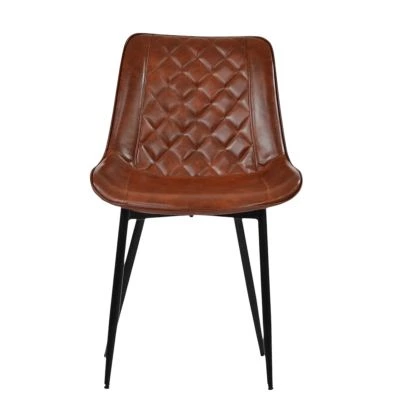
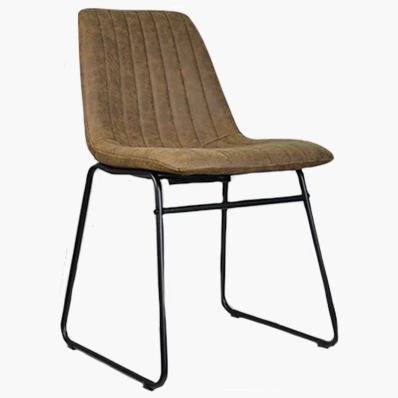 Plato Dining Chair in Aged Brown LeatherSpecial Price £49.99 Regular Price £89.99 Original price 44% Inc VATSaving £40
Final Thoughts
Most dining chair repairs come down to identifying whether the problem is cosmetic, structural, or caused by loose joinery. Simple wobbling and loose joints are usually repairable if handled early, while cracked frames and repeated failures often point towards replacement.
If you are comparing replacement options or looking for more durable seating designs, you can browse the full range of dining chairs or explore our broader guide to space-saving dining chair layouts and practical room planning.


Comments