
 Chat with us on WhatsApp

Kids Desk Chair Guide: Height, Adjustability & Safety Features
Choosing a desk chair for a child is different from choosing one for an adult. Children grow quickly, sit differently, and often use the same chair for homework, gaming, crafts, and general computer use. A chair that is too large or poorly adjusted can make sitting uncomfortable long before posture becomes a concern.
The best kids desk chairs are usually the ones that adjust properly, stay stable during movement, and continue fitting through multiple growth stages. That matters both for comfort and long-term value.
This guide focuses specifically on chair sizing, adjustability, movement, and safety features. If you want a broader breakdown of ergonomic seating principles, see the guide to buying an ergonomic office chair.
What Makes a Kids Desk Chair Ergonomic?
An ergonomic kids desk chair is designed to support a child’s proportions rather than simply shrinking an adult chair design.
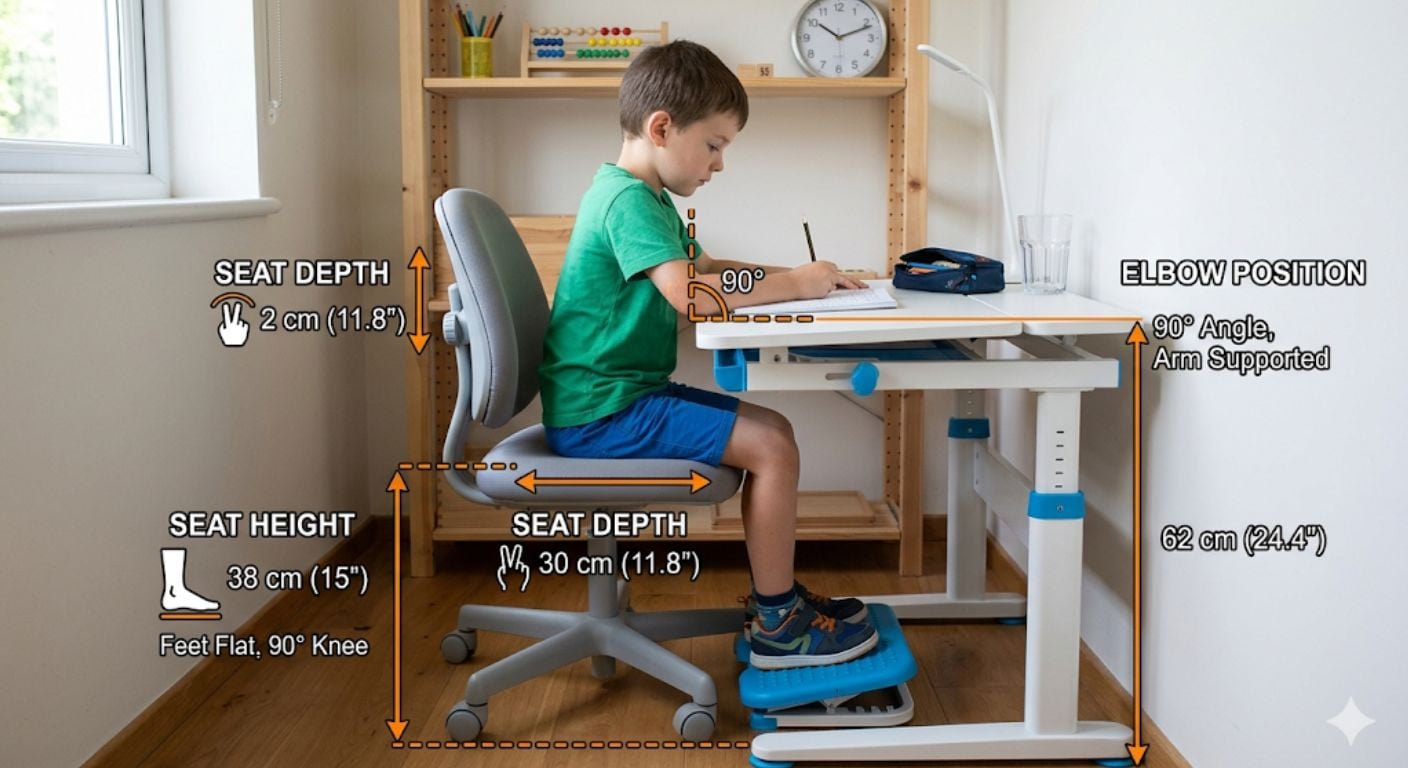
A properly fitted chair should allow:
- Feet to rest flat on the floor or footrest
- Knees to sit close to a 90-degree angle
- The lower back to stay supported
- Elbows to reach desk height without shoulder strain
Many adult office chairs technically adjust low enough for older children, but the seat depth is often too long. This causes children to perch forward instead of using the backrest properly.
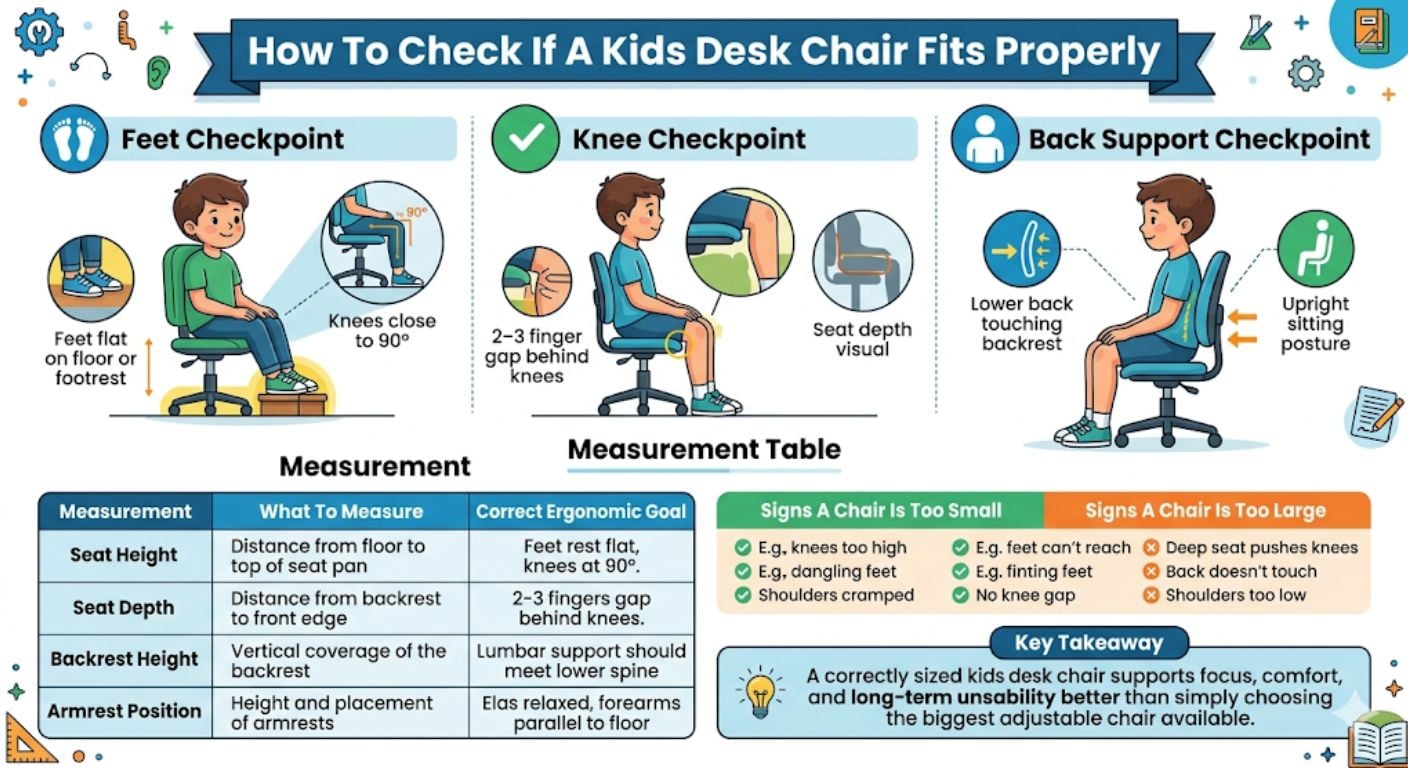
The 3-Point Growth Fit Test
Before buying a kids desk chair, use this simple sizing check.
1. Feet Checkpoint
Both feet should rest flat on the floor or on a stable footrest.
Dangling feet place pressure on the thighs and encourage constant shifting.
2. Knee Checkpoint
There should be roughly a 2–3 finger gap between the front edge of the seat and the back of the knees.
If the seat is too deep, children tend to slouch or lean forward.
3. Lower Back Checkpoint
The lower back should make contact with the backrest naturally.
If a child cannot comfortably use the backrest, the chair is usually too large.
Ideal Kids Desk Chair Measurements
| Measurement | What To Check | Ideal Goal |
|---|---|---|
| Seat Height | Feet flat with knees bent naturally | Knees close to 90° |
| Seat Depth | Gap behind knees | 2–3 finger clearance |
| Backrest Height | Lower back contact | Supports lumbar area without pushing shoulders forward |
| Armrest Position | Elbows at desk level | Relaxed shoulders while typing or writing |
Children between primary school and secondary school ages often need dramatically different seat depths even when their height difference appears small.
Why Height Adjustability Matters
Fixed-height chairs rarely last long in children’s study spaces.
A height-adjustable chair allows:
- Better compatibility with changing desk heights
- Longer usable lifespan
- Better posture during growth spurts
- Easier transition between homework and computer use
Gas-lift adjustment is usually the most practical system because it allows small changes rather than fixed height positions.
One thing we regularly see from our customers is children outgrowing seat depth before seat height. Parents often focus entirely on whether the chair goes high or low enough, but proportional seat sizing usually becomes the bigger issue over time.
If you want more detail on how adjustable seating changes comfort and usability, see adjustable vs fixed height office chairs.
Should Kids Desk Chairs Have Wheels?
Wheels can be useful, but they are not always ideal for younger children.
Chairs With Castors
Best for:
- Older children
- Secondary school setups
- Carpeted rooms
- Shared study spaces
Advantages:
- Easier movement between desk positions
- Better for swivel and rotation
- Reduced dragging and lifting
Disadvantages:
- Can encourage rolling distractions
- Less stable on hard flooring
- Some cheaper chairs move too freely
Chairs Without Wheels
Best for:
- Younger children
- Small study areas
- Hard flooring
- Focused homework setups
Advantages:
- More stable positioning
- Less movement distraction
- Easier floor protection
Disadvantages:
- Less flexibility
- Harder repositioning
Some parents prefer lockable castors because they combine movement with added stability. If you are comparing bases more generally, see castors vs gliders office chairs.
Are Swivel Chairs Good for Children?
Swivel chairs can either help movement or create distraction depending on the child and the setup.
For longer homework sessions, controlled movement is usually positive. Small posture changes improve circulation and reduce stiffness. Completely rigid seating often leads to more fidgeting rather than less.
However, younger children sometimes treat unrestricted swivel movement like a toy. In those cases, a fixed chair or limited swivel base can work better.
For secondary school students spending longer periods at a desk, swivel functionality is generally more useful than restrictive.
More detail on movement-based seating can be found in swivel vs fixed office chairs.
What Safety Features Actually Matter?
Many kids chairs advertise safety features that make little practical difference. These are the features that genuinely matter most.
Stable 5-Point Base
Five-point bases distribute weight better and reduce tipping risk.
Four-leg designs can work well too, but lightweight pedestal chairs with narrow bases are usually less stable.
Controlled Castors
Locking or resistance castors reduce uncontrolled rolling.
This is especially useful on wood or laminate flooring.
Rounded Edges
Rounded seat edges reduce pressure behind the knees and lower the chance of knocks during movement.
Breathable Materials
Mesh backs can improve airflow during longer sitting periods, particularly in smaller bedrooms or warmer rooms.
Weight Rating
Always check the supported user weight range. Some low-cost children’s chairs are built with lighter mechanisms that wear out quickly under regular use.
Are Gaming Chairs Good for Studying?
Gaming chairs are not automatically bad for studying, but many are designed around adult proportions and reclined sitting positions.
For younger children, oversized gaming chairs usually create several problems:
- Seat depth is too long
- Armrests sit too high
- Headrests push the neck forward
- Recline encourages slouching
Older teenagers can sometimes use gaming-style seating successfully if the proportions fit properly.
For study use specifically, upright support and correct seat sizing matter more than racing-style aesthetics.
Best Desk Chair Features for Different Age Groups
Ages 4–7
Prioritise:
- Stable base
- Lower seat height
- Simple adjustment
- Foot support
Avoid:
- Large adult office chairs
- Heavy recline mechanisms
- Oversized armrests
Ages 8–12
Prioritise:
- Height adjustment
- Moderate swivel movement
- Better back support
- Easy-clean upholstery
This is usually the stage where growth adjustability becomes most important.
Secondary School & Teenagers
Prioritise:
- Adult-style ergonomic support
- Stronger mechanisms
- Longer sitting comfort
- Better seat depth sizing
Some teenagers transition well into compact ergonomic office chairs at this stage. If comparing adult options, the broader office chairs collection gives a clearer overview of different chair types and sizing styles.
When a Kids Desk Chair Makes Sense — And When It Does Not
A dedicated children’s desk chair makes the most sense when:
- A child uses a desk daily
- Homework sessions are becoming longer
- The chair needs to last through multiple growth stages
- Adult chairs feel oversized or uncomfortable
A basic dining chair or occasional chair can still work for:
- Very occasional desk use
- Craft tables
- Temporary setups
- Younger children using desks for short periods only
The biggest mistake is usually buying a chair that children are expected to “grow into.” Oversized seating rarely gets used properly during the years when fit matters most.
Frequently Asked Questions
What is the best desk chair for a child with ADHD?
Movement-friendly chairs can help some children concentrate better because they allow small posture changes rather than forcing complete stillness. Swivel chairs with controlled movement often work better than fully rigid seating. Stability still matters, so extremely loose castors or aggressive recline functions are usually less suitable.
How do I measure kids desk chair height?
Measure from the floor to the underside of the child’s knee while standing naturally. The chair height should allow feet to rest flat while keeping knees close to a right angle. Desk height should then allow elbows to sit comfortably without raising the shoulders.
Can one chair last from age 4 to 14?
Some highly adjustable chairs can cover a wide age range, but most children eventually outgrow either the seat depth or backrest proportions. Adjustable height helps, but proportional fit still matters as children grow taller.
Do children need armrests on desk chairs?
Armrests are optional for most children. They can help older children during computer use, but they often get in the way at smaller desks. Fixed armrests that sit too high are usually more problematic than helpful.
Is mesh or upholstered fabric better for kids?
Mesh backs are cooler and easier to maintain during long sitting sessions. Upholstered seats generally feel softer and more comfortable initially. For everyday homework setups, practicality and cleanability usually matter more than appearance.
Final Thoughts
A good kids desk chair should fit properly now, adjust easily over time, and stay stable during everyday use. Seat depth, height range, and overall proportions matter far more than decorative styling or gaming aesthetics.
For broader ergonomic guidance and adult-sized study seating, the main guide to buying an ergonomic office chair covers the wider decision framework behind supportive seating choices.


Comments