
 Chat with us on WhatsApp

Makeup Vanity Chair: Comfort, Height & Aesthetic Tips
A makeup vanity chair needs to do more than simply fit underneath a dressing table. The right chair affects posture, comfort during longer routines, ease of movement, and how efficiently the space works overall. A chair that looks good but sits too high, too low, or too bulky quickly becomes frustrating in daily use.
Most makeup vanity setups use tables between 28 and 32 inches high, which means chair dimensions matter more than many buyers expect. Seat height, clearance space, back support, and fabric choice all influence whether the setup feels practical or awkward.
This guide focuses specifically on choosing a makeup vanity chair that works properly in real bedrooms and dressing spaces. It covers sizing, comfort, materials, and when different chair styles make sense depending on the room and how often the chair will actually be used.
What Is the Standard Height for a Makeup Vanity Chair?
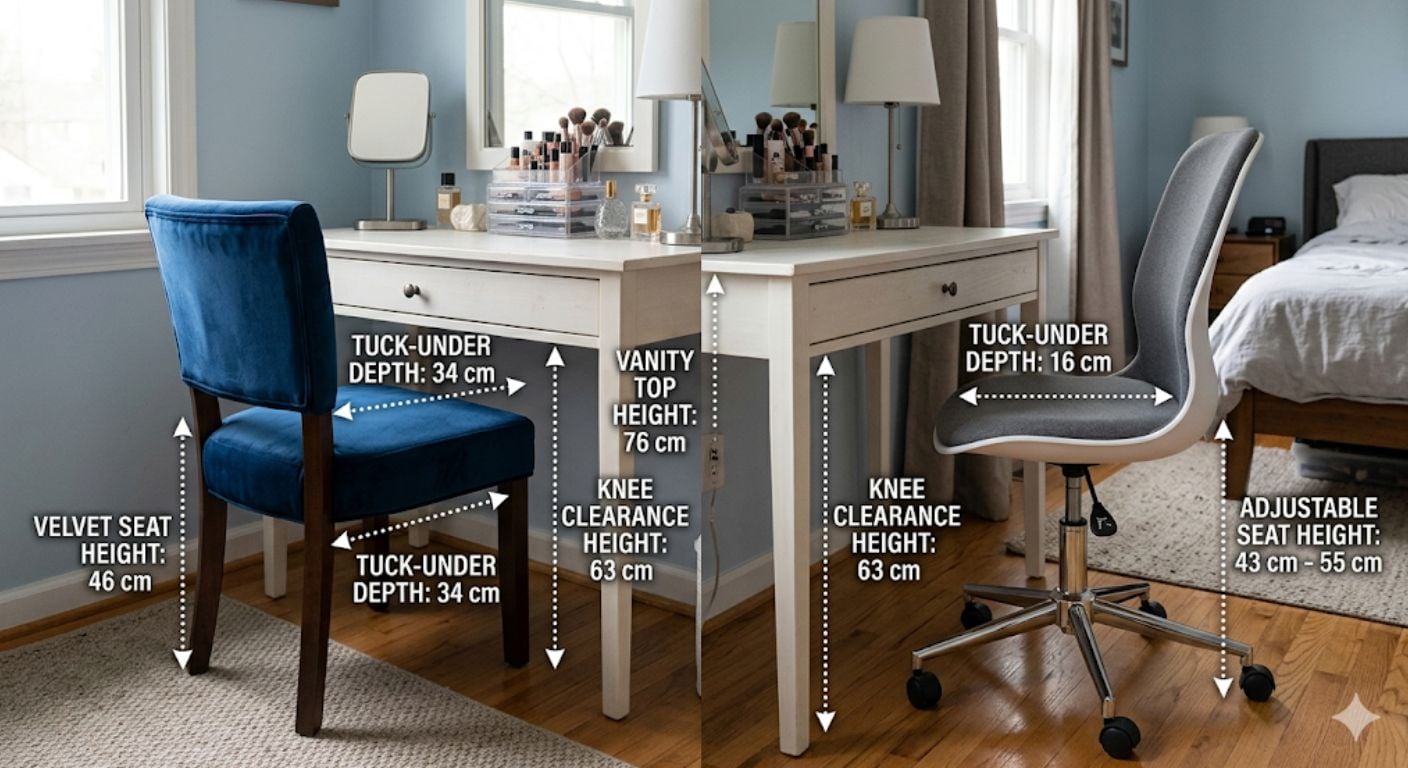
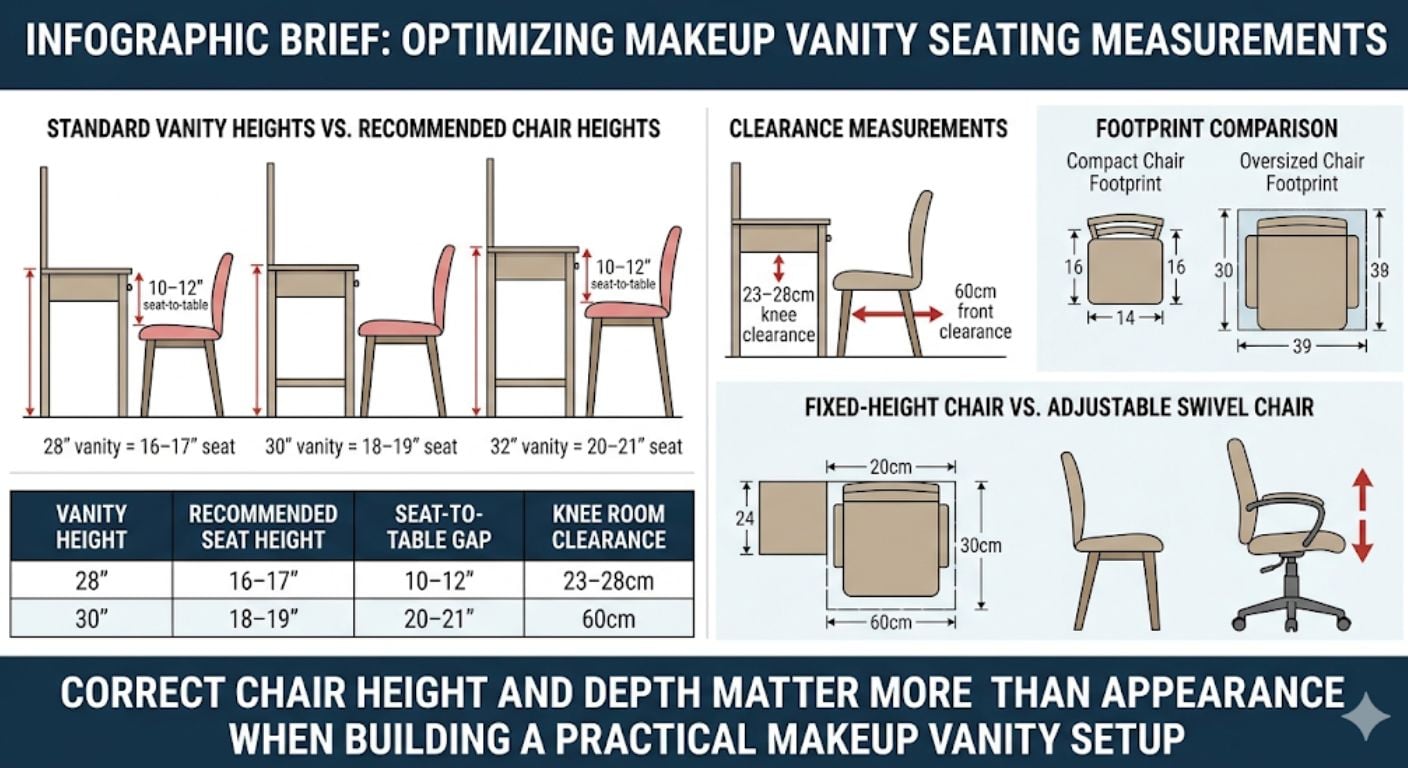
Most makeup vanity chairs work best with a seat height between 18 and 19 inches when paired with a standard vanity table measuring around 30 inches high. This usually creates the correct leg clearance and sitting position without forcing the shoulders upward.
A simple rule is to leave around 10 to 12 inches between the seat and the underside of the tabletop. This gives enough knee space while keeping the mirror at a comfortable eye level.
Quick Vanity Height Guide
| Vanity Height | Recommended Seat Height |
|---|---|
| 28 inches | 16–17 inches |
| 30 inches | 18–19 inches |
| 32 inches | 20–21 inches |
| 36 inches | 24–26 inches |
Counter-height dressing tables are less common, but they usually require a bar-style stool rather than a standard dressing table chair.
The question we get asked most by our customers is whether the listed seat height includes the cushion compression once someone sits down. Softer padded seats can reduce the effective sitting height slightly after regular use.
For additional ergonomic guidance on seated posture, the UK Health and Safety Executive provides useful workstation positioning recommendations that also apply to vanity seating.
How Much Space Do You Need Around a Vanity Chair?
A makeup vanity setup needs two separate clearance measurements to work properly:
- Knee clearance: around 23–28cm between the seat top and underside of the table
- Movement clearance: at least 60cm in front of the chair so you can sit down comfortably
In smaller bedrooms, space efficiency becomes more important than oversized seating. Compact chairs with open sides or backless stools are easier to tuck fully underneath the table when not in use.
If floor space is limited, narrow-frame dressing table chairs generally work better than wide accent chairs or bulky office seating.
Are Adjustable Vanity Chairs Worth It?
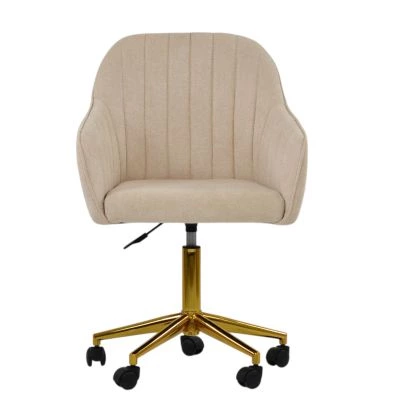
Height-adjustable vanity chairs make sense when the table height is unusual, when multiple people use the same space, or when the vanity doubles as a desk.
The main advantages are:
- Better flexibility across different table heights
- Easier posture adjustment
- Improved crossover use for work and makeup
- More comfortable mirror alignment
Swivel functionality is also useful in tighter spaces because the chair can rotate without needing to pull fully away from the table.
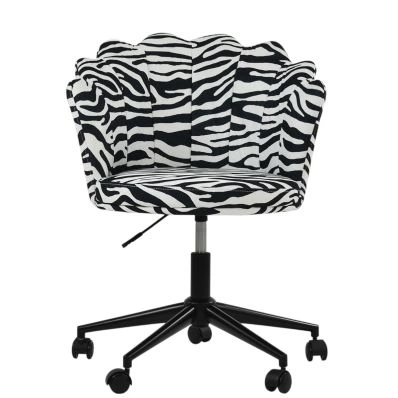
However, adjustable vanity chairs are usually bulkier than fixed-height dressing table chairs. Gas lift mechanisms, wheeled bases, and armrests increase the footprint considerably.
If the vanity sits inside a small bedroom, a fixed-height chair is often easier to live with day to day.
Which Materials Work Best for Makeup Vanity Chairs?
The material affects comfort, cleaning, appearance, and how formal the chair feels inside the room.
Velvet
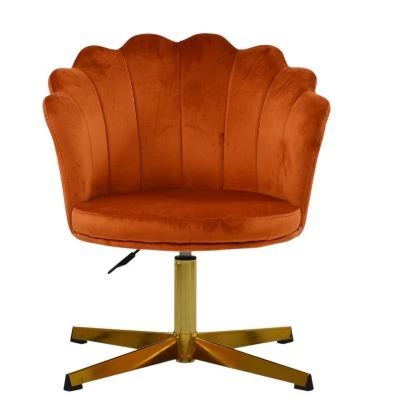
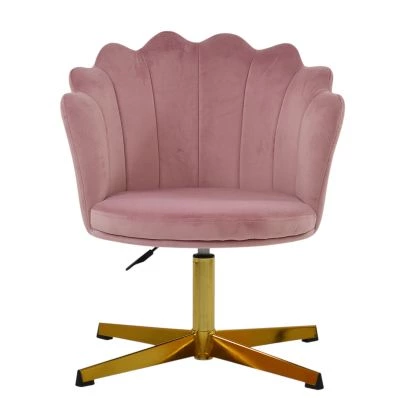
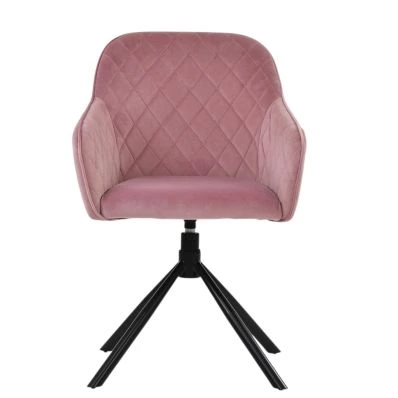
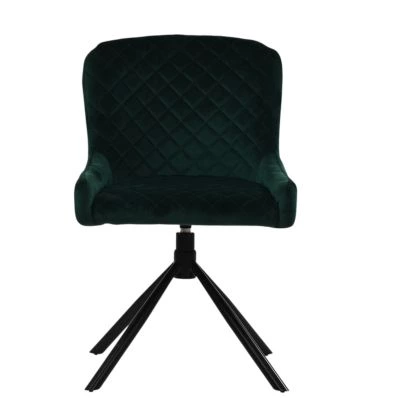
Velvet remains one of the most common upholstery choices for makeup vanity chairs because it softens the overall look of dressing areas and photographs well in bedrooms with softer lighting.
It works particularly well on padded bucket-style chairs and compact occasional chairs.
The downside is maintenance. Velvet can mark more easily than faux leather or woven fabrics, especially in homes with pets or heavy daily use.
Boucle and Teddy Fabric
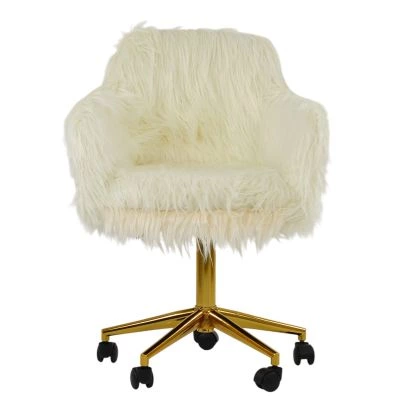
Boucle and textured fabrics create a softer appearance and often feel warmer in colder bedrooms. These fabrics suit occasional-use vanity areas more than high-frequency daily use.
They are usually thicker visually, which can make compact spaces feel fuller.
Faux Leather
Faux leather vanity chairs are easier to wipe clean after makeup use and generally wear more consistently over time.
They work well in practical dressing setups where durability matters more than softer fabric textures.
Rattan and Wood
Wood-framed or rattan vanity seating creates a lighter visual footprint and can help smaller bedrooms feel less crowded.
These styles are usually less padded, so they suit shorter makeup sessions better than long seated routines.
Do You Need Back Support on a Makeup Vanity Chair?
Back support matters more when the vanity is used for longer periods or doubles as a workspace.
For quick makeup application or occasional use, backless stools are usually sufficient and save more space underneath the table.
For longer sessions, chairs with:
- Curved backs
- Wraparound sides
- Padded seats
- Supportive upright posture
tend to feel noticeably more comfortable.
Very low-back vanity chairs can sometimes look compact but provide almost no practical support. If comfort matters, the backrest should support at least the lower-mid back rather than sitting purely at waist level.
Can You Use an Office Chair as a Makeup Vanity Chair?
Yes, but only in certain setups. Office chairs work best when the dressing table also functions as a work desk or study area.
The main advantages are:
- Height adjustability
- Better ergonomic support
- Swivel movement
- Padded seating for longer sessions
The disadvantages are usually size and appearance. Many office chairs have wider wheel bases and armrests that prevent them from fitting neatly underneath standard dressing tables.
Compact armless office chairs are normally the safest crossover option.
If you are comparing crossover seating styles, our range of office chairs includes compact options suited to dual-purpose setups.
When Does a Storage Vanity Stool Make Sense?
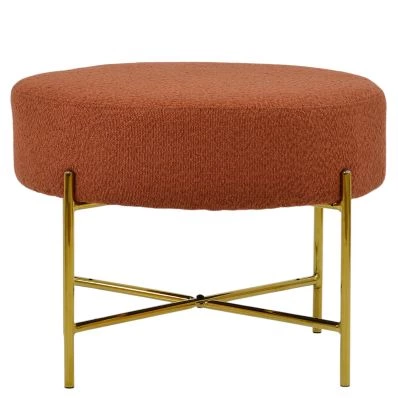
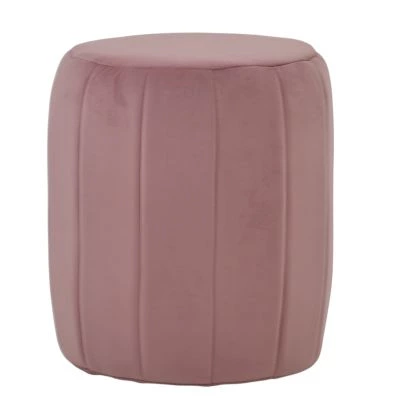
Storage stools work well in bedrooms where floor space is limited and the vanity area lacks drawer storage.
Ottoman-style vanity stools can hold:
- Hair tools
- Cosmetics
- Cables
- Mirrors
- Small accessories
The biggest benefit is reducing visible clutter around the dressing table.
However, storage stools are usually deeper and heavier than standard vanity chairs. In very compact spaces, they can reduce leg room if the proportions are not carefully checked before buying.
Who Should Choose a Compact Vanity Chair?
Compact vanity chairs are usually the right option when:
- The bedroom is narrow
- The dressing table sits close to the bed
- The chair needs to tuck fully underneath
- The vanity is used occasionally rather than daily
- You want the seating to feel visually lighter
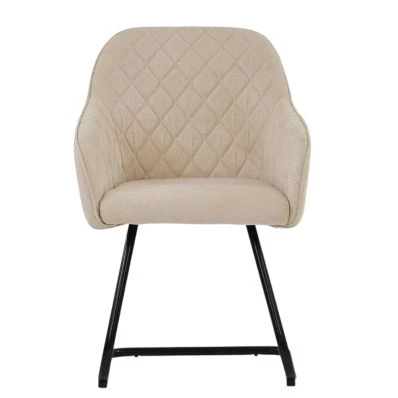
Larger upholstered vanity chairs make more sense when:
- The dressing table is used daily
- The chair doubles as bedroom seating
- Comfort matters more than footprint
- The room has enough clearance space
Most people underestimate how much difference chair depth makes. A chair that technically fits the width of the vanity can still dominate the room visually if it projects too far into the walking space.
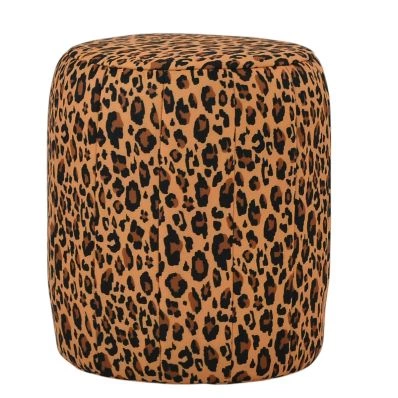
Choosing the Right Makeup Vanity Chair
The most important factor in a makeup vanity chair is proper sizing. Seat height, clearance space, and chair depth affect usability more than decorative styling alone.
For standard dressing tables, a seat height around 18–19 inches usually provides the correct positioning. Compact chairs work better in smaller bedrooms, while adjustable or supportive seating suits dual-purpose dressing and work setups.
If you are comparing different styles, materials, and sizes, our collection of dressing table chairs includes both compact and upholstered options designed for bedroom vanity spaces.


Comments