
 Chat with us on WhatsApp

Small Bedroom Chair Ideas: Making a Feature Without Losing Space
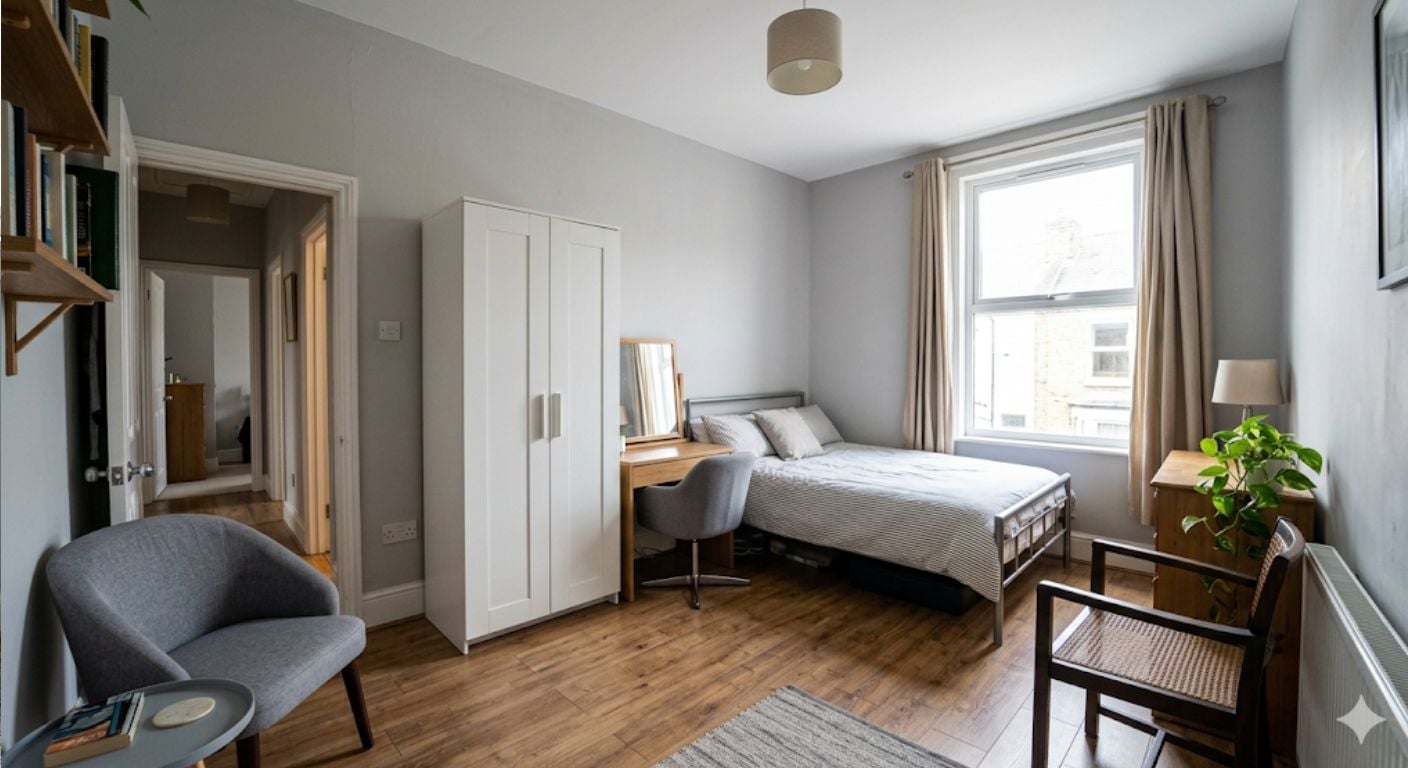
Finding seating for a small bedroom is usually a balance between comfort and floor space. A chair can make the room more functional, but the wrong shape or size quickly makes a compact layout feel crowded. This is why small bedroom chair ideas work best when they focus on scale, visual openness, and clear purpose rather than oversized lounge seating.
A well-chosen chair can create a reading spot, provide seating at a dressing table, or help separate work and sleep areas in multifunctional bedrooms. The key is choosing a design that fits the room physically and visually. Slim frames, exposed legs, compact dimensions, and lighter upholstery choices often work better than deep, bulky seating.
For bedrooms where space is limited, smaller dressing table chairs and compact swivel chairs usually provide the best balance between practicality and footprint. You can browse a range of dressing table chairs here.
What Type of Chair Works Best in a Small Bedroom?
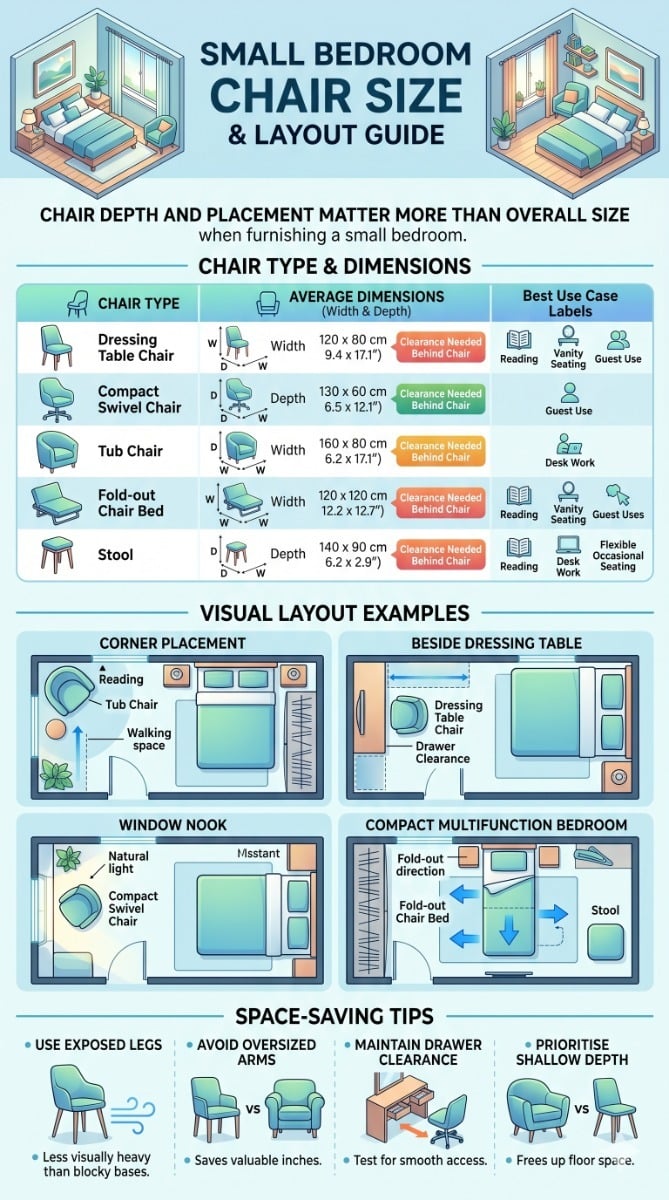
The most practical chairs for small bedrooms are usually compact occasional chairs, armless swivel chairs, slim tub chairs, and dressing table seating. These designs provide usable seating without blocking walkways, wardrobes, or drawer access.
Before choosing a style, measure:
- Available wall width
- Clearance around the bed
- Door swing space
- Drawer opening depth
- Walking routes through the room
As a general guide:
| Chair Type | Average Width | Average Depth | Best Use |
|---|---|---|---|
| Compact tub chair | 65–80cm | 65–75cm | Reading corner |
| Armless swivel chair | 50–65cm | 55–70cm | Desk or vanity |
| Dressing table chair | 40–55cm | 45–60cm | Daily occasional use |
| Fold-out chair bed | 70–90cm | 75–100cm | Guest sleeping space |
| Accent stool | 35–50cm | 35–50cm | Flexible spare seating |
Exposed legs and open-frame designs generally feel less intrusive visually than fully upholstered block-style chairs.
How to Fit a Chair Into a Tiny Bedroom Corner
The easiest way to fit a chair into a tight bedroom is to use corners that already have limited practical use. Corners beside wardrobes, near windows, or beside dressing tables usually work better than trying to position a chair at the foot of the bed.
A few layout techniques make a noticeable difference:
- Choose chairs with visible legs
Open space underneath helps the floor remain visually uninterrupted. - Avoid deep cushions
Excessive seat depth pushes furniture further into the room. - Keep clearance around storage
Wardrobe and drawer access matters more than adding larger seating. - Use lighter upholstery colours carefully
Softer neutral shades can reduce visual heaviness, although the frame shape matters more than colour alone. - Avoid oversized arms
Thick armrests add width without increasing usable seating space.
One thing we regularly see with our customers is that chair depth causes more layout problems than width. Many compact-looking chairs still project too far into narrow bedrooms once placed beside a bed or wardrobe.
Compact Swivel Chairs for Bedrooms
Swivel chairs work particularly well in smaller bedrooms because they can serve multiple purposes without needing extra floor space. A compact swivel chair can rotate between:
- A dressing table
- A small desk
- A TV viewing angle
- A reading corner
Armless designs usually work best because they slide neatly under desks or vanities when not in use.
Look for:
- Seat widths under 65cm
- Smooth swivel bases
- Adjustable height if used for desk work
- Upright back support
- Slim pedestal or four-leg bases
If the chair will double as workspace seating, posture support becomes more important than deep cushioning.
Small Bedroom Chairs for Reading
Reading chairs in compact bedrooms work best when they prioritise upright comfort rather than oversized lounging. Large armchairs often dominate smaller rooms visually and reduce usable movement space.
A compact reading chair usually performs better when it includes:
- A slightly reclined backrest
- Supportive seat padding
- Narrow arms or no arms
- A footprint under roughly 80cm wide
- Enough back height to support the shoulders
Tub chairs and curved occasional chairs often suit this use well because they provide support without needing excessive width.
Positioning also matters. Placing the chair near natural light helps avoid adding extra floor lamps, which can make smaller rooms feel busier.
Fold-Out Chair Beds for Guest Use
Fold-out chair beds are useful when a bedroom occasionally needs to accommodate guests but cannot permanently lose floor space to a second bed.
These are most practical when:
- Guests stay occasionally rather than regularly
- The room doubles as an office or dressing room
- Floor space needs to remain flexible
- A spare bedroom is unavailable
The compromise is usually comfort and bulk. Even compact chair beds are typically larger than standard occasional chairs because they contain folding mechanisms and mattress sections.
Before buying a chair bed, check:
- Fully extended sleeping dimensions
- Clearance space when unfolded
- Mattress thickness
- Weight limits
- Ease of conversion
For very tight rooms, a compact dressing chair or swivel chair often works more effectively day to day than a multifunctional sleeper chair.
Choosing Materials for Small Bedroom Seating
Texture matters in smaller rooms because upholstery has a strong visual impact when furniture sits close together.
Velvet
Velvet works well for adding texture without needing bold patterns. It suits occasional seating but can show marks more easily in busy households.
Bouclé and Sherpa
These fabrics soften sharper bedroom furniture lines and help occasional chairs feel warmer visually. However, thicker textured fabrics can appear bulkier in very small rooms.
Faux Leather
Faux leather is useful for wipe-clean practicality, especially in bedrooms used for TV watching, makeup routines, or occasional dining trays.
Chenille
Chenille balances softness with durability and usually works well in mid-sized compact bedrooms.
If maintenance matters most, removable cushion covers or wipe-clean finishes tend to outperform heavily textured fabrics long term.
When Small Bedroom Chairs Make Sense — And When They Don't
A bedroom chair usually works well when:
- The room has unused corner space
- You regularly sit in the room outside sleeping hours
- The chair replaces less useful furniture
- You need occasional desk or vanity seating
- The room serves multiple functions
A chair may not make sense when:
- It blocks wardrobes or drawers
- Walking space becomes restricted
- The chair is only decorative
- The room already feels overcrowded
- The chair duplicates seating available elsewhere nearby
In tighter bedrooms, smaller purposeful seating generally performs better than trying to replicate living room furniture layouts.
Frequently Asked Questions
What size chair is best for a small bedroom?
Most small bedrooms suit chairs between 50cm and 75cm wide depending on layout. Depth often matters more than width because deep seating projects further into walking space. Compact swivel chairs, dressing table chairs, and slim occasional chairs usually fit more comfortably than oversized lounge seating.
Can you put an accent chair in a small bedroom?
Yes, but the chair needs to be appropriately scaled. Accent chairs with exposed legs, slimmer arms, and open frames usually work better because they create less visual heaviness. Compact tub chairs and armless occasional chairs are often easier to position without overcrowding the room.
Are swivel chairs good for bedrooms?
Compact swivel chairs work well in multifunctional bedrooms because they can rotate between desks, dressing tables, and seating areas without needing additional furniture. Armless designs are usually the most space-efficient option.
What is the most practical fabric for a bedroom chair?
Faux leather and removable washable covers are generally the easiest to maintain. Velvet and bouclé add texture and warmth but often require more upkeep, especially in households with pets or regular daily use.
Final Thoughts
The most effective small bedroom chair ideas focus on function, footprint, and room flow rather than simply adding another furniture piece. Compact swivel chairs, dressing table chairs, and smaller occasional chairs usually provide the best balance between comfort and usable space.
Careful measuring matters more than following trends. A chair that leaves clear movement space and works with the room layout will almost always feel better long term than oversized seating designed for larger rooms.
For compact seating designed for bedrooms, vanities, and occasional use, explore the full range of dressing table chairs.


Comments