
 Chat with us on WhatsApp

Swivel Vs Fixed Office Chairs
Choosing between a swivel and fixed office chair changes how you move, sit, and work throughout the day. The difference is not only about whether the seat rotates. Base design affects posture, desk access, floor protection, workspace layout, and how stable the chair feels during long periods of sitting.
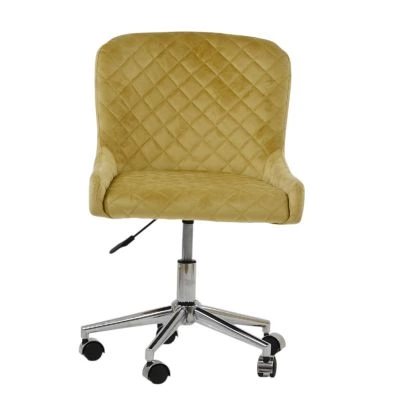
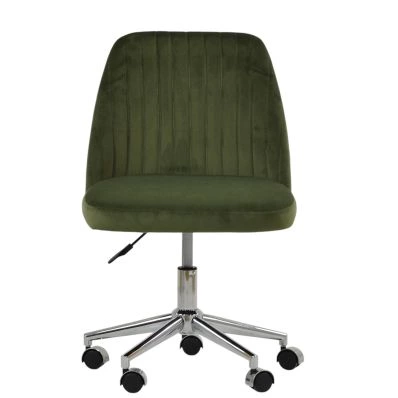
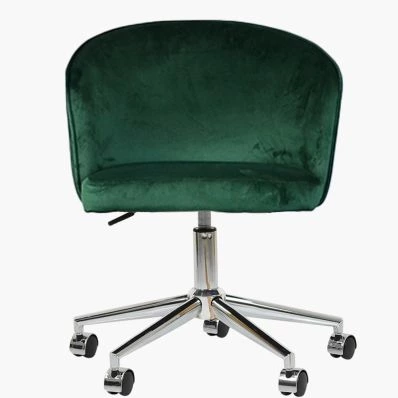
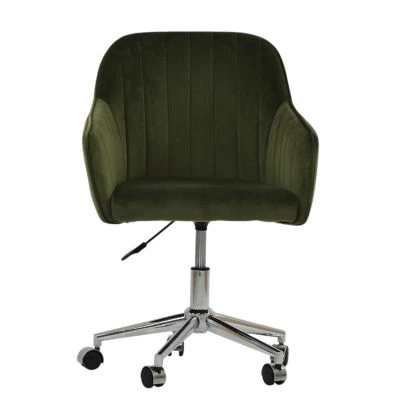
A swivel office chair rotates around a central column, usually with a five-point wheeled base. A fixed office chair stays in a static position and normally uses four legs, sled legs, or glides instead of castors. Both designs can work well in a home office, but they suit different layouts and working habits.
This guide compares swivel and fixed office chairs in practical terms, including movement, stability, compact room use, maintenance, and who each type suits best. If you are still comparing broader seating features, our guide to choosing an office chair for home working explains the wider decision process.
What Is a Swivel Office Chair?
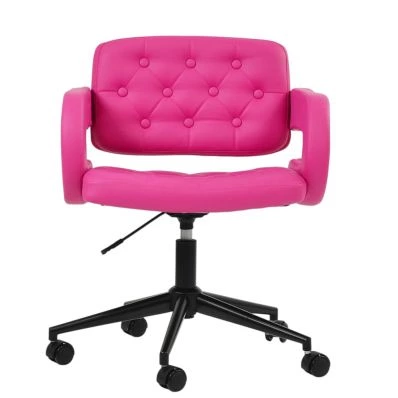
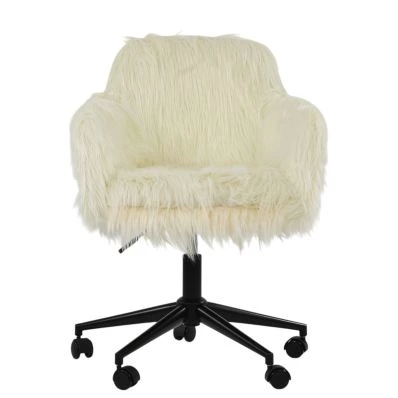
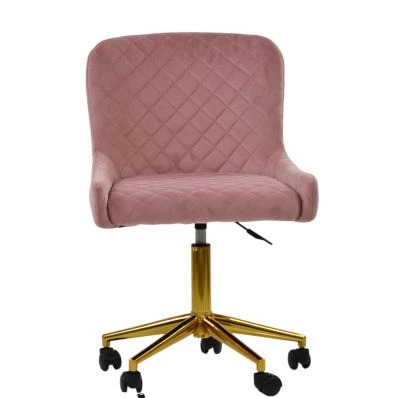
A swivel office chair is a seat mounted on a central support that allows the chair to rotate 360 degrees without moving the base.
Most swivel office chairs also include:
- A gas-lift height adjustment
- A five-point wheeled base
- Castors for movement
- A rotating seat mechanism
- Tilt functionality on some models
Swivel chairs are designed for active desk use where the user regularly changes position, turns between monitors, or moves around the workspace during the day.
What Is a Fixed Office Chair?
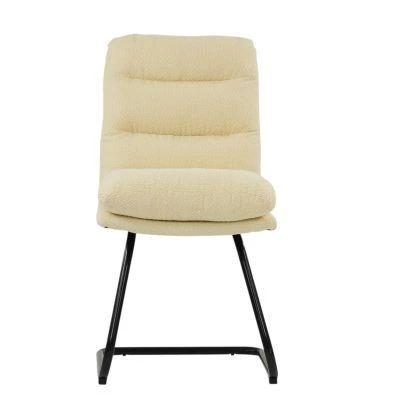
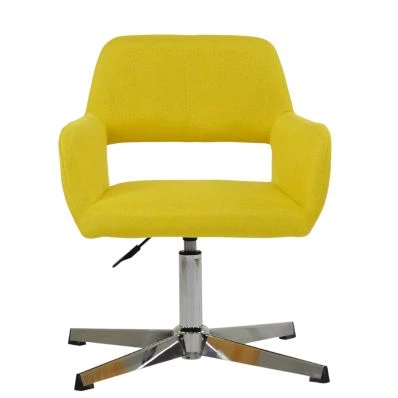
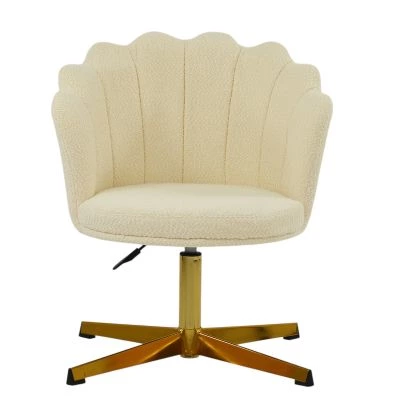
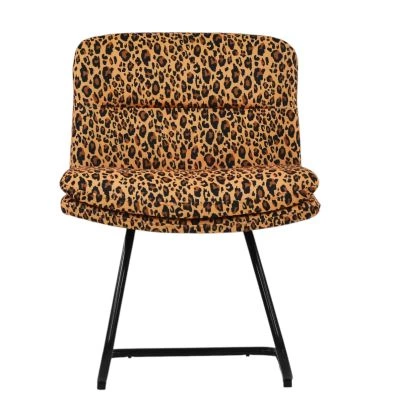
A fixed office chair does not rotate and usually stays in one position while seated. The base may use four legs, sled legs, glides, or a static metal frame instead of wheels.
Fixed chairs are commonly chosen for:
- Home offices with limited space
- Dining-table desks
- Shared rooms
- Reception-style workspaces
- Study areas where movement is limited
Some fixed chairs still include padded seats, armrests, and supportive backs, but they prioritise stability over mobility.
Technical Comparison: Swivel Vs Fixed Office Chairs
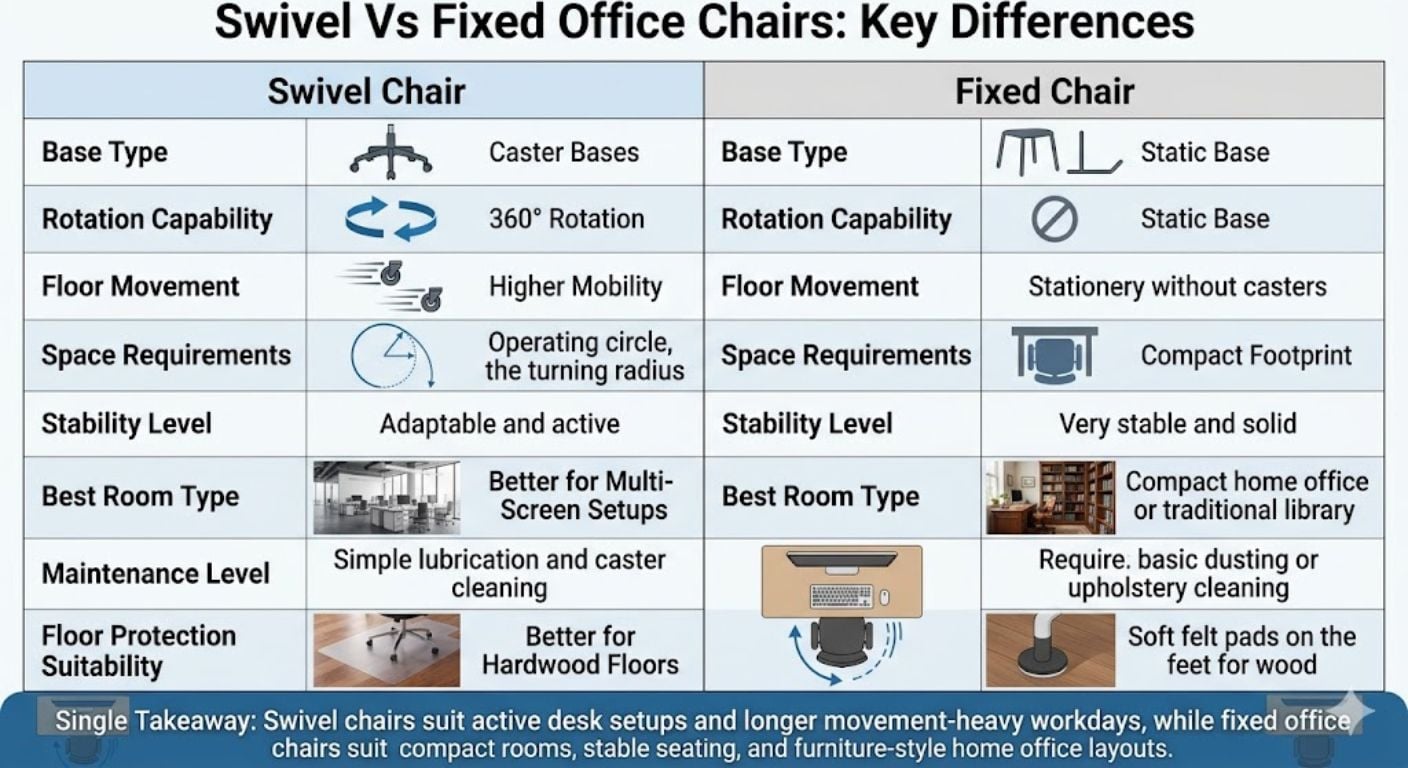
| Feature | Swivel Office Chair | Fixed Office Chair |
|---|---|---|
| Seat Movement | 360-degree rotation | Static position |
| Base Type | Central wheeled base | Four legs or sled base |
| Workspace Mobility | High | Low |
| Stability | Moderate | High |
| Floor Protection | Depends on castors | Usually better |
| Compact Room Suitability | Moderate | Often better |
| Ease of Reaching Equipment | Easier | More restricted |
| Maintenance | More moving parts | Simpler construction |
| Typical Appearance | More office-focused | Often more furniture-style |
When a Swivel Office Chair Makes More Sense
Swivel chairs suit users who move regularly while working. If your setup involves dual monitors, side desks, printers, shelving, or constant turning, the ability to rotate naturally reduces repeated twisting through the lower back and shoulders.
Swivel chairs also work better when:
- The desk is used for full working days
- Multiple people share the chair
- The seating position changes frequently
- The workspace is larger
- The user needs adjustable positioning
Most people using a desk for eight-hour working days prefer some degree of movement freedom once they become used to it.
We often find our customers underestimate how much reaching and turning happens during a normal workday until they switch from a fixed chair to a swivel design.
For buyers comparing movement-focused seating setups, our guide to castors vs gliders on office chairs explains how different bases affect movement and floor contact.
When a Fixed Office Chair Works Better
Fixed office chairs suit more controlled or compact setups where movement is less important than stability.
A fixed chair can work well when:
- The desk sits inside a bedroom or dining area
- The room is narrow
- The user works in shorter sessions
- The floor is vulnerable to wheel marks
- A less corporate appearance is preferred
Because the chair does not rotate or roll away during use, some people find fixed chairs feel more grounded and less distracting. This can help in study spaces or focused task environments where constant movement is unnecessary.
Fixed chairs also tend to tuck more neatly underneath desks because the footprint is usually smaller than a wheeled swivel base.

Are Swivel Chairs Better for Ergonomics?
Not automatically. Rotation alone does not make a chair supportive.
The real ergonomic value comes from whether the chair supports natural posture changes and fits the user correctly. Many swivel office chairs include adjustable seat height, armrests, lumbar shaping, and tilt systems, which can improve comfort during long desk sessions.
However, a well-built fixed chair with proper seat height and back support can still work effectively for shorter or moderate work periods.
The key difference is movement behaviour:
- Swivel chairs support dynamic movement
- Fixed chairs encourage a more stable seated position
If you are comparing posture support features in more detail, our guide to lumbar support, tilt, and seat depth explains how these features affect seated support.
The UK Health and Safety Executive display screen equipment guidance also recommends that workstation seating allows users to change posture comfortably throughout the day.
Swivel Vs Fixed Chairs for Small Rooms
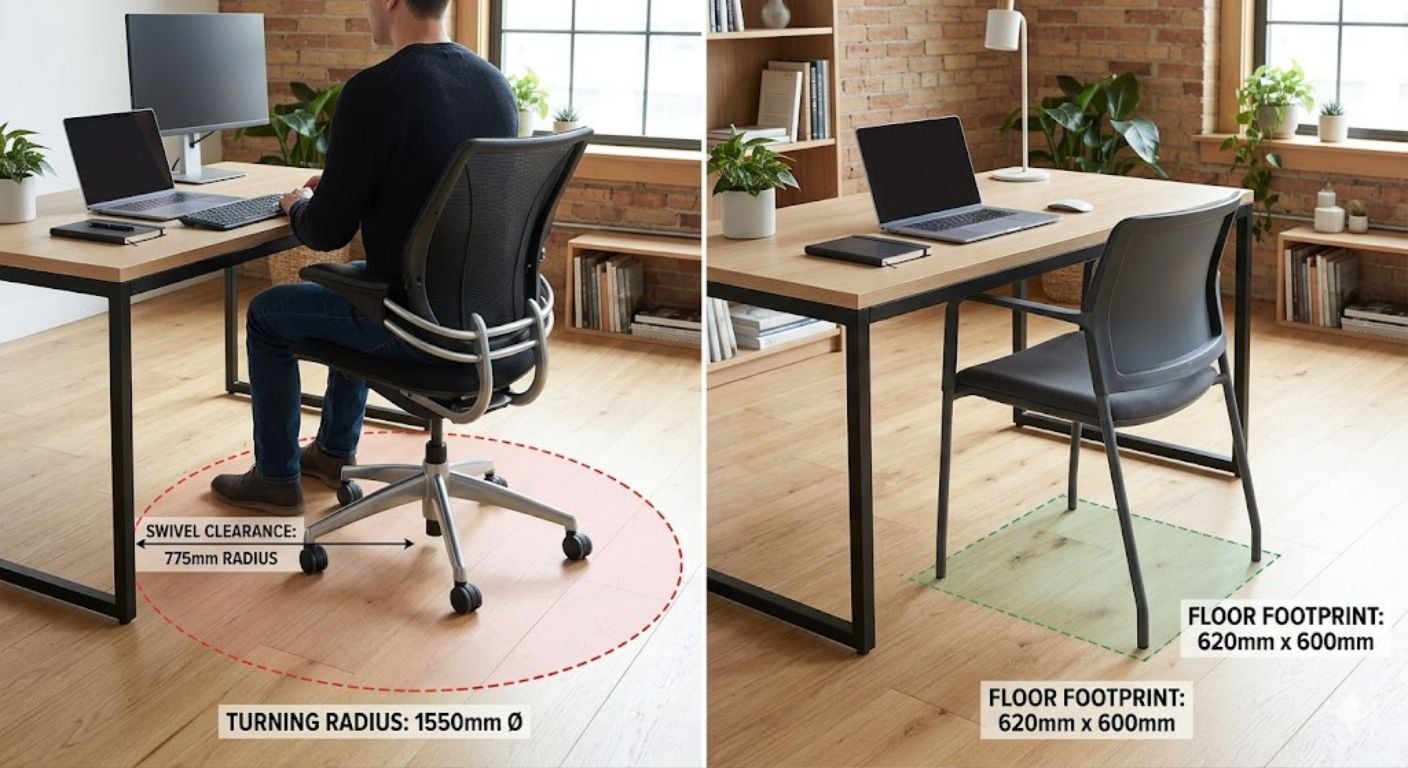
Fixed office chairs often work better in smaller rooms because they use a tighter footprint and can slide directly under the desk without wheel clearance.
Swivel chairs need additional turning space around the base. In compact rooms, this can create problems where:
- Castors hit walls or furniture
- Armrests catch desk edges
- The chair cannot rotate fully
- The base protrudes into walking areas
That does not mean swivel chairs cannot work in small rooms. Compact swivel designs with narrower bases are available, particularly for home offices where space is limited.
For users prioritising appearance alongside workspace practicality, our guide to an office chair that does not look like an office chair covers furniture-style options designed for home environments.
Floor Protection and Maintenance Differences
Fixed office chairs generally create less floor wear because the base stays static. Many use felt pads or glides that reduce marking on hardwood, laminate, or tiled floors.
Swivel office chairs place more stress on flooring because of:
- Rolling movement
- Direction changes
- Castor pressure points
- Weight transfer while rotating
Soft PU castors help reduce scuffing compared with harder nylon wheels, but floor protection mats are still useful on delicate surfaces.
Maintenance is also different.
Swivel chairs contain more moving parts, including:
- Gas lifts
- Bearings
- Rotation mechanisms
- Wheels
- Tilt assemblies
Fixed chairs are mechanically simpler, which can reduce long-term maintenance requirements.
Can You Stop a Swivel Chair From Rotating?
Yes. Some swivel office chairs can be partially stabilised or converted into a more fixed seating position.
Common methods include:
- Installing a swivel lock if the mechanism supports one
- Using rubber wedges to reduce movement
- Replacing the swivel plate with a fixed mounting bracket
- Using locking castors to prevent rolling movement
These solutions vary depending on the chair construction. Some designs are not intended to be modified.
If the main problem is unwanted movement rather than rotation itself, switching from castors to glides is often the simpler option.
Which Type of Office Chair Is Better for Home Working?
The answer depends more on work style than room type.
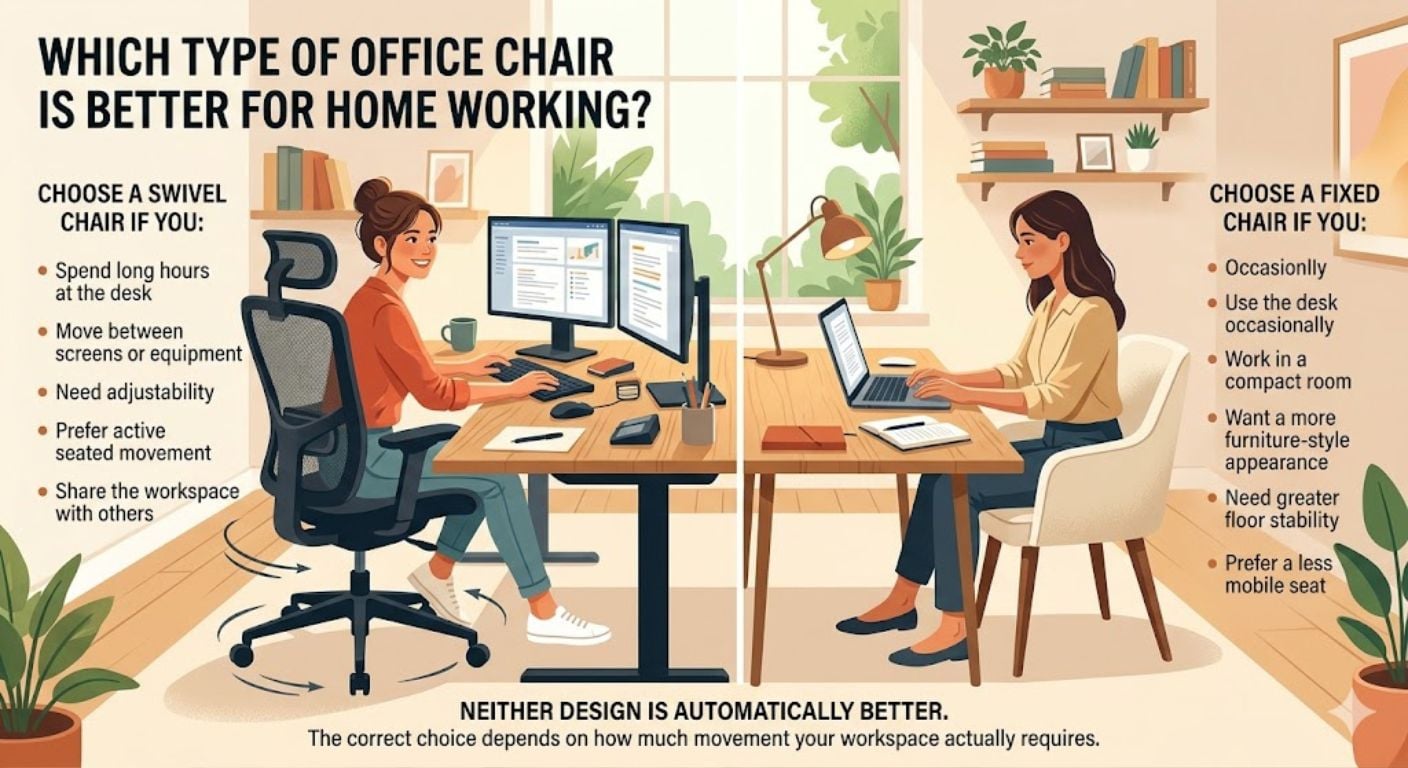
Choose a swivel office chair if you:
- Spend long hours at the desk
- Move between screens or equipment
- Need adjustability
- Prefer active seated movement
- Share the workspace with others
Choose a fixed office chair if you:
- Use the desk occasionally
- Work in a compact room
- Want a more furniture-style appearance
- Need greater floor stability
- Prefer a less mobile seat
Neither design is automatically better. The correct choice depends on how much movement your workspace actually requires.
You can browse both static and rotating designs in Lakeland’s office chair collection.
Frequently Asked Questions
Are swivel office chairs comfortable?
Yes, many swivel office chairs are comfortable for long desk sessions because they allow easier movement and repositioning while seated. Comfort depends more on seat dimensions, support, and adjustability than rotation alone.
Do fixed office chairs support long working hours?
Some fixed office chairs can support longer sessions if the seat height, back support, and desk setup are correct. However, users who move frequently during work often find swivel chairs more practical over full working days.
Are fixed office chairs better for hardwood floors?
Usually, yes. Fixed chairs with glides or felt pads create less rolling pressure and directional movement compared with wheeled swivel bases. They are commonly chosen for delicate flooring surfaces.
Do swivel chairs take up more space?
Generally, yes. Swivel chairs need additional clearance for rotation and wheeled movement. Fixed chairs usually have a tighter footprint and tuck underneath desks more easily.
Final Thoughts
Swivel and fixed office chairs solve different workspace problems. Swivel chairs prioritise movement, flexibility, and active desk use. Fixed chairs prioritise stability, compact layouts, and simpler positioning.
The better option depends on how the desk is used, how much movement happens during the day, and how much space is available around the workstation.
If you are still narrowing down features, layouts, and support types, our wider guide to buying an office chair explains the broader decision framework in more detail.


Comments