
 Chat with us on WhatsApp

What Actually Makes a Dining Chair Comfortable? A Buyer Guide
A comfortable dining chair is not defined by one feature. It is the result of three things working together: supportive shape, appropriate cushioning, and a stable frame that holds its structure over time. Most buying mistakes happen when one of these is overlooked.
This guide focuses on how to assess comfort before you buy. It does not cover the full sizing topic, but it will show how seat shape, materials, and construction directly affect how a chair feels during real use, especially over longer meals or daily use.
What defines a comfortable dining chair?
The most comfortable dining chairs balance support, softness, and stability. A chair that is too soft lacks support. A chair that is too firm becomes uncomfortable over time. The goal is controlled comfort, where the body is supported without pressure points.
- Back support: the shape, angle, and height of the backrest.
- Seat comfort: padding, contour, and pressure relief.
- Sitting position: how naturally the chair supports posture.
- Frame stability: whether the chair feels solid in daily use.
- Material feel: how the surface feels during longer sitting.
Back support matters more than padding alone
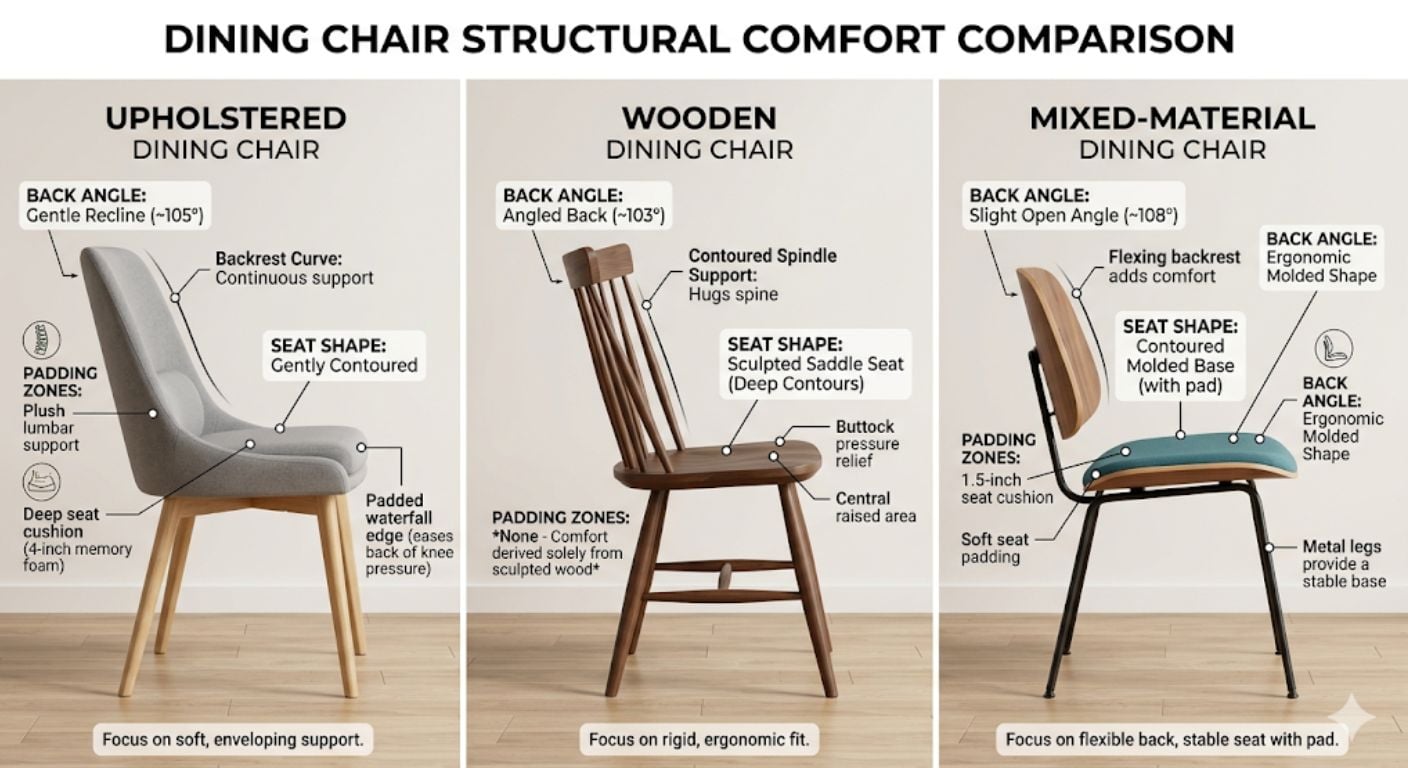
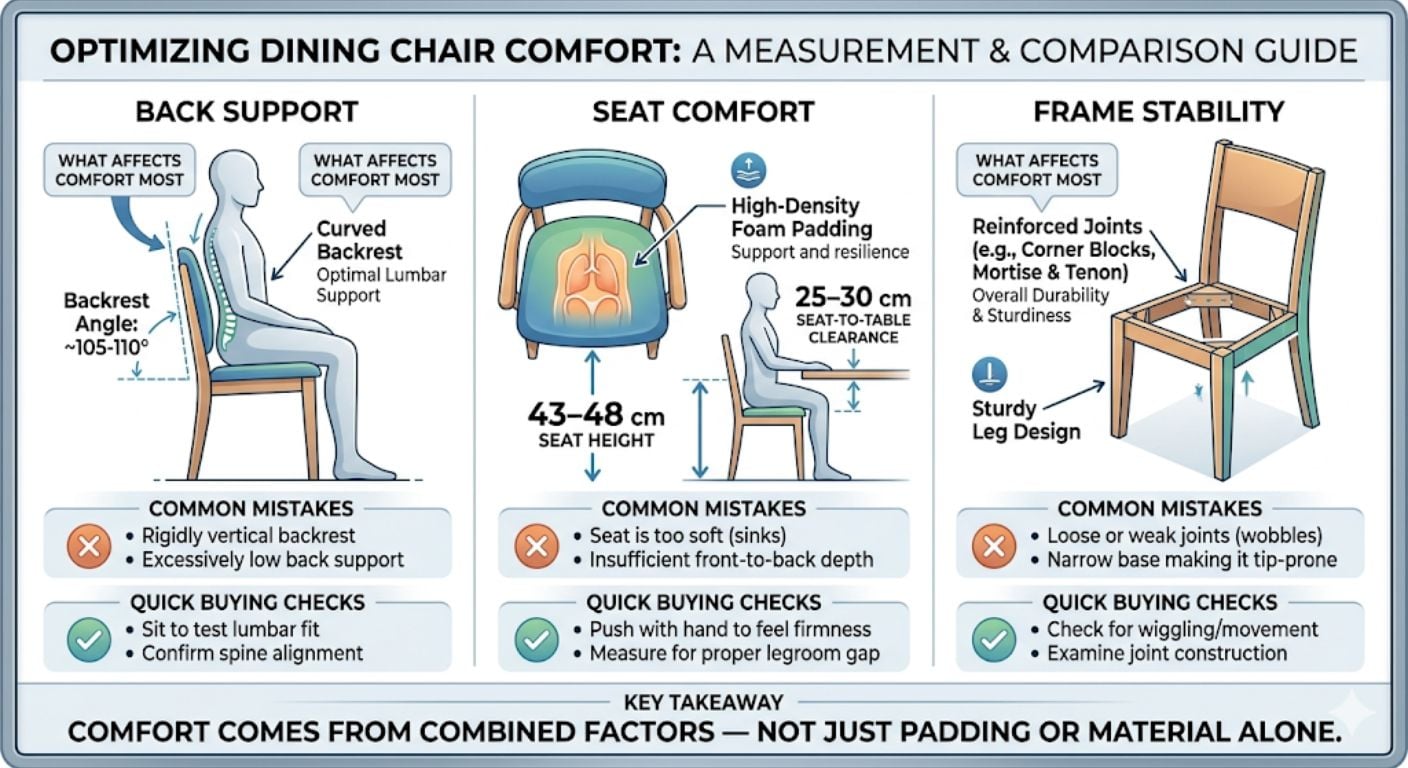
Back shape has more impact on comfort than padding alone. A well-shaped back supports your spine naturally and reduces strain during longer sitting periods.
Look for a chair with a slight backward angle rather than a completely upright back. A subtle curve can also make a noticeable difference, especially around the lower and middle back.
One thing we see with our customers is that chairs that feel fine for 10 minutes often become uncomfortable after 30–40 minutes if the back is too upright.
Seat comfort: padding, shape, and support
Seat comfort usually comes from either upholstery, contouring, or a combination of both. Padding gives a softer initial feel, but seat shape controls how weight is distributed.
Upholstered seats
Upholstered seats usually feel softer and are often better for longer sitting. They reduce pressure points and suit homes where the dining area is used regularly, not just occasionally.
- Best for: longer meals and everyday comfort.
- Watch for: fabric care, marks, and foam compression over time.
Solid or lightly padded seats
Solid or lightly padded seats are easier to maintain and often feel more durable. Their comfort depends more heavily on shape. A flat wooden seat can feel firm, while a shaped or scooped seat gives better support.
- Best for: easy cleaning and durability.
- Watch for: flat seats that become uncomfortable over longer use.
Does a scooped seat make a chair more comfortable?
Yes, a lightly scooped or shaped seat can make a dining chair more comfortable because it spreads body weight more evenly. It reduces pressure under the hips compared with a completely flat seat. This is especially useful on wooden or non-upholstered chairs.
A scooped seat is not essential on a deeply padded chair, but it is a useful feature when the seat has little or no cushioning.
Seat depth affects comfort more than people expect
Seat depth controls how your legs and back are supported. If the seat is too shallow, you may feel perched on the edge. If it is too deep, the front edge can press into the back of your knees.
A comfortable seat depth should allow you to:
- sit back against the backrest naturally;
- keep your feet flat on the floor;
- leave a small gap behind the knees;
- move without feeling restricted.
For a wider breakdown of how chair dimensions affect fit, see our dining chair sizing guide.
Fit still affects comfort
Even though this guide focuses on comfort, chair fit still matters. A chair can have a supportive back and soft seat, but if it sits too close to the tabletop, it will not feel comfortable in use.
As a simple rule, allow around 25–30 cm between the top of the seat and the underside or top working area of the table. This gives enough room for knees and natural movement.
You should also check that the chair can move in and out easily without catching on table legs, aprons, or nearby furniture.
Upholstered vs wooden dining chairs
The right choice depends on how the chairs will be used. Upholstered chairs usually win on softness. Wooden or mixed-material chairs usually win on maintenance and durability.
| Factor | Upholstered chairs | Wooden or non-upholstered chairs |
|---|---|---|
| Comfort | Softer and better for longer sitting | Depends heavily on shape and contour |
| Maintenance | Needs more care around spills and marks | Usually easier to wipe clean |
| Durability | Depends on fabric and foam quality | Often strong for busy daily use |
| Best suited to | Longer meals and comfort-focused homes | Family dining, easy cleaning, and frequent use |
For homes with children, pets, or frequent mealtimes, this becomes a practical decision as much as a comfort decision. The Furniture Industry Research Association provides guidance around furniture testing and durability, which can be useful when comparing quality claims.
How to tell if a dining chair is good quality
A good quality dining chair should feel stable, balanced, and solid when you sit on it. It should not wobble, creak, or flex when weight shifts. Comfort will not last if the frame starts to loosen or the upholstery begins to fail quickly.
Use these checks before buying:
- Wobble test: the chair should sit flat and stable.
- Frame check: avoid chairs that feel unusually light or flimsy.
- Joint check: look for reinforced corners or visible build quality.
- Upholstery check: stitching should be even and secure.
- Comfort check: the seat should support rather than collapse.
When to choose a comfort-focused dining chair
A comfort-focused chair makes sense when the dining area is used often, meals last longer, or the same chairs are used for working, reading, or family time.
It is especially worth considering if you want:
- better support during longer meals;
- a softer seat for everyday use;
- a chair that feels more substantial;
- less pressure on the hips and lower back.
You can view comfort-led options in our comfortable dining chairs range.
When to avoid softer dining chairs
Softer does not always mean better. A very soft chair can feel comfortable at first but may lack support if the foam compresses too much or the backrest is poorly shaped.
Avoid chairs where:
- the back is flat and upright;
- the seat sinks too much;
- the frame feels unstable;
- the material is not practical for the household;
- the chair does not fit properly under the table.
If space is tight, it is also worth reading our guide to choosing dining chairs for compact spaces, as comfort can be affected by clearance and movement around the table.
Frequently asked questions
What is the standard seat height for a dining chair?
Most dining chairs have a seat height of around 43–48 cm. This usually allows enough space between the chair and table for comfortable leg positioning. If the gap is too tight, movement becomes restricted and the chair can feel uncomfortable even if the seat itself is well padded.
What matters more for comfort: padding or back shape?
Back shape usually matters more. Padding improves softness, but a poorly shaped backrest will still feel uncomfortable over time. The best result comes from combining supportive back shape, moderate cushioning, and a stable frame.
Are upholstered dining chairs better for long sitting?
Upholstered dining chairs are usually better for longer sitting because they reduce pressure points and feel softer. However, the quality of the foam and the support of the backrest matter just as much as the fabric covering.
Is a wooden dining chair comfortable enough for daily use?
A wooden dining chair can be comfortable if the seat is shaped and the back gives enough support. Flat wooden seats tend to feel firmer over time, so a scooped seat or separate cushion can make a noticeable difference.
How can I tell if a dining chair is good quality?
Check whether the chair feels stable, balanced, and solid. It should not wobble, flex, or creak when you sit down. Also look at the stitching, frame weight, joint strength, and how well the seat keeps its shape.
-
-
-
-
-
-
-
-
-
-
-
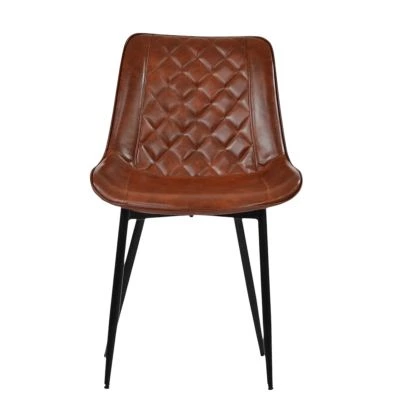
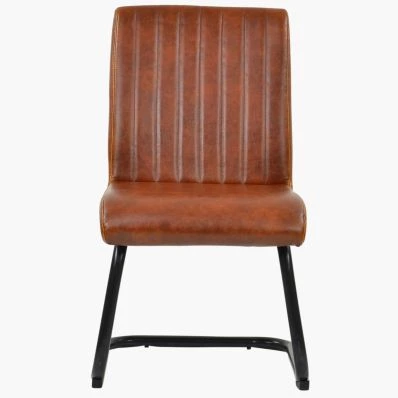
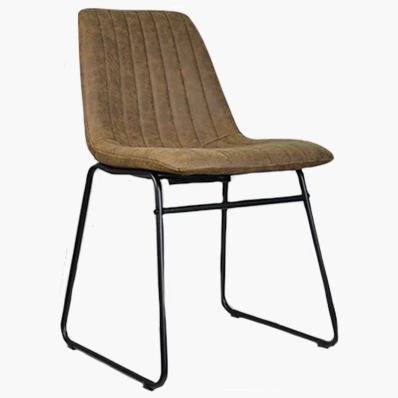 Plato Dining Chair in Aged Brown LeatherSpecial Price £49.99 Regular Price £89.99 Original price 44% Inc VATSaving £40
 -
Final thoughts
A comfortable dining chair is not just a padded chair. It needs the right support, a suitable seat shape, enough room to sit naturally, and a frame that stays stable over time.
If the chair supports your back, distributes weight evenly, and fits your table properly, it is far more likely to stay comfortable in daily use.


Comments