
 Chat with us on WhatsApp

What Height Should a Dressing Table Chair Be? Complete Guide
Choosing the correct dressing table chair height is mainly about fit, posture, and usable clearance. A chair that is too high forces your shoulders upward and reduces legroom. A chair that is too low causes leaning, poor posture, and awkward mirror positioning. Most sizing problems come from buyers focusing on appearance before measurements.
The correct setup depends on three measurements working together:
- Dressing table height
- Chair seat height
- Clearance gap between the seat and tabletop
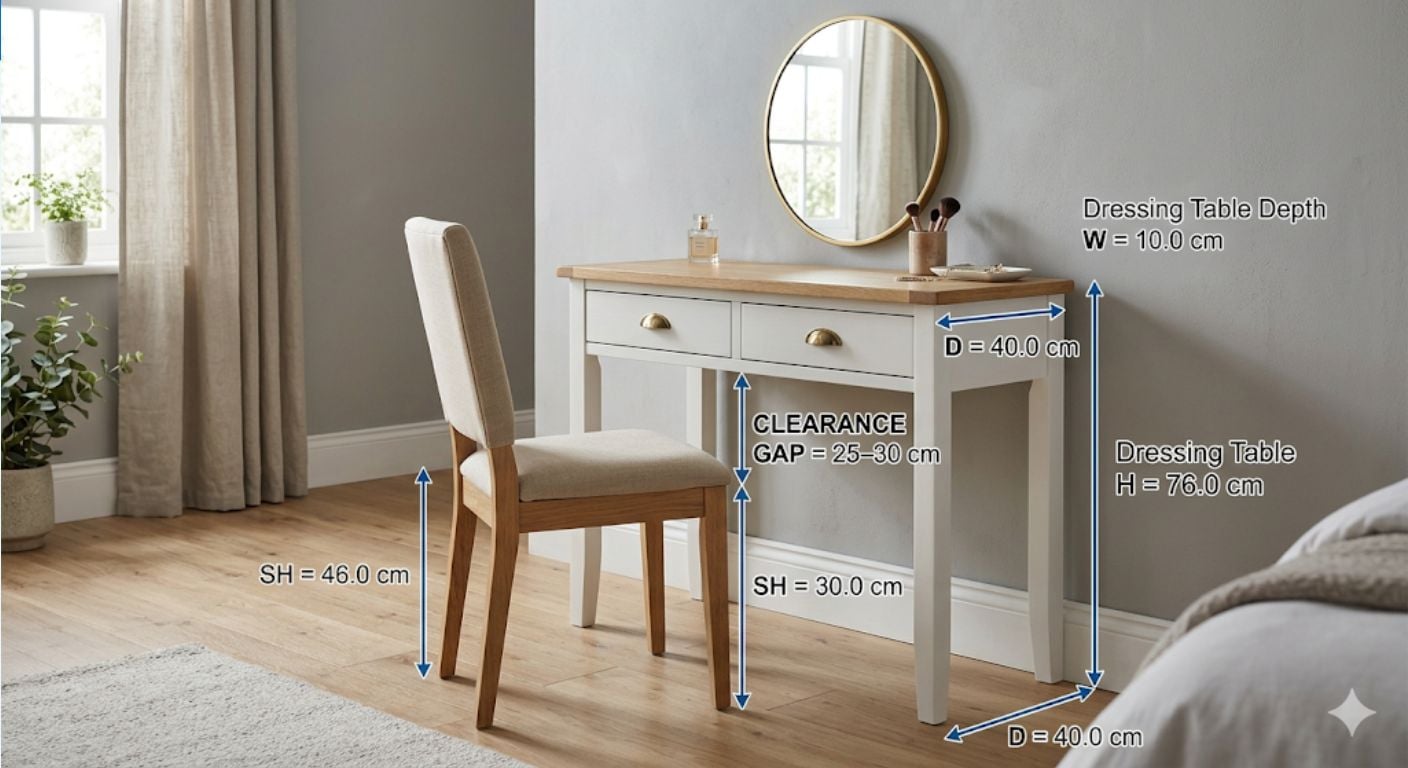
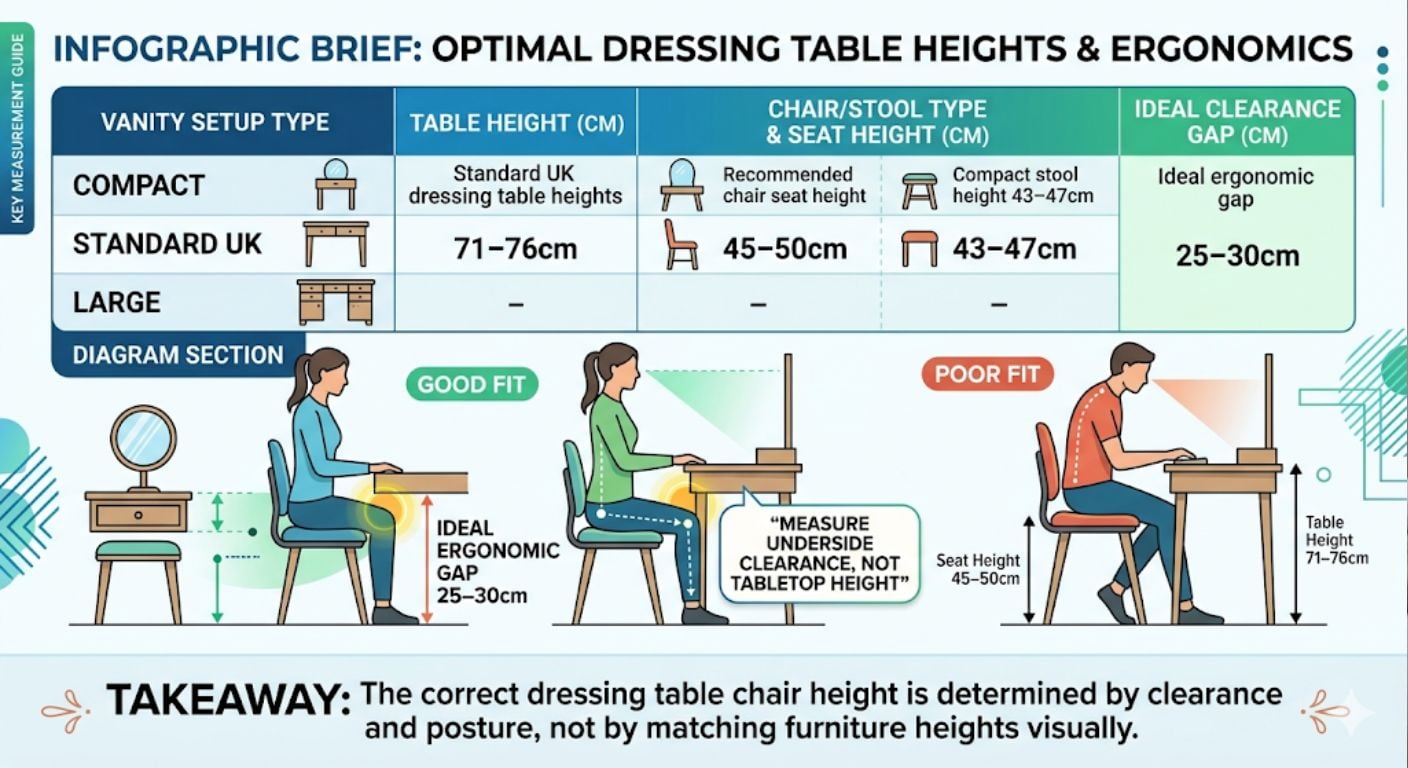
Most dressing tables in the UK sit between 71–76cm high, while most dressing table chairs work best with seat heights between 45–50cm. The ideal gap between the chair seat and underside of the tabletop is usually 25–30cm.
This guide explains standard dressing table chair dimensions, how to measure your setup correctly, seat-to-table clearance rules, when to choose adjustable chairs, how small bedrooms change sizing decisions, and common buying mistakes that lead to discomfort or returns.
If you are browsing seating options while measuring, Lakeland’s dressing table chairs collection includes compact chairs designed specifically for bedroom vanity and dressing table use.
What Height Should a Dressing Table Chair Be?
Most dressing table chairs should have a seat height between 45–50cm. This works with the standard UK dressing table height range of 71–76cm and creates a comfortable clearance gap of approximately 25–30cm between the seat and tabletop.
The goal is not matching heights directly. The important measurement is the usable sitting position once your legs fit comfortably underneath the table.
| Dressing Table Height | Recommended Chair Seat Height | Ideal Clearance Gap |
|---|---|---|
| 71cm | 43–46cm | 25–28cm |
| 73cm | 45–48cm | 25–28cm |
| 75cm | 46–49cm | 26–30cm |
| 76cm | 47–50cm | 26–30cm |
For most people, a clearance gap smaller than 24cm feels cramped. More than 32cm often feels too low unless the chair has height adjustment.
Why Seat-to-Table Clearance Matters More Than Overall Height
The standard ergonomic gap between a dressing table chair seat and the table surface is 10 to 12 inches, or 25 to 30cm.
Many buyers only compare total table height against total chair height. That usually creates problems because upholstery thickness and frame shape change the real sitting position.
What actually affects comfort:
- Thigh clearance
- Arm position
- Shoulder position while seated
- Mirror viewing angle
- Ability to tuck fully underneath the table
For example, a padded chair with a listed seat height of 47cm may compress to 45cm when seated. Thick apron rails underneath dressing tables can reduce usable legroom by 2–4cm. Curved table frames sometimes restrict knee space more than expected.
This is why measurements should always be taken from floor to top of seat cushion and from floor to underside of tabletop, not just total furniture height.
One thing we regularly see from our customers is that deeply padded seats often feel lower after a few weeks of use than they did on day one, especially with softer velvet upholstery.
Standard UK Dressing Table Dimensions
Most UK dressing tables follow similar dimensional ranges.
| Component | Typical UK Size |
|---|---|
| Dressing table height | 71–76cm |
| Dressing table depth | 40–50cm |
| Dressing table width | 80–140cm |
| Dressing table chair height | 45–50cm |
| Compact stool height | 43–47cm |
Depth matters because shallow dressing tables reduce knee clearance if the chair arms project outward.
Smaller dressing tables often work better with:
- Armless chairs
- Compact tub chairs
- Backless stools
- Narrow framed seating
The UK Health and Safety Executive also provides guidance on comfortable seated posture and adequate leg clearance for regular seated use: HSE display screen equipment guidance.
How to Measure Dressing Table Chair Height Correctly
1. Measure the underside of the dressing table
Measure from the floor to the underside of the tabletop, not the visible top surface. This identifies the true usable clearance.
2. Subtract 25–30cm
This creates the target seat height range. For example, if the underside height is 74cm, subtracting 27cm gives an ideal chair height of approximately 47cm.
3. Account for seat compression
Soft upholstery compresses during use. Velvet, boucle, and foam-padded seats may lower by 1–3cm when occupied. Firm seats maintain height more consistently.
4. Check arm clearance
Armrests frequently collide with dressing table aprons and drawer rails. If the chair arms sit above the underside height, the chair may not tuck underneath fully.
5. Test mirror alignment
Your eye level should naturally align with the centre third of the mirror while sitting upright. If you lean forward constantly, the chair is usually too low.
What Is the Best Chair Height for Different Dressing Table Types?
Compact Dressing Tables
Small dressing tables usually work best with seat heights around 43–46cm, narrow chair widths, and armless designs. Large statement chairs often overpower compact bedroom layouts.
Standard Bedroom Dressing Tables
Most standard setups work best with a 45–49cm seat height, medium cushioning, and back support for longer seated use. This is the most common sizing category.
Large Vanity Stations
Larger vanity units with deeper tabletops may suit wider chairs, slightly taller seating, or adjustable height mechanisms. This is particularly useful where makeup mirrors or storage towers increase overall table height.
Multi-Use Dressing Tables and Desks
If the dressing table also functions as a work desk, prioritise back support, use ergonomic seat depth, and maintain proper elbow height. In these situations, adjustable office-style seating sometimes performs better than fixed-height vanity stools.
This becomes even more important when the space is used by children or teenagers for homework, gaming, or studying as well as getting ready. Younger users benefit from seating that can adapt as they grow, helping maintain a comfortable relationship between the chair, desk surface, and screen or mirror. If you are choosing seating for a younger family member, see our guide to Kids Desk Chairs, which explains chair height, adjustability, posture support, and the safety features worth looking for before buying.
Dressing Table Chair Types and Their Typical Heights
| Chair Type | Typical Seat Height | Best Use |
|---|---|---|
| Compact vanity chair | 45–48cm | Standard dressing tables |
| Upholstered tub chair | 46–50cm | Larger dressing tables |
| Backless stool | 43–47cm | Tight spaces |
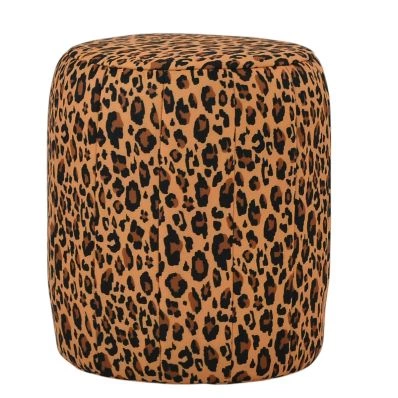
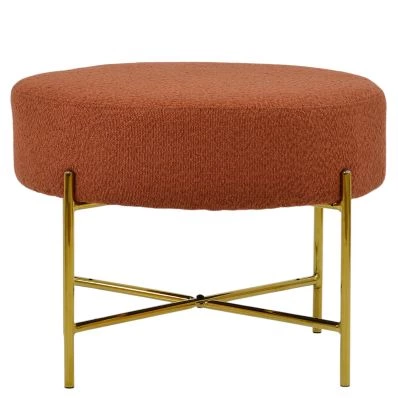
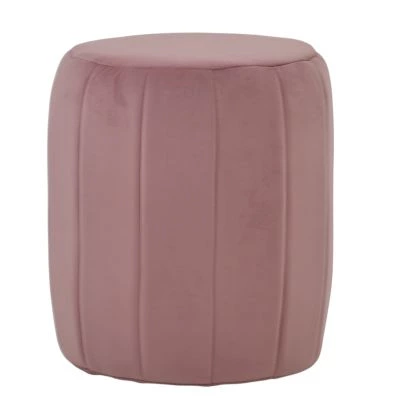
| Storage ottoman stool | 44–48cm | Small bedrooms |
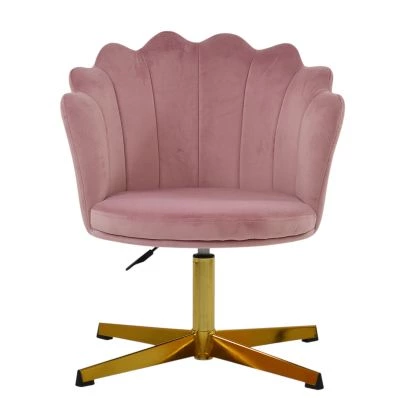
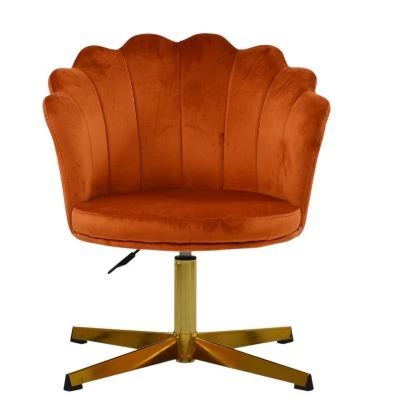
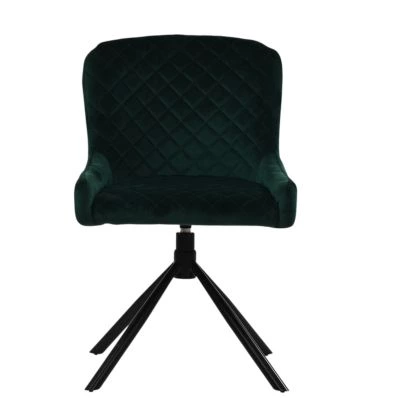
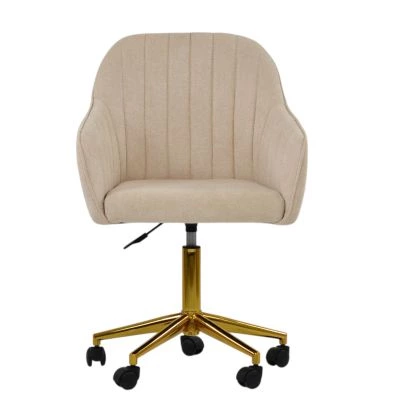
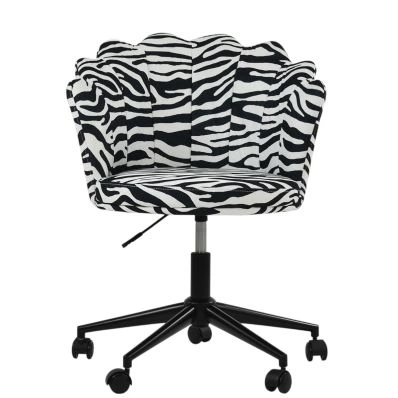
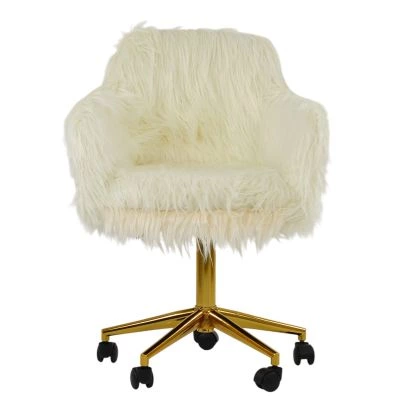
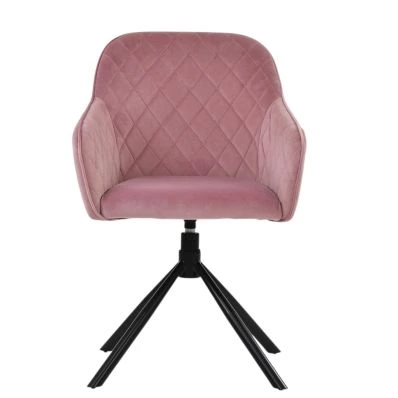
| Adjustable swivel chair | 45–55cm | Shared setups |
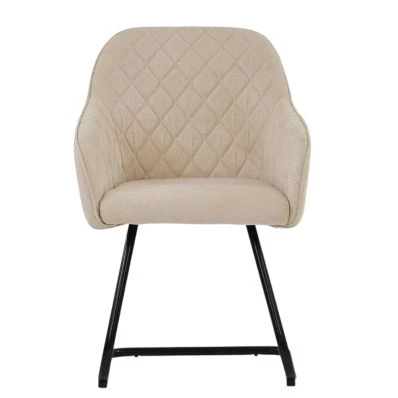
| Dining-style chair | 46–49cm | Larger bedroom furniture |
Should a Dressing Table Chair Have a Backrest?
Yes in most cases. A backrest improves posture, comfort, and sitting stability, especially for longer grooming or makeup routines. Backless stools save space but are usually less comfortable during extended use.
Choose a backed chair if:
- You spend more than 15–20 minutes seated regularly
- You use mirrors for makeup application
- You experience neck or lower back discomfort
- The dressing table doubles as a desk
Choose a stool if:
- Space is extremely limited
- The chair needs to tuck fully underneath
- Use is occasional and short duration
Low curved backs usually provide the best compromise between support and compact sizing.
Are Adjustable Height Dressing Table Chairs Worth It?
Adjustable height chairs are useful when multiple people use the same dressing table, when table height falls outside standard ranges, when the chair is shared between desk and vanity use, or when exact ergonomic positioning matters.
Gas-lift adjustment systems help compensate for thick carpets, cushion compression, and different user heights.
Swivel functionality also improves movement in tight layouts because the chair can rotate without pulling fully away from the table.
The trade-off is usually a larger base, a more visible mechanism, and reduced ability to tuck neatly underneath.
How Bedroom Size Changes Dressing Table Chair Choice
In small bedrooms, chair dimensions matter just as much as chair height. Oversized chairs create restricted walking space, visual crowding, drawer access problems, and awkward circulation routes.
For smaller rooms:
- Keep chair width below 55cm where possible
- Avoid oversized armrests
- Use lighter visual profiles
- Prioritise tuck-under clearance
Storage stools can work well because they combine seating with concealed storage for hair tools, cosmetics, or accessories.
Common Dressing Table Chair Height Mistakes
Buying based on appearance only
A visually attractive chair becomes frustrating quickly if the seat height is wrong.
Ignoring underside clearance
Decorative rails and drawers often reduce usable space underneath the table.
Choosing chairs with oversized arms
Armrests are one of the biggest causes of compatibility problems.
Forgetting seat compression
Soft upholstery changes effective height during use.
Using dining chairs without checking proportions
Standard dining chairs sometimes fit the height correctly but look oversized beside compact dressing tables.
Choosing extremely low stools
Very low seating forces leaning and upward shoulder positioning. This becomes uncomfortable surprisingly quickly during daily use.
Dressing Table Chair Buying Checklist
- Measure underside clearance: use the underside height, not the tabletop height.
- Maintain a 25–30cm gap: this is the safest ergonomic range for most users.
- Check chair width: ensure the chair fits comfortably between dressing table legs or drawer units.
- Consider upholstery compression: soft seats may reduce usable height over time.
- Check whether arms fit underneath: do not assume armrests will clear the table.
- Decide whether back support matters: longer seated use usually benefits from a backrest.
- Match room size realistically: compact rooms generally suit smaller seating footprints.
If you are still comparing styles and formats, Lakeland’s dressing table seating range includes compact upholstered chairs, stools, and vanity seating designed around standard UK dressing table dimensions.
Frequently Asked Questions
What is the standard dressing table stool height UK?
Most dressing table stools in the UK sit between 45–50cm high. Compact stools may be slightly lower at around 43–47cm. The correct height depends on maintaining roughly 25–30cm clearance between the seat and the underside of the dressing table.
How do I match chair height to a vanity table?
Measure from the floor to the underside of the dressing table, then subtract 25–30cm. The remaining figure gives the recommended chair seat height. This creates enough legroom while keeping your arms and shoulders in a comfortable position.
Can I use a dining chair as a dressing table chair?
Yes, sometimes. Most dining chairs fall within the correct height range, but many are visually larger and wider than vanity seating. Armrests and deep seats can also reduce usability in smaller bedroom layouts.
Should a dressing table chair tuck fully underneath?
Usually yes. Chairs that tuck underneath save space and improve movement around the room. This matters especially in smaller bedrooms where circulation space is limited.
Is a backless stool bad for posture?
Not necessarily, but backed chairs usually provide better long-term comfort and support. Backless stools work best for occasional use or compact rooms where space-saving matters more than extended seated comfort.
What is the ideal gap between a dressing table and chair?
The recommended ergonomic gap between the seat and tabletop is usually 25–30cm. Less than this often feels cramped. More than around 32cm can make the table feel awkwardly high.
Are adjustable vanity chairs better?
Adjustable chairs help when multiple people share the same dressing table or when the table height is non-standard. They are also useful for users who want more precise posture adjustment.
Do soft seats affect chair height?
Yes. Plush upholstery compresses during use, which lowers the effective sitting height slightly. Very soft cushions can reduce usable height by 1–3cm over time.
Summary: Dressing Table Chair Height Rules
Quick Measurement Rules
- Most dressing tables: 71–76cm high
- Most dressing table chairs: 45–50cm seat height
- Ideal seat-to-table clearance: 25–30cm
- Compact stools: typically 43–47cm high
Common Buying Mistakes
- Measuring tabletop instead of underside clearance
- Ignoring armrest height
- Choosing oversized dining chairs
- Forgetting upholstery compression
- Prioritising appearance over fit
Decision Shortcuts
- If your room is small, choose compact armless seating
- If comfort matters, use a backed chair
- If multiple people share the table, consider adjustable height
- If the chair must disappear visually, use a tuck-under stool
For buyers comparing sizes, shapes, and layouts, Lakeland’s dressing table chair collection focuses on compact bedroom-friendly seating designed around standard UK dressing table dimensions.


Comments