
 Chat with us on WhatsApp

Which Bar Stools Are Best For Kitchen Islands?
Kitchen islands are used differently from traditional breakfast bars, which means the right seating choice depends on more than appearance alone. Some islands are used for quick meals and morning coffee, while others double as workspaces, homework areas, or social seating during entertaining. The best bar stools for kitchen islands are the ones that fit the island height correctly, leave enough legroom, and suit how the space is actually used day to day.
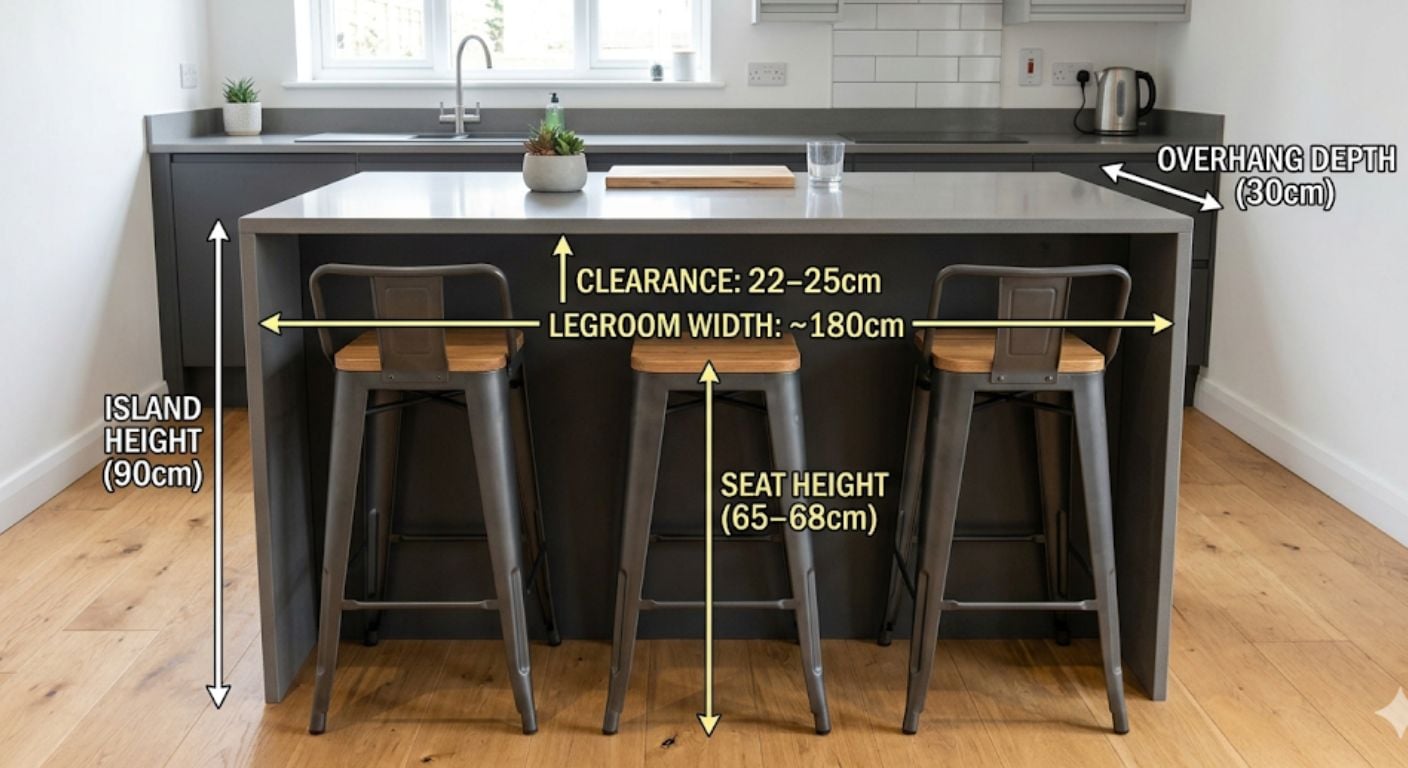
Most UK kitchen islands sit around 90cm high, which usually means a counter-height stool with a 65–68cm seat height is the correct fit. Taller raised islands or split-level breakfast bars often need bar-height seating instead. If you are unsure about sizing, our bar stool size guide explains the key measurements in more detail.
Start With Kitchen Island Height
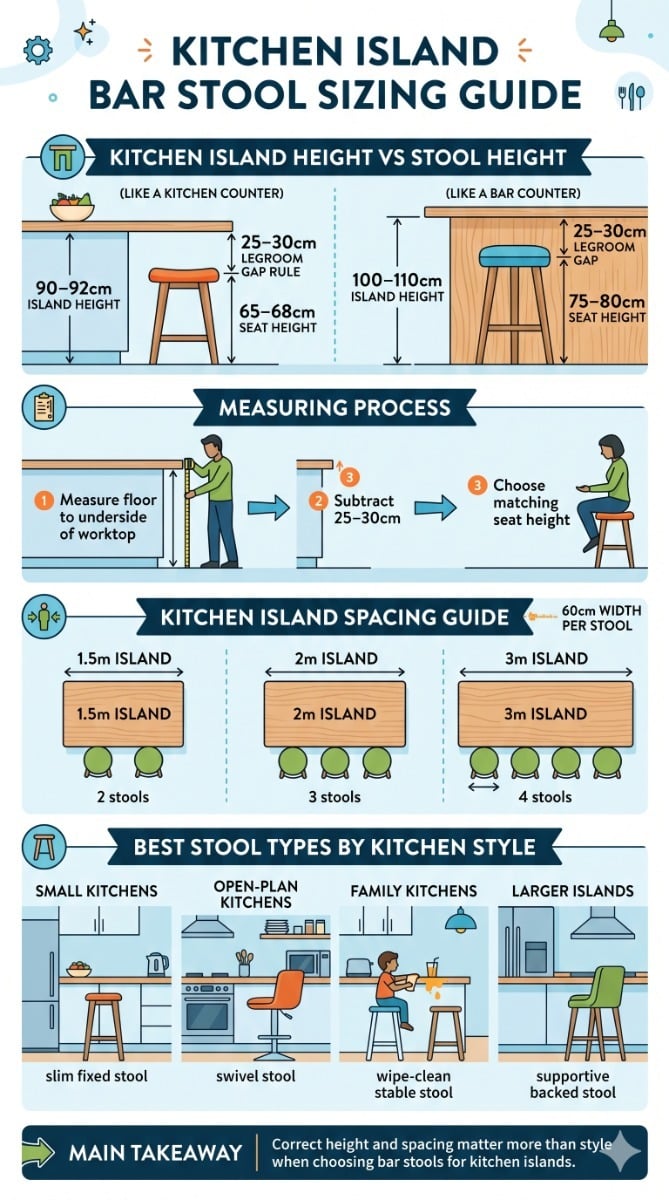
For a standard UK kitchen island measuring around 90–92cm high, choose a stool with a seat height between 65cm and 68cm. This normally leaves a comfortable 25–30cm gap between the seat and the underside of the worktop.
The most common mistake is measuring to the top of the work surface instead of the underside. The underside measurement determines actual legroom.
Typical Kitchen Island Height Guide
| Island Height | Recommended Seat Height | Stool Type |
|---|---|---|
| 88–92cm | 65–68cm | Counter-height stool |
| 100–110cm | 75–80cm | Bar-height stool |
| 110cm+ | 80cm+ | Extra-tall stool |
The difference between counter stools and bar stools becomes important here because many products are labelled differently between retailers.
For additional ergonomic guidance, the Chartered Institute of Ergonomics and Human Factors provides useful information on seating posture and comfort.
Fixed Height or Adjustable Stools?
Fixed-height stools work well when the island height is standard and unlikely to change. They usually feel more stable under regular daily use and often tuck more neatly underneath the worktop.
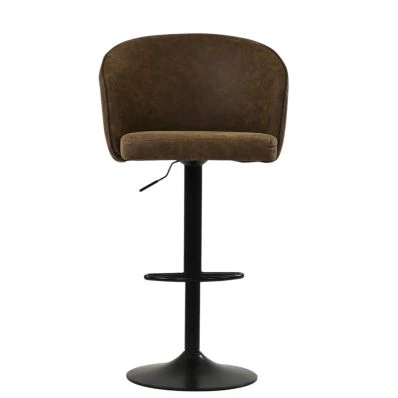
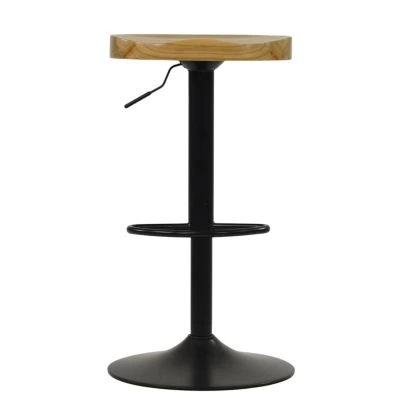
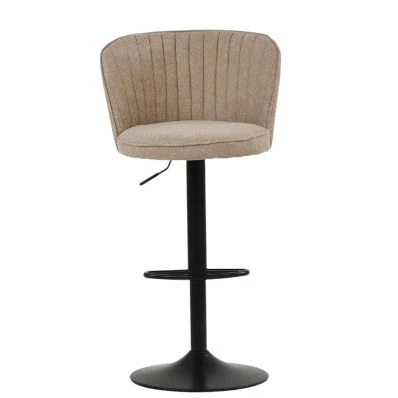
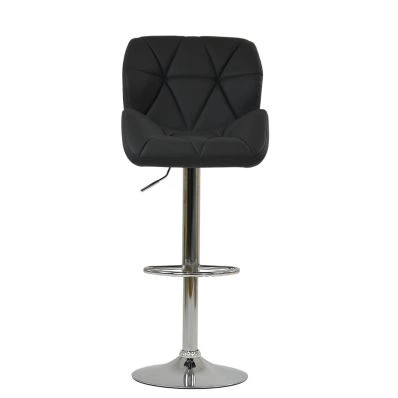
Adjustable stools are more flexible in households where multiple people use the kitchen island regularly. Gas-lift designs can also help when island heights sit between standard measurements.
Fixed Height Stools Work Best When:
- The island height is standard
- You want a cleaner, more uniform look
- The stools need to tuck fully underneath
- The seating is used daily for meals
Adjustable Stools Work Best When:
- Different people use the stools regularly
- The island height is slightly unusual
- The stools are used for both dining and socialising
- You want flexibility for future kitchen changes
One thing we see regularly is customers focusing heavily on upholstery while overlooking seat height flexibility. In practice, height compatibility usually affects day-to-day comfort far more than fabric choice.
Swivel or Static Bases?
Swivel stools are useful around kitchen islands because they make it easier to get on and off the stool without dragging the base across the floor. This matters most in tighter kitchens where walkways sit close behind the seating area.
Static stools generally feel more grounded and can suit islands used mainly for dining rather than social seating.
Our separate guide on swivel vs fixed bar stools covers the mechanical differences in more detail, but for kitchen islands specifically, swivel stools tend to suit open-plan layouts better.
Swivel Stools Usually Suit:
- Open-plan kitchens
- Entertaining spaces
- Tighter access areas
- Family kitchens with frequent movement
Static Stools Usually Suit:
- Minimal movement around the island
- More formal dining layouts
- Simpler fixed-height designs
- Smaller islands where alignment matters
What Type Of Back Support Works Best?
The right back support depends mostly on how long people stay seated at the island. Full-back stools are generally more comfortable for extended sitting, while lower-profile designs help maintain clearer sightlines across the kitchen.
If the island is used mainly for quick meals or occasional seating, compact low-back designs often balance comfort and space efficiency well.
For households using the island as a workspace or homework area, supportive backs become more important.
The full comparison between backed and backless seating is covered in our guide to bar stools with backs vs backless bar stools.
Which Materials Work Best In Kitchens?
Kitchen islands are high-contact areas, so practicality matters as much as appearance. Materials that work well in dining rooms do not always perform as well around food preparation spaces.
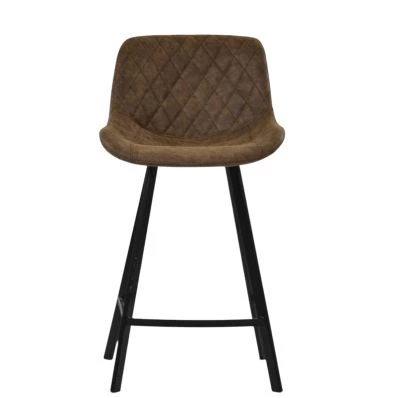
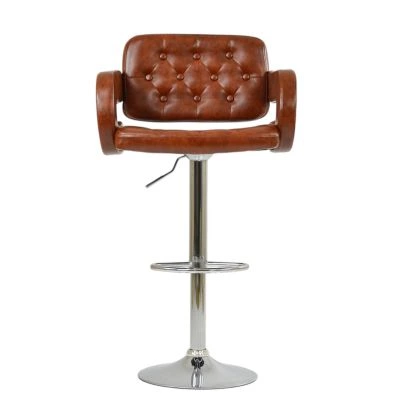
Faux Leather
- Easy to wipe clean
- Works well in family kitchens
- Lower maintenance than fabric
- Usually available across both modern and traditional styles
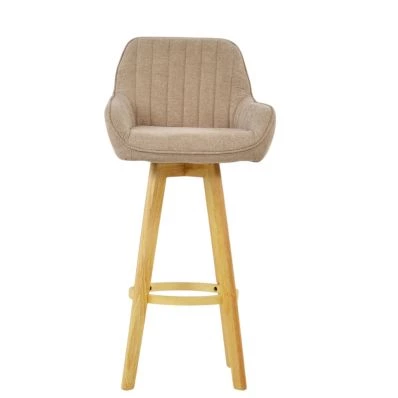
Fabric Upholstery
- Softer seating feel
- Works well in quieter kitchens
- Better for long sitting sessions
- Needs more regular cleaning
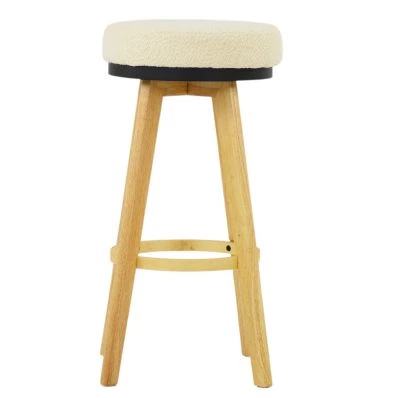
Wood And Metal Combinations
- Often durable under heavy use
- Suitable for compact kitchens
- Usually lighter visually
- Less padded comfort
If young children use the island regularly, wipe-clean upholstery and stable base designs generally perform better over time.
How Many Stools Fit Around A Kitchen Island?
Allow roughly 60cm of width per stool for comfortable everyday seating. This helps avoid elbows clashing and leaves enough room for getting on and off the stools comfortably.
Quick Kitchen Island Spacing Guide
- 1.5 metre island: usually 2 stools
- 2 metre island: usually 3 stools
- 3 metre island: usually 4 stools
If the stools have arms or wider seats, additional spacing may be necessary.
Our dedicated kitchen island stool spacing guide explains spacing and overhang requirements in more detail.
Best Bar Stool Choices By Kitchen Type
Small Kitchens
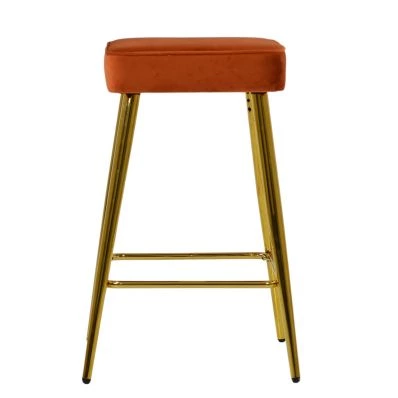
Compact fixed-height stools with slimmer frames usually work best in smaller layouts. Designs that tuck fully underneath the island help maintain walkway space.
Our guide to bar stools for small kitchens covers this in more detail.
Open-Plan Kitchens
Swivel stools with supportive backs often suit open-plan islands because the seating becomes part of the wider social space rather than purely functional dining.
Family Kitchens
Stable bases, wipe-clean materials, and supportive seating usually matter more than trend-driven finishes. Adjustable stools can also help households with mixed age groups.
Luxury Kitchen Islands
Heavier upholstered stools with supportive backs tend to suit larger islands visually and practically. Wider islands can usually accommodate more substantial frames without restricting movement.
Practical Buying Decisions
The best kitchen island stools are rarely the most visually striking option in isolation. The right choice depends on how the island is used, how much clearance is available behind the seating, and whether the stools need to tuck underneath regularly.
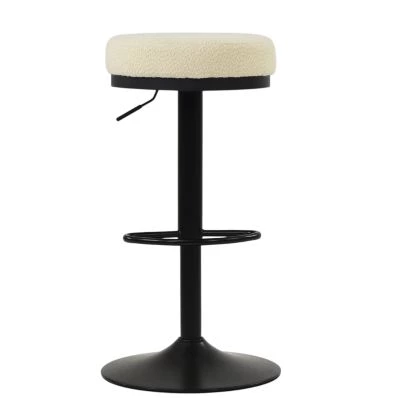
Choose supportive backed seating if the island is used for long sitting periods. Choose compact fixed-height seating if space is tighter. Adjustable swivel stools suit households needing flexibility, while fixed stools often feel more stable and structured for everyday dining.
If you are still comparing measurements, our full bar stool size guide explains seat height, clearance, spacing, and island compatibility in more detail.
Frequently Asked Questions
What height should bar stools be for a UK kitchen island?
Most UK kitchen islands are around 90–92cm high. For these, a stool with a 65–68cm seat height normally provides the correct clearance. Taller raised islands usually require bar-height stools with seat heights around 75–80cm.
How do I measure a kitchen island for seating?
Measure from the floor to the underside of the worktop rather than the top surface. Then subtract roughly 25–30cm to determine the correct seat height range for comfortable legroom.
Are swivel stools better for kitchen islands?
Swivel stools work well in kitchens where movement around the island is frequent or where space behind the seating is tighter. They make getting on and off the stool easier without dragging the base across the floor.
What material is best for family kitchen stools?
Faux leather and wipe-clean finishes usually work best for busy kitchens because they handle spills and regular cleaning more easily than softer fabrics. Stable bases are also important where children use the seating regularly.
Final Thoughts
The best bar stools for kitchen islands depend on correct sizing, comfortable clearance, and how the kitchen is actually used day to day. Height compatibility should always come first, followed by seating comfort, movement, and material practicality.
If you are comparing options across different layouts and island sizes, browse our full range of bar stools or read the complete bar stool sizing guide for more detailed measurement advice.


Comments