
 Chat with us on WhatsApp

Fix Gas Lift Bar Stool
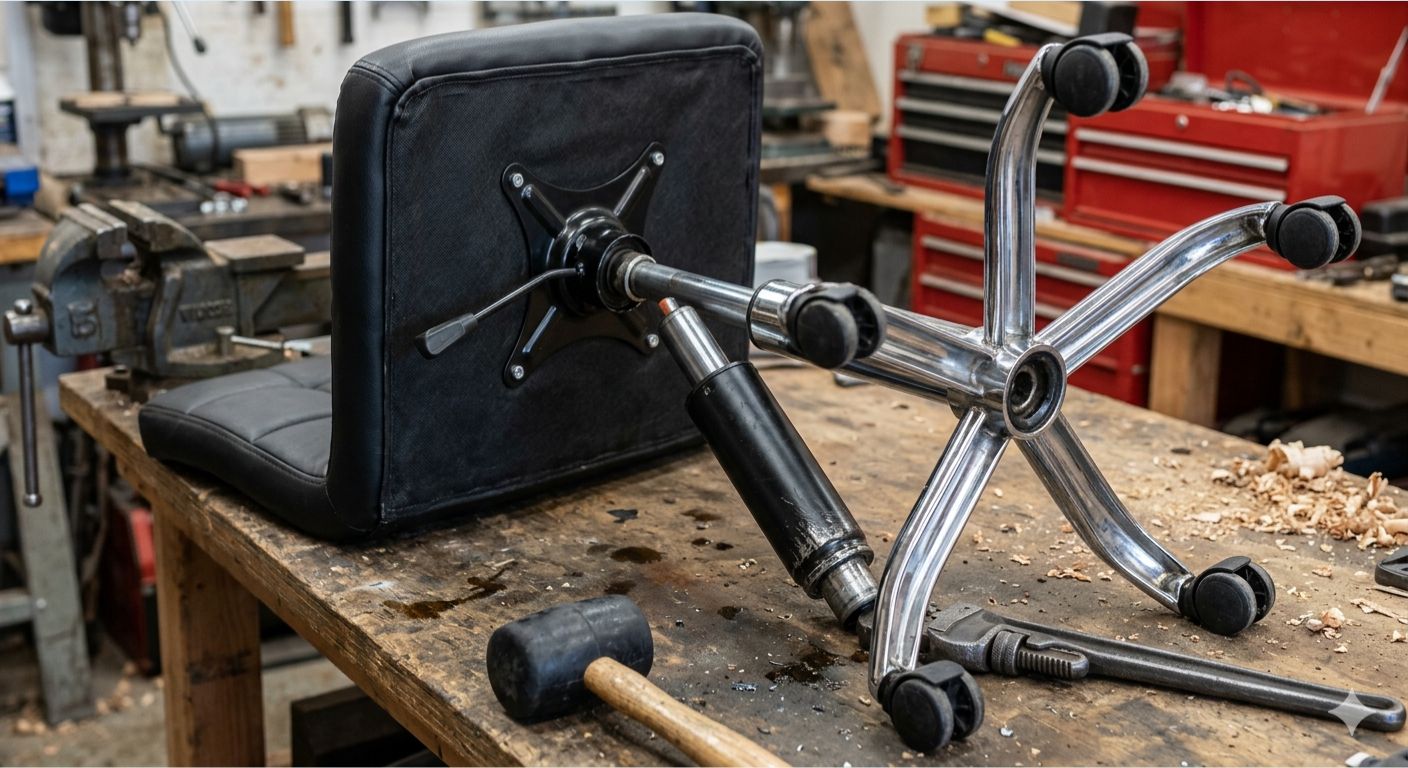
Gas lift bar stools are designed to adjust smoothly, but over time the lifting mechanism can wear out or loosen. Common problems include stools that slowly sink, refuse to move up or down, wobble around the base, or become stuck at one height. In most cases, the issue comes from the gas lift cylinder rather than the seat or frame itself.
Understanding how the mechanism works makes it easier to decide whether the stool can be repaired or whether the gas lift needs replacing. This guide explains how to diagnose common faults, remove a stuck gas lift, check compatibility sizes, and replace the cylinder safely without damaging the stool.
If you are also comparing adjustable seating options, our guide to adjustable vs fixed bar stools explains how different mechanisms affect long-term use.
How Does a Gas Lift Bar Stool Work?
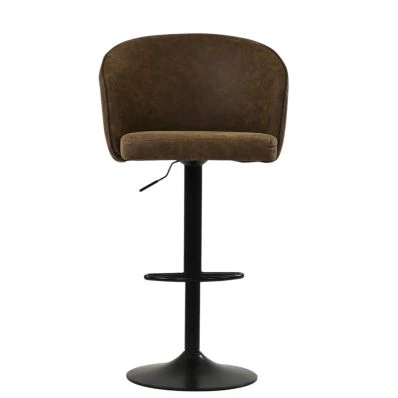
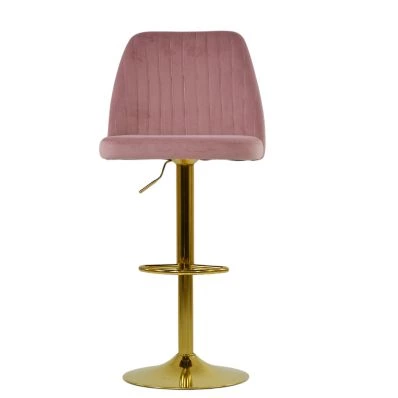
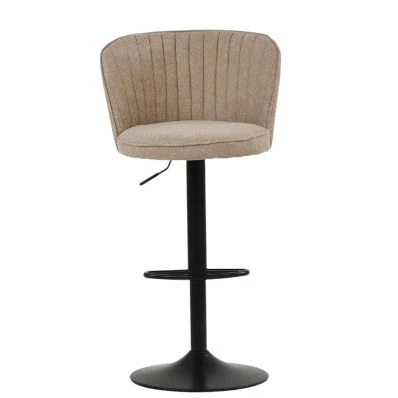
A gas lift bar stool uses a pressurised cylinder to control seat height. Inside the cylinder is compressed gas and a valve system. When the adjustment handle is pulled, the valve opens and allows the seat to move up or down depending on body weight.
The cylinder normally sits between the base and the seat frame using compression fittings rather than screws. This is why gas lifts can become difficult to remove after long periods of use.
The most common parts involved are:
- Gas lift cylinder
- Seat plate and handle mechanism
- Base column connection
- Protective outer sleeve
- Footrest support collar
Most adjustable bar stools use very similar mechanisms, even across different brands.
Why Does My Gas Lift Bar Stool Keep Sinking?
A bar stool sinks when its gas lift cylinder can no longer maintain internal pressure. This is usually caused by worn internal seals, a faulty release valve, or gradual gas leakage inside the cylinder. Once pressure is lost, the stool will slowly drop when weight is applied.
In some cases, the stool may only sink slightly at first before becoming completely unusable.
Typical causes include:
- Internal seal wear from repeated adjustment
- Gas leakage inside the cylinder
- Overloading beyond the weight rating
- Damaged release valve mechanisms
- Corrosion inside older cylinders
Most failed gas lifts cannot be permanently repaired internally. Replacing the cylinder is normally the most reliable solution.
We have found that our customers often assume the handle mechanism has failed, but in most cases the problem is actually internal pressure loss inside the cylinder itself.
How to Remove a Gas Lift From a Bar Stool
Most gas lift cylinders are held in place using tapered compression joints. They are not usually screwed in. This means the joints can seize tightly over time and require force to separate.
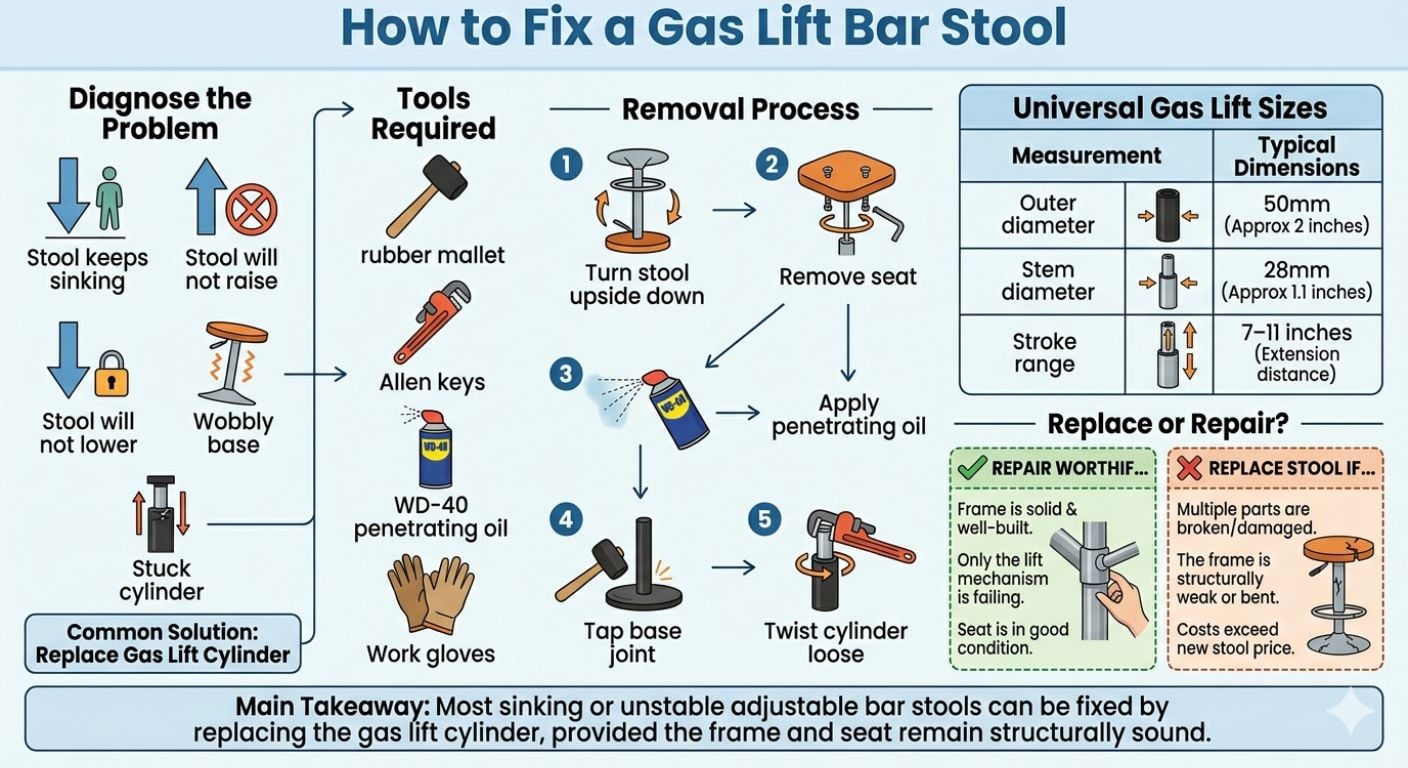
Tools You May Need
- Rubber mallet
- Pipe wrench or adjustable grips
- Allen keys
- WD-40 or penetrating oil
- Protective gloves
Step-by-Step Gas Lift Removal
- Turn the stool upside down on a protected floor surface.
- Remove the seat from the top plate if accessible.
- Apply penetrating oil around the gas lift joints.
- Use a rubber mallet to strike the base connection firmly.
- Twist the cylinder using a pipe wrench if it remains stuck.
- Separate the gas lift from both the seat plate and base.
Do not use excessive heat or attempt to cut into the cylinder. Gas lifts are pressurised components and should never be drilled or punctured.
For additional workplace seating safety guidance, the UK Health and Safety Executive provides general advice on seating equipment and maintenance.
How to Replace a Bar Stool Gas Lift Cylinder
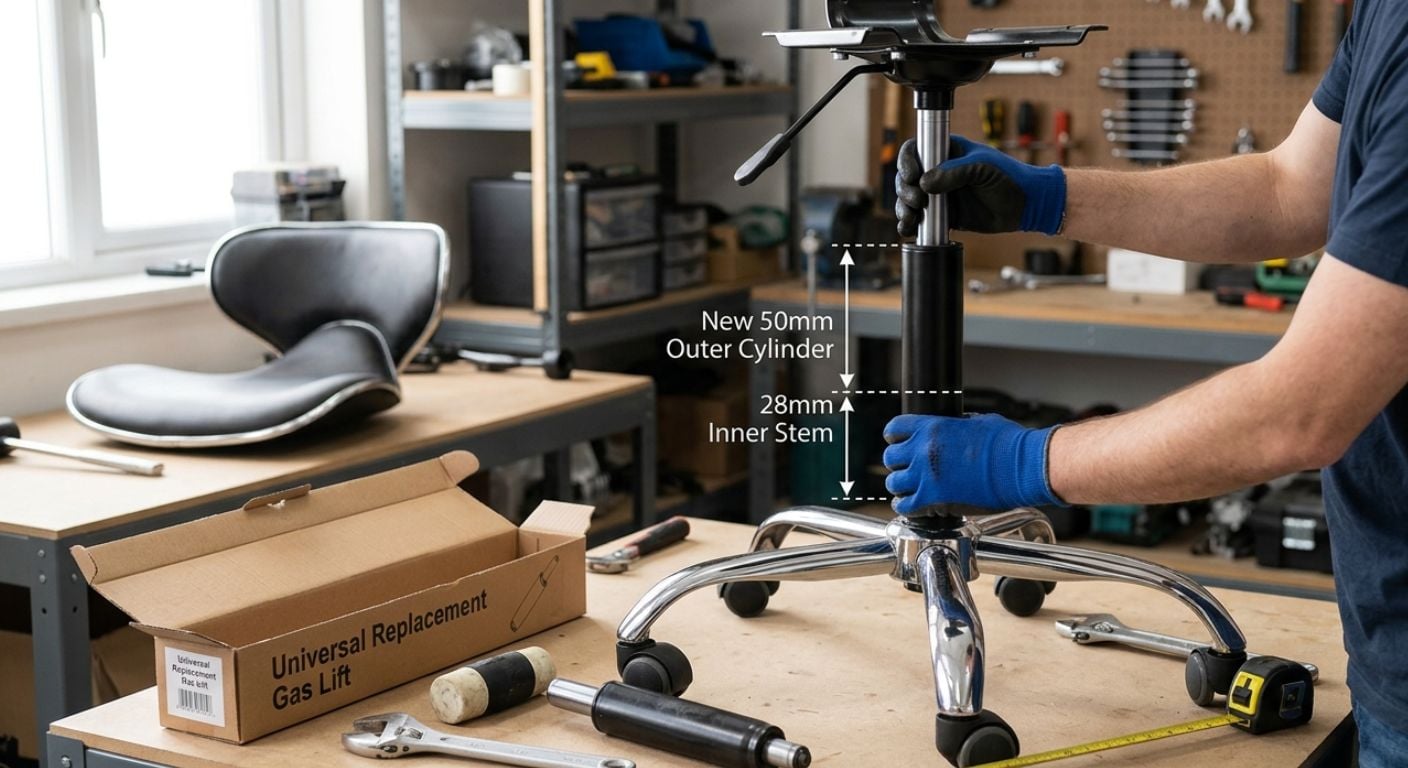
Replacing the cylinder is usually straightforward once the old gas lift has been removed.
Check Compatibility Before Ordering
Most universal replacement gas lifts follow standard sizing, but compatibility should always be checked before purchasing.
| Component | Common Universal Size |
|---|---|
| Outer cylinder diameter | 50mm |
| Inner stem diameter | 28mm |
| Typical height stroke | 7–11 inches |
Measure your existing cylinder before ordering replacement parts. Some imported stools use non-standard fittings.
Installing the New Cylinder
- Insert the new gas lift into the base.
- Lower the seat frame onto the top of the cylinder.
- Apply body weight gently to secure the compression fittings.
- Test the height adjustment mechanism several times.
The cylinder normally locks into position naturally through downward pressure during use.
If you are comparing adjustable seating with static designs, our swivel vs fixed bar stools guide explains the practical differences between moving mechanisms and fixed frames.
How to Fix a Wobbly Hydraulic Bar Stool Base
Wobbling does not always mean the gas lift has failed. In many cases, looseness develops between the base, footrest collar, or seat frame.
Check these areas first:
- Loose seat mounting bolts
- Movement between the base and cylinder
- Damaged floor protectors
- Uneven flooring
- Loose footrest connections
Turn the stool upside down and tighten all visible fixings evenly. If the wobble remains isolated around the central column, the gas lift may have worn internally and require replacement.
If your stool also creaks during movement, our guide to fixing squeaking bar stools covers noise-related faults separately.
Can You Bleed a Hydraulic Bar Stool?
Some hydraulic seating systems can trap air internally, although this is less common in standard domestic bar stools. Bleeding the mechanism involves releasing trapped pressure through the valve system while cycling the stool through its movement range.
Most domestic gas lift bar stools use sealed cylinders that are not designed for servicing. If the stool sinks, sticks, or loses pressure repeatedly, replacing the cylinder is usually safer and more reliable than attempting internal repair.
When Repairing a Gas Lift Makes Sense
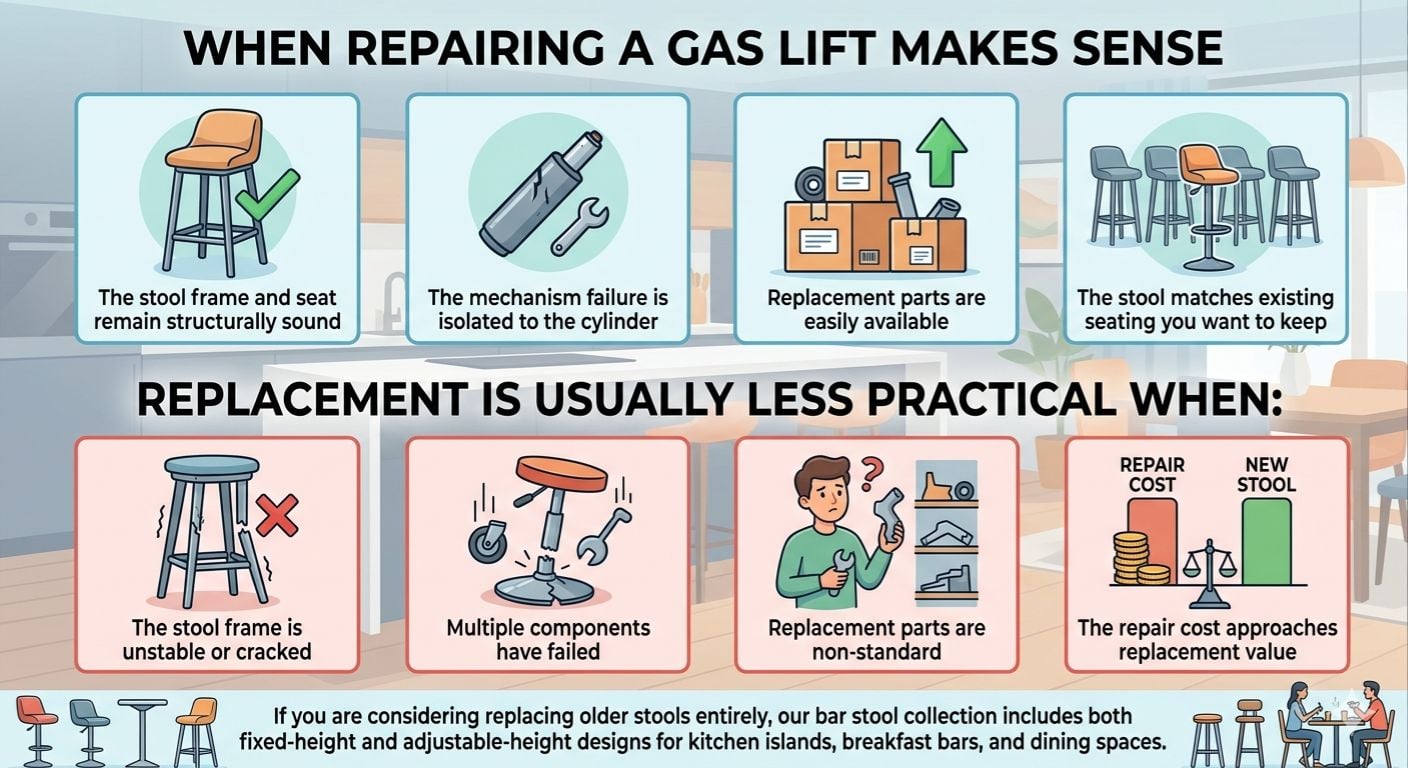
Repairing or replacing the gas lift is normally worthwhile when:
- The stool frame and seat remain structurally sound
- The mechanism failure is isolated to the cylinder
- Replacement parts are easily available
- The stool matches existing seating you want to keep
Replacement is usually less practical when:
- The stool frame is unstable or cracked
- Multiple components have failed
- Replacement parts are non-standard
- The repair cost approaches replacement value
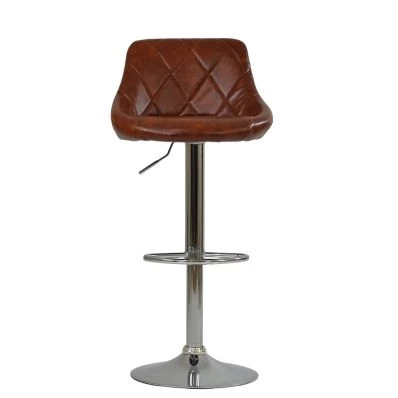
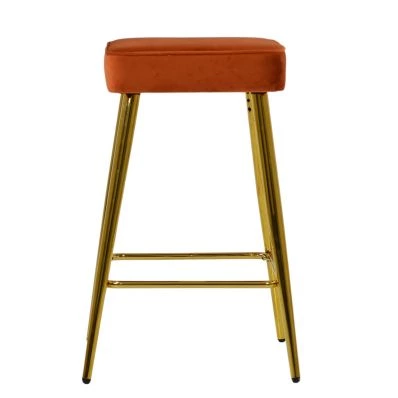
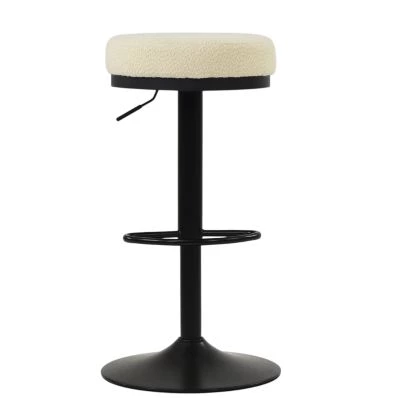
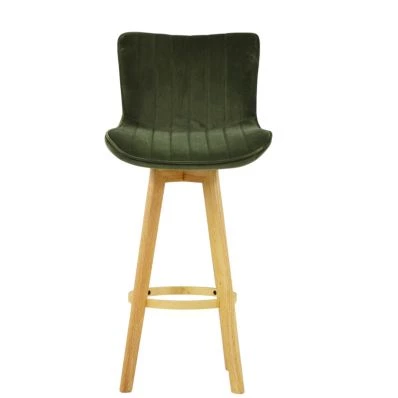
If you are considering replacing older stools entirely, our bar stool collection includes both fixed-height and adjustable-height designs for kitchen islands, breakfast bars, and dining spaces.
Frequently Asked Questions
Why does my hydraulic bar stool not go down?
If the stool will not lower, the release valve may be stuck or the handle mechanism may no longer engage the gas lift correctly. In some cases, internal cylinder damage prevents movement entirely. Checking the handle linkage first is usually the quickest starting point.
Are bar stool gas lifts universal?
Many replacement gas lifts follow standard 50mm and 28mm sizing, but compatibility is not guaranteed across every model. Always measure the existing cylinder dimensions and height range before ordering a replacement.
How long should a gas lift bar stool last?
A good quality gas lift used domestically can often last several years before pressure loss develops. Lifespan depends on adjustment frequency, user weight, build quality, and overall stool construction.
Can you repair a leaking gas lift cylinder?
Most sealed gas lift cylinders are not designed for internal repair. Once the cylinder loses pressure, replacement is generally safer, quicker, and more reliable than attempting to reseal the unit.
Conclusion
Most gas lift bar stool problems come from pressure loss inside the cylinder or looseness around the central mechanism. Identifying whether the issue is sinking, wobbling, sticking, or general instability makes repairs far easier to diagnose.
For broader sizing and compatibility guidance, our breakfast bar stool height guide explains how adjustable and fixed-height stools fit different counter heights and kitchen layouts.


Comments