
 Chat with us on WhatsApp

Grey Bar Stools: Kitchen Pairing Ideas & What Works With Them
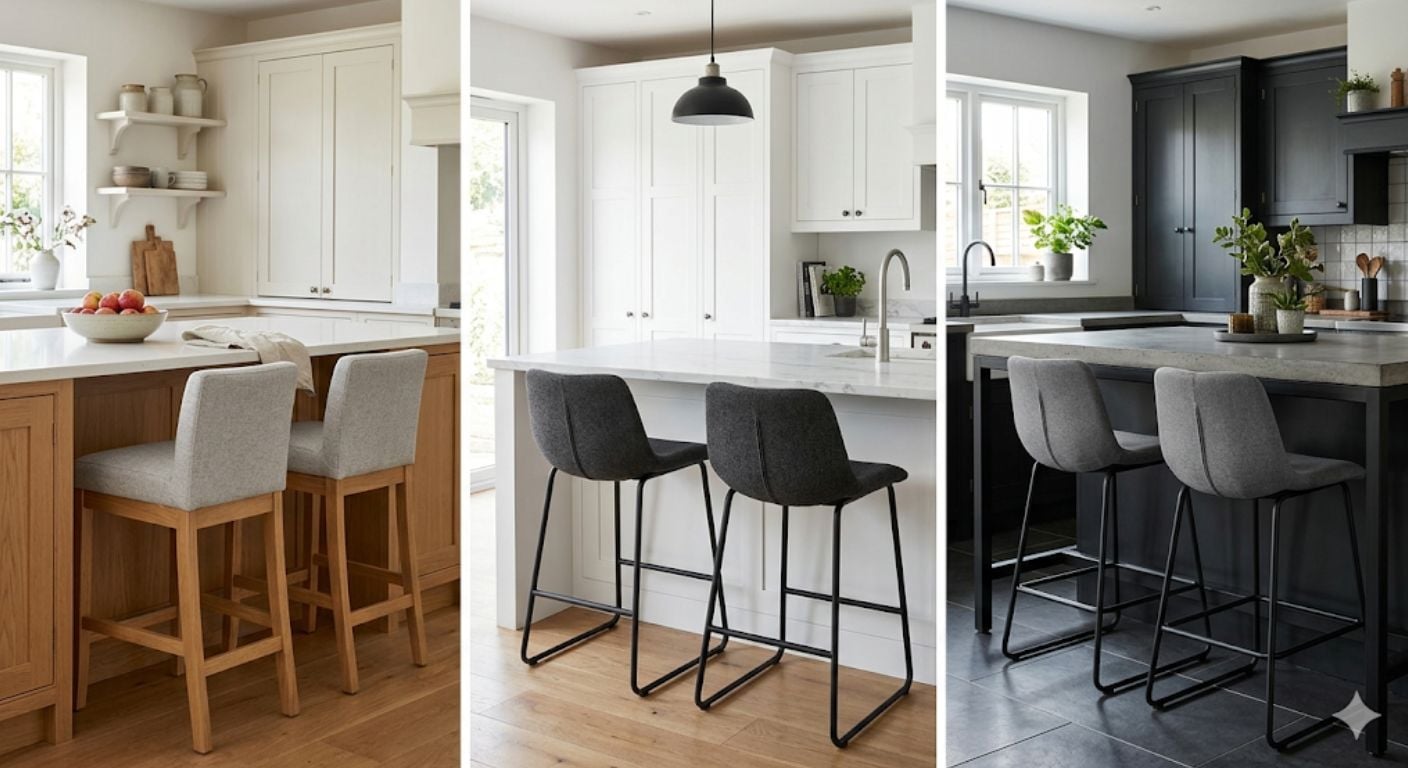
Grey bar stools work because they sit comfortably between warm and cool kitchen palettes. They can soften darker kitchens, add contrast to white cabinetry, or tie together mixed materials like timber, stone, and metal without dominating the room.
The challenge is choosing the right shade, finish, and frame style for the rest of the kitchen. Light grey, charcoal, chrome, oak, boucle, velvet, and black metal all change how the stool feels once placed against cabinetry and flooring.
This guide focuses specifically on pairing grey bar stools with different kitchen styles and materials. It does not cover general sizing or full kitchen island planning in depth, which is handled separately in Lakeland’s broader guide to kitchen island layouts and seating decisions.
For a wider overview of layouts, materials, and island styling, see the kitchen island ideas and layout guide.
Light Grey vs Charcoal Bar Stools in White Kitchens
The biggest decision is usually whether to use pale grey or darker charcoal tones.
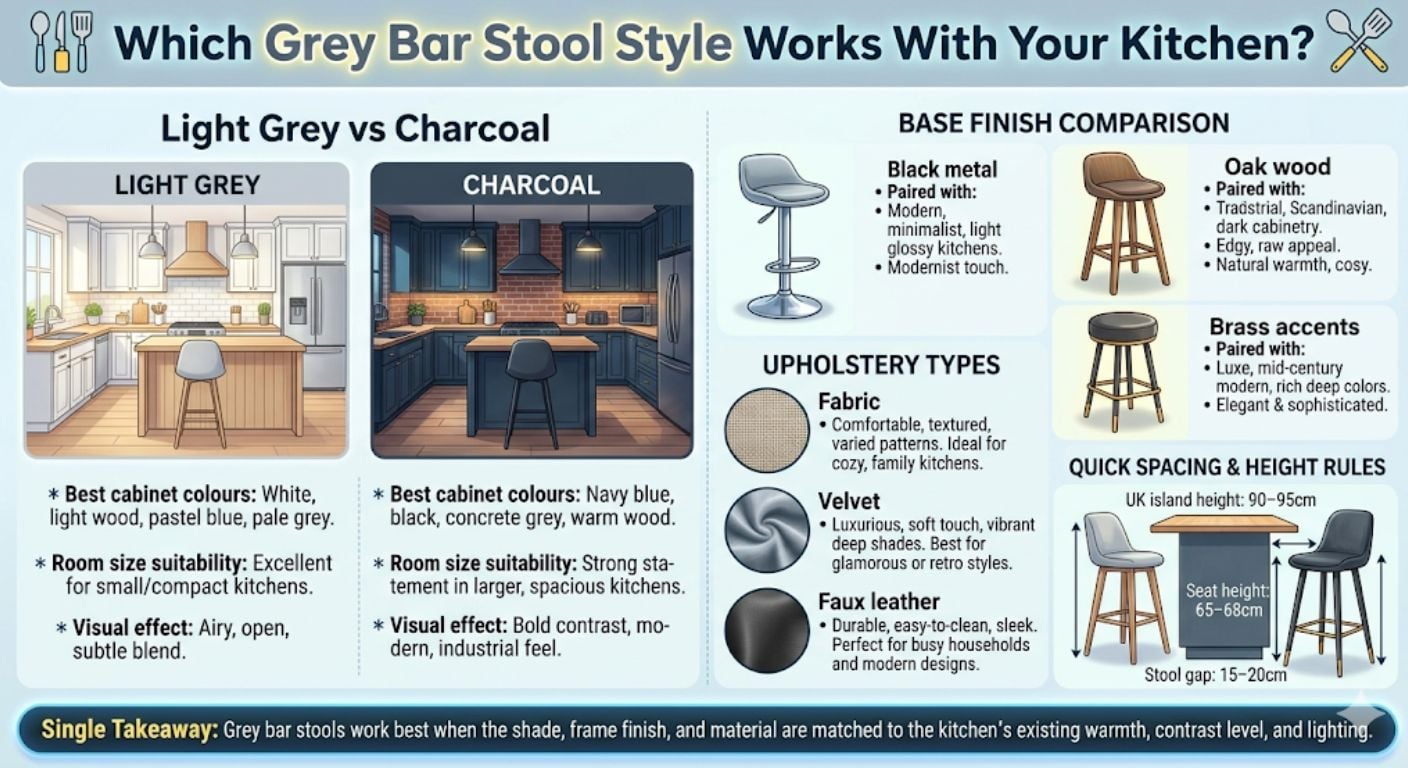
Light grey bar stools work well when:
- The kitchen already has soft neutral tones
- Cabinetry is white, cashmere, or light oak
- The room lacks natural light
- You want the stools to blend rather than stand out
Charcoal or darker grey bar stools work better when:
- The kitchen has black fixtures or darker worktops
- You want stronger contrast against white cabinets
- The island is large enough to support heavier visual weight
- Flooring is medium or dark in tone
In smaller kitchens, dark stools can make the island feel visually heavier if everything else is pale. Light grey generally keeps the room more open.
One thing we regularly see with our customers is that charcoal stools often look much darker at home than they did online once placed under pendant lighting or against darker flooring.
What Works With Grey Kitchens?
Grey kitchens can become visually flat if every surface sits within the same tone range. The stool frame and upholstery finish usually solve this.
Grey and Oak Kitchens
Grey bar stools paired with oak or walnut elements tend to feel warmer and less clinical than fully monochrome schemes.
The easiest combinations are:
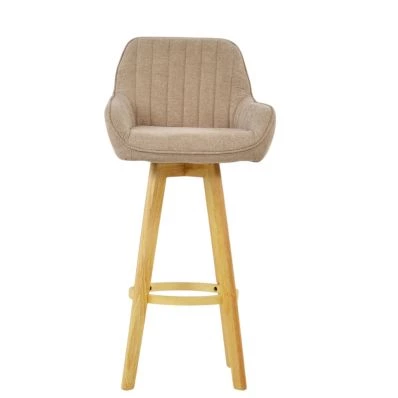
- Light grey fabric with oak legs
- Charcoal upholstery with walnut accents
- Grey seats with brushed brass footrests
- Soft woven fabrics alongside natural timber islands
Wood helps break up cooler tones and prevents the kitchen from feeling overly metallic.
If the kitchen already contains exposed oak shelving or wood flooring, repeating timber on the stool frame usually creates better continuity than chrome bases.
Grey and White Kitchens
White kitchens are more flexible because the stools become one of the main contrast elements.
The safest combinations are:
- Dove grey upholstery with chrome legs
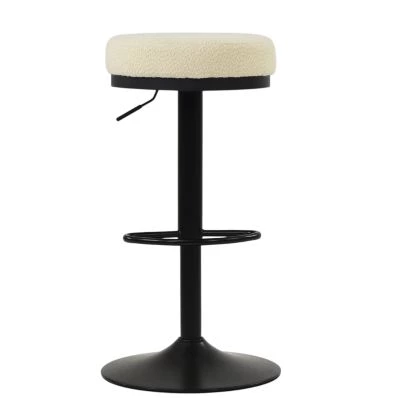
- Pale grey boucle with black metal frames
- Mid-grey fabric with brushed steel details
Very dark charcoal stools can work well in white kitchens, but usually only when black taps, handles, or pendant lighting already exist elsewhere in the room.
For kitchens with glossy cabinetry, smoother upholstery and metal bases often feel more cohesive than heavily textured fabrics.
Grey Kitchens With Black Accents
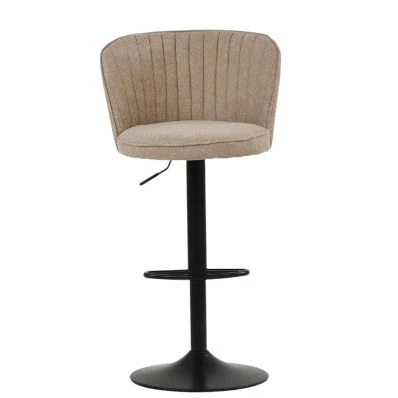
If the kitchen already uses black hardware or lighting, grey stools with black metal frames usually look more balanced than chrome.
This creates a softer contrast than full black seating while still tying into darker fixtures.
Which Upholstery Materials Work Best?
Material choice changes both maintenance and how the grey tone appears in natural light.
Fabric Grey Bar Stools
Fabric upholstery tends to give the softest appearance and works particularly well in:
- Scandinavian kitchens
- Shaker kitchens
- Wood-heavy spaces
- Neutral contemporary interiors
Textured woven fabrics often hide light marks better than flat velvet surfaces.
Grey Velvet Bar Stools
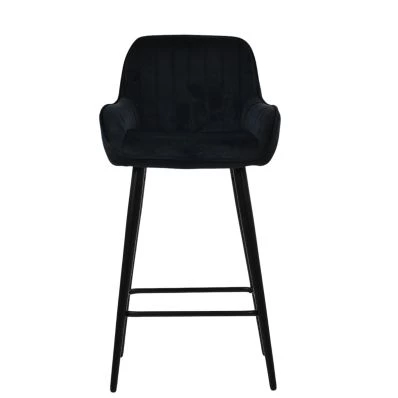
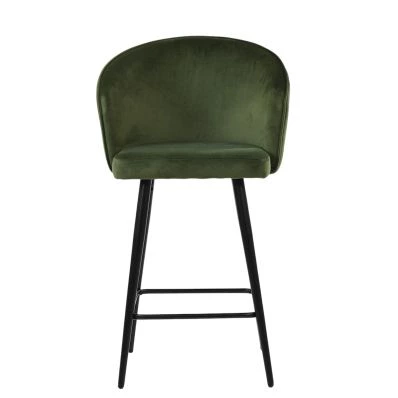
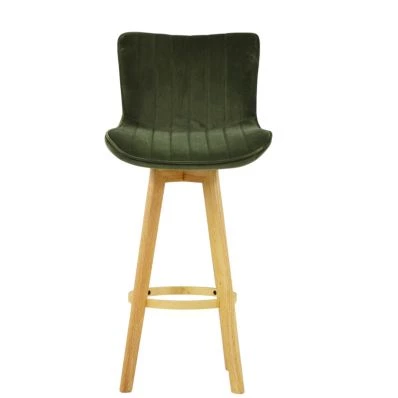
Velvet creates more contrast because the pile reflects light differently throughout the day.
This works well in kitchens with:
- Brass accents
- Marble worktops
- Darker cabinetry
- Softer indirect lighting
Performance velvet is considerably more practical than older velvet finishes, but spills should still be dealt with quickly.
To clean grey velvet upholstery properly:
- Brush lightly with a soft fabric brush
- Blot spills immediately instead of rubbing
- Use mild soap diluted with water for marks
- Allow the fabric to air dry naturally
For a deeper breakdown of practicality, cleaning, and durability, see our guide to velvet bar stool durability.
Faux Leather Grey Bar Stools
Grey faux leather suits kitchens where wipe-clean practicality matters more than texture.
It generally works best in:
- Family kitchens
- Rental properties
- Minimal contemporary spaces
- High-use breakfast bars
Mid-grey faux leather often hides everyday marks more effectively than pale grey fabric.
Chrome, Black Metal, or Wood Legs?
The base finish changes the style direction more than many buyers expect.
| Base Finish | Usually Works Best With | Overall Effect |
|---|---|---|
| Chrome | Gloss kitchens, white cabinetry, modern lighting | Cleaner and more contemporary |
| Black metal | Industrial kitchens, darker fixtures | Stronger contrast and definition |
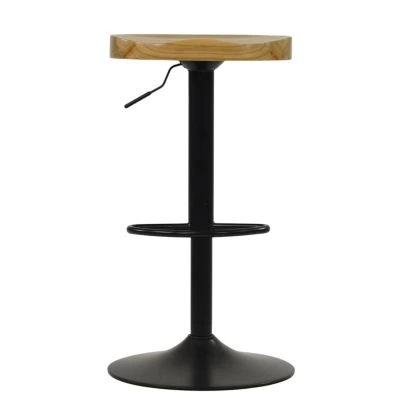
| Oak or wood legs | Neutral kitchens, shaker styles | Softer and warmer |
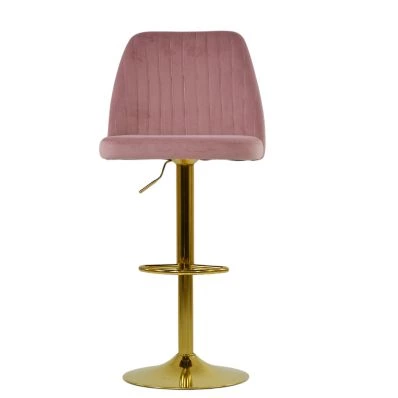
| Brass accents | Marble surfaces, darker cabinetry | More decorative and premium-looking |
Chrome still works particularly well in kitchens with stainless steel appliances because it repeats existing reflective surfaces rather than introducing another finish.
If you are specifically comparing metallic finishes, see when gold leg bar stools work well and when they do not.
Do Grey Bar Stools Suit Small Kitchens?
Yes, usually more easily than stronger colours.
Grey works well in smaller kitchens because it creates contrast without pulling too much attention toward the seating area. Pale grey and slim black-frame designs are particularly effective where sightlines matter.
Backless or lower-profile stools also help maintain openness in tighter layouts.
Where kitchens already contain several competing finishes, grey often acts as a neutral bridge between:
- White cabinetry
- Timber flooring
- Stainless steel appliances
- Stone worktops
This is one reason grey remains consistently popular despite changing kitchen trends.
Practical Pairing Decisions That Usually Work
Grey bar stools generally make sense when:
- The kitchen already mixes warm and cool finishes
- You want flexibility for future décor changes
- The room needs softer contrast than black seating provides
- Existing cabinetry is neutral rather than colourful
Grey may not work as well when:
- The kitchen already lacks contrast
- Flooring, cabinetry, and worktops are all similar grey tones
- The room has very little natural light and dark charcoal seating is added
In those situations, warmer upholstery or wood-framed seating often creates better balance.
If the goal is stronger contrast or more colour separation, colourful bar stools can sometimes work better than additional neutral tones.
Frequently Asked Questions
What height should a bar stool be for a UK kitchen island?
Most UK kitchen islands measure between 90 and 95cm high. A seat height of around 65–68cm usually fits comfortably beneath that height while leaving roughly 25–30cm of leg clearance between the seat and the underside of the counter.
For full sizing guidance, see the bar stool height guide.
How much space should you leave between bar stools?
Allow roughly 15–20cm between each stool to avoid crowding and make movement easier. Longer islands above around 2.2 metres often look more balanced with three stools instead of two.
More detailed spacing recommendations are covered in the bar stool spacing guide.
Are grey velvet bar stools practical for kitchens?
Modern performance velvet is considerably more durable than older velvet finishes and works well in many kitchens. It is still better suited to moderate everyday use rather than very heavy wear. Prompt spill cleaning and regular brushing help maintain the pile and reduce marking.
Should grey bar stools match dining chairs?
Not exactly. Grey usually works better when it coordinates rather than matches perfectly. Repeating one shared element — such as black metal, oak, or fabric texture — tends to create a more balanced result than using identical seating throughout.
This topic is covered in more detail in the guide to matching dining chairs and bar stools.
Final Thoughts
Grey bar stools remain popular because they adapt easily to changing kitchen finishes without becoming overly dominant. The key decision is usually not whether grey works, but which shade, material, and frame finish best support the rest of the room.
Light grey keeps kitchens softer and brighter. Charcoal creates stronger contrast. Wood frames add warmth, while chrome and black metal shift the look more contemporary.
To explore different finishes and upholstery options, browse the full range of grey bar stools.


Comments