
 Chat with us on WhatsApp

Leather Bar Stools: Real vs Faux, Maintenance & Cracking Risk
Leather bar stools remain one of the most practical upholstery choices for kitchens, breakfast bars, and entertaining spaces because they balance comfort with easy cleaning. The main buying decision is usually not colour or shape — it is choosing between real leather, faux leather, or bonded leather, and understanding how each material behaves over time.
Some leather-look stools stay presentable for years with minimal maintenance. Others begin peeling, cracking, or flaking surprisingly quickly. The difference normally comes down to the upholstery material itself, the quality of the coating, and how the stool is used day to day.
This guide focuses specifically on durability, maintenance, cracking risk, and practical ownership differences between leather upholstery types. For a broader comparison of bar stool materials overall, see Bar Stool Materials Which Are Best For Each Situation.
What Is the Difference Between Real, Faux, and Bonded Leather?
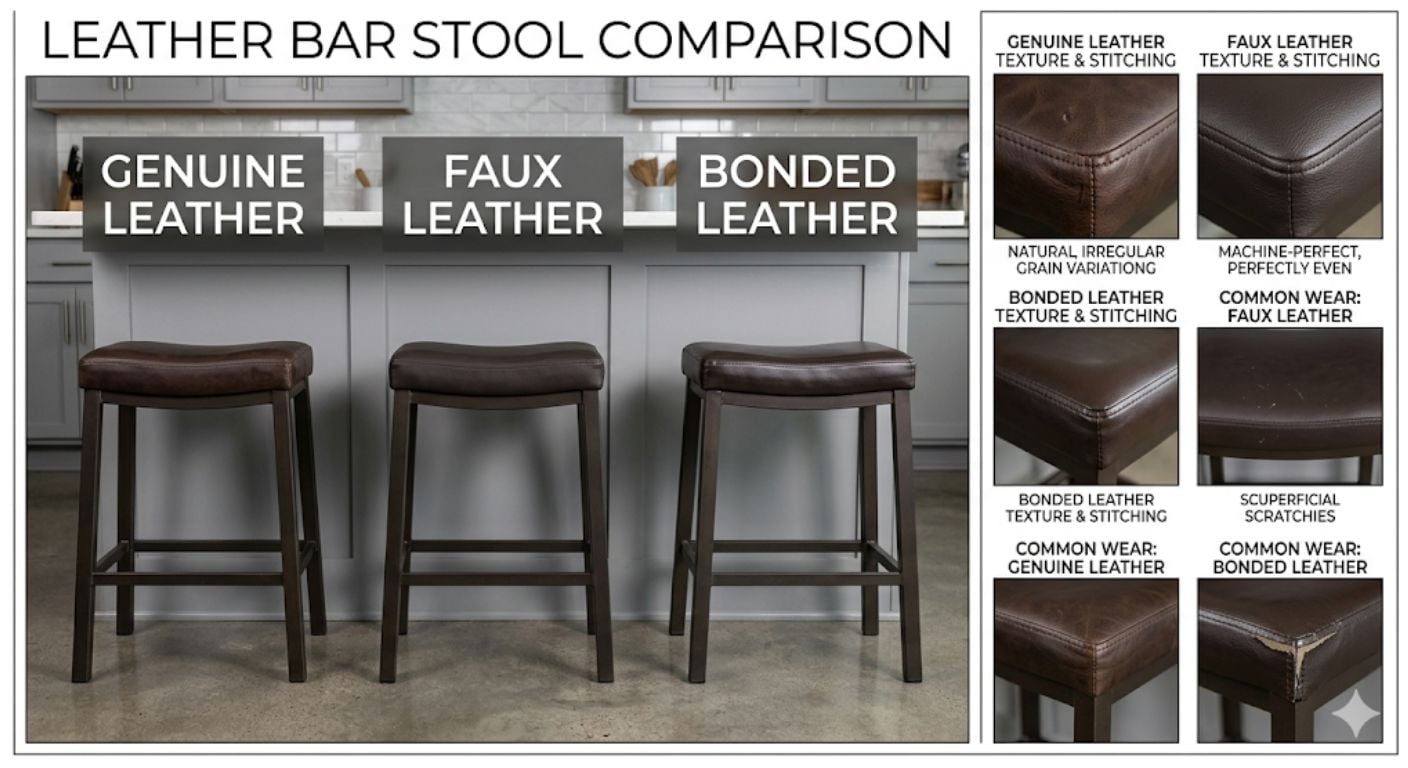
Real leather is made from animal hide and develops a natural surface variation and softening over time. Faux leather is a synthetic material, normally polyurethane (PU) or PVC applied over a fabric backing. Bonded leather sits between the two and uses shredded leather fibres mixed with synthetic binders and coatings.
Faux leather, also known as vegan leather or pleather, is a synthetic material made using a textile backing with a polyurethane coating embossed to imitate natural leather grain.
Real Leather
- Natural material with unique grain variation
- Softens and develops patina over time
- Usually longer-lasting when properly maintained
- Higher upfront cost
- Requires occasional conditioning
Faux Leather
- Synthetic wipe-clean surface
- Lower maintenance overall
- More affordable than genuine leather
- Can crack or peel if lower quality
- Often better suited to busy kitchens and family use
Bonded Leather
- Contains a small percentage of real leather fibres
- Typically finished with a synthetic top layer
- Usually cheaper than genuine leather
- Less durable than full leather upholstery
- More prone to surface splitting over time
Most bonded leather products contain around 10–20% real leather fibres mixed with polyurethane materials. The appearance can initially look convincing, but long-term durability is generally closer to faux leather than genuine leather.
Which Type of Leather Bar Stool Lasts Longer?
Genuine leather normally lasts the longest when maintained correctly, particularly on frequently used kitchen seating. High-quality faux leather can still perform well for several years, but cheaper synthetic coatings tend to deteriorate faster around high-contact areas.
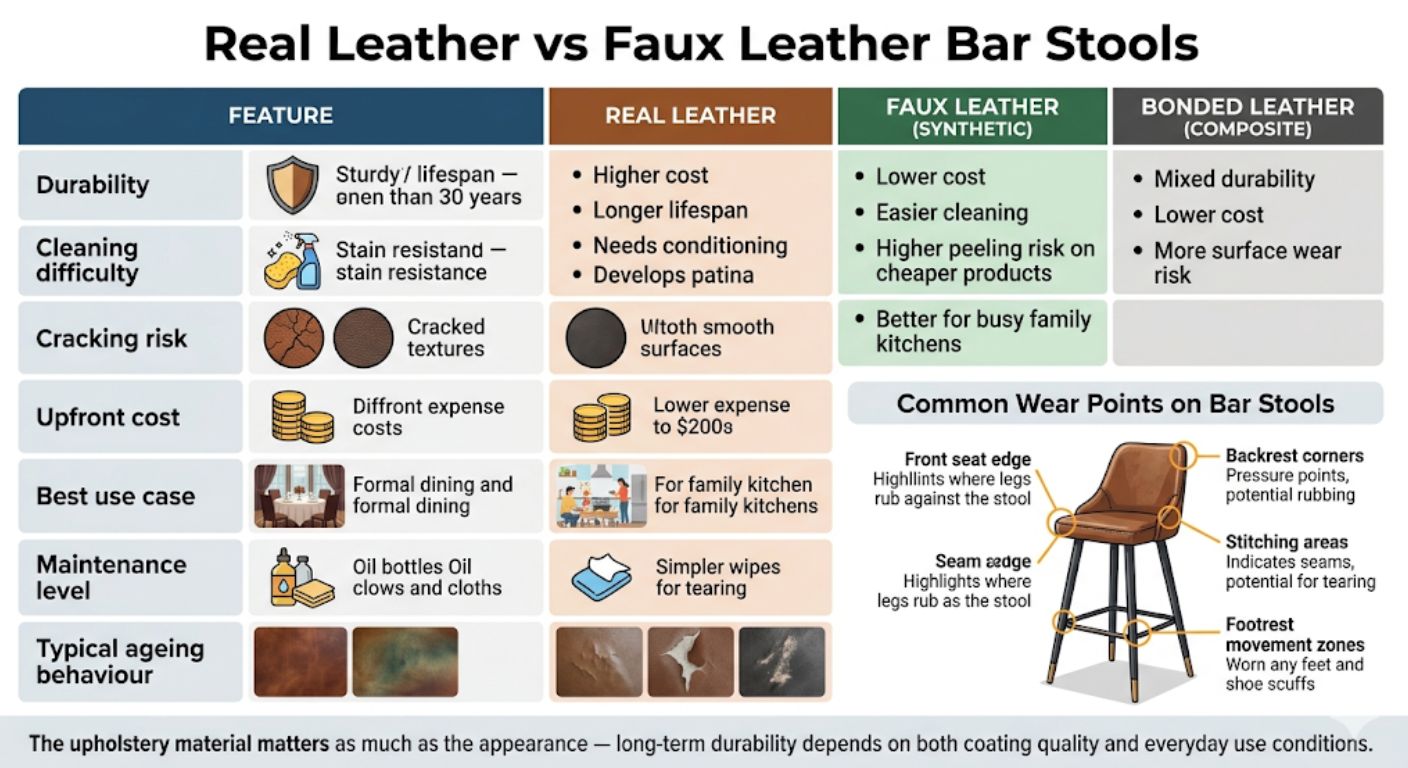
The highest wear points are usually:
- Front seat edges
- Top corners of backrests
- Areas around stitching
- Footrest-adjacent movement points
- Seat panels exposed to direct sunlight
One thing we regularly see from our customers is that cracking usually starts where people slide on and off the stool rather than where they actually sit. Front seat edges normally fail first if the upholstery quality is poor.
Real Leather Ageing
Real leather usually wears gradually rather than failing suddenly. Minor creasing and softening are normal and often improve the appearance over time. Surface marks can also blend into the material more naturally.
With proper care, genuine leather upholstery can remain usable for many years without peeling.
Faux Leather Ageing
Faux leather behaves differently because the outer surface is effectively a coated layer. Once that coating dries out, becomes brittle, or weakens, cracking and peeling can follow relatively quickly.
This does not mean all faux leather is poor quality. Better PU upholstery is significantly more durable than older PVC-based materials. The biggest issue is usually very low-cost synthetic coatings combined with heavy daily use.
Why Do Faux Leather Bar Stools Crack or Peel?
Faux leather cracks when the synthetic surface coating loses flexibility. This is usually accelerated by friction, body oils, cleaning chemicals, heat exposure, or direct sunlight.
Common causes include:
- Low-quality PVC upholstery
- Harsh chemical cleaners
- Direct radiator or sunlight exposure
- Heavy daily use
- Dry indoor air conditions
- Frequent sliding across the seat edge
In kitchens, stools positioned beside patio doors or strong south-facing windows often deteriorate faster because UV exposure gradually dries the coating.
According to guidance from the consumer advice team at Which?, both real and faux leather surfaces benefit from avoiding excessive heat and direct sunlight, which can accelerate material deterioration.
Are Leather Bar Stools Good for Family Kitchens?
Leather bar stools work well in busy kitchens because spills can usually be wiped away quickly before staining develops. Faux leather is often the more practical option for households with children because it needs less ongoing maintenance than real leather.
For busy family environments, useful features include:
- Smooth wipe-clean upholstery
- Darker colour finishes
- Metal frames for moisture resistance
- Integrated footrests
- Stitched rather than glued seams
If durability in family kitchens is your main concern, this guide to wipe-clean family kitchen bar stools goes deeper into material selection and everyday practicality.
Real Leather vs Faux Leather Bar Stools
| Feature | Real Leather | Faux Leather |
|---|---|---|
| Upfront Cost | Higher | Lower |
| Cleaning | Requires conditioning | Simple wipe-clean care |
| Cracking Risk | Lower if maintained | Higher on lower-quality products |
| Breathability | Better airflow | Can feel warmer |
| Ageing Appearance | Develops patina | Surface coating eventually wears |
| Best Use Case | Long-term premium seating | Busy kitchens and easier maintenance |
How to Clean Leather Bar Stools Properly
Leather bar stools should be cleaned gently and regularly rather than aggressively after visible dirt builds up. Strong household cleaners are one of the most common causes of premature surface damage.
Basic Faux Leather Cleaning Process
- Brush or wipe away loose crumbs and dust
- Use a soft cloth with warm mild soapy water
- Dry fully using a microfibre cloth
Avoid:
- Bleach-based cleaners
- Abrasive pads
- Furniture polish sprays
- Alcohol-heavy cleaning products
- Over-saturating stitched seams
Cleaning Real Leather
Real leather benefits from occasional conditioning to maintain flexibility and reduce drying. Most domestic bar stools only need conditioning every several months unless positioned in particularly dry or warm rooms.
Does Frame Construction Matter as Much as the Upholstery?
Yes. Upholstery durability matters less if the frame loosens or flexes under regular use. A strong frame helps reduce movement stress across stitched upholstery panels.
Metal frames are usually the most durable option for high-use kitchens because they resist humidity changes and movement better than softer timber frames.
Important structural details include:
- Reinforced footrests
- Stable welded joints
- Minimal frame flex
- Secure seat fixing points
- Balanced weight distribution
If the stool includes a swivel or gas-lift mechanism, stability becomes even more important over time.
What Seat Height Works Best for Leather Bar Stools?
There should generally be around 25–30cm between the top of the stool seat and the underside of the worktop or bar surface.
For a standard 90cm kitchen island, this normally means a seat height around 65cm. Adjustable leather bar stools can provide more flexibility where multiple users share the same seating area.
For full sizing guidance, use this dedicated bar stool height guide.
When Real Leather Makes Sense
- You want longer-term durability
- You prefer natural ageing and patina
- The stools will be used by adults primarily
- You are comfortable with occasional conditioning
- The room is relatively stable in temperature and sunlight
When Faux Leather Makes More Sense
- You want easier day-to-day cleaning
- The stools are used heavily by children
- You prefer lower upfront cost
- The seating may need replacing sooner for style reasons
- You want a more wipe-clean kitchen setup
FAQ
Does faux leather always peel?
No. Higher-quality PU faux leather can last well for several years without major peeling. Premature cracking is more common with cheaper PVC materials, poor cleaning methods, or heavy friction around seat edges.
Is bonded leather better than faux leather?
Not necessarily. Bonded leather includes real leather fibres, but durability can still be limited because the surface layer is synthetic. In many cases, high-quality PU faux leather performs better over time than lower-grade bonded leather.
Are leather bar stools suitable for pets?
Leather and faux leather both resist hair buildup better than fabric upholstery, but claws can still scratch surfaces. Textured leather generally hides marks better than smooth synthetic finishes.
Can cracked faux leather be repaired?
Minor surface cracks can sometimes be disguised using repair kits, but peeling coatings are difficult to restore permanently. Once the synthetic top layer begins separating, replacement is often the more practical option.
-
-
-
-
-
-
-
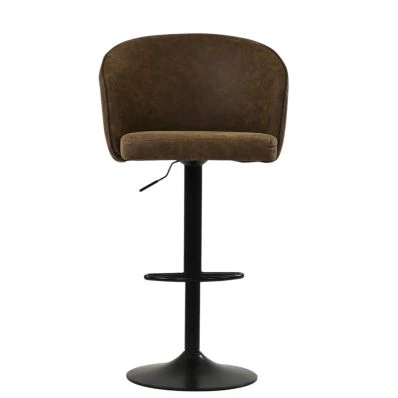
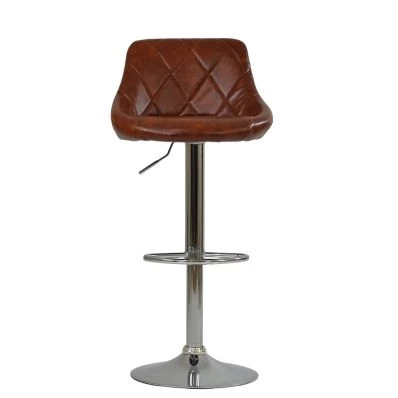
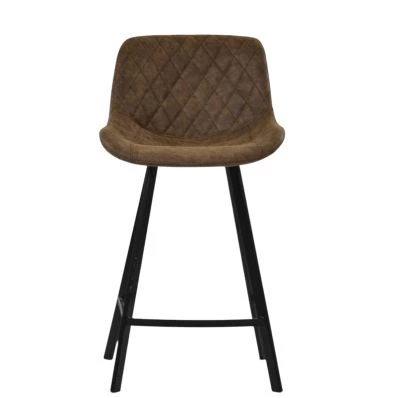 Matteo 65cm Bar Stool in Aged Brown Leather & Black BaseSpecial Price £59.99 Regular Price £74.99 Original price 20% Inc VATSaving £15
 -
-
-
-
-
Final Thoughts
Leather bar stools remain one of the most practical seating choices for kitchens because they combine comfort, easier cleaning, and strong visual versatility. The key difference is understanding how real leather, faux leather, and bonded leather behave over time.
Real leather generally offers better long-term ageing and durability, while faux leather usually delivers lower maintenance and easier day-to-day cleaning for busy homes.
For broader material comparisons, visit the complete bar stool materials guide, or browse the full range of bar stools to compare upholstery and frame options in more detail.


Comments