
 Chat with us on WhatsApp

Leather Bar Stools: Real vs Faux, What to Expect & How to Clean
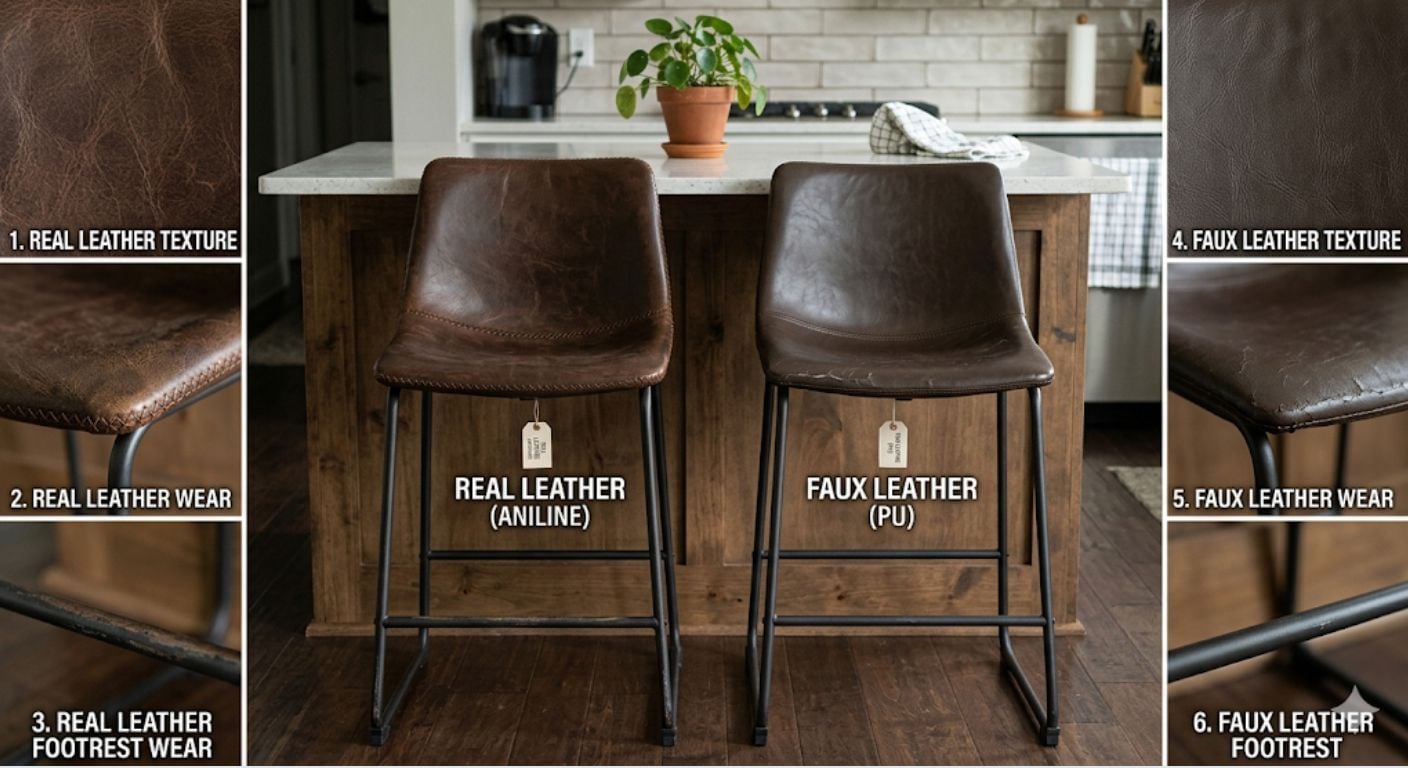
Leather-look seating remains one of the most practical upholstery choices for kitchens, breakfast bars, and entertaining spaces. It is easy to wipe down, works across modern and traditional interiors, and generally handles daily use better than many fabric alternatives. The biggest difference comes down to material type, long-term wear, and how the stool is maintained.
Real leather and faux leather behave very differently over time. Real leather softens and develops character as it ages, while faux leather is lower maintenance initially but more vulnerable to peeling and cracking if exposed to heat, sunlight, or harsh cleaning products. Understanding those differences helps reduce premature wear and avoids buying the wrong material for the space.
If you are comparing different upholstery options more broadly, Lakeland’s guide to bar stool materials for different situations covers how leather compares with wood, velvet, metal, and fabric seating.
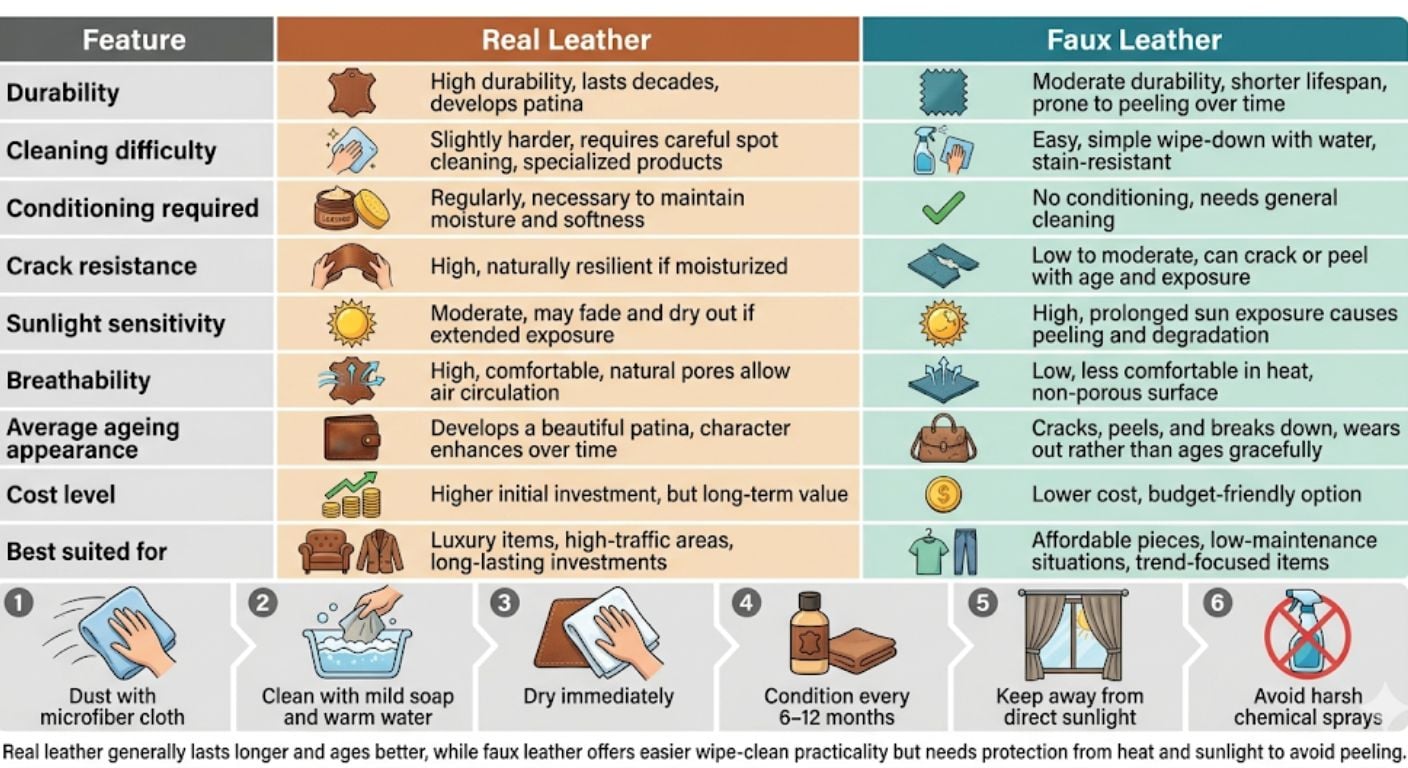
Real Leather vs Faux Leather: What Changes Over Time?
| Feature | Real Leather | Faux Leather |
|---|---|---|
| Surface feel | Natural grain, softer over time | Smoother, more uniform finish |
| Breathability | More breathable | Can feel warmer or stickier |
| Cleaning | Needs conditioning periodically | Simple wipe-clean surface |
| Ageing | Develops patina | May crack or peel with age |
| Sunlight resistance | Can fade gradually | More likely to dry and split |
| Cost | Higher upfront investment | More budget-friendly |
| Best suited to | Long-term ownership | Busy kitchens and lighter budgets |
Real leather generally lasts longer if maintained properly. It responds well to occasional conditioning and tends to age gradually rather than failing suddenly. Faux leather is often chosen for family kitchens because it is easier to wipe clean quickly after spills, but lower-quality synthetic materials can deteriorate faster in direct sunlight or high-heat rooms.
One thing we regularly see with our customers is that stools positioned beside bifold doors or radiators tend to age faster regardless of material. Constant heat exposure is one of the biggest causes of cracking and fading over time.
How to Clean Leather Bar Stools Properly
Leather seating should be cleaned gently and regularly rather than aggressively once heavily marked. Strong chemicals, abrasive cloths, and soaking the material with water are common causes of premature wear.
Routine Cleaning Steps
- Remove dust using a dry microfiber cloth.
- Mix warm water with a small amount of mild soap.
- Dampen the cloth lightly rather than soaking it.
- Wipe in gentle circular motions.
- Use a second clean cloth to remove residue.
- Dry the seat immediately with a towel.
For faux leather, avoid alcohol-heavy sprays or bleach-based kitchen cleaners. These can strip protective coatings and accelerate peeling.
For real leather, use a pH-balanced leather cleaner where possible. The Leather UK trade association also recommends avoiding excessive moisture and harsh detergents when caring for natural leather upholstery.
How Often Should Leather Bar Stools Be Conditioned?
Real leather bar stools typically benefit from conditioning every 6–12 months depending on room temperature, sunlight exposure, and frequency of use. Conditioning helps restore moisture to the leather surface and reduces the risk of drying or stiffness.
Faux leather does not absorb conditioner in the same way as genuine leather, but synthetic-safe protectors can still help maintain flexibility and reduce surface drying.
Signs your stools may need conditioning include:
- Dry or rough texture
- Loss of softness
- Small surface cracks forming
- Dull appearance
- Creasing around pressure points
Apply conditioner sparingly using a soft cloth and always spot test first. Over-applying products can leave residue that attracts dirt.
How to Prevent Faux Leather from Peeling or Cracking
Most faux leather deterioration comes from environmental exposure rather than everyday sitting. Heat, UV light, and aggressive cleaning products gradually dry the material until the outer layer begins separating or splitting.
How to Extend the Life of Faux Leather
- Keep stools away from direct sunlight where possible.
- Avoid placing them beside radiators or underfloor heating vents.
- Wipe spills quickly before liquids sit on the surface.
- Use only mild soap and soft cloths for cleaning.
- Avoid scrubbing textured grain aggressively.
- Do not use abrasive kitchen sprays or bleach products.
- Clean regularly instead of allowing grease build-up.
Light-coloured faux leather needs slightly more attention because dye transfer from jeans and dark clothing can stain the surface if left untreated. Cleaning marks quickly usually prevents permanent discolouration.
What About Pets, Children, and Heavy Daily Use?
Leather-look upholstery remains popular in family kitchens because it handles spills more predictably than woven fabrics. Faux leather is particularly practical for households where stools are used daily for quick meals, homework, or entertaining.
That said, neither real nor faux leather is immune to scratching. Pet claws, metal rivets on clothing, and repeated friction against kitchen islands can all leave visible wear marks over time.
For busy kitchens, look for:
- Smooth wipe-clean finishes
- Darker colours that hide wear better
- Strong stitched seams
- Supportive footrests to reduce strain on joints
- Stable metal or solid wood frames
If durability matters more than softness, faux leather often makes more sense financially because replacement costs remain lower.
Do Adjustable Leather Bar Stools Need Extra Maintenance?
Height-adjustable stools with gas lift mechanisms require occasional maintenance beyond the seat upholstery itself. Dust and movement around the lift column can create squeaks or stiffness over time.
How to Fix a Squeaky Gas Lift Stool
Raise the stool fully, lift the protective collar slightly, and apply a small amount of lubricant around the moving joint. Wipe away excess product immediately to avoid transferring oil onto flooring or upholstery.
Most sealed gas lift mechanisms do not require refilling or internal servicing during normal household use.
If you are comparing upholstery options across adjustable models specifically, Lakeland’s collection of leather bar stools includes both fixed-height and gas-lift designs.
Cleaning Chrome and Metal Parts Around Leather Seats
Leather upholstery often sits alongside chrome or brushed metal frames. These areas benefit from separate cleaning methods because standard leather products will not protect exposed metalwork.
For light rust spots on chrome:
- Crumple aluminium foil with the shiny side outward
- Dip it lightly in water
- Rub gently over the rusted area
- Wipe clean with vinegar or rubbing alcohol afterwards
This method removes light oxidation without scratching polished chrome finishes.
For broader maintenance guidance on metal frames specifically, see Lakeland’s article on cleaning metal bar stools and rust removal.
When Real Leather Makes More Sense
Real leather is usually the better long-term option when:
- The stools will stay in the home for many years
- The kitchen receives moderate rather than intense sunlight
- You prefer natural ageing over uniform finishes
- Comfort and breathability matter more than lowest cost
- You are willing to perform occasional conditioning
It is less suited to households wanting completely maintenance-free seating.
When Faux Leather Makes More Sense
Faux leather tends to work better when:
- Easy wipe-clean maintenance is the priority
- The kitchen sees frequent family use
- Budget matters more than long-term ageing
- You want a consistent appearance across multiple stools
- You are furnishing rental or transitional spaces
The trade-off is that lower-grade faux leather may not age as gracefully as genuine leather over extended periods.
Frequently Asked Questions
Can you use vinegar to clean leather bar stools?
Vinegar should be used cautiously. Diluted vinegar may help clean chrome or metal frame components, but it can dry out leather surfaces if overused. Mild soap and warm water are safer for routine upholstery cleaning.
How do you stop faux leather bar stools from peeling?
Keep faux leather away from direct sunlight and strong heat sources, clean it gently with non-abrasive products, and avoid allowing grease or dirt to build up. Regular light cleaning is more effective than occasional deep scrubbing.
Does real leather last longer than faux leather?
In most cases, yes. Real leather generally ages more gradually and can remain usable for many years with proper care. Faux leather is easier to maintain initially but is more vulnerable to surface cracking and peeling over time.
Can leather bar stools work in family kitchens?
Yes. Faux leather especially works well in busy kitchens because it wipes clean easily after spills. Choosing darker colours and durable stitched seams helps reduce visible wear from heavy daily use.
-
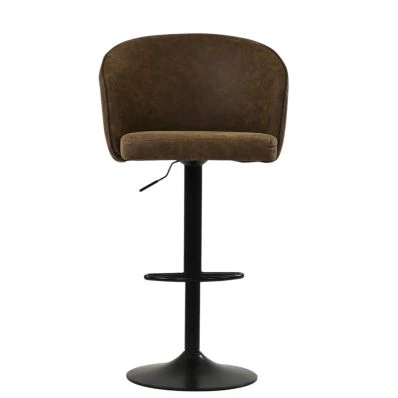
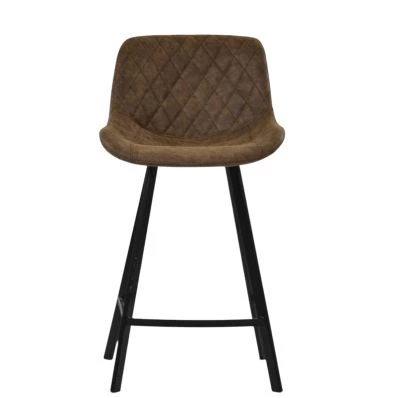 Matteo 65cm Bar Stool in Aged Brown Leather & Black BaseSpecial Price £59.99 Regular Price £74.99 Original price 20% Inc VATSaving £15
 -
-
-
-
-
-
-
-
-
-
Final Thoughts
Leather bar stools remain one of the most practical seating choices for kitchens because they balance comfort, wipe-clean maintenance, and visual versatility. The main decision is not simply appearance — it is whether long-term ageing, budget, or ease of maintenance matters most in the room.
Real leather rewards long-term ownership and gradual ageing, while faux leather offers easier day-to-day practicality at a lower initial cost. Understanding how each material behaves helps avoid cracking, peeling, and unnecessary replacement.
For a broader comparison of upholstery, frame, and seat material types, see Lakeland’s main guide to choosing bar stool materials.


Comments