
 Chat with us on WhatsApp

Velvet Office Chairs: Heat, Wear & Cleaning Guide
Velvet office chairs sit in a different category from mesh and leather seating. Buyers usually choose velvet for its softer surface texture, warmer appearance, and more domestic look in home offices. The trade-off is that velvet behaves differently under daily use, especially around heat, cleaning, and visible wear.
This guide focuses specifically on how velvet office chairs perform over time. It covers heat retention, stain handling, pile wear, maintenance routines, and where velvet makes practical sense compared to other upholstery materials. If you are comparing broader upholstery types across office seating, our guide to leather office chair comfort and maintenance expands further into leather performance, while mesh vs leather office chairs covers airflow and long-session use in more depth.
For current seating styles and upholstery options, you can also browse the wider office chair collection.
How Velvet Office Chairs Handle Heat
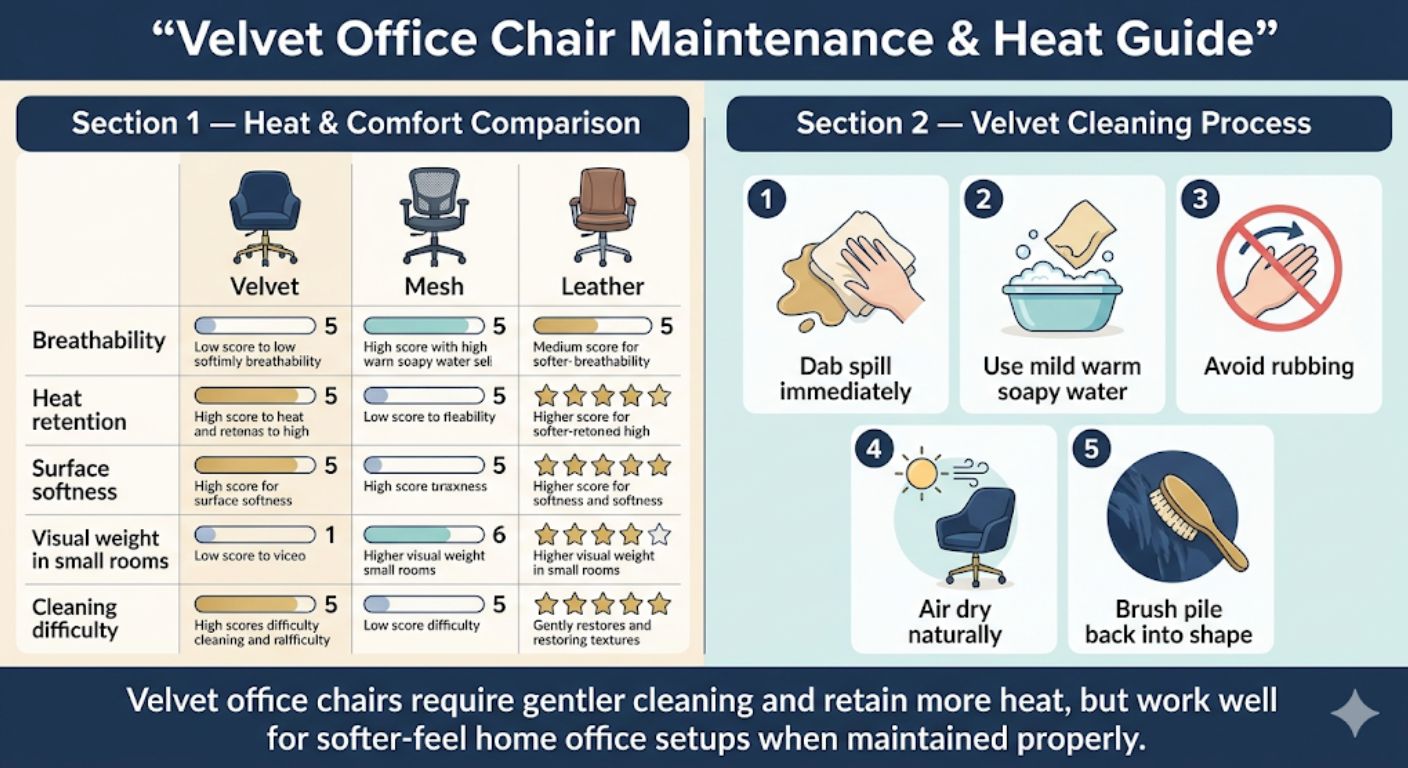
Velvet is warmer than mesh and usually warmer than standard woven fabric. The dense pile traps more heat against the body, particularly during long desk sessions or in rooms with poor airflow.
That does not automatically make velvet uncomfortable. In cooler rooms, many users prefer the softer and less clinical feel compared with mesh seating. The issue tends to appear during summer or in compact home offices where airflow is limited.
Signs that a velvet chair may feel too warm include:
- Back or leg warmth after 30–60 minutes
- Visible moisture marks on darker velvet
- Constant shifting position during longer sessions
- Fabric feeling warm even before sitting down
Unlike mesh, velvet does not ventilate naturally. The upholstery absorbs and holds warmth rather than dispersing it.
Reducing Heat Build-Up on Velvet Chairs
A few practical adjustments reduce heat retention significantly:
- Keep humidity lower where possible
- Avoid placing the chair in direct sunlight
- Use breathable clothing fabrics during longer sessions
- Vacuum regularly so the pile stays open rather than compressed
- Rotate sitting positions slightly during all-day use
One thing we see regularly with our customers is that darker velvet colours show heat and pressure shading faster than lighter tones, particularly on heavily used home office chairs.
If thermal comfort matters more than upholstery feel, mesh seating will usually outperform velvet in warmer environments. If appearance and softer texture matter more, velvet remains a reasonable compromise for moderate daily use.
Does Velvet Wear Out Quickly?
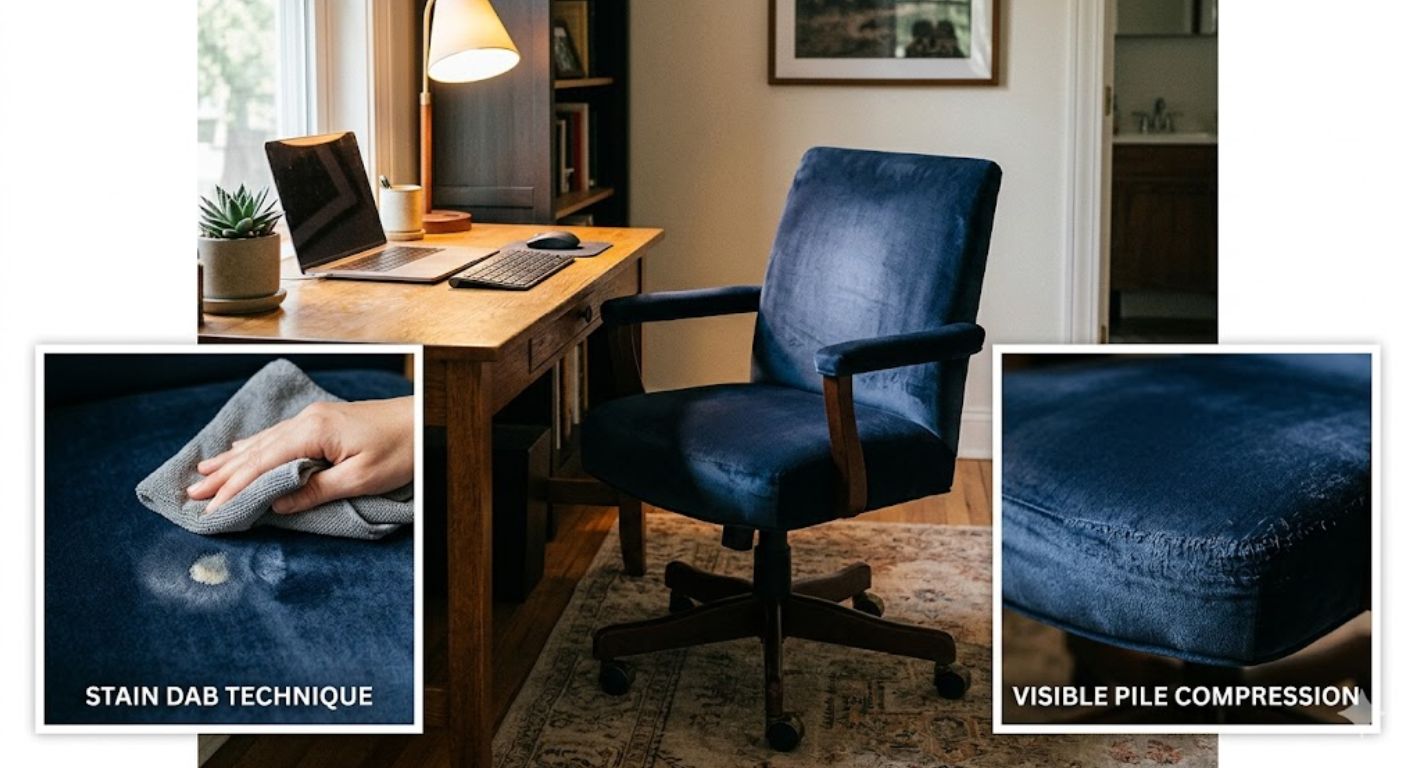
Velvet does not usually fail structurally first. The more common issue is visible pile wear.
Over time, the fibres flatten in pressure areas such as:
- Front seat edge
- Lower back section
- Arm contact points
- Outer seat corners
This is called pile crushing or pile distortion. It changes how light reflects across the fabric, which creates darker or lighter patches even when the material itself is still intact.
What Affects Velvet Durability?
Several factors influence how quickly velvet changes appearance:
| Factor | Effect on Wear |
|---|---|
| Daily sitting hours | Faster pile compression |
| Clothing texture | Denim and rough fabrics increase friction |
| Pets | Claws catch fibres easily |
| Direct sunlight | Colour fading and drying |
| Lower-density velvet | Faster matting and flattening |
Velvet office chairs generally suit moderate home office use better than high-traffic commercial environments.
Synthetic velvets normally resist staining and abrasion better than natural cotton velvet. Most office chairs use polyester-based velvet for this reason.
How to Clean a Velvet Office Chair Without Damaging the Fabric
Velvet requires gentler cleaning than leather or standard woven fabric. The main mistake is rubbing stains aggressively, which crushes the pile and spreads moisture deeper into the material.
How to Remove Stains From Velvet Office Chairs
- Dab spills immediately using a dry microfiber cloth
- Work from the outside of the stain inward
- Use small amounts of warm water with mild soap
- Avoid soaking the fabric
- Allow the chair to air dry naturally
- Brush the pile lightly afterwards using a soft fabric brush
Do not use high heat directly on velvet. Hairdryers can distort fibres and create uneven texture patches.
For tougher marks:
- Baking soda can help absorb grease-based stains
- Steam cleaners should only be used cautiously at low pressure
- Always test cleaning products on a hidden area first
How Often Should Velvet Chairs Be Cleaned?
A simple maintenance routine works better than occasional deep cleaning.
| Task | Suggested Frequency |
|---|---|
| Vacuum upholstery | Weekly |
| Spot clean marks | Immediately |
| Brush pile | Every few weeks |
| Full upholstery clean | Every 6–12 months |
Vacuuming matters more than many buyers expect because dust settles into the pile and gradually makes the surface look flatter and duller.
Velvet vs Leather Office Chairs in Small Home Offices
Velvet and leather behave differently visually inside smaller workspaces.
Leather reflects more light and usually creates a cleaner edge definition. Velvet absorbs more light because of its textured pile, which can make large chairs feel visually heavier in compact rooms.
That does not mean velvet cannot work in smaller offices. Shape matters just as much as upholstery.
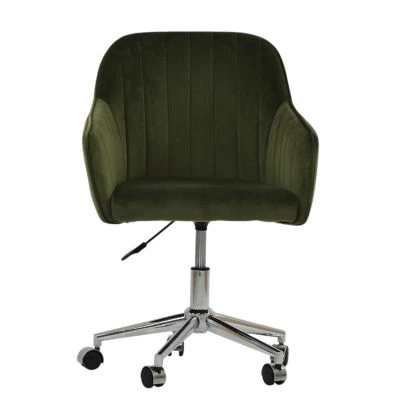
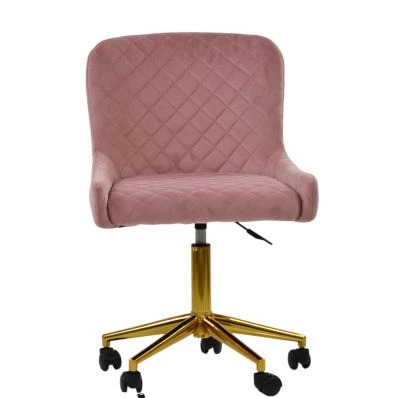
Velvet Chairs Work Better in Smaller Rooms When They Have:
- Slim arm profiles
- Narrower backrests
- Open lower frames
- Lighter upholstery colours
- Sculpted rather than oversized silhouettes
Large executive-style velvet chairs can dominate smaller rooms quickly, especially in darker shades.
If the goal is a softer residential look rather than a traditional task-chair appearance, velvet often fits better than mesh or heavy bonded leather seating.
You can also compare softer upholstery styles in our article covering boucle office chair durability and cleaning.
When Velvet Office Chairs Make Sense
Velvet office chairs usually work best when buyers prioritise:
- Softer upholstery feel
- More decorative home-office styling
- Medium-length sitting sessions
- Lower visual formality
- Domestic rather than corporate environments
They are often chosen for:
- Bedroom offices
- Dressing room desks
- Occasional workstations
- Hybrid living spaces
- Compact apartment setups
Velvet also softens the appearance of swivel office chairs that might otherwise look overly corporate in residential interiors.
When Velvet May Not Be the Right Choice
Velvet is less practical in some situations.
It may not suit buyers who:
- Work long hours in warm rooms
- Need maximum airflow
- Have pets that scratch upholstery
- Want the lowest-maintenance fabric
- Need highly durable commercial-use seating
In those cases, mesh or easier-clean synthetic upholstery usually performs more consistently over time.
If long-session posture and workstation setup matter more than upholstery feel, our guide explaining how lumbar support works covers the structural side of office chair comfort in more detail.
FAQ
Are velvet office chairs hard to keep clean?
Velvet is not difficult to maintain if spills are handled quickly. The biggest risk comes from rubbing stains aggressively or using excessive water. Regular vacuuming and gentle spot cleaning prevent most long-term issues.
Do velvet office chairs get hot in summer?
Yes, velvet retains more heat than mesh and most woven fabrics. In warmer rooms or during long sitting sessions, the upholstery can feel noticeably warmer against the body.
Can you steam clean a velvet office chair?
Low-pressure steam can help refresh velvet upholstery, but too much heat or moisture may flatten the pile. Always test a hidden area first and avoid soaking the fabric.
Does velvet flatten over time?
Yes. Pressure areas gradually develop pile compression, particularly on seat fronts and lower back sections. This affects appearance more than structural performance.
Is velvet better than leather for a home office?
They suit different priorities. Velvet feels softer and less formal, while leather is generally easier to wipe clean and maintain. Buyers usually choose based on room style, heat tolerance, and cleaning preference rather than outright comfort.
Final Thoughts
Velvet office chairs offer a softer and more residential alternative to mesh and leather seating, but they require more attention around heat management, cleaning, and visible wear.
For moderate home-office use, they can work well when buyers understand the maintenance trade-offs beforehand. The upholstery choice matters less than many people expect if the chair itself is structurally supportive and properly sized for daily use.
For broader office seating comparisons, see the Ultimate Guide to Cleaning Leather Chairs or browse the full office chair range for different upholstery types and frame styles.


Comments