
 Chat with us on WhatsApp

What To Consider When Buying Dining Chairs
Buying dining chairs involves more than choosing a colour or matching a table. The wrong chair can create spacing problems, poor posture, awkward seat heights, limited movement around the table, or upholstery that does not suit how the room is actually used. Dining chairs are also one of the most physically used pieces of furniture in the home, particularly in open-plan spaces where they are used for working, socialising, and everyday family use as well as dining.
This guide explains the key factors that matter before buying dining chairs, including sizing, seat height, spacing, materials, durability, comfort, and layout compatibility. It also covers how different chair styles behave in practical use, what measurements actually matter, and how to avoid common buying mistakes that lead to returns or uncomfortable setups.
You can browse Lakeland’s full range of dining chairs here.
Start With Table Compatibility
The table should dictate most dining chair decisions. Chair height, width, arm clearance, and overall footprint all need to work with the table dimensions before style becomes relevant.
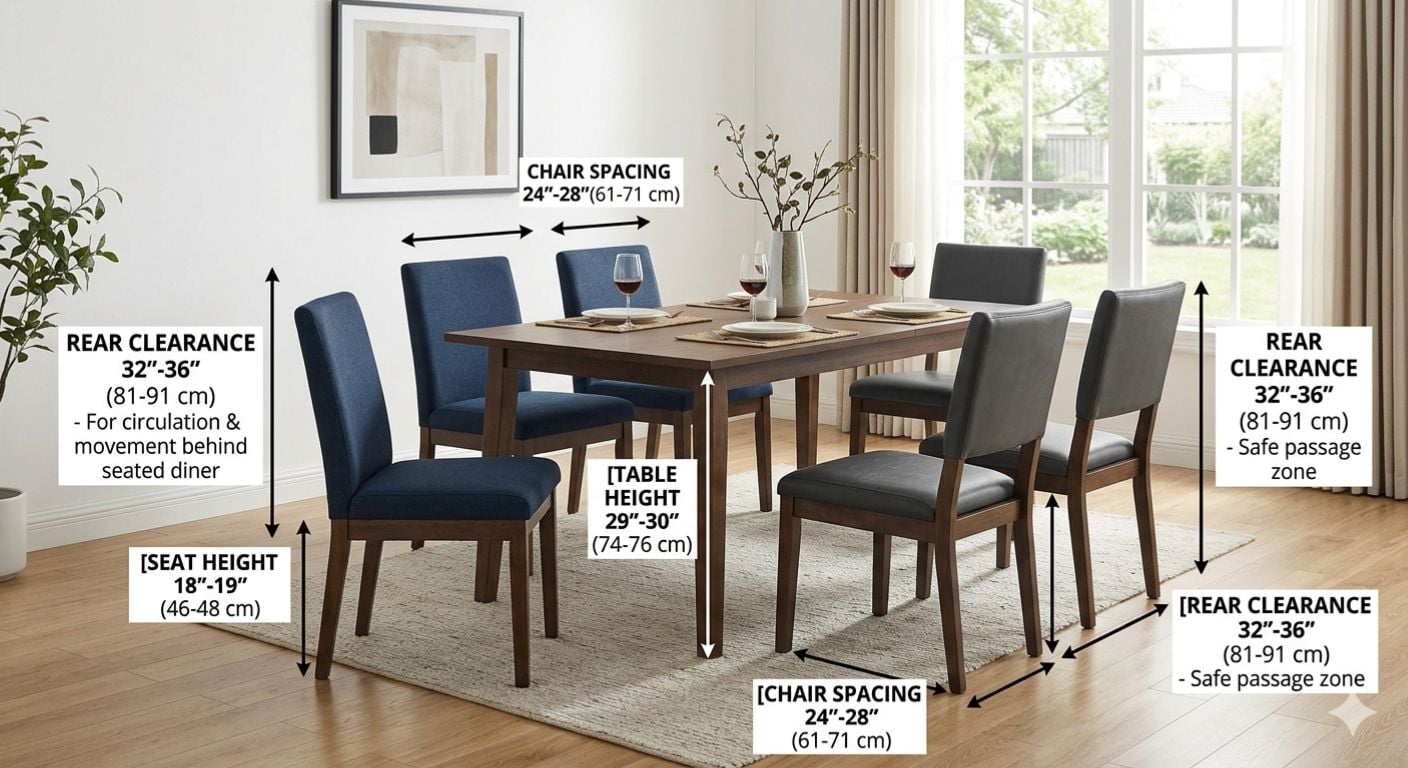
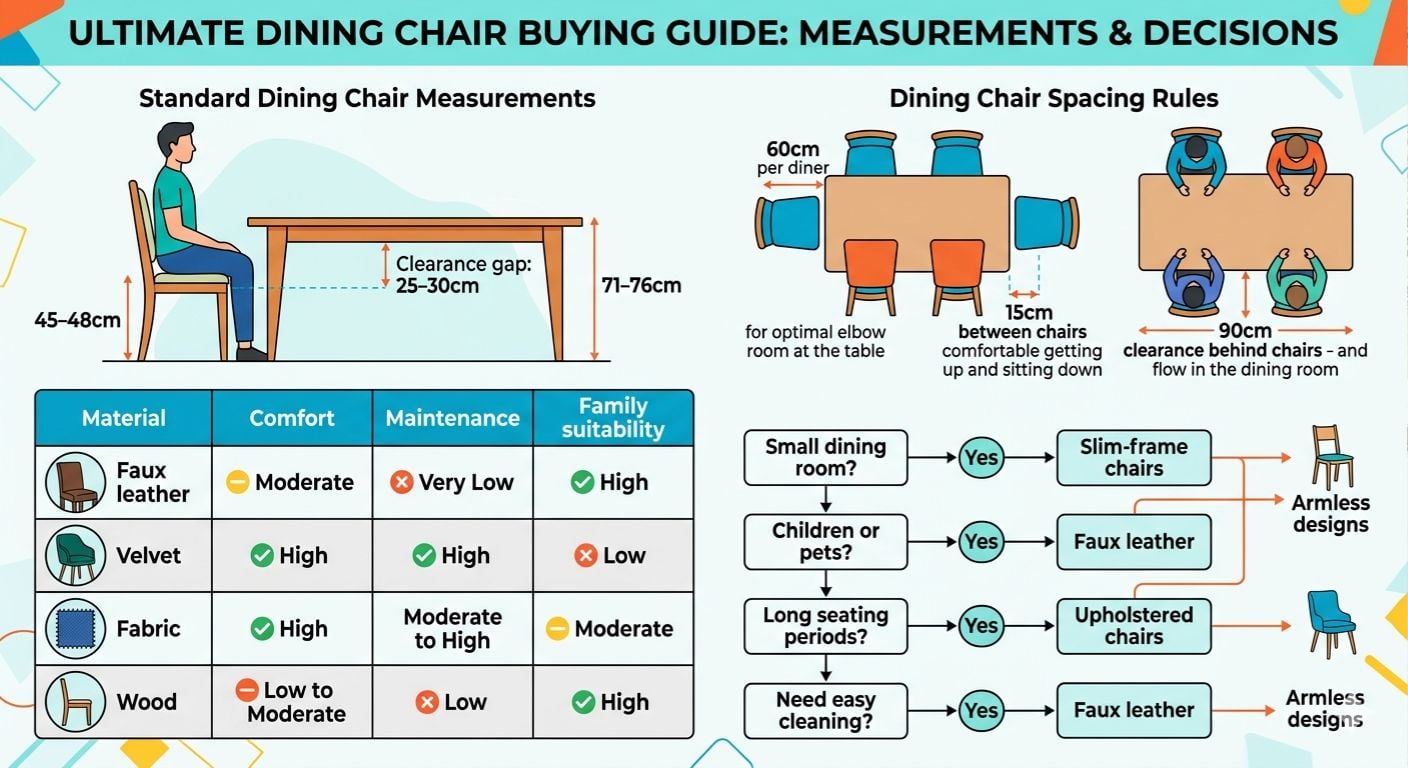
Most standard dining tables are between 71–76cm high. Standard dining chair seat heights usually fall between 45–48cm. This leaves a leg clearance gap of roughly 25–30cm between the seat and tabletop, which is considered the most comfortable range for normal dining posture.
If the gap is too small, users sit cramped against the table edge. If the gap is too large, arm positioning becomes uncomfortable and posture support drops significantly during longer meals.
For a more detailed breakdown of dining chair and table measurements, see this dining chair seat height guide.
Standard Dining Chair Measurements
- Seat height: typically 45–48cm
- Dining table height: typically 71–76cm
- Recommended clearance gap: 25–30cm
- Average chair width per person: around 45–60cm
- Recommended walkway behind chairs: minimum 90cm
One thing we regularly see is customers focusing entirely on table length while overlooking chair width. Wider upholstered chairs can reduce usable seating far more than expected once arm movement and spacing are included.
How Much Space Should You Leave Around Dining Chairs?
You should normally allow around 60cm of table width per person and at least 90cm clearance behind occupied chairs. This gives enough room for people to sit down, push chairs back, and move around the room comfortably without the dining area feeling crowded.
Spacing matters just as much as table size. Even if chairs technically fit underneath the table, poor spacing can make daily use awkward.
General Spacing Rules
- Allow roughly 60cm per seated person
- Leave around 15cm between chair edges where possible
- Maintain at least 90cm clearance behind chairs
- Increase rear clearance in open-plan walkways
- Account for armrests if using carver-style chairs
If the room is compact, avoid oversized winged or heavily padded dining chairs that extend outward visually and physically. Slim-frame chairs with tapered legs usually work better in tighter dining layouts.
For smaller dining rooms or apartments, this compact dining chair guide explains how footprint and visual bulk affect usability.
Choose Materials Based On Daily Use
Dining chair materials should be selected based on maintenance requirements, frequency of use, household type, and seating duration. Upholstery affects both practicality and comfort over time.
Fabric Dining Chairs
Fabric chairs generally provide a softer seating feel and a wider range of textures and colours. They suit dining rooms used for longer meals or social seating.
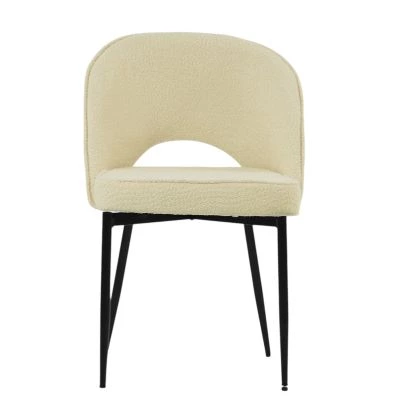
However, lighter woven fabrics may require more maintenance in family homes. Textured materials can also trap crumbs, dust, and pet hair more easily than wipe-clean finishes.
Velvet Dining Chairs
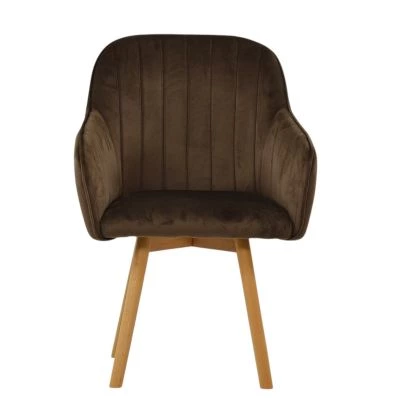
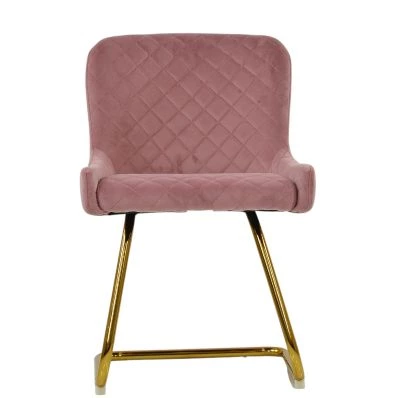
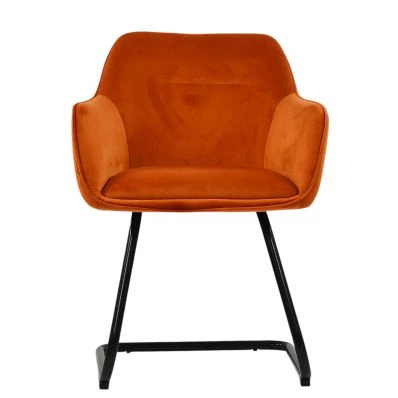
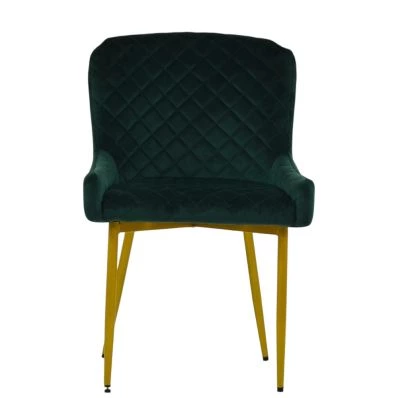
Velvet dining chairs are popular because they provide a softer visual finish and padded seating feel. They are often used in formal dining rooms or lower-traffic spaces.
Velvet can mark more easily than flatter fabrics, particularly in homes with pets or frequent daily use. Performance depends heavily on pile density and fabric quality.
For a detailed breakdown of durability and maintenance considerations, see this guide to velvet dining chairs.
Faux Leather Dining Chairs
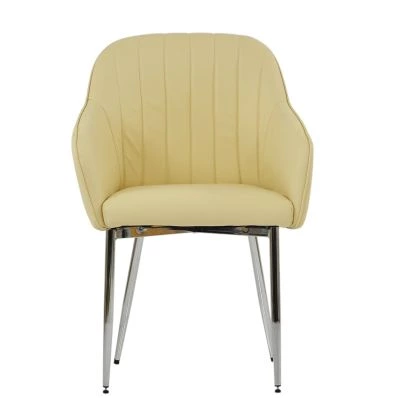
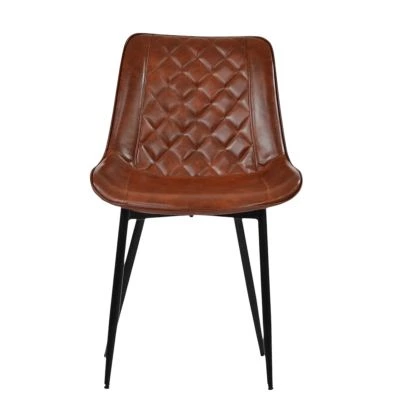
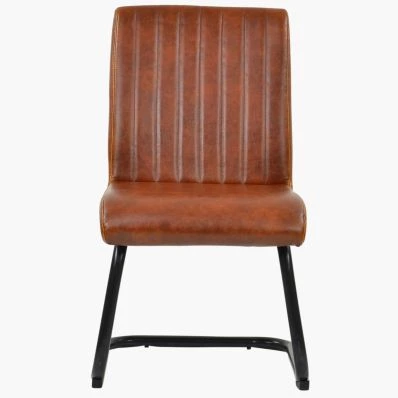
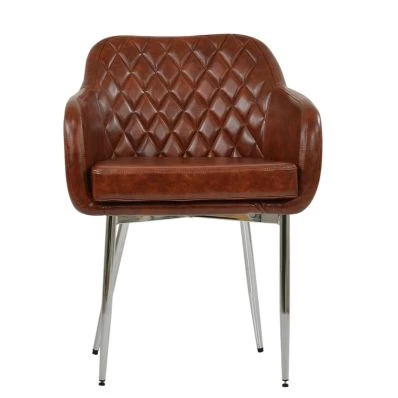
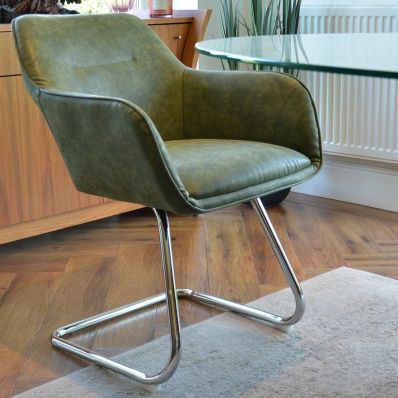
Faux leather remains one of the most practical dining chair materials for busy households because it is wipe-clean and resistant to most food spills.
This makes it particularly useful for homes with children or frequent entertaining. Faux leather also tends to hold its shape well over time compared with some softer fabrics.
According to the NHS home cleaning guidance, smooth wipeable surfaces are generally easier to maintain hygienically in frequently used household areas.
You can also compare material trade-offs in this leather dining chair guide.
Wood And Metal Frame Construction
Frame construction affects long-term stability more than upholstery choice alone.
- Solid wood frames typically provide strong structural rigidity
- Metal frames often suit contemporary layouts and thinner chair profiles
- Cantilever bases create more movement but can feel softer under heavier use
- Powder-coated finishes generally resist scratching better than exposed chrome
Frame thickness and joint quality matter more than appearance alone. Lightweight chairs may look minimal but can sometimes feel unstable during everyday use.
Comfort Matters More Than Most Buyers Expect
Dining chairs are no longer used only for meals. In many homes they are used for laptop work, conversations, children’s homework, and extended evening seating. Comfort therefore becomes a practical requirement rather than a luxury feature.
The biggest comfort factors are usually:
- Seat cushioning density
- Backrest angle
- Seat depth
- Lower back support
- Foot positioning
- Arm movement space
Highly upright chairs may look compact but become uncomfortable during longer sitting periods. Deeply reclined chairs may feel comfortable initially but can create awkward posture at standard dining tables.
For a detailed breakdown of seating ergonomics and cushioning, see this dining chair comfort guide.
Should You Choose Dining Chairs With Arms?
Dining chairs with arms provide additional support and can feel more relaxed during long seating periods, but they require more space and may not tuck fully underneath the table. Armless chairs usually maximise seating capacity and flexibility around tighter dining layouts.
Armchairs are commonly used at the ends of rectangular dining tables while side chairs are used along the sides.
Before buying dining chairs with arms, check:
- Overall chair width
- Arm height clearance beneath the table
- Available spacing between chairs
- Walkway clearance behind the table
For a full comparison of practical pros and cons, see this guide to dining chairs with or without arms.
Think About Chair Shape And Back Support
Backrest shape changes both posture support and how visually heavy the dining area feels.
Low Back Dining Chairs
Low back chairs generally create a more open visual layout and suit smaller dining rooms well. They are easier to slide beneath tables and often feel less bulky.
However, they usually provide less upper-back support during extended sitting.
High Back Dining Chairs
High back chairs provide more shoulder and upper-back support. They often suit formal dining rooms or larger spaces where visual scale matters less.
The trade-off is that they occupy more visual space and can make compact dining rooms feel crowded.
Curved And Wraparound Backs
Curved backrests often improve comfort because they support a more natural seated posture. Wraparound styles can also help users remain positioned centrally at the table.
For more detailed comparisons between different back styles, see this guide to dining chair backs.
Can You Mix Different Dining Chair Styles?
Yes, but mixed dining chair layouts work best when there is still one consistent element connecting the chairs. This could be material, frame colour, seat shape, or leg finish.
The most common successful combinations are:
- Matching chairs in different colours
- Matching frame styles with different upholstery
- Armchairs at table ends with side chairs elsewhere
- Wood and upholstered combinations sharing similar tones
Randomly mixing unrelated chair sizes or heights usually creates imbalance rather than contrast.
How Many Dining Chairs Fit Around A Table?
A standard 180cm dining table usually seats six people comfortably when allowing around 60cm width per person. Narrower chairs may increase capacity slightly, but overcrowding reduces comfort and movement space significantly.
Approximate seating guidelines:
| Table Length | Typical Seating Capacity |
|---|---|
| 120cm | 4 chairs |
| 150cm | 4–6 chairs |
| 180cm | 6 chairs |
| 220cm+ | 8 chairs |
These figures depend heavily on chair width and whether armchairs are included.
For more detailed layout guidance, see this dining table seating guide.
Decision Logic: Which Dining Chair Type Suits Your Situation?
If You Have Children
- Choose wipe-clean materials like faux leather
- Avoid heavily textured upholstery
- Prefer sturdy fixed-leg frames
- Avoid delicate light-coloured velvet finishes
If Your Dining Room Is Small
- Use slimmer chair frames
- Avoid oversized armchairs
- Consider low-back chairs
- Use lighter visual finishes where possible
If You Use Dining Chairs For Working
- Prioritise back support and seat cushioning
- Choose chairs with supportive posture angles
- Avoid very shallow seat bases
- Check frame rigidity carefully
If You Frequently Entertain
- Focus on comfort over ultra-compact sizing
- Maintain generous spacing between chairs
- Consider upholstered seating
- Ensure chairs are easy to move around the table
Common Dining Chair Buying Mistakes
- Buying chairs before measuring the table clearance
- Ignoring total chair width when calculating seating capacity
- Choosing upholstery unsuited to daily household use
- Overcrowding chairs around the table
- Forgetting walkway clearance behind occupied chairs
- Choosing oversized armchairs for compact layouts
- Prioritising appearance over seating comfort
Frequently Asked Questions
What is the standard height of a dining chair?
The standard dining chair seat height is usually between 45–48cm. This is designed to pair with standard dining tables measuring around 71–76cm high, leaving enough leg clearance for comfortable seating posture.
How much space should be allowed between dining chairs?
Allow around 60cm width per person at the table and roughly 15cm between chair edges where possible. Behind occupied chairs, maintain approximately 90cm clearance so people can move comfortably around the dining area.
What is the best dining chair material for family homes?
Faux leather and wipe-clean performance fabrics are usually the most practical for family homes because they resist staining and are easier to clean after everyday spills. Heavily textured fabrics may require more maintenance.
Should dining chairs tuck completely under the table?
Usually yes, particularly in smaller dining rooms where circulation space matters. Chairs that tuck underneath the table reduce obstruction and improve movement around the room when the table is not in use.
Can you mix dining chair styles?
Yes. Mixed dining chair layouts work best when there is still a shared element such as colour tone, leg finish, material, or shape. Completely unrelated chair sizes or heights usually look unbalanced.
Summary: The Main Things To Check Before Buying Dining Chairs
- Match seat height to table height correctly
- Allow around 60cm width per seated person
- Maintain roughly 90cm clearance behind chairs
- Choose upholstery based on daily use, not appearance alone
- Check armrest clearance before buying armchairs
- Prioritise comfort if chairs will be used beyond mealtimes
- Avoid oversized chairs in compact dining rooms
- Consider long-term maintenance before choosing fabrics
The most successful dining chair setups balance spacing, comfort, durability, and table compatibility rather than focusing on a single feature in isolation.
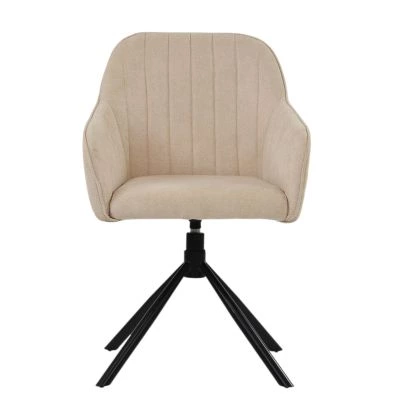
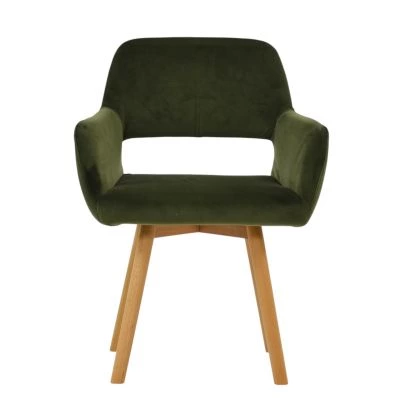
You can browse Lakeland’s full collection of dining chairs here, including upholstered, faux leather, velvet, wooden, and metal-frame designs.


Comments