
 Chat with us on WhatsApp

What Is Lumbar Support and Does It Actually Work?
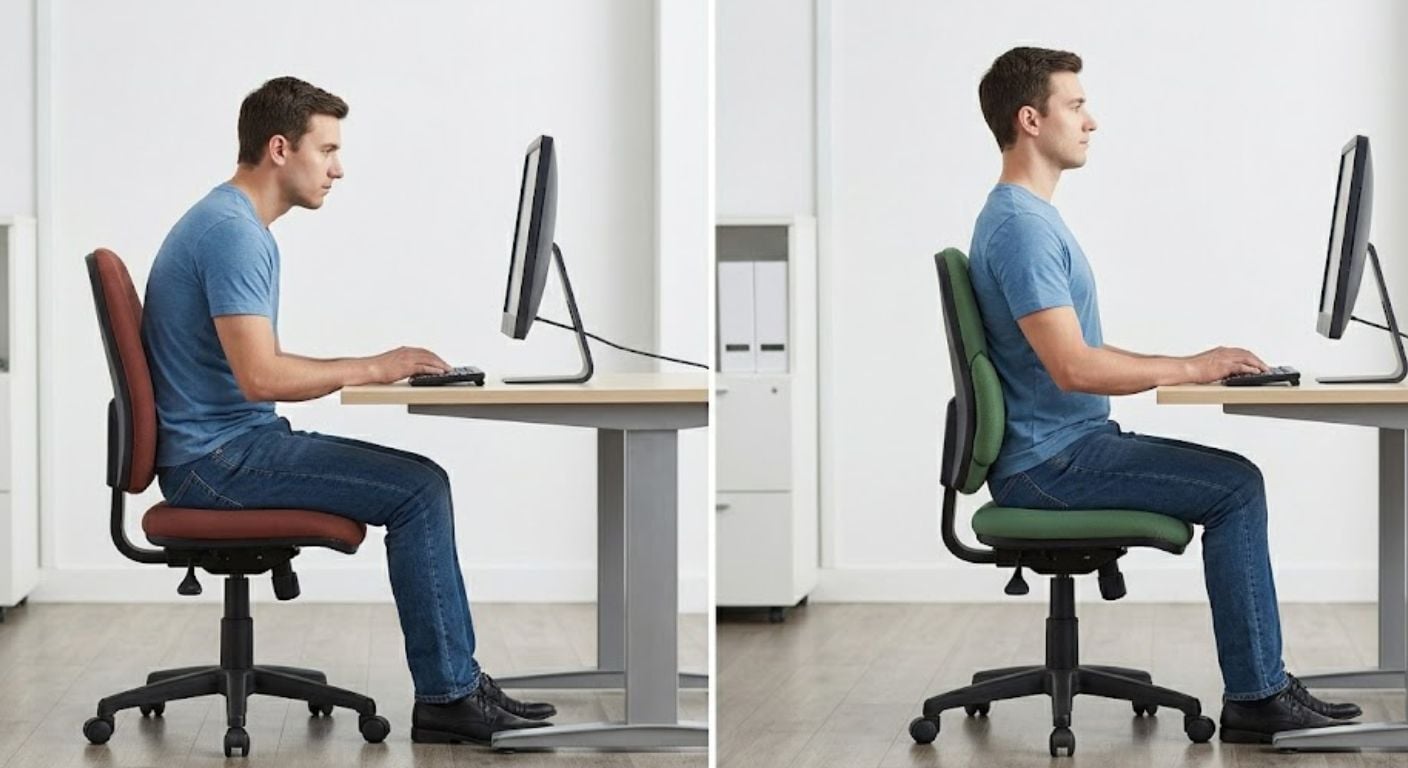
Lumbar support is designed to support the natural inward curve of the lower back while sitting. The aim is not to force you into a perfectly upright position, but to reduce pressure on the lumbar spine and help maintain a more neutral sitting posture during long periods at a desk.
When sitting without support, many people gradually slide forward, round their lower back, and flatten the spine's natural curve. Over time this can increase muscle fatigue and discomfort, particularly during longer working sessions.
For office chair buyers, lumbar support is one of the most commonly advertised features, but it is also one of the most misunderstood. Whether it helps depends on how it is designed, how it is adjusted, and whether it matches your body shape.
What Does Lumbar Support Actually Do?
Lumbar support fills the gap between the chair back and the natural curve of your lower back. This helps keep the lower spine better supported instead of allowing it to collapse backwards into a slouched position.
A well-positioned lumbar support can help:
- Maintain spinal alignment
- Reduce lower back muscle fatigue
- Encourage a more neutral seated posture
- Improve comfort during extended sitting
- Reduce the tendency to slump forward
It is important to understand that lumbar support is not a treatment for back problems. It is a seating feature designed to improve support and reduce strain while sitting.
Does Lumbar Support Work?
Yes, lumbar support works for many people, mainly by improving seated comfort and reducing fatigue during longer desk sessions. It does not guarantee back pain relief, but it can help the lower back stay better supported while sitting.
People who typically benefit include:
- Home workers sitting for long periods
- Office workers using a desk all day
- People who naturally slouch when seated
- Users whose current chair has a flat backrest
Discomfort can also be influenced by desk height, sitting habits, monitor position, activity levels, and existing medical conditions. Lumbar support is one part of a better sitting setup, not the whole solution.
Fixed vs Adjustable vs Dynamic Lumbar Support
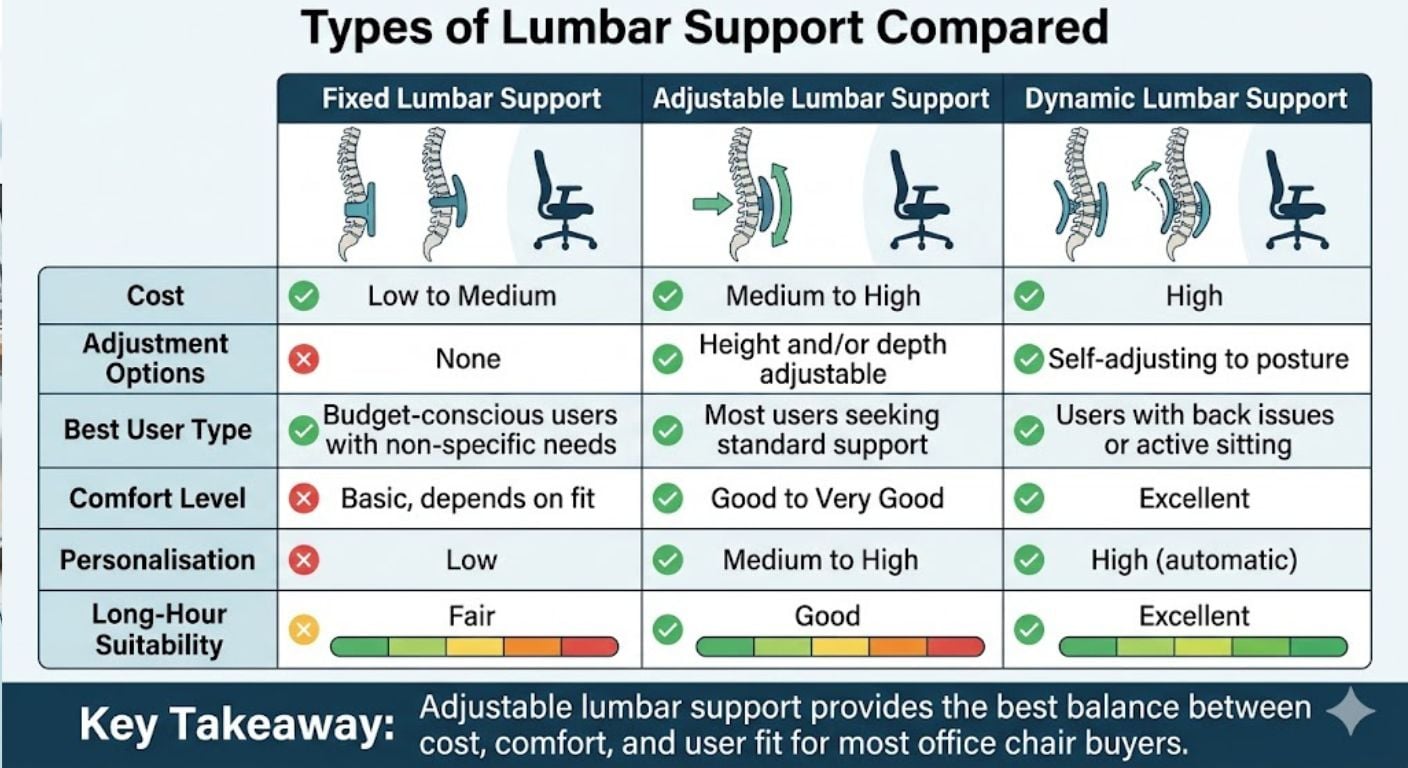
Not all lumbar support systems work in the same way. The main difference is how much control the user has over the support position.
| Type | How It Works | Best For |
|---|---|---|
| Fixed | Built into the backrest with no adjustment | Occasional use and general seating |
| Adjustable | Height and sometimes depth can be altered | Most users and regular desk work |
| Dynamic | Moves with the user while seated | Long working sessions and premium seating |
Fixed Lumbar Support
Fixed support is moulded into the chair backrest. It is simple, usually lower cost, and does not require adjustment. The limitation is that one fixed position has to suit different users, which means it may sit too high or too low for some people.
Adjustable Lumbar Support
Adjustable systems allow the support position to be changed vertically and sometimes horizontally. This gives a better chance of matching the support to your lower back shape and seated height.
We often find our customers underestimate how much positioning matters. A lumbar support that sits just a few centimetres too high can feel uncomfortable even when the chair itself is otherwise well made.
Dynamic Lumbar Support
Dynamic systems move as the user shifts position. They are designed to keep contact with the lower back during movement, rather than relying on one fixed position. These systems are usually found on more expensive office chairs.
How to Adjust Lumbar Support Correctly
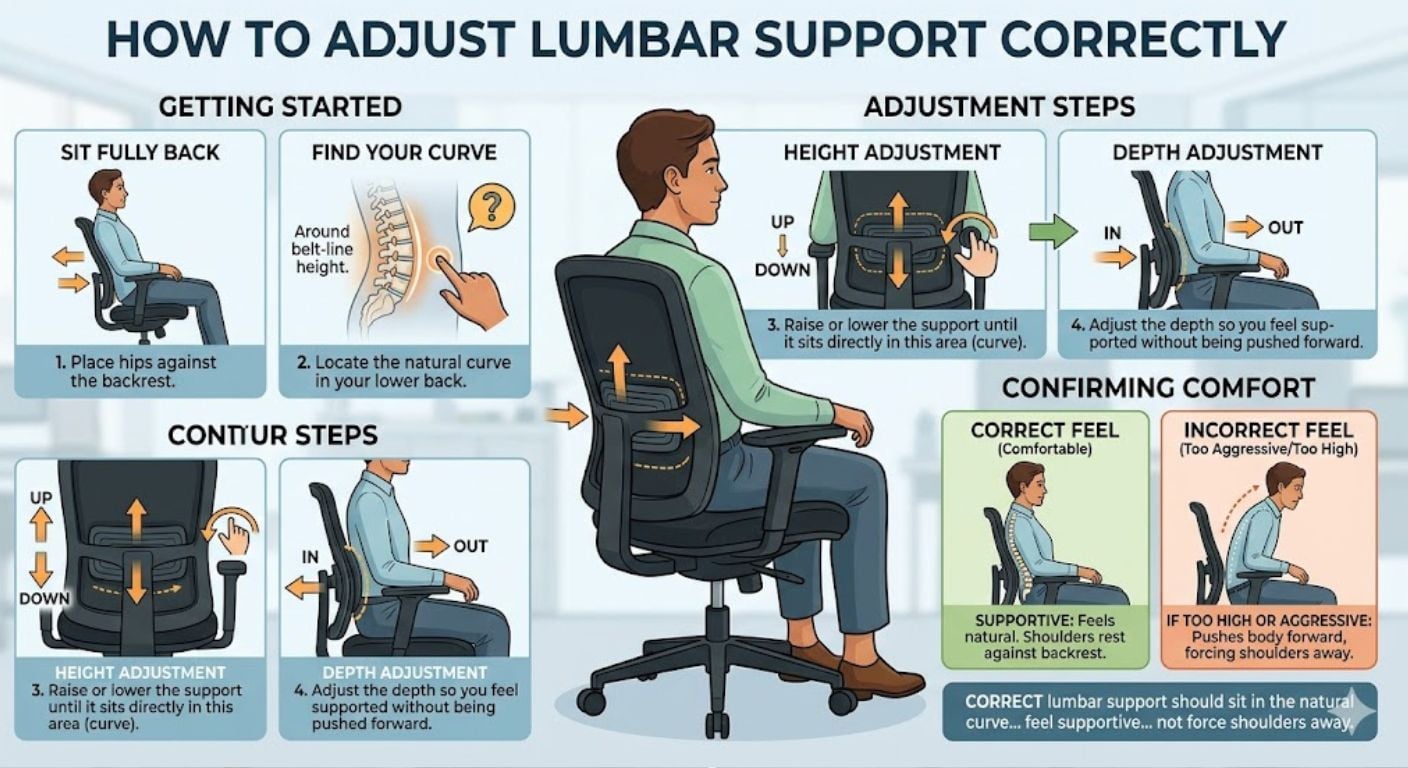
Correct lumbar support should sit in the natural curve of your lower back, usually around belt-line height. It should feel supportive without pushing your body forward or forcing your shoulders away from the backrest.
- Sit fully back in the chair.
- Place your hips against the backrest.
- Locate the natural curve in your lower back.
- Raise or lower the support until it sits directly in this area.
- Adjust the depth so you feel supported without being pushed forward.
If the support feels aggressive or uncomfortable, it is often positioned too high or adjusted too deeply.
Can Lumbar Support Help With Back Pain?
Lumbar support may help reduce discomfort caused by prolonged sitting, but it should not be viewed as a cure for back pain. It can improve seated comfort, but back pain can have many causes beyond the chair itself.
For some users, lumbar support can help:
- Reduce muscle tension
- Improve seated comfort
- Encourage better posture habits
- Reduce fatigue during work
For others, especially where pain has a medical cause, the improvement may be limited. The UK's NHS guidance on back care highlights the importance of movement, posture variation, and regular activity rather than relying only on seating equipment.
Is a Soft Chair Better for Your Back?
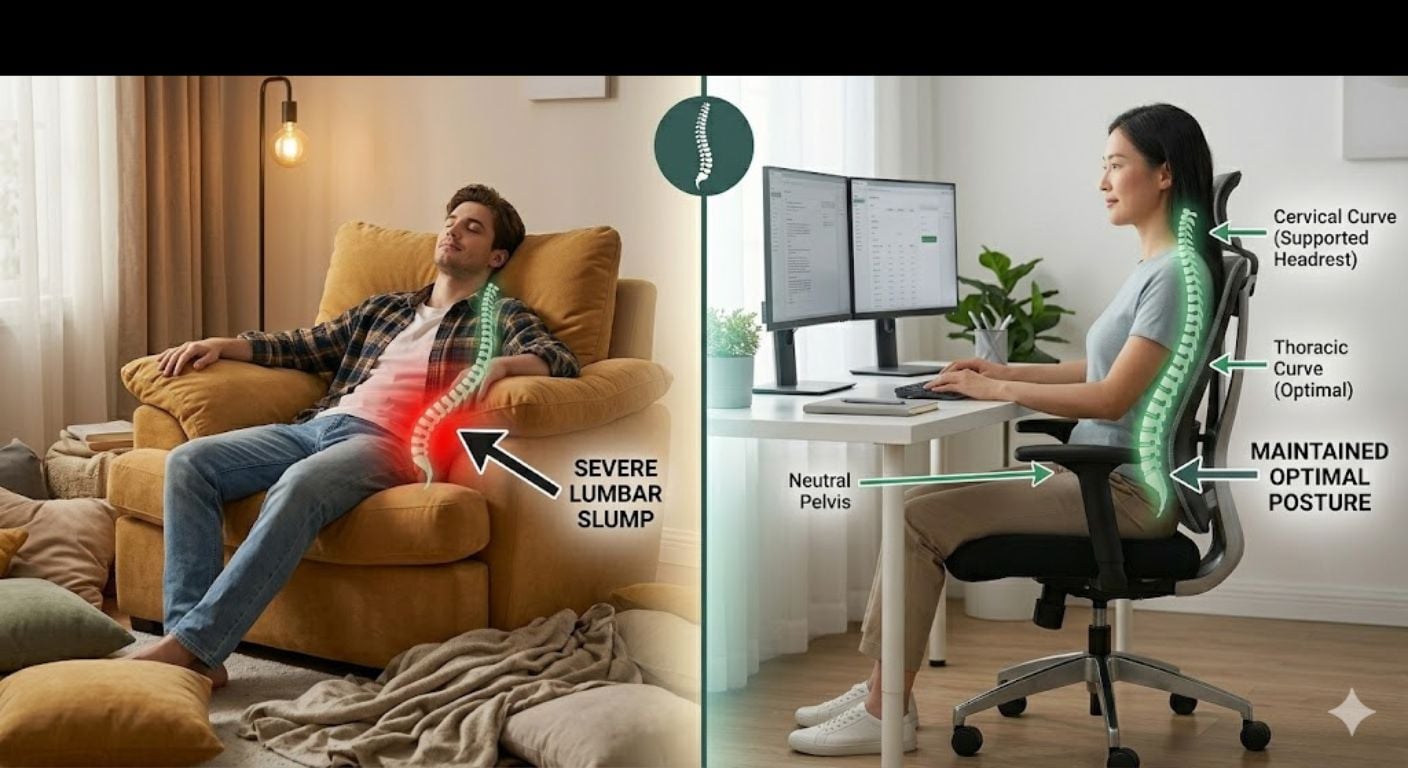
No. Soft does not automatically mean supportive. Very soft seating can allow the pelvis to roll backwards, flattening the lower spine and reducing support.
A chair that feels comfortable for ten minutes may become less comfortable after several hours if it lacks structure. In many cases, moderate firmness combined with properly positioned lumbar support provides better long-term comfort than heavily padded seating.
Should You Add a Lumbar Cushion?
A lumbar cushion can help if your current chair lacks adequate lower back support. It is most useful when you are working from a dining chair, using an older office chair, travelling, or relying on temporary seating.
Built-in support is generally more stable, but a good lumbar cushion can be an effective upgrade where replacing the chair is not practical.
Does Sitting on an Exercise Ball Help?
Exercise balls encourage movement and can activate core muscles, but they provide little direct support for the lower back. They are not usually the best option for long-term desk work.
For occasional use, they may encourage movement. For daily desk work, a supportive office chair is usually the more practical option.
Who Benefits Most From Lumbar Support?
Lumbar support is most useful for people who sit for several hours each day, work from home regularly, or notice lower back fatigue when seated. It may be less important for users who only sit at a desk occasionally.
If you are comparing seating materials alongside support features, our guides on leather office chairs, mesh versus leather office chairs, and velvet office chairs explain how upholstery choices affect long-term comfort and maintenance.
For broader seating material guidance, see our guide to cleaning and maintaining leather chairs.
Frequently Asked Questions
What is lumbar support?
Lumbar support is a feature designed to support the natural inward curve of the lower back while sitting. It helps maintain a more neutral spinal position and can reduce fatigue during prolonged sitting.
Is lumbar support good for you?
For most people who spend long periods sitting, properly adjusted lumbar support can improve comfort and help reduce strain on the lower back.
How high should lumbar support be?
The support should sit in the natural curve of the lower back, typically around belt-line height when seated fully back in the chair.
Can lumbar support completely eliminate back pain?
No. Lumbar support may improve comfort and reduce strain, but back pain can have many causes beyond seating alone.
Is adjustable lumbar support worth it?
For regular desk users, adjustable support is usually worth having because it allows the chair to fit different body shapes more effectively than fixed support.
-
-
-
-
-
-
-
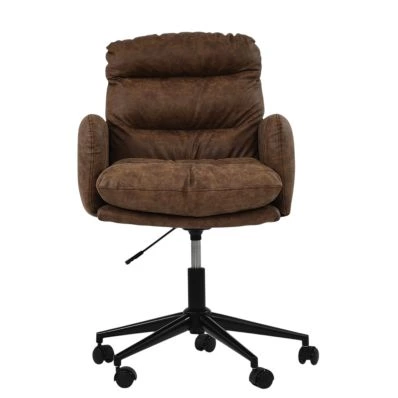
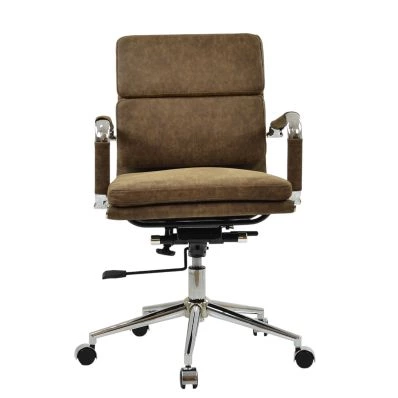 Chester Office Chair in Aged Brown LeatherSpecial Price £119.99 Regular Price £179.99 Original price 33% Inc VATSaving £60
 -
-
-
-
-
Conclusion
Lumbar support works by helping maintain the natural curve of the lower back while sitting. The biggest benefits are usually improved comfort, reduced fatigue, and better long-term sitting posture.
The most effective systems are properly adjusted and matched to the individual user. For regular desk work, adjustable lumbar support is generally more versatile than fixed support and offers a better chance of achieving a comfortable fit.


Comments