
 Chat with us on WhatsApp

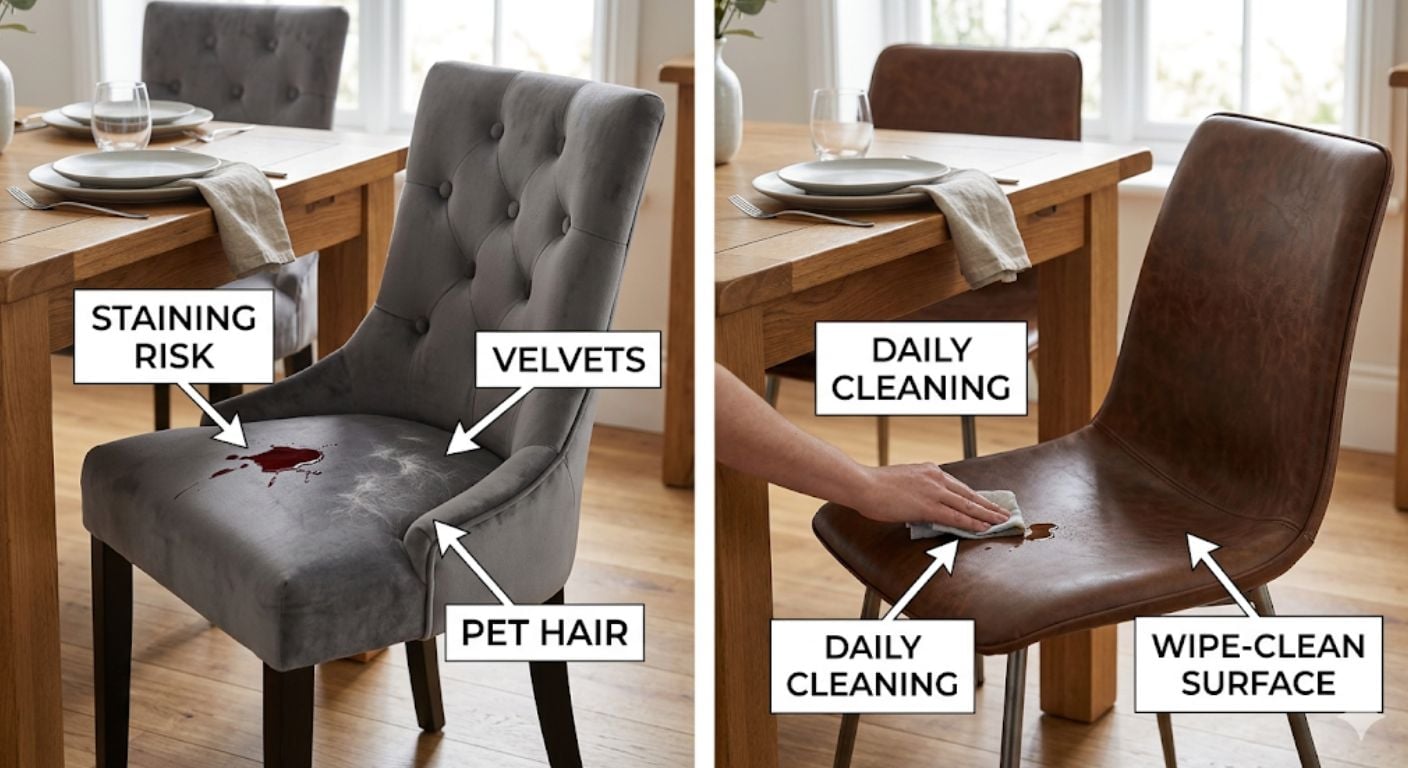
Velvet Dining Chairs vs Leather: Staining vs Wipe-Clean
Choosing between velvet and leather dining chairs is mainly a maintenance decision. Both materials can work well in a dining room, but they behave very differently around food, drink, children, pets, sunlight and daily cleaning.
Velvet gives a softer upholstered feel and more colour depth, but it needs quicker spill response and more regular surface care. Leather and faux leather are usually easier to wipe clean, but they can mark, crack, peel or scratch depending on the material quality and how the chair is used.
This guide compares velvet and leather dining chairs by staining, wipe-clean performance, durability, family use, pets, colour choice and long-term practicality. It is designed to help you choose the right material before you buy, not after the first spill.
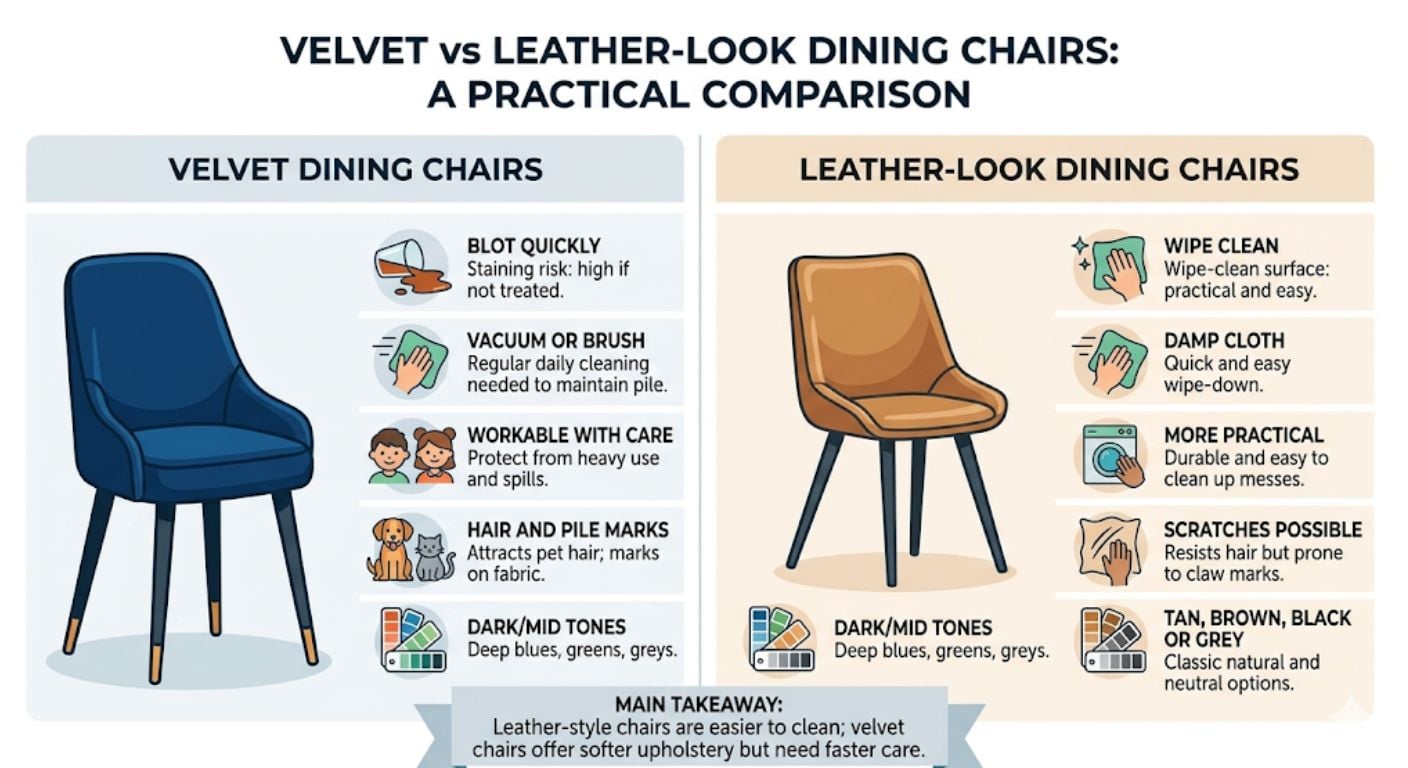
Velvet vs Leather Dining Chairs at a Glance
Choose leather or faux leather if you want the easiest wipe-clean option for everyday meals. Choose velvet if you want a softer upholstered chair and are prepared to clean spills quickly, vacuum regularly and accept that the fabric may show pressure marks or pile movement.
| Decision Point | Velvet Dining Chairs | Leather or Faux Leather Dining Chairs |
|---|---|---|
| Food spills | Needs quick blotting before liquid settles into the pile | Usually wipes clean more easily |
| Daily cleaning | Best with vacuuming and light brushing | Best with a damp cloth and dry wipe |
| Children | Works better in darker colours or performance velvet | Usually more practical for frequent mess |
| Pets | Can attract hair and show claw marks in the pile | Hair removes easily, but claws can scratch the surface |
| Appearance over time | May show shading, pressure marks and pile direction | May crease, crack, peel or scratch depending on quality |
| Best use case | Dining rooms where comfort and softer upholstery matter | Busy kitchens, family dining areas and easier cleaning |
If your priority is simple maintenance, leather-style upholstery usually wins. If your priority is a warmer, softer upholstered seat, velvet can still be practical, but the chair needs to be chosen and cared for properly.
You can browse Lakeland’s main dining chairs range to compare upholstered, leather-look and mixed-material options in one place.
How Velvet Handles Staining and Spills
Velvet is not automatically unsuitable for dining chairs, but it is less forgiving than wipe-clean upholstery. The pile gives velvet its soft surface and colour depth, but that same texture can hold crumbs, pet hair and liquid if spills are not dealt with quickly.
The main issue is not always permanent staining. It is often surface marking. Velvet can show pressure marks, water rings, pile direction and flattened areas. These marks may improve with brushing or steaming, but they make velvet more sensitive than leather-style materials in everyday family dining spaces.
Velvet works best when:
- Spills are blotted immediately
- Darker colours are chosen for frequent use
- The fabric is vacuumed regularly
- Sharp pet claws are not likely to drag across the seat
- The room is not exposed to strong direct sunlight all day
Performance velvet is a better choice than delicate decorative velvet for dining chairs. It is usually made from synthetic fibres and designed to resist daily wear more effectively. It still needs care, but it gives more margin for real homes where food, drinks and frequent sitting are part of normal use.
Before choosing velvet, it is worth understanding how it performs in real dining spaces. Factors such as stain resistance, pet hair, food spills, cleaning requirements, and long-term wear can vary significantly between different velvet fabrics. Our guide to Are Velvet Dining Chairs Practical? Staining, Cleaning & Daily Use explores the advantages, drawbacks, cleaning methods, and everyday maintenance considerations to help you decide whether velvet is the right choice for your home.
How Leather Handles Wipe-Clean Dining Use
Leather and faux leather dining chairs are usually easier to clean after meals because the surface is less absorbent. Most minor spills can be wiped away with a damp cloth before they settle. This makes leather-style upholstery a strong choice for kitchens, family dining tables and open-plan spaces where chairs are used every day.
The advantage is simple: food residue sits on the surface for longer instead of sinking quickly into fabric. That does not mean leather is maintenance-free. Real leather can dry, crease or absorb oils if neglected. Faux leather can crack or peel over time if the coating is poor quality or exposed to heat, sunlight or heavy abrasion.
Leather-style chairs work best when:
- You need fast cleaning after meals
- Children regularly use the dining table
- Pet hair needs to be removed quickly
- The chairs are used in a kitchen or dining area every day
- You prefer a smoother seat surface over soft pile upholstery
One thing we see with our customers is that wipe-clean material matters most after the chairs arrive; many people choose by colour first, then realise daily cleaning is the part they notice every week.
For more detail on leather types, faux leather and cleaning expectations, read Lakeland’s dedicated leather dining chair guide.
Staining: Which Material Is More Forgiving?
Leather-style upholstery is more forgiving for wet spills. Velvet is more forgiving for visual softness and comfort, but less forgiving when food, sauces or coloured drinks are left untreated. The practical difference is how quickly the material absorbs or holds the spill.
For dining chairs, the most common staining risks are:
- Tea, coffee and red wine
- Tomato-based sauces
- Oily food residue
- Chocolate and sticky desserts
- Children’s drinks
- Make-up transfer or hand cream
On leather or faux leather, these usually remain on the surface long enough to wipe away. On velvet, liquid can move into the pile faster, especially if rubbed. Rubbing is one of the most common cleaning mistakes because it pushes the stain wider and can distort the fabric surface.
If staining is your main concern, choose leather-style upholstery first. If you prefer velvet, choose darker colours, avoid pale neutrals in high-use family areas, and treat the chair as a fabric surface that needs prompt care.
How to Clean Food Spills Off Velvet Dining Chairs
Act quickly, remove solids first, then blot rather than rub. Velvet should be cleaned with controlled pressure because aggressive rubbing can flatten or distort the pile. Always check the care label before using any cleaning product.
- Remove food residue. Use a spoon or blunt edge to lift solids from the surface. Do not scrape hard into the fabric.
- Blot liquid immediately. Use a clean, dry cloth and press gently. Do not rub in circles.
- Use a lightly damp cloth if suitable. Work from the outside of the mark inward to avoid spreading it.
- Let the area dry naturally. Avoid direct heat from hairdryers or radiators.
- Brush the pile lightly. Once dry, use a soft upholstery brush to restore the surface direction.
For stubborn stains, test any cleaner on a hidden area first. If the chair has a manufacturer’s cleaning code, follow that rather than general advice. Some velvet finishes tolerate water-based cleaning better than others.
How to Clean Leather or Faux Leather Dining Chairs
Leather-style dining chairs are usually cleaned with a soft damp cloth followed by a dry cloth. The aim is to remove residue without soaking seams, damaging coatings or leaving moisture sitting on the surface.
- Wipe loose crumbs away. Use a dry cloth or soft brush around seams.
- Clean with a damp cloth. Use mild soapy water only if the care label allows it.
- Dry the surface. Do not leave water sitting on the seat or stitching.
- Avoid harsh cleaners. Bleach, abrasive pads and strong solvents can damage the finish.
- Condition real leather if required. Faux leather does not need leather conditioner.
Real leather and faux leather should not be treated as the same material. Real leather may need occasional conditioning. Faux leather is usually simpler to wipe, but its surface coating can be damaged by heat, friction and unsuitable cleaners.
Durability: What Actually Matters Beyond the Cover Material
Durability is not decided by upholstery alone. A dining chair lasts longer when the frame, seat support, foam and cover material all work together. A strong fabric on a weak frame is still a weak chair.
When comparing velvet and leather dining chairs, judge durability through four practical areas:
- Frame strength: the chair should feel stable, with no wobble through the legs or joints.
- Seat structure: the seat should support regular sitting without sagging quickly.
- Foam resilience: the padding should recover after use rather than flattening early.
- Upholstery resistance: the cover should suit the level of spills, abrasion, sunlight and cleaning it will face.
Leather can last well when the material quality is good and the surface is cared for. Faux leather is practical but more dependent on coating quality. Velvet can also last well, especially synthetic or performance velvet, but it needs more careful handling around spills and pet claws.
If you are comparing several chair materials, Lakeland’s broader material comparison guide explains how upholstery, wood, plastic and metal differ across everyday dining use.
Kids, Pets and Busy Homes
For homes with children, leather-style upholstery is usually the safer choice. It gives more time to clean spills and handles sticky hands better than velvet. For homes with pets, the answer depends on whether hair, claws or scratching are the bigger issue.
Choose leather-style dining chairs if:
- Children eat at the table every day
- You need to wipe chairs quickly after meals
- Drinks are often spilled
- You want less routine upholstery maintenance
- Pet hair removal is a regular task
Choose velvet dining chairs if:
- The dining space is used more carefully
- You prefer a softer fabric seat
- You are choosing darker or more forgiving colours
- You are prepared to vacuum and brush the fabric
- Pets are unlikely to scratch or climb on the chairs
For very high-mess family spaces, plastic can also be worth considering because it is simple to wipe down and does not absorb liquid like upholstery.
Colour Choice: Hiding Stains, Hair and Daily Marks
Darker velvet colours usually hide food marks better than pale velvet, but they may show light pet hair more clearly. Mid-tone colours are often the most balanced option because they do not show every crumb, hair or pressure mark as strongly.
For velvet dining chairs, practical colour choices include:
- Navy: good for hiding darker food marks and general wear
- Dark green: forgiving for everyday use and less stark than black
- Charcoal or dark grey: practical for mixed households with children or pets
- Black: strong for stains, but can show dust, crumbs and pale hair
- Blush, cream or pale grey: better for lower-use dining spaces
For leather-style chairs, tan, brown, black and grey are usually easier to live with than very pale finishes. Pale leather or faux leather can show dye transfer from clothing, especially dark denim, and may need more frequent wiping.
Lakeland’s dining chair category includes different finishes, so it is worth comparing colour and material together rather than treating them as separate decisions.
Sunlight, Heat and Open-Plan Kitchens
Both velvet and leather-style upholstery can suffer in strong sunlight. Velvet may fade or show uneven pile changes. Real leather can dry out. Faux leather can become brittle or crack faster when exposed to heat and direct sun.
In open-plan kitchens, avoid placing upholstered dining chairs directly beside radiators, bifold doors or large south-facing windows without considering sunlight exposure. This matters more for darker colours because fading can be more visible.
If the dining area receives strong sun every day, choose a material and colour that will age evenly. Mid-tone finishes are usually more forgiving than very dark or very pale options. Regular rotation of chairs can also help wear and fading stay more even across the set.
Safety and Upholstery Standards
Upholstered dining chairs sold in the UK must be treated as regulated furniture products, not just decorative items. UK Government guidance explains that domestic upholstered furniture is covered by fire safety rules designed to reduce ignition risk in the home. :contentReference[oaicite:0]{index=0}
This matters because dining chairs are often bought in sets and used daily. When buying upholstered velvet, leather or faux leather dining chairs, check that the retailer provides compliant products and clear product information. The decision should not be based on fabric appearance alone.
Decision Logic: If This, Choose That
Use the material decision as a practical filter. Start with cleaning, then think about comfort, colour and long-term wear.
| Situation | Better Choice | Reason |
|---|---|---|
| Children eat at the table daily | Leather or faux leather | Faster wipe-clean surface after spills and sticky hands |
| You want a softer upholstered feel | Velvet | Warmer texture and more cushioned surface feel |
| Pets shed light hair | Mid-tone leather-style upholstery | Hair removes more easily and is less visible than on dark velvet |
| Pets scratch furniture | Neither is perfect | Leather can scratch; velvet can mark or pull. Consider a less delicate finish. |
| Dining area gets strong direct sunlight | Mid-tone leather-look or durable fabric | Very dark velvet and leather can show fading more clearly |
| You want the lowest daily maintenance | Leather or faux leather | Smoother surface usually needs less routine care |
| The room is used mainly for occasional dining | Velvet | Lower spill risk makes the softer fabric easier to manage |
If the dining space is high-use, prioritise wipe-clean performance. If the space is lower-use and comfort matters more, velvet becomes easier to justify. If you are unsure, choose the material that suits the messiest normal day in your home, not the tidiest one.
Where Wooden and Plastic Dining Chairs Fit Into the Decision
Velvet and leather are not the only practical choices. Wooden and plastic dining chairs solve different problems and should be considered when upholstery maintenance feels like the wrong trade-off.
Wood is a strong option when you want a firmer chair with less fabric maintenance. It can still scratch, dent or mark, but it does not hold crumbs or absorb spills in the same way as upholstery.
Plastic is the simplest surface for wiping down, although it may not offer the same padded comfort as upholstered seating. It is especially useful where cleaning speed matters more than softness.
How to Choose the Right Dining Chair Material
The right choice is the material that matches your actual dining routine. A chair that looks good but does not suit daily use will become frustrating quickly. A practical chair that feels too firm or visually wrong may also be a poor fit.
Use this order:
- Start with use level. Daily family meals need easier cleaning than occasional dining.
- Assess spill risk. If food and drinks are often dropped, choose wipe-clean first.
- Consider pets. Hair, claws and climbing behaviour all affect upholstery differently.
- Choose colour practically. Mid and dark tones are usually more forgiving than pale finishes.
- Check the frame and seat quality. Upholstery alone does not make a chair durable.
- Match comfort expectations. Velvet usually feels softer; leather-style surfaces usually feel smoother and cooler.
For most busy homes, leather-style dining chairs are the safer everyday choice. For dining rooms where softness, fabric texture and colour depth matter more, velvet is a good option when you choose the right colour and accept the care routine.
Category Integration: Where to Browse Next
Once you know which material suits your home, compare chairs within the right category rather than starting again from the full market. Material choice should narrow the decision, not make it more complicated.
Browse Lakeland’s main dining chairs range for the full selection. If velvet is the better fit, compare options in the velvet dining chairs range. If easier cleaning is the priority, compare leather-look and faux leather options where available.
The aim is to choose a chair that suits how the table is used every week. Material, colour, frame and cleaning expectations should all support that decision.
Frequently Asked Questions
Are velvet dining chairs okay with kids and pets?
Velvet dining chairs can work with kids and pets, but they are not the lowest-maintenance choice. Choose darker colours or performance velvet, clean spills quickly and vacuum regularly. If sticky hands, dropped food and pet hair are daily issues, leather-style upholstery is usually easier to manage.
Are leather dining chairs easier to clean than velvet?
Yes, leather and faux leather dining chairs are usually easier to clean than velvet. Most food spills sit on the surface long enough to wipe away. Velvet needs faster blotting and more careful cleaning because liquid can settle into the pile and rubbing can damage the surface.
Do velvet dining chairs stain easily?
Velvet can stain if spills are left untreated, especially pale colours or delicate fabrics. The main risk is liquid settling into the pile. Performance velvet and darker colours reduce the risk, but they do not remove the need for quick cleaning after food or drink spills.
Is faux leather better than performance velvet for dining chairs?
Faux leather is usually better for wipe-clean convenience. Performance velvet is better if you want a softer fabric feel while keeping better durability than delicate velvet. Faux leather may peel over time if poor quality; performance velvet may still show pile marks, pet hair or staining.
What colour velvet hides stains best?
Navy, dark green, charcoal and darker grey velvet usually hide food marks better than cream, blush or pale grey. Black can hide stains but may show dust and light pet hair. Mid-dark colours are often the safest choice for regular dining use.
Can leather dining chairs scratch?
Yes, leather and faux leather dining chairs can scratch, especially from pet claws, sharp objects or abrasive cleaning. Real leather may develop natural creasing and surface marks. Faux leather depends heavily on coating quality and can crack or peel if damaged or exposed to heat.
Which dining chair material is best for a busy kitchen?
For a busy kitchen, leather-style or plastic dining chairs are usually more practical than velvet. They are easier to wipe after meals and less vulnerable to liquid spills. Velvet can still work, but it needs darker colours, quick cleaning and more routine care.
How often should velvet dining chairs be cleaned?
Vacuum velvet dining chairs weekly if they are used often. Blot spills immediately and brush the pile lightly when needed. Avoid soaking the fabric or rubbing in circles. For occasional dining rooms, cleaning can be less frequent, but dust and crumbs should still be removed regularly.
-
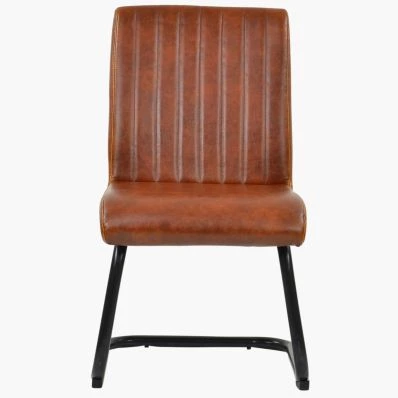
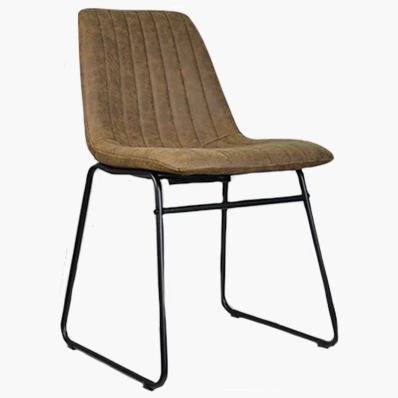 Plato Dining Chair in Aged Brown LeatherSpecial Price £59.99 Regular Price £89.99 Original price 33% Inc VATSaving £30
 -
-
-
-
-
-
-
-
-
-
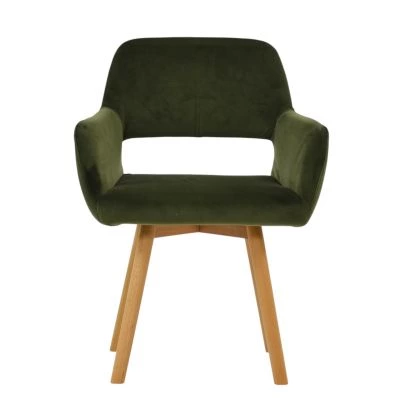
-
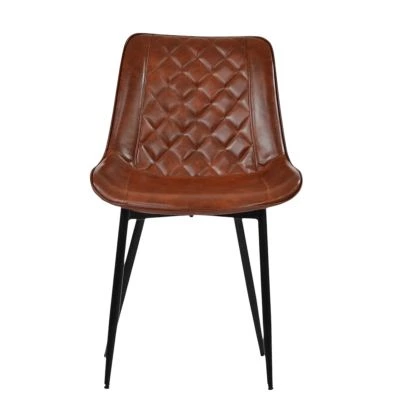 Hogan Dining Chair in Vintage Brown LeatherSpecial Price £44.99 Regular Price £69.99 Original price 36% Inc VATSaving £25Out of stock
Structured Summary
- Best for wipe-clean use: leather or faux leather dining chairs.
- Best for softer upholstery: velvet dining chairs, especially performance velvet.
- Best for children: leather-style upholstery is usually the safer everyday choice.
- Best for pets: leather-style chairs are easier for hair removal, but claws can scratch them.
- Best velvet colours for regular use: navy, dark green, charcoal and mid-dark grey.
- Common mistake: choosing pale velvet for a high-use family dining area.
- Cleaning mistake to avoid: rubbing velvet spills in circles.
- Durability rule: judge the frame, seat support, foam and upholstery together.
- Decision shortcut: if cleaning speed matters most, choose leather-style upholstery; if softness matters most, choose velvet.
For a full comparison of styles and materials, browse Lakeland’s dining chairs range and narrow the choice by how the table is used day to day.


Comments