
 Chat with us on WhatsApp

Bar Stool Materials: Which Are Best For Each Situation
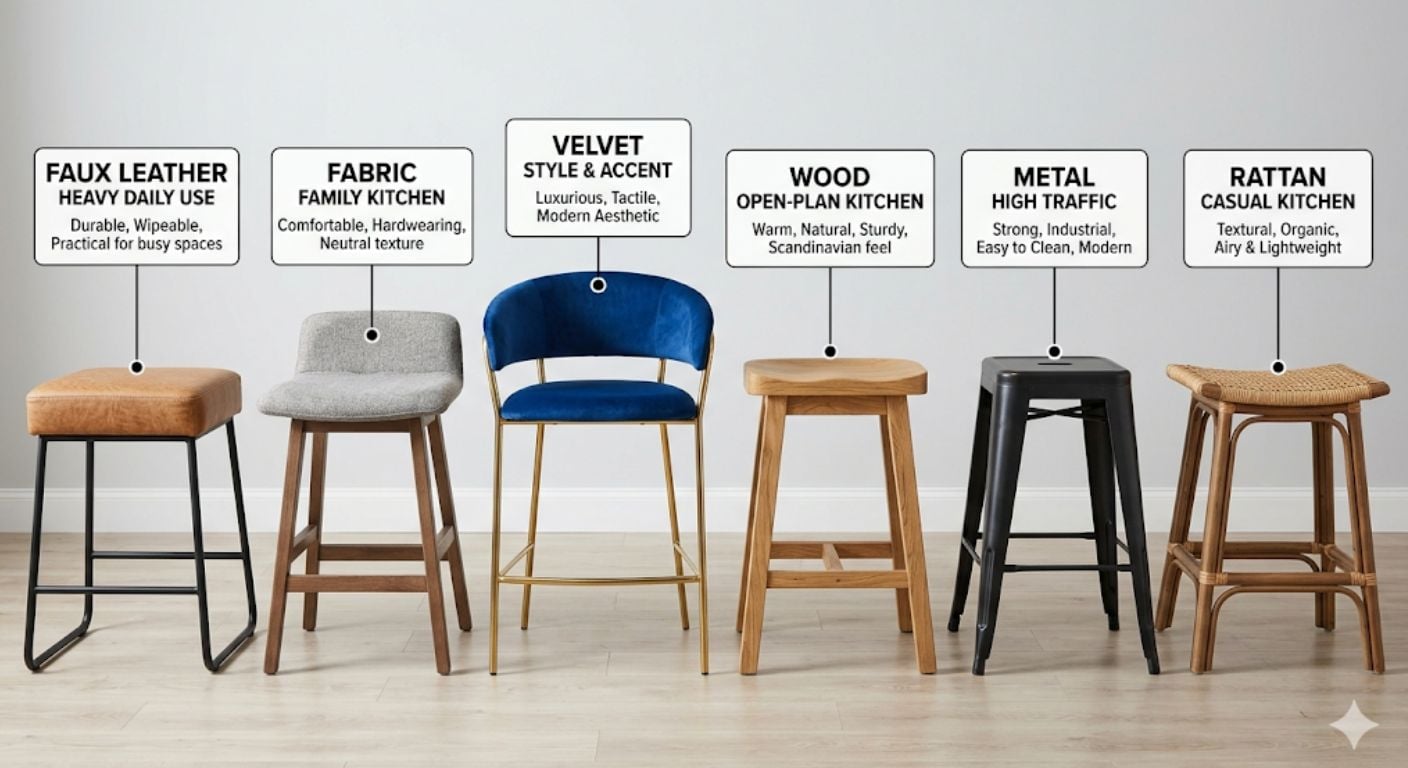
Choosing the right bar stool material affects more than appearance. The material changes how the stool handles spills, scratches, daily wear, temperature changes, cleaning, and long-term durability. A stool that works well in a quiet breakfast area may perform poorly in a busy family kitchen or an open-plan entertaining space.
The challenge is that most buyers compare styles before thinking about how the material behaves in real use. Leather, fabric, velvet, wood, metal, and rattan all solve different problems. Some are easier to clean. Some age better. Some are lighter, quieter, or more resistant to scratches and moisture.
This guide breaks down the strengths, limitations, maintenance requirements, and best-use cases for the main bar stool materials used in UK homes. It also explains how frame materials, upholstery choices, and finishes affect durability, stability, and long-term ownership.
If you are still deciding between stool formats, height types, or room layouts, you can browse Lakeland’s full range of bar stools alongside this guide.
The Main Bar Stool Materials Explained
The majority of bar stools use a combination of three material layers:
- Frame material
- Seat structure
- Upholstery or surface finish
A stool may combine a powder-coated steel frame with faux leather upholstery, or a solid wood frame with fabric seating. Understanding how each layer behaves makes it easier to predict how the stool will perform over time.
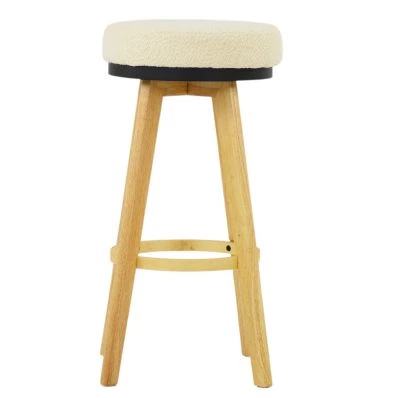
Solid Wood Bar Stools
Solid wood remains one of the most widely used materials for fixed-height bar stools. Oak, beech, walnut, and ash are common because they provide strength without excessive weight.
Wooden stools are normally chosen for:
- Traditional kitchens
- Shaker-style spaces
- Farmhouse interiors
- Scandinavian layouts
- Fixed breakfast bars
The main advantage of wood is repairability. Minor scratches, scuffs, and marks can often be sanded or refinished instead of permanently damaging the stool.
Wood also feels visually softer than metal frames. In open-plan kitchens with stone worktops and hard flooring, wooden stools can reduce the overly industrial look that some metal-heavy spaces create.
The trade-off is moisture sensitivity. Excessive water exposure can lead to swelling, warping, or joint movement over time.
We find many of our customers focus on upholstery first and only notice loose wooden joints years later when stools are heavily used without occasional tightening.
For households wanting more detailed maintenance guidance, see How to Care for Wooden Bar Stools.
Metal Bar Stools
Metal frames are commonly used in:
- Industrial kitchens
- Commercial-style home bars
- Minimalist interiors
- Compact kitchens
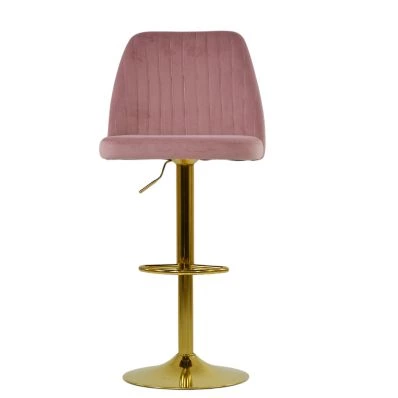
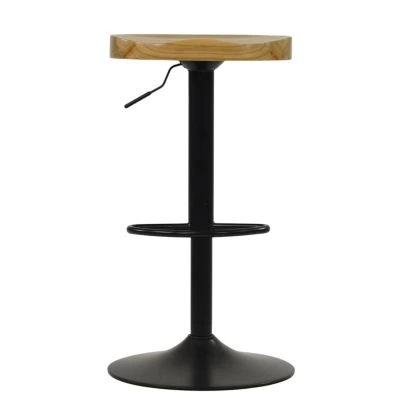
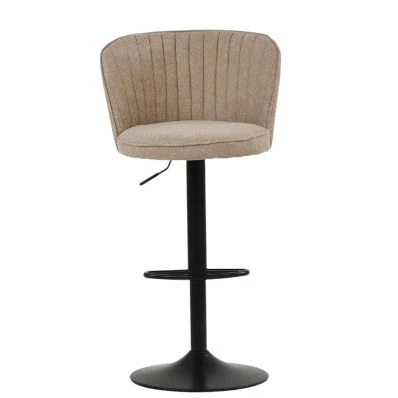
- Adjustable gas-lift stools
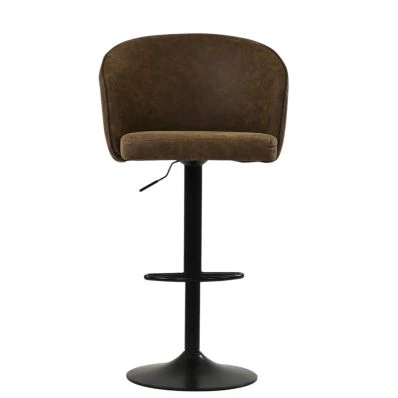
Steel provides high structural strength and works well for daily-use seating. Powder-coated finishes improve scratch resistance and reduce visible wear.
Common finishes include:
- Chrome
- Brushed steel
- Matte black powder coating
- Brass-effect coatings
- Gunmetal finishes
Metal stools generally outperform wood in high-traffic environments because they resist movement, twisting, and impact damage more effectively.
The finish matters as much as the metal itself.
- Powder-coated steel handles daily wear well
- Stainless steel improves corrosion resistance
- Chrome reflects fingerprints more visibly
- Brushed finishes hide scratches better
For outdoor or semi-outdoor use, aluminium or stainless steel performs better than untreated steel because both resist corrosion more effectively.
If you are comparing finishes specifically, see Cleaning Metal Bar Stools & Rust Removal.
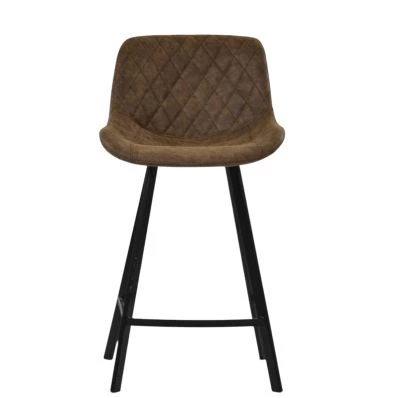
Faux Leather Bar Stools
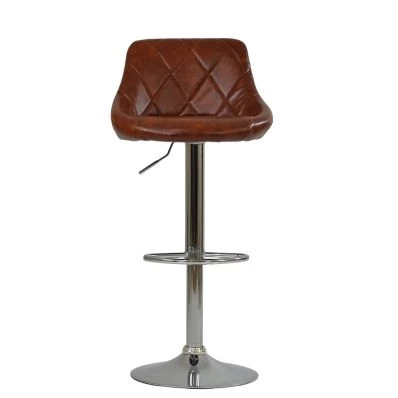
Faux leather is one of the most practical upholstery choices for kitchens.
It is widely used because it combines:
- Wipe-clean surfaces
- Lower maintenance
- Consistent colouring
- Lower cost than genuine leather
- Good stain resistance
Modern PU and vegan leather materials are substantially better than older bonded leather products. Better-quality faux leather resists cracking more effectively and usually handles food spills without permanent marking if cleaned quickly.
This makes faux leather particularly useful for:
- Family kitchens
- Rental properties
- Breakfast bars
- Daily dining use
- Homes with younger children
The downside is heat sensitivity. Lower-grade faux leather can stiffen, peel, or crack over time when exposed to strong sunlight or heavy daily friction.
For buyers comparing leather types in more depth, see:
- Leather Bar Stools: Real vs Faux, Maintenance & Cracking Risk
- Leather Bar Stools: Real vs Faux, What to Expect & How to Clean
Genuine Leather vs Faux Leather
Genuine leather and faux leather solve different problems.
| Material | Best For | Advantages | Trade-Offs |
|---|---|---|---|
| Genuine leather | Long-term ownership | Ages naturally, durable, premium texture | Higher cost, requires conditioning |
| Faux leather | Busy kitchens | Wipe-clean, lower maintenance, lower cost | Can crack over time |
| Bonded leather | Budget seating | Lower initial cost | Shorter lifespan |
Genuine leather develops visible patina and texture changes over time. Many buyers prefer this because natural wear looks intentional rather than damaged.
Faux leather generally stays visually consistent for longer but may deteriorate more suddenly once the surface coating begins to fail.
For everyday practicality, faux leather usually suits busy households better.
For long-term ownership and lower replacement frequency, genuine leather often performs better if maintained correctly.
Fabric Bar Stools
Fabric upholstery softens the overall feel of a kitchen and reduces the colder appearance created by metal-heavy interiors.
Fabric stools work well in:
- Open-plan living spaces
- Softer contemporary kitchens
- Dining-led islands
- Extended sitting areas
- Homes with warmer colour palettes
Compared with leather, fabric normally feels:
- Warmer in winter
- Less sticky in summer
- Softer during longer sitting sessions
Performance depends heavily on the fabric type.
Performance Fabrics
Modern performance fabrics are designed to improve stain resistance and daily durability.
These fabrics often include:
- Tighter weaves
- Moisture resistance
- Anti-stain coatings
- Better abrasion resistance
Performance fabrics work particularly well in homes that want upholstered seating without the maintenance concerns of softer decorative fabrics.
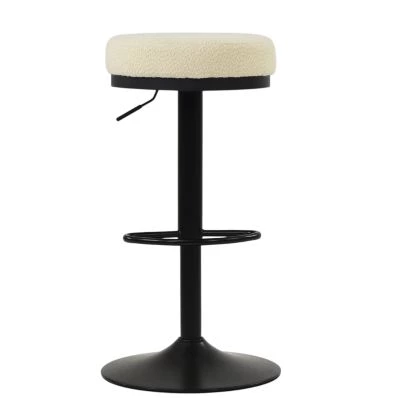
Boucle Upholstery
Boucle has become increasingly common in contemporary seating because of its textured appearance.
The material creates a softer visual finish and works well in calmer neutral interiors.
The downside is maintenance.
Boucle can trap crumbs, pet hair, and dust more easily than smoother fabrics. It is also harder to clean after food spills.
For homes with heavy daily use, boucle normally works better in lower-traffic areas than heavily used breakfast seating.
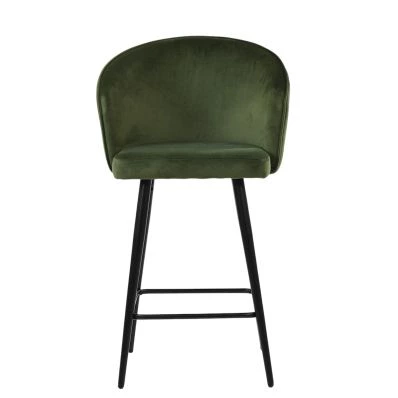
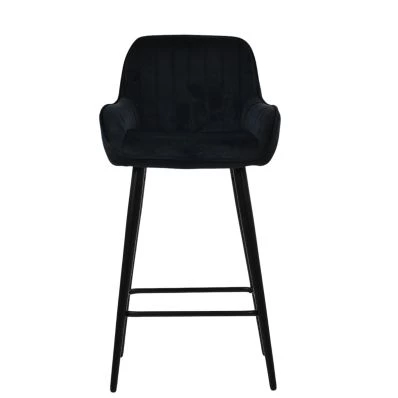
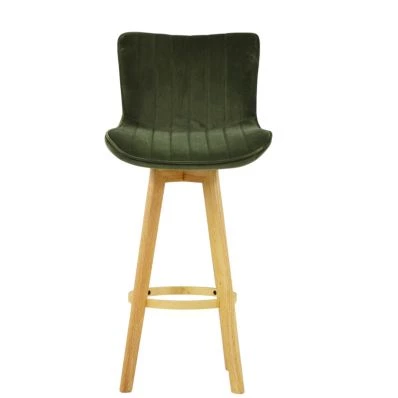
Velvet Bar Stools
Velvet creates a more formal upholstered look and adds visible texture depth.
Velvet performs best in:
- Adult-only spaces
- Entertaining areas
- Lower-use breakfast bars
- Statement seating layouts
The trade-off is visible wear.
Velvet shows pressure marks, directional shading, and pet interaction more visibly than smoother upholstery materials.
For buyers specifically researching durability and maintenance, see Velvet Bar Stools: Durability, Cleaning, Pets & Wear Points.
Rattan and Woven Bar Stools
Rattan bar stools are usually selected for texture rather than maximum durability.
They work best in:
- Coastal-style kitchens
- Relaxed contemporary spaces
- Lighter neutral interiors
- Lower-traffic breakfast areas
Natural rattan introduces warmth without adding visual heaviness.
However, woven surfaces can loosen over time under repeated pressure. Natural rattan is also more sensitive to moisture exposure and temperature changes than metal or upholstered seating.
Synthetic rattan improves durability and moisture resistance but changes the overall texture and feel.
Which Bar Stool Materials Work Best In Different Situations?
Choosing the right material becomes easier when the environment is defined first.
Best Material For Family Kitchens
For family kitchens, prioritise:
- Easy-clean surfaces
- Durable frames
- Lower maintenance
- Resistance to spills and scratches
The strongest combinations are usually:
- Faux leather with powder-coated steel
- Performance fabric with metal frames
- Wood frames with wipeable upholstery
Avoid highly absorbent fabrics if children regularly use the stools for homework, snacks, or daily meals.
If you are buying specifically for high-traffic family use, see Family Kitchen Bar Stools: Wipe-Clean Materials & Swivel Safety.
Best Materials For Open-Plan Kitchens
Open-plan kitchens require more balance between durability and visual weight.
Large upholstered stools can make islands look crowded, especially in narrower layouts.
Lighter visual combinations often work better:
- Slim metal frames
- Open-back designs
- Mid-tone wood finishes
- Fabric or faux leather upholstery
This becomes particularly important when stools remain permanently visible from living or dining areas.
For layout-specific guidance, see Bar Stools for Open-Plan Kitchens: Visual Weight & Material Selection.
Best Materials For Rental Properties
Rental properties benefit from lower-maintenance materials that tolerate inconsistent use.
The most practical combinations are usually:
- Powder-coated metal frames
- Faux leather upholstery
- Darker colour finishes
- Fixed-height frames
These materials reduce:
- Cleaning complexity
- Visible marking
- Upholstery damage
- Maintenance frequency
Best Materials For Commercial-Style Home Bars
Home bars and entertainment spaces often suit heavier materials because daily cleaning pressure is lower than in kitchens.
Good combinations include:
- Genuine leather and steel
- Walnut wood and metal
- Brushed steel with darker upholstery
- Upholstered fixed-height stools
These spaces allow more emphasis on long-term appearance and texture rather than wipe-clean practicality.
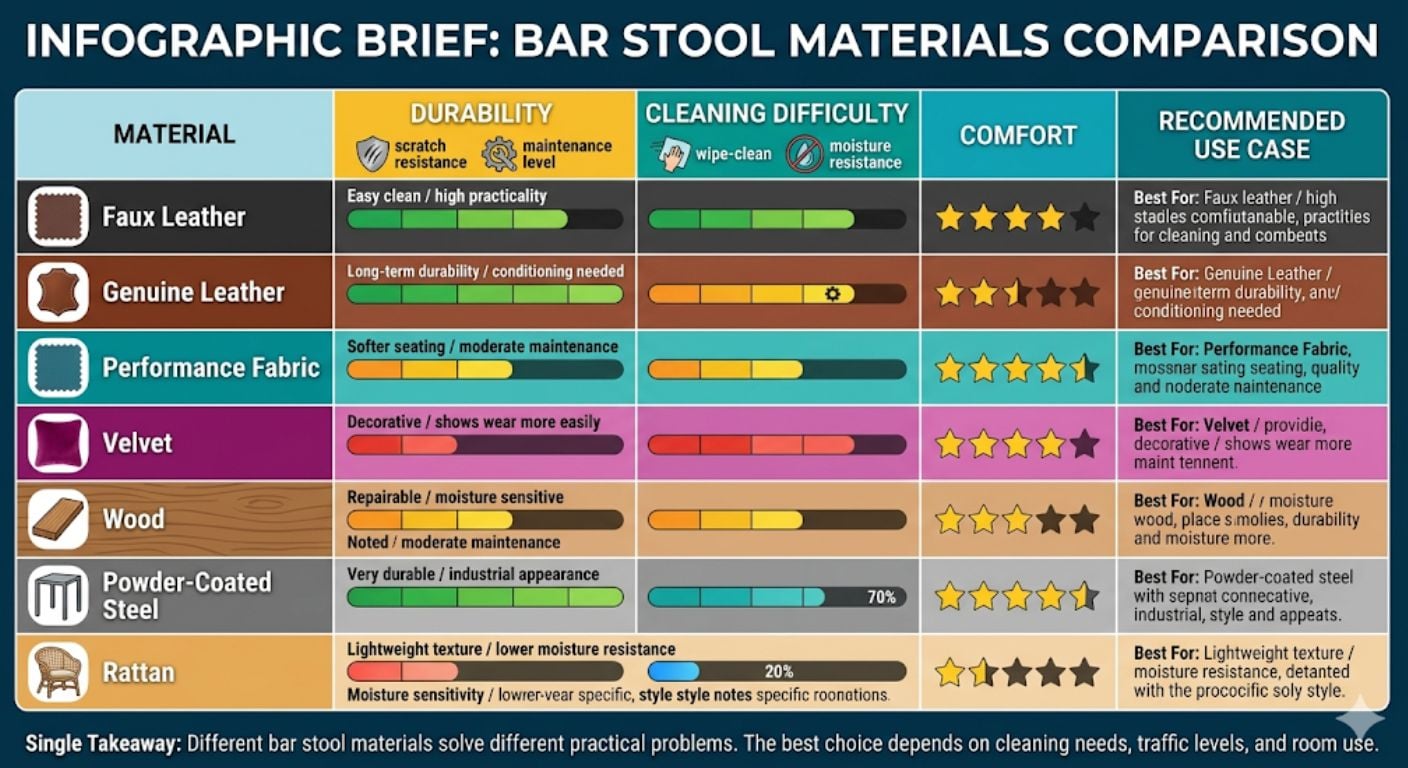
Material Comparison Table
| Material | Cleaning Difficulty | Durability | Best Use Case | Main Weakness |
|---|---|---|---|---|
| Faux leather | Easy | High | Family kitchens | Heat damage over time |
| Genuine leather | Medium | High | Long-term ownership | Requires conditioning |
| Performance fabric | Medium | Medium-High | Daily dining | Spill absorption |
| Velvet | Medium-High | Medium | Lower-use seating | Marks and shading |
| Solid wood | Medium | High | Fixed-height layouts | Moisture sensitivity |
| Powder-coated steel | Easy | Very high | Heavy-use kitchens | Can feel colder visually |
| Rattan | Medium | Medium | Decorative seating | Moisture sensitivity |
Understanding Frame Materials
The frame determines how stable the stool feels over time.
Steel Frames
Steel frames are common in:
- Adjustable stools
- Commercial-style seating
- Industrial kitchens
- High-use homes
Advantages include:
- High strength
- Lower movement over time
- Good weight capacity
- Thin structural profiles
The downside is weight. Heavier steel stools can become awkward to move repeatedly on delicate flooring.
Aluminium Frames
Aluminium is lighter than steel and naturally resistant to corrosion.
It works well for:
- Semi-outdoor areas
- Lightweight movable seating
- Modern kitchens
The trade-off is that aluminium usually feels lighter structurally than steel unless thicker tubing is used.
Wooden Frames
Wooden frames remain popular because they visually soften seating areas.
However, quality varies heavily depending on:
- Joinery methods
- Frame thickness
- Hardwood vs softwood construction
- Reinforcement design
Hardwoods such as oak and beech normally outperform softer pine constructions in long-term stability.
Fixed Height vs Adjustable Materials
Material performance changes depending on whether the stool is fixed-height or adjustable.
Adjustable stools usually rely on:
- Steel support columns
- Hydraulic gas-lift mechanisms
- Circular pedestal bases
This means adjustable stools are commonly paired with metal-heavy construction.
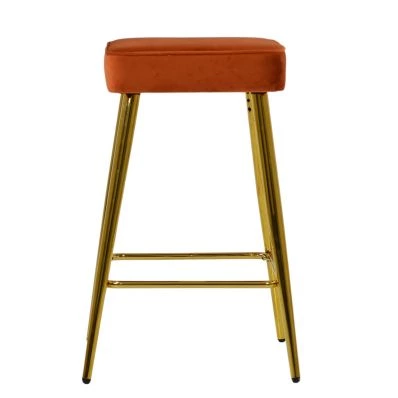
Fixed-height stools allow:
- Larger wooden frames
- More varied leg structures
- Lower visual bulk
- Better long-term rigidity
If you are comparing stool mechanisms separately, see:
Material Choice and Kitchen Spacing
Large upholstered stools occupy more visual and physical space than slim metal designs.
As a general guide:
- Allow around 15cm between stools
- Allow approximately 60cm width per seated person
- Maintain clear walkway space behind occupied stools
Bulky upholstery combined with oversized frames can quickly create pinch points in smaller kitchens.
This is especially important for:
- Peninsula islands
- Galley kitchens
- Compact apartments
- Narrow walkthroughs
For detailed spacing guidance, see:
Decision Logic: Which Material Should You Choose?
If your priority is easy cleaning:
- Choose faux leather or performance fabric
- Avoid boucle and untreated natural fibres
If your kitchen gets heavy daily use:
- Choose powder-coated steel or hardwood frames
- Avoid lightweight decorative frames
If you want softer visual styling:
- Choose fabric, boucle, or wood combinations
- Avoid heavily reflective chrome finishes
If you want lower long-term replacement frequency:
- Choose genuine leather or solid hardwood construction
- Avoid lower-grade bonded leather
If you have pets:
- Avoid velvet and loose boucle textures
- Choose smoother wipeable surfaces
If your stools sit near direct sunlight:
- Avoid lower-grade faux leather
- Choose fabric or higher-quality leather finishes
If you want a lighter visual footprint:
- Choose slim metal legs or open-frame designs
- Avoid oversized upholstered bucket seats
Frequently Asked Questions
What Is The Best Material For Bar Stools?
The best material depends on how the stools will be used. Faux leather and powder-coated steel are practical for busy kitchens because they are easier to clean and resist daily wear well. Genuine leather and hardwood suit long-term ownership, while fabric upholstery works better in softer open-plan spaces where comfort matters more than wipe-clean convenience.
Are Wooden Bar Stools Durable?
Yes, solid hardwood bar stools are durable when properly constructed. Oak, beech, and ash frames usually handle daily residential use well. The main long-term risk is joint movement or moisture exposure rather than structural failure. Hardwood stools can also be refinished more easily than metal or upholstered seating when scratched.
Are Metal Bar Stools Better Than Wooden Ones?
Metal stools generally perform better in high-traffic kitchens because they resist twisting, movement, and impact damage more effectively. Wooden stools create a softer visual finish and are easier to repair cosmetically. The better choice depends on whether durability or warmth is the higher priority.
Can Metal Bar Stools Be Used Outdoors?
Some can, but only if the frame material is suitable. Powder-coated aluminium and stainless steel resist corrosion far better than untreated steel. Upholstery also matters. Indoor fabric and standard faux leather usually deteriorate quickly outside, even in covered areas.
Which Bar Stool Material Is Easiest To Clean?
Faux leather is usually the easiest material to clean because most spills can be wiped away before staining occurs. Powder-coated metal frames also require very little maintenance. Textured fabrics, boucle, and velvet generally need more careful cleaning and show marks more visibly.
Do Fabric Bar Stools Wear Out Quickly?
Not necessarily. Higher-quality performance fabrics handle daily use well when properly maintained. Durability depends on the weave density, abrasion resistance, and how heavily the stools are used. Lighter decorative fabrics normally wear faster than tightly woven commercial-style upholstery.
What Is A Fixed Height Bar Stool?
A fixed height bar stool has a non-adjustable seat height designed for one specific surface level. Fixed-height stools are usually more stable visually and structurally because they do not rely on hydraulic adjustment mechanisms. They are commonly used with standard kitchen islands and breakfast bars.
Which Material Works Best With Pets?
Smooth faux leather and tightly woven performance fabrics usually cope best with pets because they resist trapped hair and are easier to wipe clean. Velvet and boucle tend to show claw marks, hair, and pressure marks more visibly over time.
Structured Summary
Key Measurement Rules
- Standard kitchen islands usually require 65–70cm seat height stools
- Commercial bar heights normally require 75–80cm seat heights
- Allow around 25–30cm between seat height and worktop underside
Spacing Guidance
- Leave around 15cm between stools
- Allow roughly 60cm width per seated person
- Check walkway clearance behind occupied stools
Material Shortcuts
- Faux leather: easiest cleaning
- Powder-coated steel: highest durability
- Genuine leather: strongest long-term ageing
- Performance fabric: softer everyday seating
- Wood: warmer visual appearance
- Velvet: lower-use decorative seating
- Rattan: texture-focused styling
Common Buying Mistakes
- Choosing upholstery before considering maintenance
- Ignoring sunlight exposure
- Overcrowding islands with oversized stools
- Using indoor materials outdoors
- Prioritising style over cleaning practicality
Most buyers end up balancing three things: durability, maintenance, and visual weight. Very few materials dominate all three equally.
If you are narrowing down styles, finishes, or configurations, Lakeland’s full range of bar stools includes fixed-height, adjustable, upholstered, wooden, and metal designs across multiple material combinations.


Comments